
A no-pull harness may reduce a handler’s struggle during a walk, but it does not teach a dog what to do with a loose leash. Some designs redirect the chest, while others tighten under tension. That difference matters for comfort and welfare. If your dog seems painful or moves unusually, consult a veterinarian; see the HubPet veterinary disclaimer.
This guide examines anti-pull mechanisms and their limitations instead of declaring a model universally safe. For broader equipment types, focus on the exact features here; the training foundation remains our published loose-leash walking guide.
Recognize the different mechanisms behind the label
No-pull describes a marketing goal, not a single physical design. A front-clip harness attaches the leash at the chest and may redirect the dog when tension develops. A back-clip harness with a front option lets the handler select attachment points without replacing the full piece of equipment.
Other designs cinch or apply pressure around the chest or under the front legs when the dog pulls. These mechanisms deserve special caution, because reducing pulling through discomfort does not align with humane skill building. Compare what physically happens under tension, not just the package name.
Understand the limits of front-clip control
A front attachment can change leverage for some dog-handler pairs and sometimes makes walks easier to manage. However, it may also turn a dog’s body or produce awkward movement if the dog lunges into a tight leash. The handler should prevent repeated abrupt pulling rather than relying on the redirection.
VCA recommends checking for unrestricted shoulders and warns that some no-pull designs press across the front of the joint. A 2025 research review also discusses potential welfare costs of pressure and redirection. Use the tool cautiously and keep training central.

Avoid tightening designs that rely on discomfort
Inspect product photos or a sample in person. Ask whether straps shorten around the chest when the dog pulls or whether the attachment produces pressure against tender areas. A design that forces the dog to stop through discomfort does not become a positive-reinforcement method simply because it avoids the neck.
If you notice flinching, rubbing, altered gait or resistance to wearing the harness, stop and reassess. Instead, choose a comfortable non-tightening arrangement and reduce the difficulty of walks while teaching useful behavior. AVSAB supports reward-based methods rather than aversive corrections.
Check shoulder freedom before worrying about pull control
Observe the dog taking relaxed steps indoors while the leash hangs loose. The front legs should move naturally without a horizontal strap pushing into the shoulder. Inspect the harness from the side during forward movement, because pressure points can stay hidden in a product image.
Next, apply only gentle ordinary leash guidance while the dog remains calm. Watch for twisting or straps sliding into armpits. A harness that appears to reduce pulling but makes movement uncomfortable is not a suitable trade-off for everyday walks.
Make secure fit a separate buying requirement
Measure your dog using the manufacturer’s designated points, including chest girth where relevant. Adjust each strap while the dog stands naturally. The harness must stay secure without squeezing; breed labels cannot replace individual measurements.
For a dog who backs out, inspect whether the strap layout provides adequate escape resistance. A third strap may help certain body shapes, but no harness is perfectly secure in every circumstance. Practice safe handling near doors and use a manageable route while you test fit.

Build a reward-based loose-leash routine
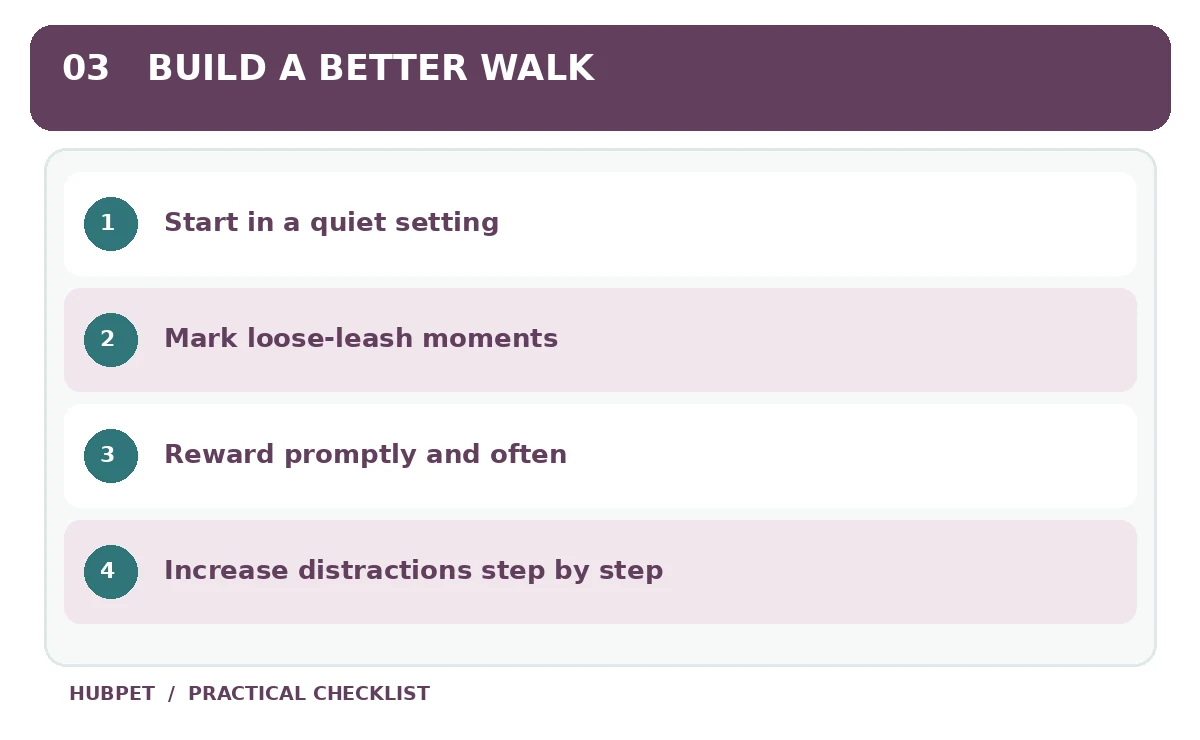
Start in a quiet space. When your dog moves near you and the leash forms a gentle curve, mark and reward the choice. Change direction calmly before the leash becomes tight rather than yanking after a surge. Short, frequent practice helps the dog learn the pattern.
Increase distractions gradually: hallway, yard, quiet sidewalk, then busier paths as the skill strengthens. If the dog pulls constantly, make the route easier. A training session that stays successful is more useful than a long walk full of restraint.
Compare attachment points in a supervised trial
Test the back clip on a quiet route, then try the front clip at low distraction if the harness supports both. Notice gait, leash position, comfort and the handler’s ability to avoid sudden tension. Do not conduct force tests or deliberately provoke lunging to see whether the harness stops it.
If a second point of attachment helps your setup, check the manufacturer’s instructions for compatible leads and safe use. A second attachment is not permission to restrain the dog sharply. Equipment should protect the practice while the dog learns the skill.
Respond to lunging, fear and reactivity safely
Pulling can reflect excitement, insufficient training, fear or a strong reaction to another dog. The harness cannot tell you which cause is present. Increase distance from a trigger, protect space, and avoid flooding the dog with situations it cannot handle.
For an anxious or reactive dog, use a qualified reward-based professional and consult your veterinarian when needed. Our reactive-dog walking guide offers management context without suggesting a device will solve fear.
Keep an equipment and walking log
After a trial walk, note whether straps shifted, the dog rubbed an armpit, and how often the leash stayed loose. Repeat under similarly easy conditions before deciding whether the harness helps. Do not equate a tired or unusually quiet dog with a successful training outcome.
Inspect buckles and seams, then wash and dry according to the label. Retire damaged hardware. Meanwhile, use the same reward marker and walking criteria across the family so the dog receives consistent information. Our family consistency guide can help.
Choose the humane option and know when to stop
Look for a comfortable non-tightening design with adjustable fit, free shoulder movement, stable hardware and easy removal. Then ask whether it improves handler safety without causing pressure-based discomfort. Avoid absolute claims that any harness stops all pulling or works for all breeds.
If walking becomes painful, frightening or difficult to control safely, pause the trial and seek appropriate veterinary or qualified behavior support. A no-pull label cannot stand in for welfare assessment. The long-term objective is a dog that understands loose-leash behavior, not a dog held in place.
How We Research
HubPet compared published guidance from veterinary and animal-welfare organizations with practical product-use criteria: fit, food safety, daily cleaning, and clear limits. We reviewed the linked material on October 26, 2026. We did not conduct laboratory or hands-on testing of named commercial models, and we do not claim brand endorsements. Learn about our process on the About HubPet page.
Sources
VCA: Controlling Pulling on Walks. Reviewed October 26, 2026.
VCA: Collar and Harness Options for Dogs. Reviewed October 26, 2026.
AVSAB: Humane Dog Training Position Statements. Reviewed October 26, 2026.
Peer-reviewed review: Review of Collars, Harnesses, and Head Collars for Walking Dogs. Reviewed October 26, 2026.
No. Equipment may change leverage during a walk, but loose-leash behavior develops through consistent reward-based practice in manageable settings.
No. Fit, shoulder clearance, body shape and the dog’s gait matter. Check movement and discomfort during a calm supervised trial.
Pressure-based tightening can cause discomfort. Prefer humane non-tightening options and teach walking skills without aversive restraint.
A suitable harness may help handling, but it does not address fear or reactivity. Increase distance and seek qualified reward-based help when necessary.
Lower the walking difficulty, reward short periods of loose leash, and practice in calm settings. Review fit and seek professional help for safety concerns.