
A crinkle ball uses a light flexible material to make a rustling sound as the cat bats it. Some versions look like a compact foil pom-pom, while others hide a crinkly layer inside fabric. Sound and weight can make the toy engaging, but the same thin film or loose fibers may become risky if your cat chews pieces off. The aim is a safe batting game, not a toy that survives aggressive biting. This guide explains how to compare construction styles and what to check before and after play. For suspected ingestion, contact a veterinarian and consult our veterinary disclaimer.
Identify the material before offering the toy
Some crinkle balls use folded synthetic film, while others have soft fabric over an inner crinkle sheet. Read the label and examine the actual object. Thin exposed films may tear into small strips after repeated biting. A stitched fabric cover may hide the film, but it can also open at a seam. No label can replace observing your cat’s play style. If your cat chews and swallows soft materials, a simple solid ball may be easier to inspect and manage.
Check for mouth-sized pieces and small attachments
Hold the whole toy in your hand and look for small beads, bells, eyes, ribbon ties, or glued decorations. Check whether any piece comes away under a gentle tug. A crinkle ball should not include a small detachable center. Choose a shape that the cat cannot easily swallow whole, and remember that a compressed film ball may become much smaller. Do not rely on the diameter printed on a package if the material collapses under pressure. Use extra care with kittens.
Inspect seams and layers on fabric versions
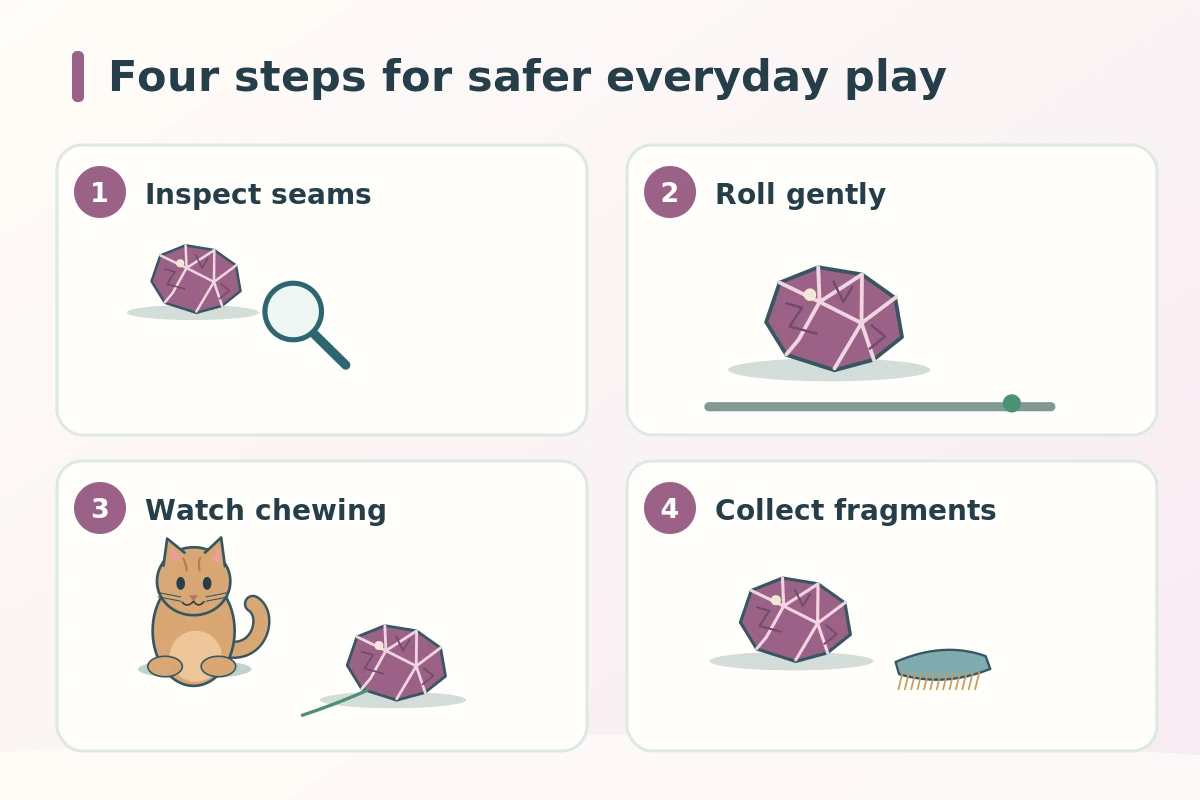
Trace every stitched join and look for loose thread ends or gaps. Press the ball gently to see whether an inner layer pushes out. If the cover contains stuffing, inspect whether it can escape from a worn edge. Loose fibers may tempt licking and chewing. Replace the toy when seams separate. Do not make a quick repair with exposed adhesive or a knot that the cat can bite free. A clean intact surface is more important than a decorative pattern.

Test the sound level in a quiet room
Gentle rustling may attract a curious cat. Yet a sharp crackling noise can startle a shy one, especially when the sound comes from beneath its paws. Roll the ball once and watch from a comfortable distance. If the cat retreats, offer a quieter toy and avoid repeated demonstrations. Do not shake the toy beside a cat’s head to gain attention. Play should begin with choice and room to leave. Different cats prefer different levels of sound and movement.
Compare a covered ball with torn shiny film
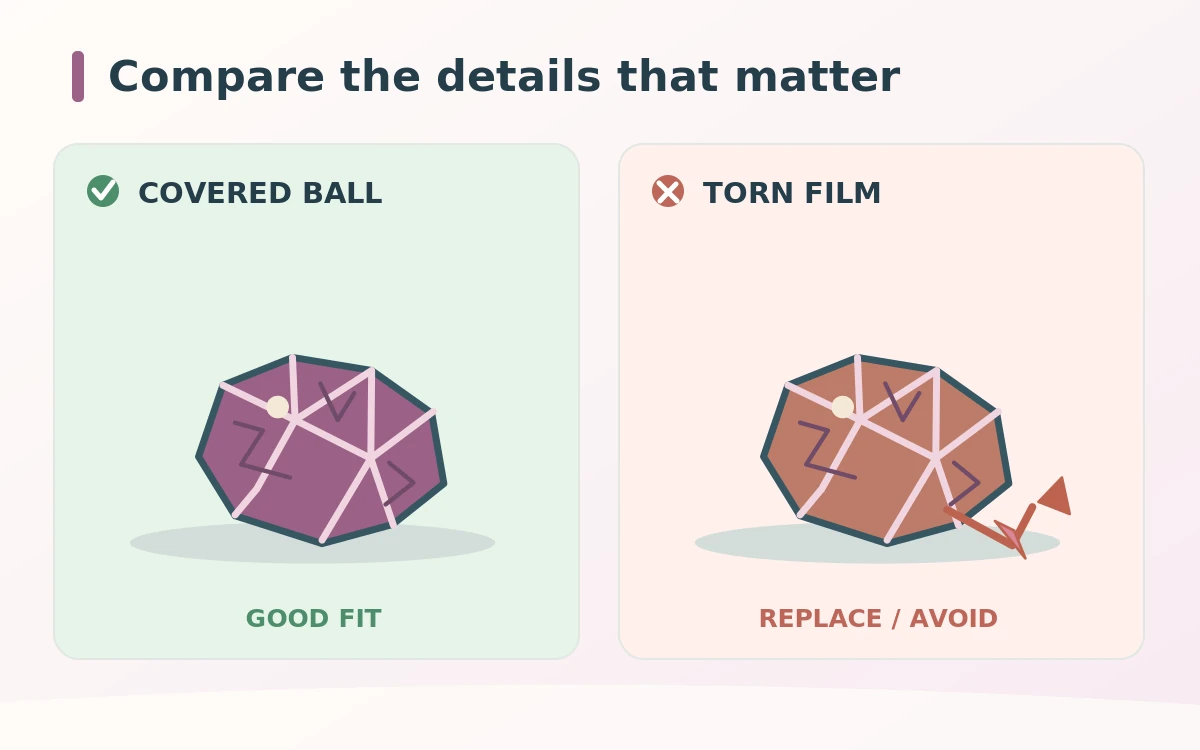
A sturdy covered ball has its crinkle material retained inside a smooth intact shell. A torn shiny film ball may show strips, curled edges, and separated layers. Those pieces can break off during chewing. Examine the ball under good light after a few swats. If its shape shrinks, opens, or leaves fragments on the floor, collect every piece you can find and stop using it. Choose a more durable material instead of continuing until the toy completely unravels.
Use floor-level rolling instead of high throws
Roll the ball a short distance across a clear floor and let your cat bat it back. That encourages stalking and catching without dramatic jumps. Avoid throwing a light ball toward open stairs, shelves, or a crowded desk. For traction, use a rug that lies flat or another stable play surface. If the ball floats under a sofa, retrieve it before it meets electrical cords or small household debris. Choose the floor area as carefully as the toy itself.
Notice if batting turns into tearing
A cat may chase and swat a crinkle ball gently, or it may pin the object and use its teeth to pull at layers. Monitor that change. Tearing is a sign to end this toy session rather than an invitation to keep going. Offer a sturdier kicker or another appropriate object for biting behavior. Never punish the cat for using its mouth. It is your job to choose materials that suit the animal’s behavior and remove hazards without creating a struggle.
Offer short play sessions with a clear ending
Start with one intact ball, roll it slowly, and pause for the cat to catch it. A few satisfying catches may be enough. Cats Protection and VCA describe short bursts of play and the value of changing toys over time. If the cat walks away, allow a rest period. Do not keep rattling the ball to prolong interest. A calmer rhythm can help avoid frantic chewing. Put away the ball if its thin material becomes damaged during the game.
Clean only as the construction allows
Follow the manufacturer instructions before wetting the toy. A plastic film ball may trap water inside folds, while a fabric ball may require a delicate wash and complete drying. Never use a heat source that can melt synthetic material. Remove pet hair with a soft brush or appropriate cloth when possible. If dirt collects inside an unsealed crinkly layer, replacing the inexpensive toy may be more practical than trying to sanitize inaccessible material.
Keep lost balls and fragments out of reach
Crinkle balls can disappear behind appliances and under cabinets. Count the toys after play in a multi-pet household. Vacuum or sweep small fragments if a ball has torn, and inspect the space before letting pets return. Do not leave damaged plastic or metallic film where cats can discover it overnight. Store intact balls in a closed container between sessions when your cat is a destructive chewer. The storage routine should fit the real chewing risk, not a universal rule.
Choose a durable alternative when necessary
If your cat repeatedly shreds crinkle film, try a single-piece ball that does not shed layers. A secure ball track can offer similar batting without loose foil. For a cat that likes sound, a safely enclosed rattle design may be another option, but check every opening and attachment. Some cats prefer quiet fabric toys instead. Rotate a small selection and observe what your cat enjoys. There is no benefit to preserving a noisy toy that your cat tries to dismantle.
How We Research
We used current feline welfare and veterinary guidance about play, hunting-style activity, chewing hazards, scratching, and safe materials. Next, we translated those principles into hands-on inspections of the specific toy or post: the seams, moving parts, size, stability, and cleaning access. We did not test or rank commercial models. The diagrams illustrate what owners can observe without claiming any item has a safety certification. This article is general educational information, not individual veterinary advice. Learn about our editorial approach.
Sources
Cornell Feline Health Center — Safe Toys and Gifts — Cornell Feline Health Center — Safe Toys and Gifts (consulted October 2026).
PAWS — Cat Toys and How to Use Them — PAWS — Cat Toys and How to Use Them (consulted October 2026).
Battersea Dogs & Cats Home — Playing with Your Cat — Battersea Dogs & Cats Home — Playing with Your Cat (consulted October 2026).
VCA Animal Hospitals — Cat Behavior and Training: Play and Play Toys — VCA Animal Hospitals — Cat Behavior and Training: Play and Play Toys (consulted October 2026).
Safety note: Take damaged toys, loose strings, sharp fragments, and accessible batteries away immediately. If a part might have been swallowed, contact a veterinarian promptly. Do not force a fearful cat to participate in play.
They require careful inspection and supervision. Remove any ball that tears into film strips, collapses to a mouth-sized piece, or encourages chewing.
Yes, small torn films and loose fibers can be swallowed. Seek veterinary advice promptly if you suspect ingestion, especially if pieces are missing.
The noise or unexpected movement may be unpleasant. Offer a quieter toy and let your cat approach voluntarily.
Follow the product care instructions. A film ball may trap water, while a fabric version may require careful drying to protect the inner layer.
Replace it when seams open, film tears, strands detach, or the toy no longer holds its original safe shape.