
A sofa collects fur in seams, woven surfaces and cushion edges; the right removal sequence depends on fabric construction, not just the strength of the tool. This article provides practical checks and limitations. See our veterinary information disclaimer for health-related decisions.
Identify what your sofa can tolerate
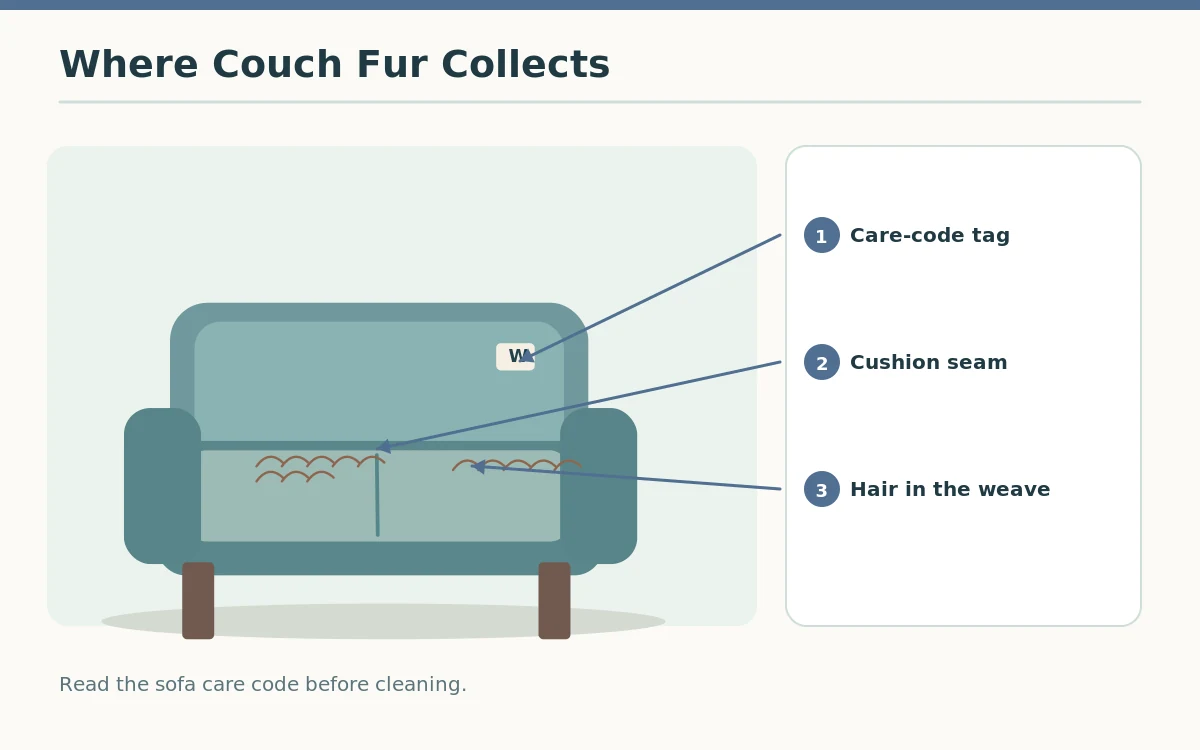
Before choosing a pet-hair remover, inspect the manufacturer’s care label, usually under a cushion or on the frame. Common upholstery codes describe cleaning methods: W allows specified water-based methods, S requires an approved solvent approach, W/S permits certain options, and X generally restricts cleaning to vacuuming or gentle brushing. Those codes do not guarantee that an aggressive scraper is harmless. For a vintage sofa, a loose weave, velvet, boucle, leather, or damaged fabric, start with a hidden patch and very light contact. Follow fabric-specific guidance when it conflicts with a general cleaning trick. Do not wet an unknown cushion simply to make fur stick together.
Lift loose clumps before working on embedded hair
Move the pet to another comfortable spot and remove throws or washable covers. Pick up the largest tufts by hand or with a soft upholstery attachment. Start at the top of the back cushions and work toward the seat; this keeps dislodged fur from falling onto cleaned areas. Use slow overlapping vacuum passes instead of pressing the nozzle hard against fabric. A crevice tool can reach tight seams, but protect loose threads and piping from suction. Inspect the tool opening before starting, because a tiny stone or broken clip can abrade upholstery. Empty a full vacuum bin to restore airflow.
Select a gentle remover for the weave
A soft lint brush works well for surface hair on stable fabrics, while an adhesive roller may catch fine strands along the arms and back. Reusable fabric rollers can gather fur from broad sections without peeling off many sheets. Rubber squeegees and scraping tools can grip hair strongly but also snag loops, lift pile or leave marks on delicate upholstery. Test any rubber or textured implement on a concealed patch with almost no pressure before moving to a visible cushion. Avoid stiff metal pet-hair rakes on leather, loose chenille, velvet, or fragile embroidery. If threads move, stop immediately.
Use directional strokes instead of scrubbing
Work along the nap or weave in short, controlled motions. Gather a small ridge of fur at the edge of the cleaned section, remove it, and repeat. Scrubbing back and forth can push hair deeper between threads and abrade the surface. Around seams, roll the lint brush away from piping so it does not catch the stitching. Keep tools flat rather than digging their corner into upholstery. A fabric that begins to pill, shine, stretch, or shed its own fibers is telling you the method is too harsh. Switch to gentler suction or seek professional upholstery advice.
Handle cushions, zippers and inserts with care
Some cushion covers unzip but are not machine washable. A zipper indicates access to a cushion insert; it does not override the sofa’s washing instructions. If the maker permits removal, label the covers so each returns to the correct cushion. Otherwise, clean the cushion as an assembled unit. Vacuum along the seam where pets like to curl, and look beneath cushions for hair and small toys. Do not spray moisture into foam or down inserts. If you find a damp patch from an accident, follow the furniture’s stain-specific instructions rather than combining several cleaning products.

Know where vacuum attachments help most
A miniature powered upholstery brush can lift embedded fur, but its spinning bristles may pull delicate yarns. A straight-suction upholstery head with a smooth edge offers a gentler starting point. For pet hair in a tight corner, use a crevice tool without forcing it into a stitched join. Check the attachment for loose wheels, exposed screws and sharp edges. Do not allow children or pets to play with detached brushes, cords or small nozzle parts. If an electric brush jams with hair, stop the vacuum before clearing the obstruction. A small clean tool is often more effective than a clogged powerful one.
Protect fabrics between cleanups
Washable throws or fitted furniture covers can take the heaviest fur load when the fabric and pet both tolerate them. Choose a cover that lies flat rather than bunching into a chewing hazard. Brush or groom your dog away from seating areas and remove loose fur before longer cuddle sessions. Vacuum the dog’s preferred sofa corner regularly, even when it looks clean from a distance. Keep a soft lint brush nearby for a quick touch-up after visitors leave. Cleaning more often with lower friction helps protect upholstery better than occasional forceful scraping.

Make a small before-and-after test
Choose a palm-sized area near the back of a cushion. Photograph it in similar light, try gentle suction, then add one fabric-safe brush technique. Record whether fur releases, fabric snags, the pile changes direction or the surface becomes shiny. Stop at the first sign of damage. Check the cleaned area after the fabric rests; some materials reveal pilling only when the nap settles. If the result is poor, do not automatically use a sharper scraper. A furniture professional can suggest a safer method for valuable, vintage or unusual textiles.
How We Research
We compared pet-care or textile/equipment guidance from the sources below, looking for practical checks that an owner can verify without buying a particular brand. We separated observed mechanisms from marketing claims and checked the limitations specific to remove dog hair from a couch. This guide does not claim original laboratory tests, certified product performance, veterinary diagnosis, or exhaustive testing of every model. Read more about our editorial approach. Product manuals and fabric care labels take priority. Reviewed October 28, 2026.
Sources
Bassett Furniture, How to Clean a Fabric Sofa. Read source. Accessed October 28, 2026.
Consumer Reports, Vacuum Cleaner Buying Guide. Read source. Accessed October 28, 2026.
American Cleaning Institute, Laundering Problems and Solutions. Read source. Accessed October 28, 2026.
Safety note: Product and routine advice must be adapted to the individual animal, fabric, and appliance. For pain, injury, unexplained coat changes, or persistent distress, contact a veterinary professional. Follow equipment and care-label instructions rather than forcing an unsafe workaround.
No. Test gently on a hidden area; a squeegee may snag looped, delicate or textured upholstery.
No. The cleaning code does not automatically authorize machine washing or removing covers.
Check the maker’s directions and start with very gentle, appropriate suction; avoid aggressive scraping.
Not on unknown upholstery. Water can mark fabrics or soak the insert.
Use washable throws where appropriate, groom your dog gently, and vacuum preferred resting areas regularly.