
A double dog crate may look space-efficient, especially when furniture makers combine two enclosures under one tabletop. However, shared confinement is not the same as housing two dogs in separate compartments. Dogs who are affectionate outside a crate can still compete over food, space, or access to an exit when trapped together. Oregon Humane Society recommends separate crates for puppies, and AKC encourages private retreat spaces in multi-pet homes. Treat each compartment as a complete crate for one animal. This article explains how to assess partitions, doors, placement, and routines before buying multi-dog furniture. For anxiety or injury questions, see the HubPet veterinary disclaimer.
Start with two dogs, two choices to retreat
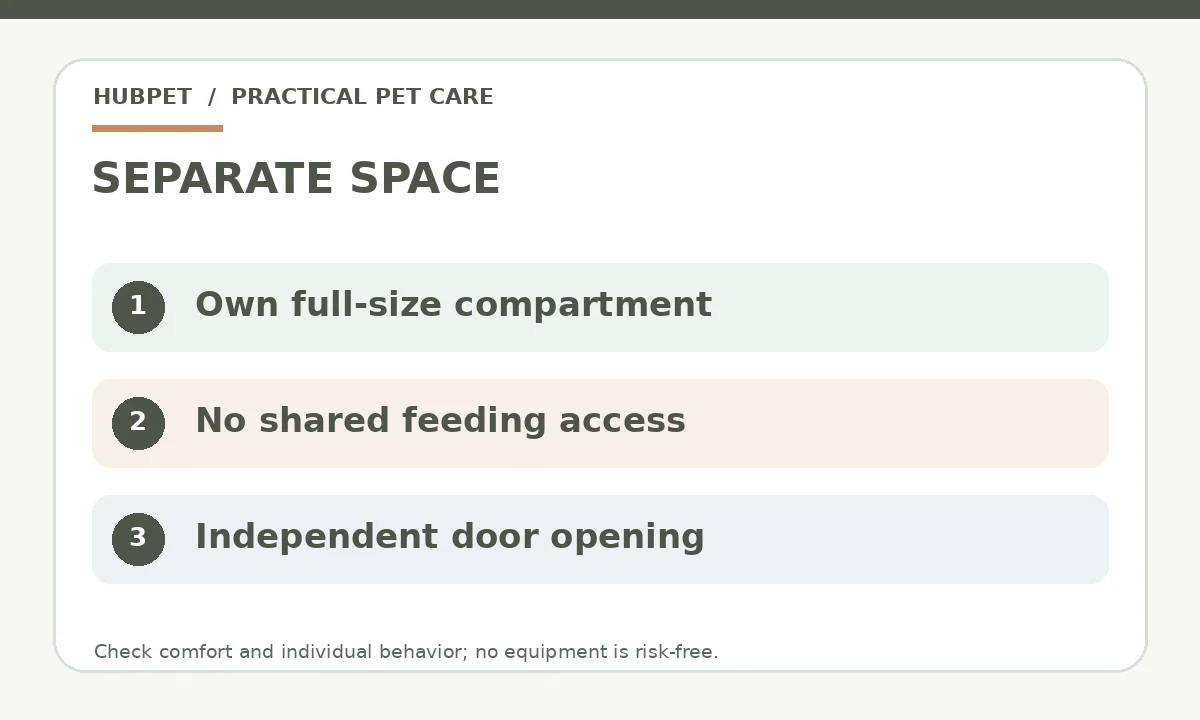
Each dog needs a place where the other cannot enter or block the exit. A shared enclosed compartment removes that choice, even when the pair usually naps together. A physical partition may help, but it must resist pushing and prevent access to food or toys across the barrier. Instead of planning around a single shared bed, observe each dog’s preferred rest time, sleeping posture, and reaction to proximity. If either dog avoids the area, freezes, guards resources, or growls when approached, stop the trial and change the arrangement.
Measure each compartment independently
A large outer furniture dimension does not tell you the space available on either side of a divider. Measure the individual interior for each dog, allowing room to stand, turn, and lie down comfortably. Dogs of different sizes may need different compartments. Also account for raised thresholds and washable bedding that reduce usable space. Cornell emphasizes comfort and posture when selecting a crate. Do not rely on a seller’s combined weight limit to infer appropriate room for both animals. Each dog deserves an enclosure that meets its own body and movement needs.
Inspect the center partition from both sides
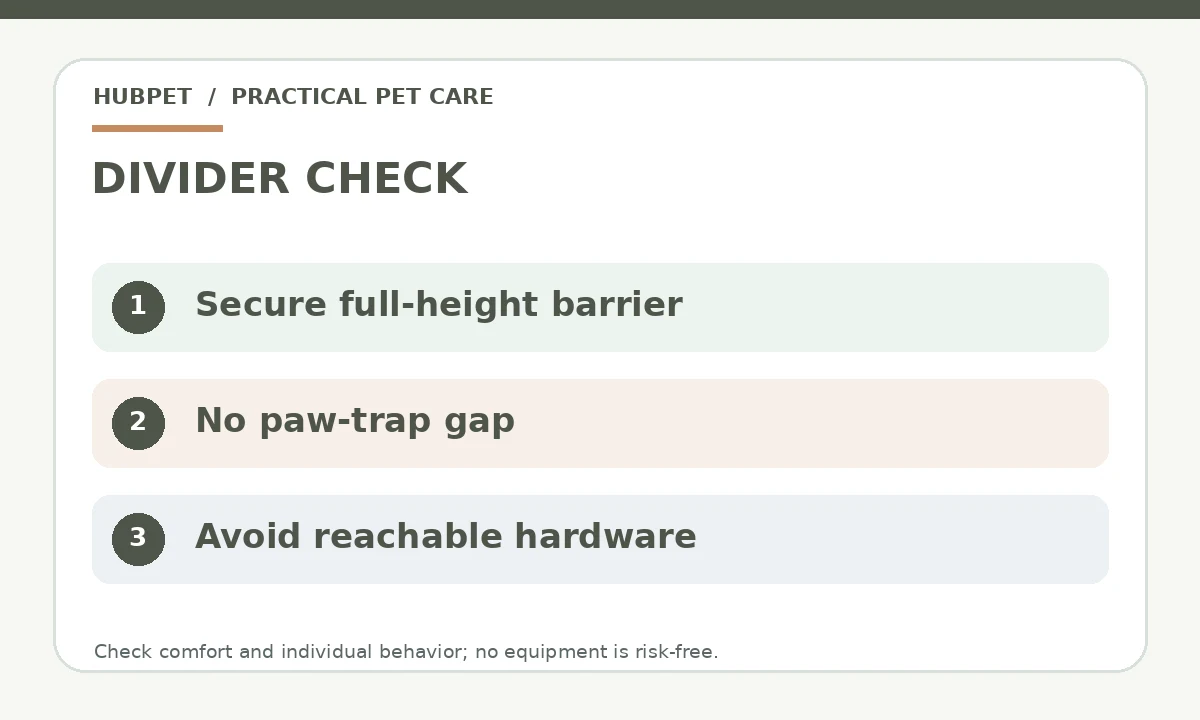
A divider may use bars, slats, solid material, or a removable panel. Test its fasteners while both compartments are empty. Check whether paws, noses, tags, or toys can reach through openings. Then examine whether one dog can push against a panel that shifts into the other dog’s area. Solid separation can reduce visual pressure for some pairs, yet poor ventilation creates a different problem. The correct choice depends on behavior and airflow. Never use an improvised tie or decorative trim that exposes a chewing or snagging hazard.
Look for truly independent doors and latches
Each animal should have an exit you can open without reaching through the other compartment. Test both doors at the planned furniture location. If one door swings across the other’s opening, rearrange the layout. Furthermore, look for latches that close securely but release quickly in an emergency. Handle the doors with no dogs inside until the mechanism feels predictable. Avoid a shared access hallway that forces the dogs into close contact before they can leave. Individual exits matter during cleaning, feeding, visitors, and a possible evacuation.
Keep food and high-value items separate
Food bowls, chews, and favorite toys can trigger competition in otherwise peaceful households. AKC recommends separate feeding areas and private retreat spaces. Therefore, manage meals individually and avoid putting a highly valued chew beside a porous divider. Observe each dog’s body language from a respectful distance during calm rest, but do not test guarding by teasing an animal with food. If one dog stares, stiffens, growls, or blocks access, move the animals into safer separate zones and seek a qualified reward-based professional for a management plan.
Train crate comfort one dog at a time
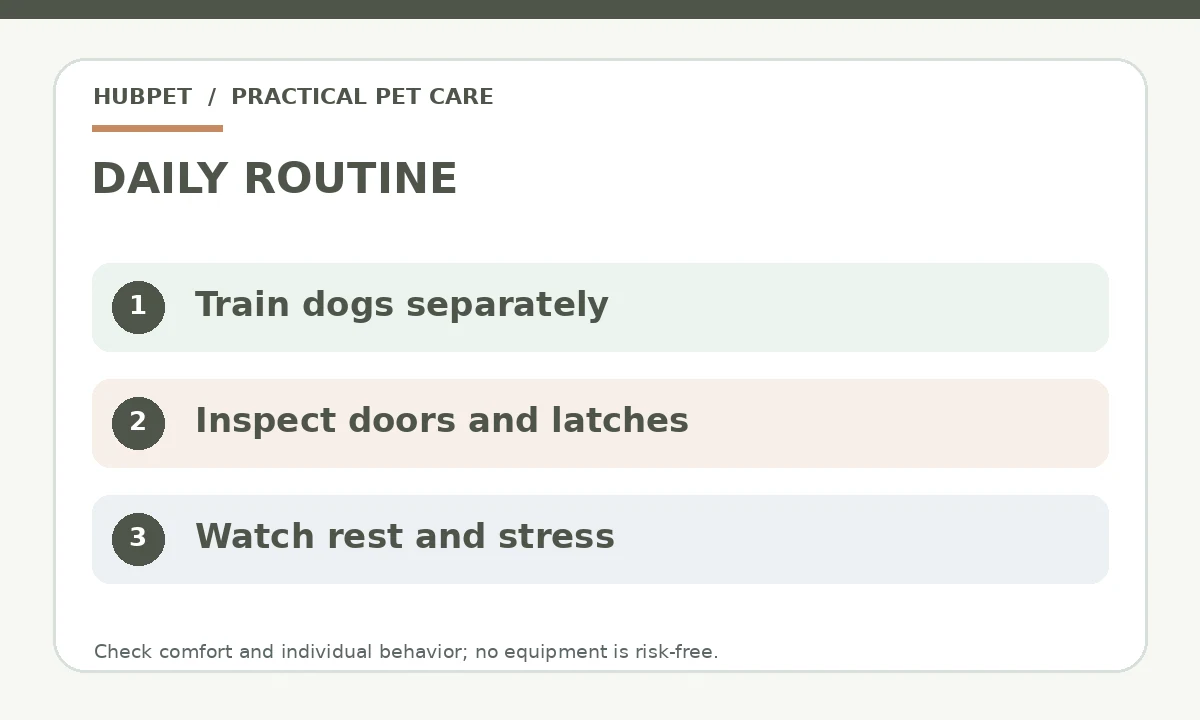
Set up the resting spaces before expecting simultaneous crate time. Invite each dog to investigate its own open compartment and reward voluntary entries. Then practice short relaxed door movements separately. Meanwhile, the other dog can rest behind a gate or in another safe room. This arrangement prevents excitement from masking an individual dog’s discomfort. Neither dog should have to compete for your attention inside a closed area. Progress at each animal’s pace, and watch for panting, drooling, pacing, or attempts to force an exit.
Place the unit for temperature, access, and calm
A double crate takes a larger wall footprint than a single kennel and may sit beneath a tabletop or built-in cabinet. Check airflow on both sides instead of assuming matching compartments have matching conditions. Avoid heating vents, direct sunlight, dangling cords, and doors that children frequently open. In addition, leave space to remove trays and reach both emergency exits. If one side faces a busy hallway and the other faces a quiet corner, the dogs may respond differently. Comfort requires observing each animal rather than designing only for room symmetry.
Do not assume furniture-grade construction is escape-safe
Decorative wooden bars and trim can look attractive but may splinter when chewed. Check fasteners, coating wear, floor edges, and the stability of any tabletop load. A unit intended as furniture should still meet everyday crate needs. If a dog scratches or bites the structure persistently, a more expensive cabinet is not the solution. ASPCA warns that confinement can intensify separation-related distress. Stop forced confinement, consider a safe room, and ask a veterinarian or qualified behavior specialist about the underlying problem.
Plan cleaning without moving dogs through each other
Clean one compartment while its occupant rests somewhere secure and separate. Remove bedding, sweep corners, and follow the manufacturer’s material-specific cleaning advice. Then dry surfaces thoroughly before the dog returns. A fixed center divider can make interior corners difficult to reach, so try the cleaning routine before purchase. Also inspect partition screws and latch plates during cleaning. The ability to clean both sides without juggling the dogs in a shared entryway is a functional safety feature, not a minor convenience.
Consider two freestanding crates instead
Two separate crates may offer more flexible placement, independent replacement, and less shared vibration. In a small home, they can sit side by side with breathing space or occupy different quiet areas. If you want a double unit, verify a full, secure barrier and an independent exit for each dog. Finally, remember that each animal needs time outside any crate for movement, bathroom breaks, social contact, and enrichment. The best arrangement is one the dogs use calmly and voluntarily, not simply the one that saves floor space in a photo.
How We Research
Our editorial team compared current dog welfare, crate-selection, and humane training guidance with the equipment problem in this guide. The review distinguishes sourced safety principles from practical inspection prompts. No specific products were tested, and this guide does not claim a crate prevents injuries or suits every dog. Sources were checked on October 27, 2026. Learn about our process on the About HubPet page. For distress, injuries, or medical questions, consult your veterinarian.
Sources
Oregon Humane Society: Two puppies or one?. Reviewed October 27, 2026.
American Kennel Club: How to manage multiple pets at home. Reviewed October 27, 2026.
Cornell University College of Veterinary Medicine: Dog crates: when to use them and how to pick one. Reviewed October 27, 2026.
ASPCA: Separation anxiety and confinement. Reviewed October 27, 2026.
Connecticut Humane Society: Introducing two dogs. Reviewed October 27, 2026.
Separate confinement is generally safer because dogs need individual room and a way to avoid each other. Shared space may create conflict or stress even for friendly dogs.
Not necessarily. Inspect the partition, airflow, individual internal dimensions, doors, and how easily you can clean each side.
Separate feeding often reduces competition, but monitor reactions across the partition. Avoid high-value chews that trigger fixation or guarding.
Welfare and training organizations recommend helping puppies rest separately and practice independent routines. Consult a qualified trainer for household-specific planning.
Do not assume decorative material will contain a determined chewer. Splinters and loose hardware are hazards, and escape attempts may signal distress that needs professional attention.