
Puppy crate dividers allow a growing dog to use a larger crate without having to occupy the full floor area immediately. A divider may support a consistent sleeping space during house-training, but it cannot compensate for missed bathroom breaks or an overly long period of confinement. AKC and Cornell both describe adjustable dividers as a practical option for puppies. The key is using an intact panel that fits the crate and leaves enough room for natural posture. This guide focuses on the moving divider itself, not on selling a universal crate size. For persistent accidents, panic, or health symptoms, consult your veterinarian and review the HubPet veterinary disclaimer.
Know why a divider exists
Some caregivers buy a crate that can fit the dog’s expected adult body and use a panel to define a smaller current sleeping area. This can reduce the chance that a very large interior becomes separate resting and toilet zones. However, a divider never trains bladder control. Puppies need frequent, appropriate outdoor breaks and positive reinforcement. Cornell suggests adjustable barriers for puppies who will grow into an adult-size crate. Treat that idea as a fit option, not permission to confine a young dog longer than its comfort or bathroom needs allow.
Measure usable space with your puppy present
Watch your puppy stand with the head naturally upright, rotate without rubbing the walls, and lie down comfortably. Then assess the space created by the divider rather than the outer label. A dog who curls up during a photo may still need room to stretch when resting. In addition, bedding uses some floor area and height. Avoid making the compartment so tight that the puppy cannot change position. If the puppy struggles to stand or turn, move the divider immediately before another session.

Confirm that the panel matches your crate
A divider from another manufacturer may look close enough to fit but leave dangerous gaps. Check the instructions and model-specific attachment points before installation. Inspect every wire tip, tab, hook, and locking mechanism while the crate is empty. The divider should stand upright without flexing into the dog’s area. It must not create a shelf the puppy can climb or a place for paws and collars to catch. If the intended mounting hardware is missing, obtain proper replacement parts rather than tying the panel with string or improvised wire.
Position the divider without blocking the door
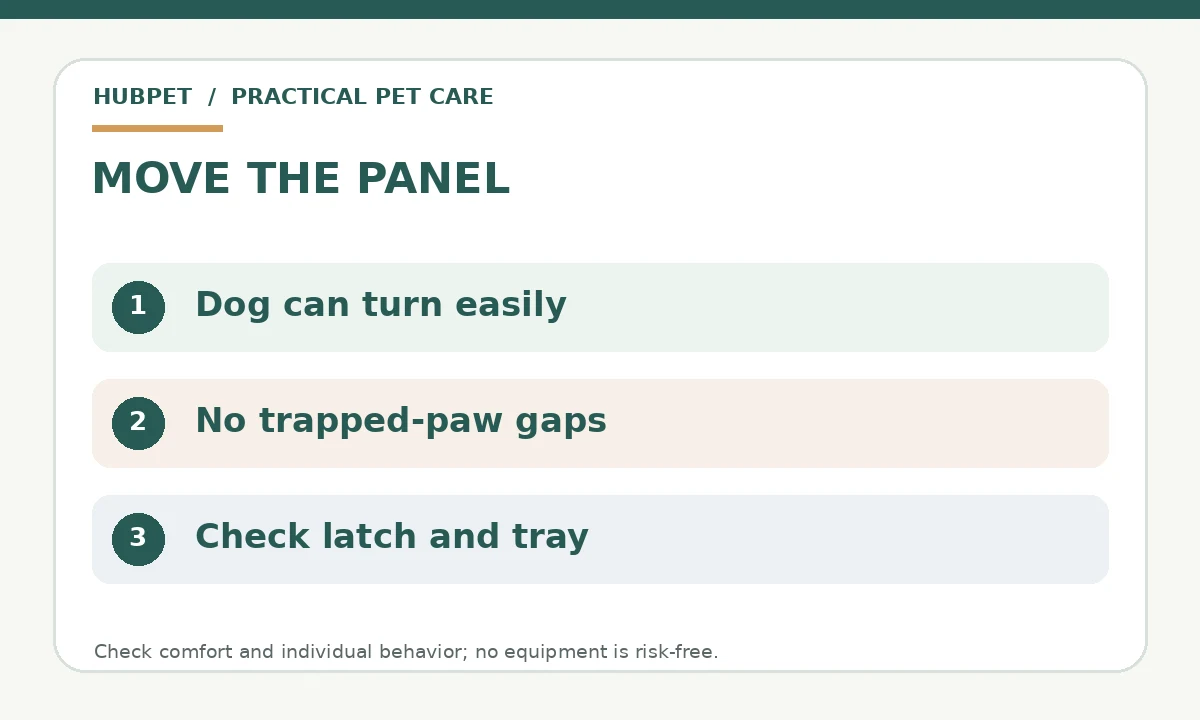
Place the panel far enough from the door to support normal entry and exit. Then close the gate and verify that the panel does not contact hinges, latches, or the floor tray. A door that needs extra force can indicate incorrect assembly. Meanwhile, look for narrow triangular gaps at the corners where a paw may slip. Keep the route to the opening clear of toys, bowls, or bulky bedding. If the puppy catches a toe or repeatedly pushes at an edge, stop using that configuration and assess the fit again.
Teach open-door comfort before testing confinement
Invite the puppy to explore the adjusted crate with the door fixed open. Scatter suitable rewards close to the entrance, then farther inside as confidence grows. Allow the puppy to leave voluntarily. After several calm visits, briefly move the door while you remain nearby. Do not force entry or use the crate as punishment. Humane World recommends small positive steps because the process varies between dogs. If the puppy whines from genuine distress, freezes, or paws frantically, reduce the difficulty. The divider should be an unnoticed part of a comfortable space.
Use bathroom habits to guide routine, not shrinkage
A common response to accidents is moving the panel closer until the puppy has almost no room. That approach overlooks timing, illness, anxiety, and whether the dog can hold urine comfortably. Instead, record feeding, drinking, naps, outings, and accidents for several days. Offer bathroom breaks after waking, eating, and play, based on the puppy’s age and needs. If accidents persist despite an appropriate schedule, ask the veterinarian to rule out health issues. Never withhold water as a crate-training shortcut.
Recheck fit as the puppy changes shape
Growing puppies change height, length, and sleeping posture at different rates. Observe your dog during calm rest and note when the body touches the panel repeatedly. Then move the divider back before space becomes cramped. Rather than applying a fixed weekly adjustment rule, use visible posture and comfort. At the same time, inspect attachment hardware after every move. The panel must remain secure even as the puppy becomes stronger. Photographing the adjusted layout can help other family members install it consistently after cleaning.
Decide when to remove the divider entirely
You can remove the divider when the dog fits the full crate comfortably and a smaller zone no longer supports a practical training goal. Make the change during a familiar, low-stress routine instead of combining it with a new room or a longer absence. Some dogs settle immediately, while others need a few short sessions to become comfortable with the expanded interior. If toilet accidents resume, revisit scheduling and veterinary concerns rather than reintroducing a restrictive panel automatically. The puppy’s welfare remains more important than a rigid housetraining theory.
Avoid over-crating during busy households
Crates support short periods of management, but puppies also need play, movement, social contact, and regular bathroom breaks. A divider does not increase the duration for which confinement is appropriate. If family members have long workdays, plan supervision, a sitter, or a safe puppy-proofed area rather than relying on extra crate time. Furthermore, keep the crate away from direct sun, heaters, and noisy passageways. Children should know the puppy’s resting space is private and should never reach through the bars or disturb a sleeping animal.
Keep a simple growth and safety log
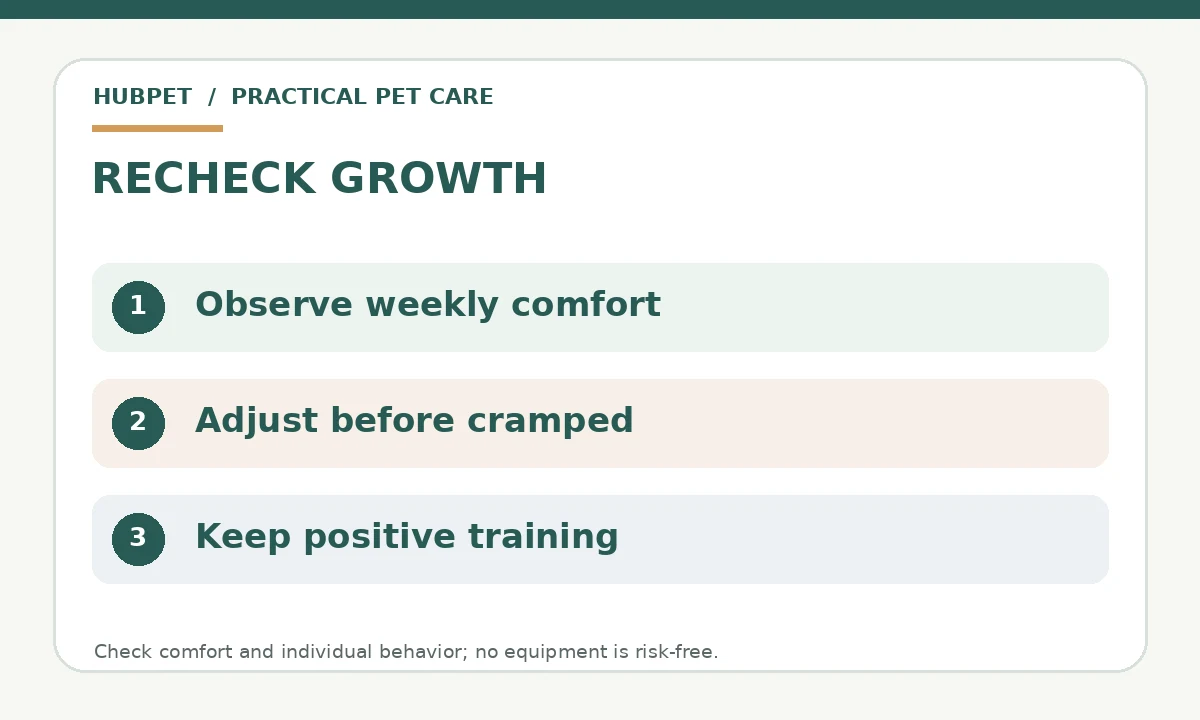
Once a week, inspect panel attachments, joints, the floor tray, and the puppy’s current resting posture. Record when you moved the panel and why. Check the door latch after every adjustment and clean the panel according to the manufacturer instructions. However, do not let measurements replace observation: the puppy may express discomfort before the space looks visibly small. Stop use if hardware bends or if the animal shows persistent panic. This small written checklist helps everyone maintain the same safe setup without guessing which hook position was used before.
How We Research
Our editorial team compared current dog welfare, crate-selection, and humane training guidance with the equipment problem in this guide. The review distinguishes sourced safety principles from practical inspection prompts. No specific products were tested, and this guide does not claim a crate prevents injuries or suits every dog. Sources were checked on October 27, 2026. Learn about our process on the About HubPet page. For distress, injuries, or medical questions, consult your veterinarian.
Sources
Cornell University College of Veterinary Medicine: Dog crates: when to use them and how to pick one. Reviewed October 27, 2026.
American Kennel Club: A beginner’s guide to crate training. Reviewed October 27, 2026.
Humane World for Animals: How to crate train your dog or puppy. Reviewed October 27, 2026.
ASPCA: Separation anxiety and confinement. Reviewed October 27, 2026.
A divider may define a comfortable sleeping zone in a larger crate, but regular bathroom breaks and positive training remain necessary. Never shrink the area until the puppy cannot turn.
That is one practical option when the manufacturer provides a compatible adjustable panel. Fit the puppy now and confirm that the larger crate can suit adult size.
Adjust based on the puppy’s current posture and growth, not a fixed schedule. Recheck the mounting points and latch after every move.
Avoid makeshift attachments that create chewing, snagging, or release hazards. Use the hardware specified for the model or replace the unsuitable divider.
No. Puppy bathroom needs and welfare limits do not change because a divider exists. Arrange timely breaks and seek veterinary advice for persistent problems.