
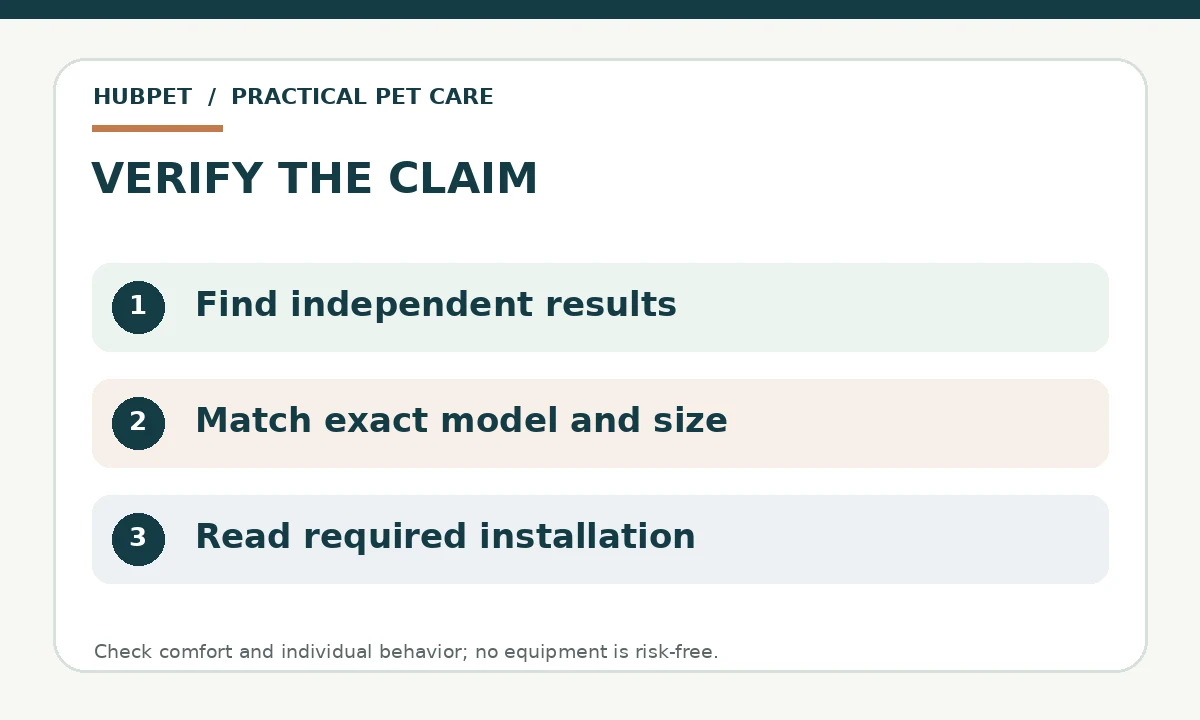
Judge a crash-tested dog car harness by documented performance, not a reassuring label on a shopping page. A manufacturer may describe a test without explaining its method, impact conditions, pass criteria, or evaluated sizes. Center for Pet Safety (CPS) publishes independent certification information, but certification applies to specified products and configurations. The correct setup also depends on the dog and the vehicle. This article explains how to inspect those facts before purchase. For injury or health concerns, seek veterinary advice; see the HubPet veterinary disclaimer.
Understand the difference between tested and certified
The phrase “crash tested” does not tell you whether a harness passed an established performance threshold. Ask who conducted the test, whether results are available, and what device represented the dog. Independent certification is stronger evidence than a brand statement alone, but it is not a promise that no injury could happen. CPS uses test dogs made to simulate animal weight and evaluates the restraint system. Check the current CPS Certified Products directory for the exact model rather than assuming that every product from a familiar brand shares the same results.
Match the certificate to the exact size
Manufacturers often sell several sizes under one product name, and safety testing may specify a weight range or approved configuration. Read the model page and record the weight limits associated with your dog’s size. A harness that looks alike in a different size can have different strap routing or buckle dimensions. Before buying, compare the dog’s current weight and body measurements with both the size chart and any certification limits. If the dog falls between sizes, contact the manufacturer for fitting guidance rather than improvising extensions or combining components from two harnesses.
Treat installation instructions as part of the restraint
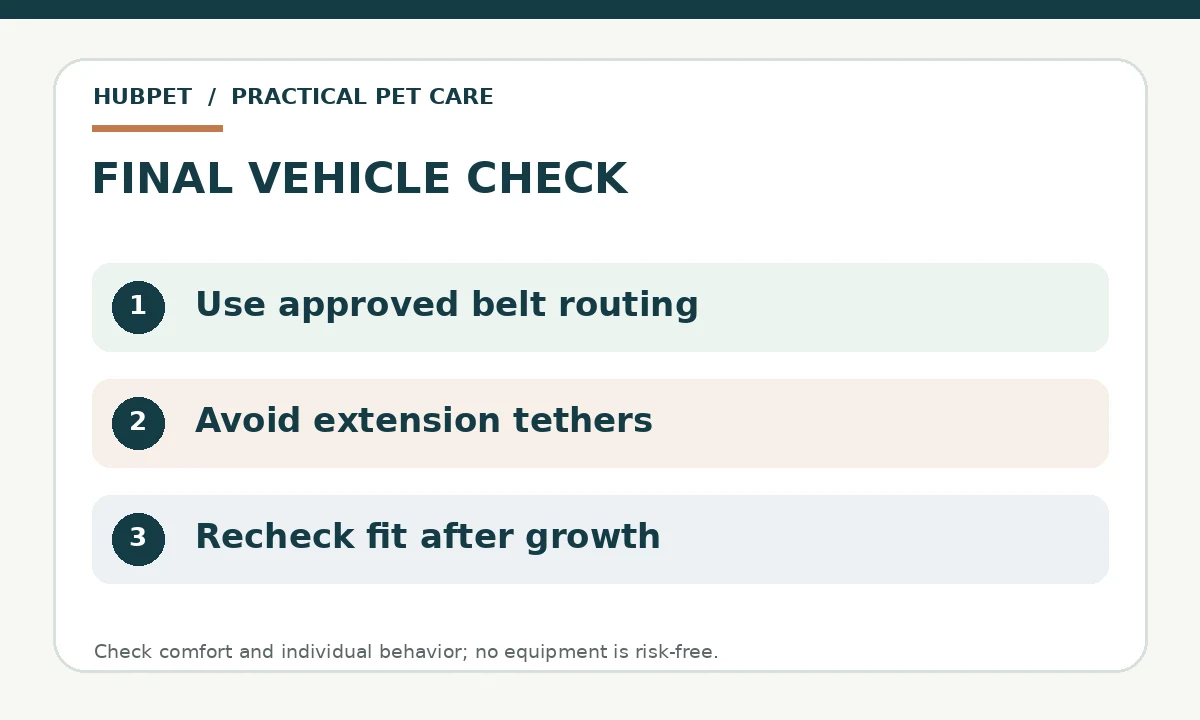
The vehicle seatbelt path is not an optional detail. Some approved harness systems require the car belt to pass directly through designated loops; others specify a defined attachment process. Never add a separate tether simply because it is convenient. CPS warns that extension tethers and zipline-style accessories can increase motion and negate the benefit of an otherwise tested harness. Keep the model instructions in the glove compartment, and review them before a borrowed vehicle or a change of seating position. If the connection will not work as specified, select another verified travel arrangement.
Check body fit without forcing the dog
Fit the harness in a stationary car while the dog feels calm. Position the chest panel as directed and smooth twisted straps. The dog should breathe normally, sit or lie comfortably, and move the shoulders without a strap cutting into the armpits. Check how the buckle sits when the belt is routed. A dog who freezes or struggles during fitting needs a slower introduction, not tighter straps to stop movement. Inspect contact points again after a short practice ride, especially for a broad-chested or still-growing dog.
Use the rear seating area thoughtfully
CDC and ASPCA recommend restraining a dog in the back seat rather than allowing free roaming near the driver. Check the vehicle manual for seatbelt use and keep the dog away from active front airbags. Position the animal so the restraint does not cross hard trim, hot surfaces, or objects that could strike during sudden braking. A seat cover may protect upholstery but does not replace the harness. Remove loose heavy items from the same space. An apparently comfortable dog can still become a distraction or projectile if the actual connection is missing.
Compare the system, not only the harness fabric
Soft padding may reduce rubbing during routine driving, but fabric thickness alone cannot establish impact performance. Focus on the full system: webbing, buckles, sewn connections, required seatbelt routing, and whether the manufacturer publishes maintenance instructions. Inspect for damaged stitching, cracked plastic, or bent hardware. Avoid using a harness with unknown crash history, and contact its manufacturer after any collision for replacement guidance. A lifetime warranty or dramatic product video should not be mistaken for evidence of crash protection.

Introduce car use in small steps
Practice wearing the harness indoors first, with rewards for voluntary cooperation. Next, fit it in a stationary vehicle while keeping sessions brief. Then make a short calm drive, followed by a preferred activity, before planning longer travel. Watch for drooling, frantic panting, vomiting, repeated escape attempts, or sustained distress. These signs merit a change of plan; a veterinarian can assess motion sickness or anxiety. Training improves tolerance but cannot compensate for an unsafe harness or incorrect seatbelt connection.
Check cleaning and replacement limits
Read washing directions before the first trip. Heat, solvents, excessive machine agitation, or harsh disinfectants can damage components, even when the fabric looks unchanged. After cleaning, inspect each latch and recheck the fit. If webbing has frayed, a buckle sticks, or the label identifying the model has faded, ask the manufacturer whether replacement is required. Keep an image of the purchase receipt and model instructions. This simple documentation makes it easier to check recalls, confirm matching accessories, and avoid buying an unverified replacement later.
Understand the limits of safety evidence
Crash test conditions reproduce specific scenarios; they do not model every direction of impact, vehicle interior, or animal posture. A certification listing supports a defined claim within its published scope, not complete injury prevention. The same limitation applies to marketing claims that a seat or booster is “safe” simply because a dog stays in it. Vehicle design also matters. Choose a well-documented restraint with correct fit and installation, and keep realistic expectations about what a laboratory result can prove.
Use a five-part shopping decision
Before paying, verify the precise model on a recognized independent directory, check the tested size range, measure the dog, read the full installation instructions, and confirm the vehicle connection is possible. Reject listings that blur a crash-tested component with an untested add-on. At home, practice a stationary fit with rewards. If your dog cannot tolerate the arrangement, investigate a compatible tested crate or carrier rather than forcing the animal to remain distressed. Record your decision so you can revisit fit as the dog grows.
How We Research
Our editorial team compared current pet travel, vehicle restraint, and safety-testing guidance with the specific shopping question in this guide. The review distinguishes sourced safety principles from practical inspection prompts. Our team did not test specific products, and this guide does not claim any car accessory prevents injuries or fits every dog. Our team reviewed source pages on October 27, 2026. Learn about our process on the About HubPet page. For distress, injuries, or medical questions, consult your veterinarian.
Sources
Center for Pet Safety: CPS Certified Products. Reviewed October 27, 2026.
Center for Pet Safety: Harness crash-test study findings. Reviewed October 27, 2026.
Center for Pet Safety: Extension tether safety advisory. Reviewed October 27, 2026.
Centers for Disease Control and Prevention: Pet travel safety. Reviewed October 27, 2026.
ASPCA: Travel safety tips. Reviewed October 27, 2026.
Not necessarily. Look for an independent result and the exact model and size; a manufacturer can use the phrase without showing a pass result.
Not unless the certification and manufacturer instructions specifically allow it. CPS advises against extension tethers because they can undermine crash performance.
Only if that particular harness is designed and appropriately evaluated for vehicle restraint. Many walking harnesses lack travel-test evidence.
Not automatically. Upholstery support and elevation are different from independently documented crash performance.
Check before each journey and again after weight changes, growing phases, cleaning, or component replacement.