
This article provides general product-selection and home-feeding safety guidance, not veterinary diagnosis or treatment. Ask your veterinarian about changes in appetite, trouble eating, swallowing symptoms or feeding adjustments needed for a medical condition. See our veterinary disclaimer.
A dog that sneaks cat food can turn mealtime into a chase around the house. A dog-proof cat feeding station should solve that access problem without making the cat eat in a cramped box or jump to a precarious shelf. The first choice is often environmental rather than electronic: a separate room, a suitable pet gate, or a protected feeding zone. VCA explains that dogs and cats have different nutritional needs, so their everyday diets should not be exchanged. The goal is calm access to each animal’s own food. Work from the cat’s comfort and the dog’s reach, and choose a setup that is simple to supervise and clean.
Start by observing which pet crosses the boundary
Does your dog push past the cat while food is served, reach a shelf with front paws, or nose into a bowl left out all day? Does the cat leave because the dog watches from the doorway? These patterns tell you which barrier matters. A station that physically blocks the dog’s muzzle may still be poor if the cat must squeeze through an unfamiliar flap while frightened. Observe at a quiet meal and write down access points, escape routes, and whether the cat eats comfortably. Keep the dog separated while you inspect the layout; do not stage a tempting situation to see whether the dog steals food. If either pet guards bowls, use separate rooms and ask a qualified professional about the tension.
Choose a room boundary before choosing furniture
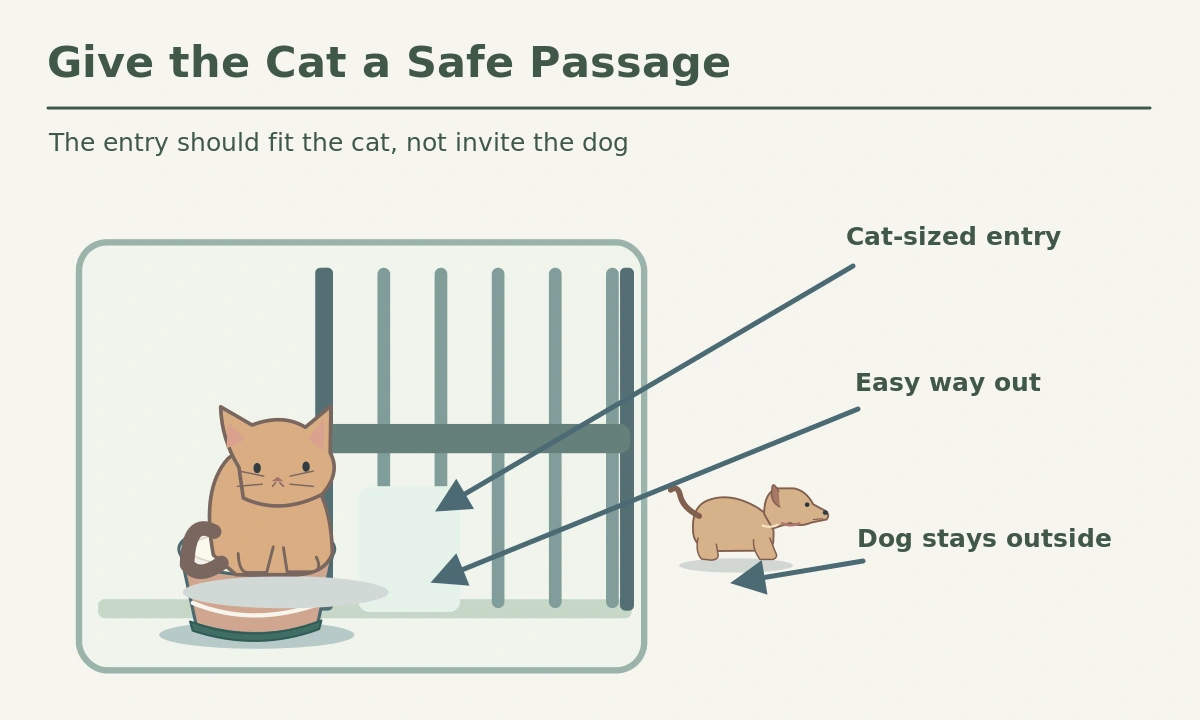
A door or pet gate can create a protected feeding area that contains the cat’s bowl on the floor. A cat-size opening may work when the cat easily passes and the dog cannot follow, but verify the actual animal sizes. Small dogs may fit through gates advertised for cats, while larger cats may dislike narrow passages. Check bar gaps, hardware, latch strength, sharp edges and the risk of getting a collar caught. Never leave a young pet unsupervised with a gate that permits climbing or snagging. An ordinary closed door with scheduled meals is often safer than a complicated enclosure. Make sure the cat has water and a comfortable way to leave after the meal.
Measure the cat’s entrance and exit, not just the bowl
A cabinet-style station may look spacious from the outside but have a small door and limited turning room inside. Measure usable opening width and height while allowing the cat to move through without crouching sharply or rubbing whiskers against hard corners. Ensure there is light, ventilation and no moving panel that could trap the animal. Ideally, the cat can turn around or use a second clear exit if the room is shared; do not make a food box with a single blocked escape path. Older or less mobile cats may need floor-level access without jumping. If the cat pauses, backs away, or stops eating when the station changes, make the entrance easier rather than carrying the cat inside.
Evaluate raised locations for stability and safety
A counter or shelf may put food above a dog’s nose, but height alone is not protection. Some dogs can jump, and a bowl near an edge may fall. A cat must also reach the space without a risky leap onto slippery furniture. If you use a broad, stable elevated platform, provide a secure route and enough landing room for all four paws. Keep dishes back from the edge and avoid placing the station beside cords, hot appliances or open windows. Do not encourage an elderly or painful cat to jump to earn a meal. A separate floor-level room is usually easier to adapt for changing mobility. Supervise the new layout before leaving it in routine use.
Compare a gate, a feeder, and an enclosed station
A gate separates a whole area and can work for scheduled feeding, but it needs secure installation and a cat-friendly passage. A microchip or RFID feeder may limit access at the bowl itself; however, its lid and sensor cannot prevent every dog from crowding the cat. Check manufacturer instructions and acclimate the cat to movement and sound. An enclosure hides the bowl but can trap odors and reduce visibility, especially when the entrance faces a busy hallway. None of these designs automatically stops a persistent dog or makes cats comfortable. Match the solution to the actual traffic pattern. In a two-cat household, one narrow entrance can also create blocking between cats.

Plan meals so dishes do not become unattended bait
When possible, feed pets in their own spaces and remove bowls after the meal rather than leaving attractive food within the dog’s reach. Follow the feeding schedule and portion directions for each pet. VCA notes that cats and dogs have different nutritional requirements; routine access to the other species’ food can upset a balanced plan. Clean food bowls after each meal and water bowls daily, consistent with FDA guidance. If a pet needs access to food throughout the day for a medical reason, consult the veterinarian about a safe arrangement. Avoid sudden changes in diet or food availability just to make a barrier work. A predictable routine reduces rushing and the number of opportunities for theft.
Introduce the new feeding place gradually
Move the cat’s dish only as fast as the cat is comfortable following it. Begin with the feeding area open and quiet; offer a familiar meal or a few pieces of the normal diet near the entrance. Let the cat enter and leave on its own. If a new flap, lid or gate moves, first allow the cat to explore it while it stays still, then add motion gradually. Keep the dog separated during practice, rather than using the dog as a distraction. Reward calm, voluntary approaches without luring the cat into a tight space. If the cat eats less, avoids the area, or appears distressed, step back to a simpler arrangement and talk with a veterinarian about ongoing appetite changes.

Do a final safety and hygiene walk-through
Stand at the dog’s level and check whether a muzzle or paw can reach through a gap. Stand at the cat’s approach and check visibility, turning space, exit path and floor grip. Lift the dish to see whether you can wash it daily without dismantling the station. Inspect latches, gates and shelf supports, and remove dangling cords or chewable foam strips. Keep the feeding area separate from litter and strong household cleaners. Recheck access as pets grow or mobility changes. If the barrier makes either animal feel trapped or sparks conflict, stop using it and choose a simpler separation. A successful dog-proof station means both pets eat calmly and the cat always has a safe way out.
How We Research
We reviewed original public guidance from VCA Animal Hospitals, FDA, CDC. Food-contact hygiene recommendations were compared with the practical constraints of the selected bowl design. We conducted no laboratory material tests, live product fit trials or independent certifications. Where the topic involves an individualized health question, we distinguish it from equipment selection and direct readers to a veterinarian. Our diagrams explain what to inspect on common designs; they do not represent a specific product model. More about the editorial process appears on About HubPet.
Sources
VCA Animal Hospitals, Feeding Multiple Pets. Read the original guidance.
FDA, Proper Storage of Pet Food & Treats. Read the original guidance.
CDC, About Cleaning and Disinfecting Pet Supplies. Read the original guidance.
Safety note: Follow your pet food instructions and the bowl manufacturer’s care directions. Replace damaged parts that could cut or trap pets, or that pets might swallow. Call a veterinarian about persistent eating changes, repeated choking or gagging, discomfort, or problems that require individual medical advice. Do not assume that a feeding device can prevent a health emergency.
Not necessarily. Dogs may jump or reach with their paws, and the cat needs a stable, accessible route. A separate room can be safer.
No. Measure the real opening and the individual cat’s mobility. Avoid narrow gaps, sharp edges, collar snags and blocked exits.
It may limit access to a bowl, but it does not prevent every dog from crowding or overturning the unit. Supervise and follow its instructions.
Not as a default. Older, painful or less mobile cats may need floor-level feeding in a room the dog cannot enter.
Return to an easy, familiar feeding spot and introduce the station gradually. Contact a veterinarian if appetite drops or avoidance persists.