
This article gives general home setup and pet-product advice, not medical diagnosis or treatment. If your cat is straining, unable to urinate, in pain, or suddenly avoiding the litter box, seek prompt veterinary care. See our veterinary disclaimer.
A curious dog may approach the tray, eat waste, or scatter litter. This can make the cat feel unsafe while toileting. A dog-proof cat litter box area should separate access without trapping the cat behind a tight entrance. Start with a secure barrier and a cat-access route. Avoid cramped covered boxes and products that simply promise to keep dogs out. Consider dog size, cat mobility, household traffic, and cleanability together. Ask your veterinarian about repeated stool-eating or other concerning behavior. This guide addresses the physical environment only.
Watch where the dog reaches the litter area
Before buying a gate, identify the actual entry path. Does the dog approach from a hallway, wait near the box after meals, or squeeze behind furniture? Is the cat forced to pass the dog to reach its toilet? An enclosure may hide the litter from view but not stop a determined dog if the opening is large enough. Do not scold the dog at the tray while the cat uses it. The noise can stress both animals. Use management to prevent access and teach calm behavior separately with reward-based methods. Keep the cat’s established tray available while you test a protective setup.
Choose a barrier that truly limits dog access
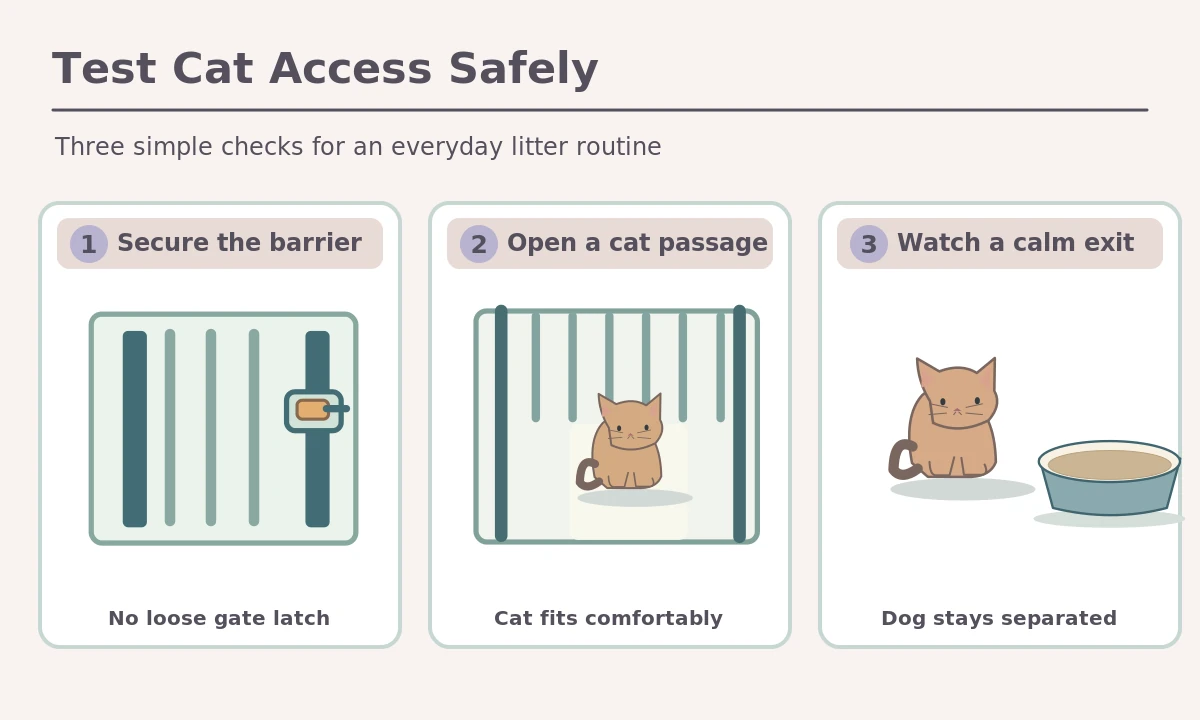
A secure pet gate can divide a room. The cat still needs a comfortable opening or another safe route. Measure the dog’s shoulder height, chest width, and reach, rather than trusting a label such as small-dog-proof. Follow the gate maker’s installation instructions. Pressure gates do not suit every site, and stair locations need special care. Check that the dog cannot push the gate over or reach the tray through its bars. Remove projecting hardware that could catch a collar. Never leave a door with a loose latch as the only separation. Watch how the pets move around the gate before relying on it.

Preserve two-way access and an escape path for the cat
A cat may enter a narrow enclosure but still feel trapped. This happens when a dog waits at its only opening. Cats Protection emphasizes safe, quiet litter sites and accessible exits. Provide enough free space that the cat can turn, pause, and walk away without pushing past the dog. An elevated jump or tall gate may not work for kittens or older cats. Mobility limitations can make it harder still. Try a floor-level cat opening that excludes the dog. Check that no paw or head can become stuck. Do not construct a small hole with rough wood or exposed screws. Test the exit while you keep the dog calmly separated elsewhere.
Place the tray beyond reach, not just out of sight
A box placed immediately beside a gate may remain within a dog’s muzzle or paw reach. Set it farther inside the protected area, on level flooring, with a comfortable approach for the cat. Keep the tray large enough for a complete turn; an undersized box is not a fair trade for dog prevention. Do not put an ordinary litter box on a shelf. Only consider a maker-approved elevated setup with safe cat access. Lifting the toilet increases fall risk and may create a balance problem for an older cat. Pick a quiet room away from food and water with an unobstructed route for daily scooping.
Compare an open cat passage with a single tight box opening
A low cat passage can keep the dog out of a separate room. The cat can then use an ordinary open tray. A tight cabinet with one small hole can concentrate odor and give a waiting dog control over the exit. Some cats do prefer enclosed spaces, but the key is that the cat can enter and leave willingly. Avoid self-closing pet flaps that might strike the cat or become hard to push. Never use neck straps or tethers to keep a pet near a litter station. A large athletic dog may jump a short gate. Choose a securely installed barrier or another room. Do not improvise an unstable high fence.

Keep litter and cleaning materials out of reach
Scoop at least daily and remove waste in a closed bag. The CDC recommends daily litter changes as a preventive measure for toxoplasmosis and thorough handwashing after cleaning. Do not leave open trash, cleaning chemicals, or plastic bags beside the gate where either animal can reach them. Call a veterinarian if the dog eats feces, litter, or a liner. Report vomiting, straining, pain, or unusual behavior if present. Avoid inducing vomiting or giving home remedies without veterinary instructions. For the cat, maintain a predictable cleaning routine so the barrier does not create a neglected, odor-heavy toilet corner.
Test the setup during normal household movement
Observe a calm cat visit while you keep the dog elsewhere. Then check whether the gate stays shut during everyday errands. Is there enough clearance for opening the gate without tipping the box? Do children understand that the divider must stay latched? Can the cat pass without a collar snagging? Try a safe barrier that permits people to clean without climbing awkwardly over sharp edges. The protection is only as strong as its daily routine. A frequently open barrier offers little benefit, even if it looks secure in a product photo. Keep the dog occupied with appropriate enrichment outside the litter area.
Know when equipment is not the full solution
If the dog repeatedly seeks cat waste, ask a veterinarian about diet, illness, and behavior. Avoid guessing at causes. If the cat avoids the protected box, check the exit, odor, and litter type. Watch whether the dog waits nearby. Provide another accessible tray while adjusting the layout. Do not punish either animal for normal investigation or accidents. Where cats and dogs have tension, consult a qualified force-free trainer. A veterinary behavior professional can also plan safe separation. A successful dog-proof litter zone is not simply a locked-away tray. It is a reliably clean and easy-to-reach toilet for the cat, with a stable barrier the dog cannot bypass.
How We Research
We reviewed original welfare and veterinary information from Cats Protection, Best Friends, CDC. We compared its guidance on litter box dimensions, location, cat access, and hygiene to the practical limitations of the layouts described here. Our figures illustrate common tray and room designs rather than a specific commercial product, and we do not claim independent laboratory tests or veterinary diagnosis. Readers should verify manufacturer instructions for individual materials and home fixtures. For more information about our approach, see About HubPet.
Sources
Cats Protection, Cats & Toileting. Read the original guidance.
Best Friends, Cat Not Using Litter Box. Read the original guidance.
CDC, Preventing Toxoplasmosis. Read the original guidance.
Safety note: Keep litter waste away from children and dogs, wash hands after handling dirty litter, and follow the litter manufacturer’s disposal directions. Ask a veterinarian about a sudden change in your cat’s elimination, painful or frequent attempts to urinate, or other concerning signs. Do not use a new box or barrier as a substitute for clinical advice.
Use a securely installed barrier or separate room that blocks the dog yet preserves comfortable two-way cat access.
No. Many dogs can still reach through a lid opening, and covers can trap odor or restrict the cat’s escape.
Some can, but jumping should not be the only route for kittens, senior cats or cats with mobility limitations.
Set it on level flooring beyond the dog’s reach, with full turning space and a visible path out for the cat.
Call your veterinarian for individualized advice, especially if symptoms occur. Do not use improvised treatments or induce vomiting.