
Guillotine dog nail clippers work differently from ordinary plier-style tools: the nail enters a ring-like opening and one blade slides across it. That mechanism looks tidy, but it can conceal the cut line and put pressure on a nail if the blade is dull or the opening is the wrong size. Veterinary advice is not unanimous about preference: one VCA nail-trimming guide describes both styles as potentially effective, while its handling guide recommends avoiding guillotine designs because they may crush rather than cut. Understanding that distinction helps you make a careful choice instead of assuming every style is interchangeable.
Visualize the moving blade before buying
Hold an unpowered, empty guillotine clipper against a light background and slowly operate its handles. The blade moves across a fixed hole, closing the opening. Unlike a two-edge plier design, you cannot place the nail freely between two separate cutting surfaces. Once the claw has entered the hole, it may be harder to see precisely how much extends beyond the blade. The shape also requires you to approach the nail from a suitable direction. Practice the mechanism on a straw away from pets so you understand the travel before considering actual nail care.
Check whether the aperture truly fits
The hole must allow a curved nail to enter without scraping, wedging or forcing the toe sideways. A narrow opening can press on a thick nail before the blade reaches it. A very generous ring may be hard to position precisely around a small nail. Examine claws individually, including dewclaws, instead of assuming a single tool fits all toes. Ask for the inside opening measurement if the listing shows only an overall length. When you cannot see the intended tiny tip clearly in the opening, select a different design rather than adjusting the dog’s foot awkwardly to accommodate the tool.

Understand why veterinary recommendations differ
A VCA article about trimming dogs’ nails explains how both scissor and guillotine styles can work and notes that handlers develop preferences. A separate VCA guide on nail handling recommends plier or scissor clippers, warning that a single guillotine blade can crush rather than slice. PetMD also quotes veterinary concerns about the difficulty of judging placement. Those are practical reasons to favor a sharp two-blade design when you are learning. A previous owner’s success with one mechanism does not mean it is ideal for your dog, especially when nails are dark, thick or sharply curved.
Inspect the blade for dragging and misalignment
A healthy blade should travel smoothly across the opening without visible skew. Look for nicks, rust, burrs and looseness around the sliding mechanism. Some designs accept a replacement blade; confirm the correct replacement type and follow manufacturer instructions rather than forcing a generic part into the track. Do not keep squeezing if the blade sticks during a practice cut. Crushing or twisting can hurt an animal even when you avoid the quick. Remove any tool from service if the mechanism requires jerking, catches on a dry test item, or leaves an obviously uneven cut.
Watch the cutting line, not the handle position
The amount that enters the circular opening matters more than how far the handles travel. Do not thread a long length of nail through the hole and assume a backing plate will locate the quick. On pale nails, the quick may be visible, but its tapered tip can still be hard to judge. On dark nails, stay with the very end and ask for help when visibility is uncertain. Trimming slowly and inspecting after each small action is safer than trying to remove an entire curve in a single squeeze. The clipper should not dictate the amount you cut.

Keep the dog comfortable during positioning
Ask your dog to offer a paw on a nonslip mat and reward a moment of stillness. Bring the open tool near the nail for a brief rehearsal, then release the paw. Avoid twisting the elbow or pulling the leg away from the dog’s natural posture just to align the clipper aperture. If the dog repeatedly withdraws, growls or stiffens, pause the task. VCA’s cooperative handling exercises encourage gradual practice with the equipment sound and touch. A tool you can operate only while restraining the dog more tightly is likely a poor choice for that animal.
Compare against a two-blade plier clipper
With sharp plier-style cutters, the jaws can approach an exposed tip from a more flexible angle. That can make it easier to see the small portion being removed, particularly on a nail with an awkward curve. The drawback is that large handles may be difficult for small hands, and an oversized jaw may still hide the cut line. Try each mechanism without touching the dog before comparing control. Favor the one that aligns easily, closes predictably and leaves a clear view. If neither one works comfortably, consider a manual file or a carefully introduced grinder instead.
Make maintenance and cleaning part of the decision
A guillotine track can collect debris where the blade slides. Follow its cleaning instructions after use and store the tool with the blade protected. Do not submerge electric or lighted versions unless the manufacturer explicitly allows it. Inspect a replacement blade after installation with the tool empty. Check for accidental opening in storage around children or pets. Cheaper tools are not a bargain if the only practical solution to a dull blade is continued squeezing. A predictable edge and clean movement are more valuable than a decorative finish or a crowded accessory kit.
Know when not to experiment at home
Avoid testing either clipper style on a cracked, torn, infected or pad-penetrating nail. A dog in pain may react suddenly even if usually calm. Ask a veterinary team to examine the foot and advise on safe care. Likewise, very overgrown nails may have a long quick that prevents a large one-time correction. Seek instruction before trying to shorten them aggressively. Keep a simple log of the dog’s tolerance and which tool angle feels natural; repeated discomfort, pinching or a poor cut should end the experiment rather than become a training goal.
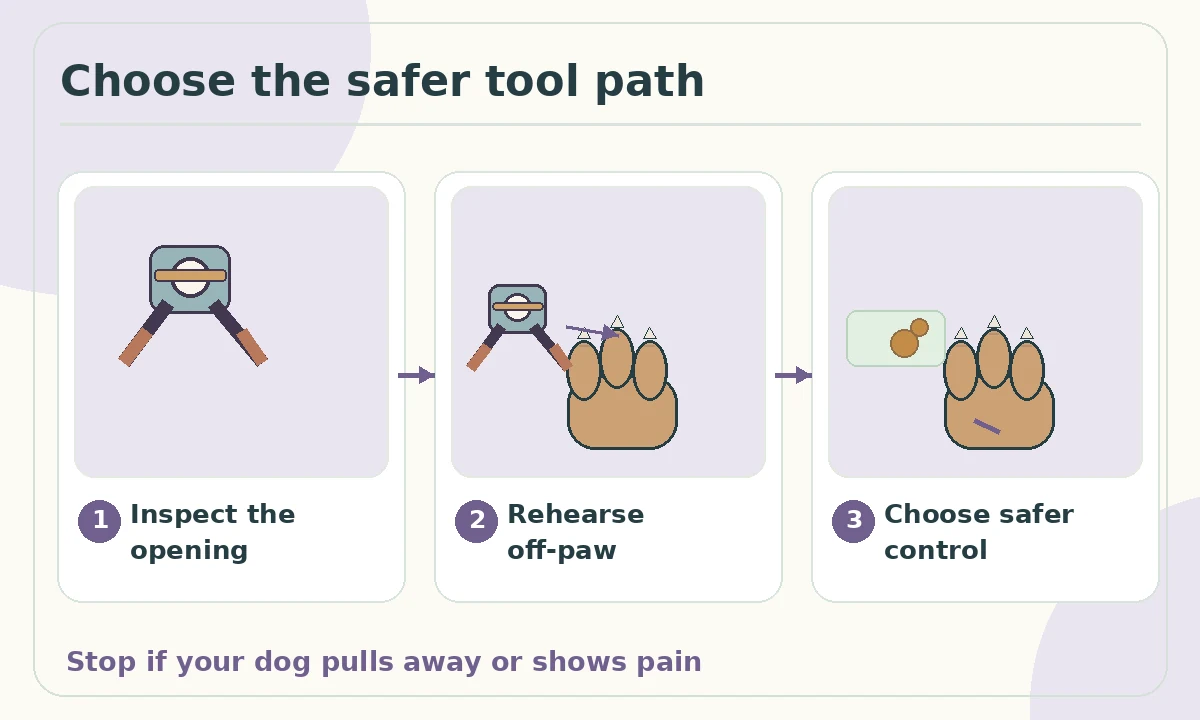
Choose the least complicated reliable option
If you are still comparing guillotine dog nail clippers with other options, make a list of four requirements: clear view, sharp edge, easy angle and calm handling. Test how the tool opens, closes and returns without involving your dog. Picture the actual curved claw you need to reach, not a straight sample in a promotional photograph. No mechanism carries a guarantee against cutting the quick. Many beginners find a well-fitting two-blade clipper easier to control, and a professional demonstration can settle the choice more effectively than a product rating.
How We Research
This independent guide reviews practical fit, handling, and tool safety rather than ranking products by unverified marketing claims. We cross-checked recommendations from veterinary sources and cooperative-care teaching materials that address guillotine dog nail clippers. Our comparisons focus on features a reader can examine, the limitations of protective accessories, signs to stop, and ways to introduce the equipment with rewards. Illustrations are explanatory artwork, not photos of tested products. We did not conduct product trials, measure noise in a laboratory, or examine individual animals. Read About HubPet for our editorial approach.
Sources
VCA Animal Hospitals, How to Trim a Dog’s Nails: Source guidance. Reviewed October 27, 2026.
VCA Animal Hospitals, Handling Exercises for Trimming Nails and Brushing Teeth: Source guidance. Reviewed October 27, 2026.
PetMD, How To Trim Dog Nails: Source guidance. Reviewed October 27, 2026.
Dogs Trust, How to Clip Your Dog’s Nails: Source guidance. Reviewed October 27, 2026.
Safety note: Never force a frightened dog to accept nail care. Stop for bleeding, a split or embedded nail, significant pain, or uncertainty about the quick; ask a veterinarian or experienced groomer for hands-on help. This article is general information and not a veterinary diagnosis. See our veterinary disclaimer.
The nail enters a fixed opening while one moving blade slides across to cut the exposed portion.
No. Some veterinary resources caution that the single blade can pinch or make placement difficult.
Only if the opening and blade fit smoothly without forcing the nail. A sturdy two-blade tool may offer better control.
Some models allow it. Use only the correct part and follow the maker’s directions.
Do not guess. Use a better-fitting tool or ask a veterinary professional to demonstrate the technique.