
Thick, curved nails can make a small clipper feel awkward, but buying the biggest tool on the shelf may create a different problem. Large dog nail clippers should fit the actual nail, open smoothly, and let your hand make a deliberate, limited cut. A strong spring cannot compensate for blunt blades or a handle you cannot stabilize. Use this guide to inspect the jaw, test a tool without touching your dog, and decide when a veterinarian or groomer is the safer choice. Nail care should be slow and cooperative, not an exercise in holding a powerful dog still.
Start by looking at nails, not breed charts
Large dogs do not all have identical nails. Examine several toes while your dog is relaxed: the thickness, curve, and accessible tip may change from toe to toe, and a dewclaw can point in another direction. A product labeled for large breeds may have a generous handle yet a narrow cutting gap. Compare the widest nail you can safely access with the tool’s published opening; if the manufacturer does not give that information, ask for a clear close-up of the open jaws. A larger handle has value only when the cutting end fits and remains visible.
Choose a controlled cutting jaw
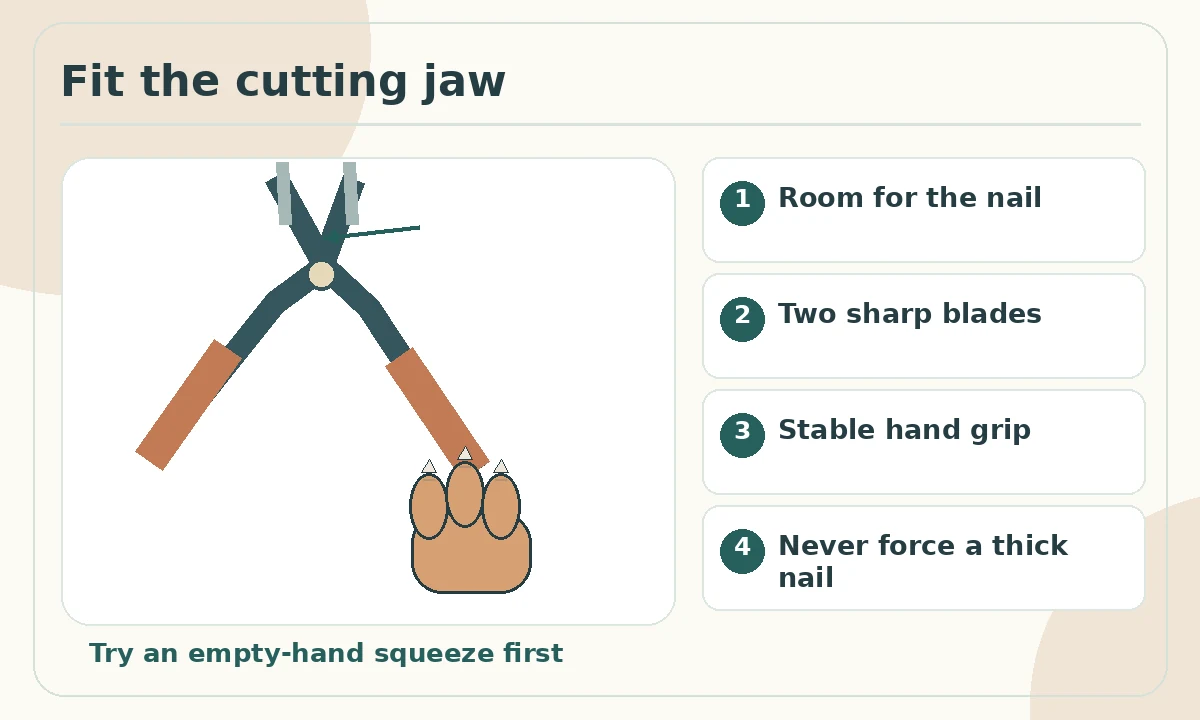
Plier-style tools usually bring two blades together around a nail, while some scissor-style versions use smaller notched cutting edges. PetMD describes sturdy plier clippers as a common option for thicker nails. Whichever design you consider, open the tool fully and check that the nail would sit between the cutting edges without being shoved sideways. You should still see the end you intend to remove. An excessively wide jaw can obscure your view and tempt you to take a larger slice than necessary. Visible access matters more than a marketing claim about extra power.
Test the handles with the tool empty
Put the clippers in your normal trimming hand before introducing them to a dog. The grip should let you close the jaws with a gradual squeeze while keeping your wrist close to neutral. Very long or slippery handles can make small adjustments difficult if your palm is narrow. A smooth spring return is helpful only when it does not bounce the handles apart or require an awkward reach. Practice opening, placing and closing the tool on a dry piece of uncooked pasta away from your pet. Any twisting, sudden jolt or painful pinch in your hand is a reason to try another size.
Inspect sharpness and fasteners before every session
Look along the cutting edges under a lamp. Dull, chipped, misaligned or rusty blades may squeeze a thick nail instead of making a clean cut. The pivot should not rattle, and the jaws should meet evenly when closed. A safety latch can prevent accidental opening in storage, but it is not a substitute for controlled use. Keep clippers dry and secure between sessions. Never test a suspect blade on your dog’s toe. Replace a damaged cutting tool, and follow the manufacturer instructions for any blade maintenance rather than improvising a sharpening method on an assembled clipper.
Understand what a guard cannot tell you
Some large clippers have a metal stop plate behind the blades. It can limit how far a nail extends, but it does not locate the living quick inside that individual nail. Quick length varies, and VCA notes that the quick may extend close to the end of a very long claw. Treat the guard only as an optional positioning aid, and move it away if it blocks your view. Never make a full-depth cut merely because a built-in stop permits it. The safe stopping point comes from inspecting each nail and removing only a small amount.

Prepare a nonslip workspace and a cooperative dog
Set out treats, adequate light, a clean towel and the selected tool before inviting your dog to the area. Ask for a paw briefly, reward the choice to remain, and release it before the dog pulls away. Practicing this separately from trimming reduces pressure on both of you. VCA recommends gradual handling exercises that let a pet build comfort with the sight, sound and sensation of the equipment. A frightened, stiff or repeatedly withdrawing dog needs a break, not firmer restraint. Consider having a professional demonstrate comfortable paw support for your particular dog’s size.
Make the first trim intentionally small
Look closely at the end of one nail and decide whether you can confidently identify a tiny outer tip to remove. For pale nails, the quick may show through the shell; for dark nails, visibility is less reliable. Place the tool without bending the toe and remove only a very small sliver. Then stop, examine the freshly exposed surface and reward your dog. Do not chase a cosmetic shape in one session. The American Kennel Club emphasizes gradual progress and the relationship between a long quick and a long nail. If you cannot determine a safe position, stop and ask for a hands-on demonstration.
Know the warning signs that end a home session
A split nail, bleeding, swelling, intense paw sensitivity or a claw curving into a pad changes this from an ordinary tool-selection task. Do not try to fix these problems by squeezing harder or cutting near the base. Call a veterinary practice for advice. If a minor accidental trim causes bleeding, stop and follow your veterinarian’s guidance about a pet-appropriate styptic product; persistent bleeding warrants prompt care. For a dog who lunges or panics, schedule low-stress professional help rather than attempting to overpower the reaction. Your dog’s comfort is part of the outcome.
Use a small purchase checklist, not a star rating
Before buying, write down the nail diameter or comparable reference, your hand size, the need for a clear cutting view and the ease of cleaning. In a store, operate the handles several times without an animal present. Ask whether replacement parts are available and read real returns information. Claims such as heavy-duty, safety-stop and ergonomic do not have uniform meanings. A modest, sharp pair that gives you precise control may serve a large dog better than a bulky clipper with oversized jaws. Keep a professional option in reserve if the fit remains doubtful.

Review the tool after a few calm sessions
After several brief sessions, check whether the tool slips, leaves rough edges or demands excessive hand force. The dog should be able to step away between attempts without losing access to praise or rewards. If you repeatedly need to regrip the nail or cannot see the cut line, revisit the jaw design. A grinder or manual file may help refine a sharp edge, but those options have their own training and handling requirements. The goal is comfortable maintenance over time, not to finish every nail by a deadline or justify a purchase that feels wrong.
How We Research
This independent guide reviews practical fit, handling, and tool safety rather than ranking products by unverified marketing claims. We cross-checked recommendations from veterinary sources and cooperative-care teaching materials that address large dog nail clippers. Our comparisons focus on features a reader can examine, the limitations of protective accessories, signs to stop, and ways to introduce the equipment with rewards. Illustrations are explanatory artwork, not photos of tested products. We did not conduct product trials, measure noise in a laboratory, or examine individual animals. Read About HubPet for our editorial approach.
Sources
VCA Animal Hospitals, How to Trim a Dog’s Nails: Source guidance. Reviewed October 27, 2026.
PetMD, How To Trim Dog Nails: Source guidance. Reviewed October 27, 2026.
VCA Animal Hospitals, Handling Exercises for Trimming Nails and Brushing Teeth: Source guidance. Reviewed October 27, 2026.
American Kennel Club, Good Grooming: Improve Your Dog’s Nail Care Routine: Source guidance. Reviewed October 27, 2026.
Safety note: Never force a frightened dog to accept nail care. Stop for bleeding, a split or embedded nail, significant pain, or uncertainty about the quick; ask a veterinarian or experienced groomer for hands-on help. This article is general information and not a veterinary diagnosis. See our veterinary disclaimer.
No. Match the open jaw to the actual nail and choose handles your hand can control without twisting.
No. A guard cannot measure the quick inside a particular nail. Trim conservatively and inspect every nail.
Dull or misaligned blades, a poor jaw fit, or an unsuitable design can pinch. Do not continue with damaged clippers.
No. The quick may extend farther forward. Ask a professional about a gradual plan instead of taking a large cut.
Stop the attempt and return to brief reward-based handling exercises. Ask a veterinarian or cooperative-care groomer for help.