
A complete dog grooming kit does not have to fill a cabinet. Many owners need a brush suited to the coat, a simple comb where appropriate, a few basic bath supplies, and a safe nail-care plan. Specialized tools can be helpful for specific coats, but the wrong blade, stiff pins, or hot dryer can cause discomfort. Buy for your dog’s actual fur and tolerance, not the largest bundle.
AKC, ASPCA, and VCA all emphasize matching the tool to coat type and working gently. If you find extensive mats, skin lesions, or pain, equipment shopping is not the next step; seek a qualified groomer or veterinarian. Our veterinary disclaimer describes the limits of general recommendations.
Start by identifying the coat you are maintaining
Check whether the dog has smooth short fur, a dense double coat, a long silky coat, or curls that tangle close to the skin. Breed labels are imperfect guides because individual coat texture and grooming history vary. Take a clear photo and ask your groomer or veterinary team when you cannot identify the maintenance needs.
A tool that is gentle for one coat may snag another. Record where tangles form and whether the dog has sensitive skin. Plan purchases around those observations before comparing popular brush brands. The goal is safe access to loose fur and knots without scraping healthy skin.
For short smooth coats, begin with a gentle brush
A rubber curry or grooming mitt can lift loose hair and dirt from a smooth coat without the aggressive pins needed for dense fur. A soft bristle brush may finish the coat. Test the tool on a small area with minimal pressure, then watch for redness or avoidance before repeating larger passes.
Avoid buying a sharp de-shedding blade solely because it promises dramatic hair removal. Excessive brushing can irritate skin, and some coats do not require heavy undercoat tools. Choose a comfortable handle that helps you control pressure rather than pressing hard to finish quickly.

For long or curly coats, pair brush with comb
A soft slicker or pin brush may help separate loose hair in longer coats, while a comb checks whether the brush actually reached through the fur. The comb should move without pulling skin. Choose tooth spacing suited to the dog’s texture and size rather than assuming finer teeth are always better.
Test a small section behind the ear or along the side, avoiding tender areas. If the comb catches on a tight knot, stop. A mat against the skin may need professional removal rather than a stronger brush. Our mat prevention article explains routine checks.
Double coats need technique as well as a rake
Some dense double coats shed large amounts of loose undercoat. An appropriate undercoat rake or carefully used slicker may help, but blade shape and tooth length matter. Ask a qualified groomer to demonstrate light pressure and how often to use the tool. Dragging a sharp edge repeatedly can damage coat or skin.
Avoid assuming that shaving is the easiest solution for a shedding double coat. Coat management depends on breed, health, climate, and the reason for the proposed trim. If the dog has extensive mats or skin disease, seek individual professional advice before cutting or shaving hair.
Choose nail tools only with a safety plan
Dog nail clippers come in scissor and guillotine styles, while grinders shorten nails more gradually. The right choice depends on your control, nail size, and how the dog responds to vibration. A grinder may feel less abrupt but its sound can worry some dogs. Keep a non-slip area and rewards ready.
Ask a groomer or veterinary professional to show where the quick may be and how to take very small amounts. Dark nails require extra caution. A styptic product may belong in a prepared kit, but proper training matters far more than an accessory. Review our nail-care instructions before attempting a trim.
Bath supplies should prioritize skin compatibility
Choose a dog-specific shampoo appropriate for the individual dog, a non-slip bath surface, absorbent towels, and a gentle way to rinse. Fragrance and foam are not reliable indicators of a better wash. Skin conditions may require products prescribed or recommended by your veterinarian rather than an ordinary cosmetic shampoo.
A separate bath brush is optional. If your dog dislikes pressure or spray, practice handling before buying more attachments. Rinse residue completely and avoid irritating the eyes. Follow our bath frequency guide instead of using a fixed schedule from product advertising.

Treat clippers and scissors as advanced equipment
Home clippers can be useful for coats requiring regular trimming, but blade temperature, skin folds, cord position, and matting create hazards. Scissors near tightly matted skin are particularly risky. VCA explicitly cautions against cutting mats with scissors because skin may be caught in the clump.
Do not buy professional blades simply to avoid grooming appointments. Ask for a hands-on demonstration and start with maintenance tasks you can perform safely. A trained groomer may be the more practical option for complex trims, sensitive areas, or a dog that cannot tolerate extended sessions.
Inspect comfort, grip, and maintenance before purchase
A good handle gives control without a tight painful grip. Check whether the tool can be cleaned, whether pins are bent, and whether replacement blades are available. Rounded edges and an appropriate head size matter more than a fashionable finish. A brush too wide for your dog’s face or legs may be hard to use safely.
Clean tools according to their instructions and store sharp edges securely away from children and animals. Replace damaged pins, rusty blades, or loose clipper guards. Tool maintenance protects skin and makes consistent gentle strokes easier over time.
Buy a minimum kit, then test it in short sessions
For many dogs, start with one suitable brush, a comb if the coat needs it, towels, a dog-safe shampoo, rewards, and a nail-care plan. Add specialized rakes, dryers, clippers, or tables only when a particular need becomes clear. This approach avoids buying several overlapping tools that the dog dislikes.
Keep a receipt and check the return policy. Let your dog sniff each item, then reward a brief touch before trying full grooming. A useful tool should improve comfort and reduce snags without requiring force. If you cannot use it gently, it is not a helpful purchase for your household.
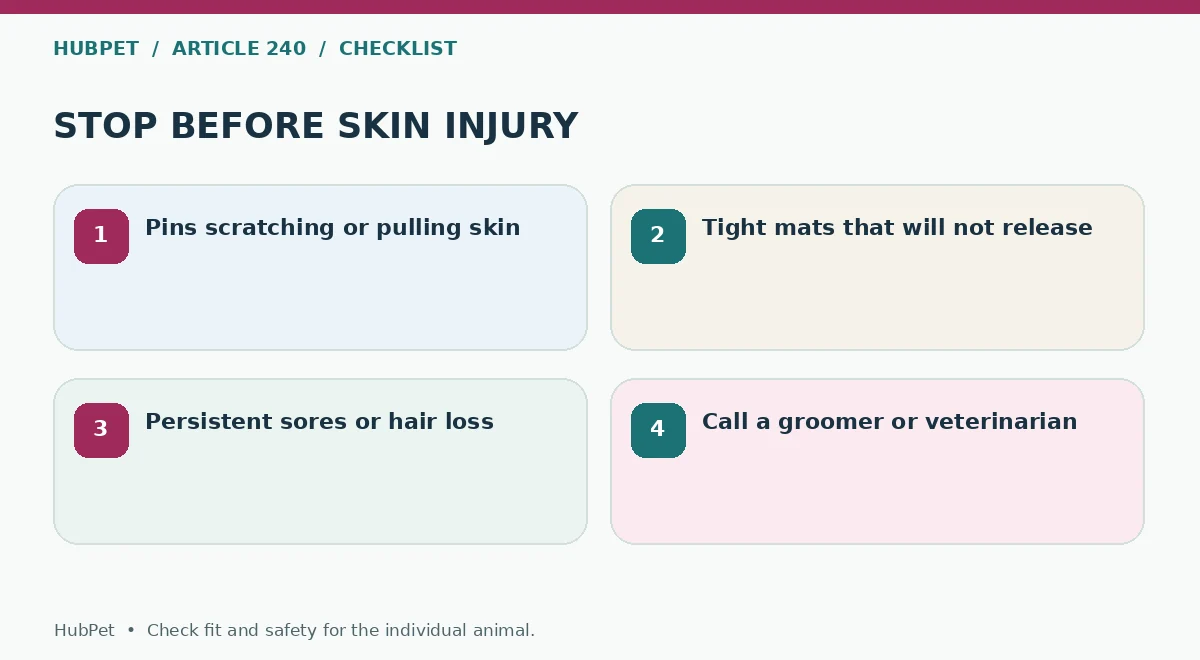
Use a quick decision chart when comparing options
Ask three questions about every item: Which coat or care task does it solve, how will I prevent skin injury, and does my dog tolerate the sensation? A short smooth coat may need a soft mitt but not a de-matting blade. A curly coat may need a slicker plus comb, with professional support for tight mats.
Skip bundles that combine incompatible coat tools or promote aggressive de-shedding for every dog. If you see hair loss, painful spots, or persistent scratching, stop tool testing and consult a veterinarian. The safest kit is often small, well understood, and used consistently.
How We Research
We compared this article’s choices with current veterinary, animal-welfare, and transport guidance, checking the cited sources on October 26, 2026. Recommendations focus on observable fit, safe handling, and real-world limits rather than unverified brand claims. Product specifications and travel rules can change, so confirm them with the provider and your veterinary team. We have not purchased, laboratory-tested, ranked, or endorsed individual models. Read more at About HubPet.
Sources
AKC: Dog Grooming Tools & Supplies. Accessed October 26, 2026.
VCA Animal Hospitals: Grooming and Coat Care for Your Dog. Accessed October 26, 2026.
ASPCA: Dog Grooming Tips. Accessed October 26, 2026.
Start with a brush matched to the coat, towels, dog-safe shampoo, treats for cooperative handling, and a nail-care plan. Add a comb or specialist tool only when needed.
No. Slickers often suit some long or dense coats but may irritate sensitive skin or be unnecessary for a smooth short coat. Choose by coat texture and technique.
Not automatically. Some coats benefit from appropriate undercoat tools, but sharp blades and frequent hard strokes can damage skin or fur. Ask a qualified groomer to demonstrate.
Many owners can maintain brushing, bathing, and basic handling without clipping. Complex trims and tight mats are often safer with a trained professional.
No. Itching, lesions, bald areas, and discomfort can indicate medical problems. Stop irritating grooming and arrange a veterinary assessment rather than changing brushes repeatedly.