
A dog collar serves several possible jobs: carrying identification, offering a simple leash attachment, or helping prevent escape. These jobs are not identical. This guide compares collar constructions, fit checks and limits so you can avoid relying on a label alone. See the HubPet veterinary disclaimer for medical and safety decisions.
If your dog pulls hard or coughs during walks, pressure on the neck warrants special caution. Consider our reward-based walking guide separately from any gear purchase. A collar cannot replace training or a veterinary assessment of breathing or neck pain.
Decide whether the collar is mainly for ID or walking
An identification collar can carry a visible tag and help someone contact you if a dog becomes lost. A leash collar has the additional job of handling tension when the dog moves. For some dogs, those functions belong on different equipment. Start with the daily situation instead of choosing one collar to do everything.
Check neighborhood rules for identification, registration and leash use. Meanwhile, keep microchip contact information current where applicable; a collar tag can fall off. For powerful pullers or dogs with neck sensitivity, speak with a veterinarian about walking equipment that shifts force away from delicate neck structures.
Compare flat buckle and quick-release collars
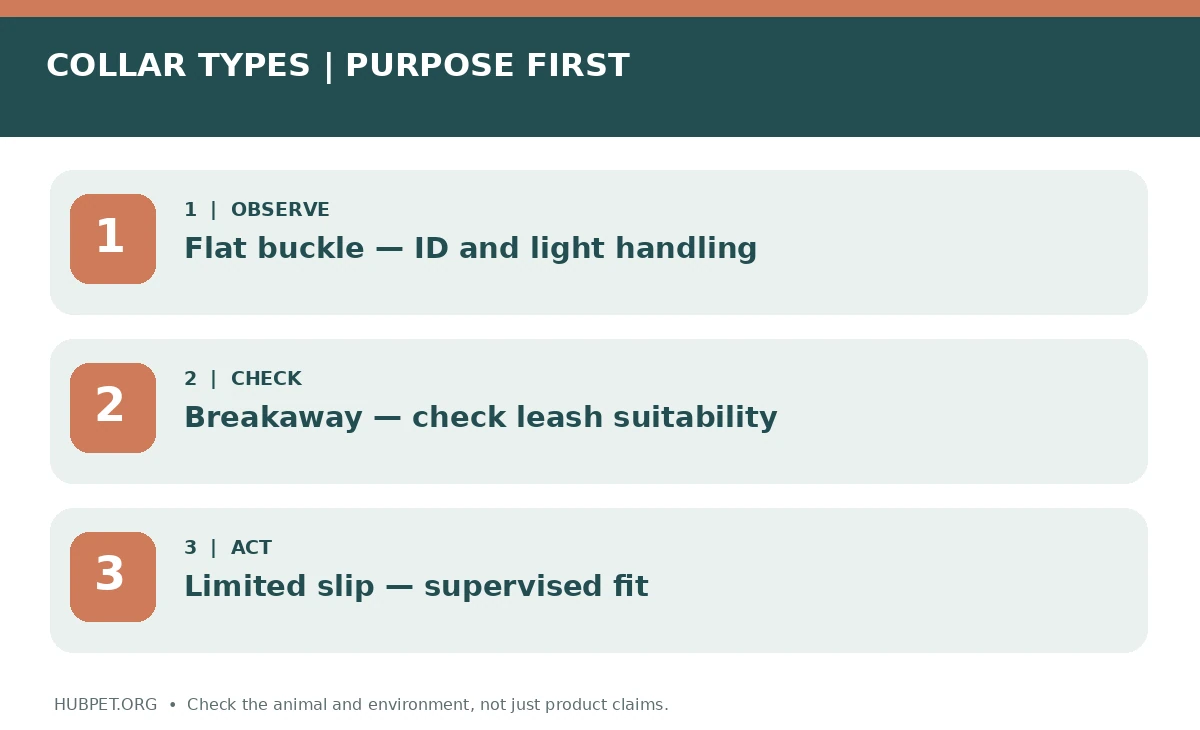
A flat buckle collar has a consistent circumference during wear. Traditional belt-style buckles and plastic quick-release closures differ in how they open. Inspect each closure for reliable engagement and edges that catch fur. Flat collars work for many dogs as ID holders, but neck pressure can still become problematic under hard pulling.
A quick-release buckle may simplify removal in daily use, yet not every closure releases under tension. Learn the actual mechanism before fitting it to a dog with dense hair. Avoid buying solely by fabric width or color. Instead, look for a comfortable edge, secure stitching and a closure you can operate quickly.
Understand breakaway designs and their limits
Breakaway collars can release when a certain force reaches the clasp. That may reduce snagging risk in some settings, but it also means the collar can come off while handling a dog. Never assume a breakaway mechanism stays connected during a walk. Read the manufacturer’s instructions before attaching a leash.
Some products use separate rings for a walking connection, while others serve ID only. Check both functions in person. If your dog plays with other dogs, supervise collar wear and look for entanglement risks. Dogs can catch jaws or feet in loose collars, particularly during rough play.
Use limited-slip designs with extra care
A limited-slip or martingale collar narrows its circumference when a dog pulls, within a set range. It may help certain narrow-headed dogs avoid backing out of a loose collar. However, incorrect adjustment can place pressure around the neck. Do not use tightening as a punishment or training correction.
A collar that can cinch tighter deserves extra supervision. Remove it during unsupervised play or when snagging is possible. Ask a knowledgeable fitter to demonstrate the stopping point and check it when the dog changes weight. If escaping remains a concern, consult a reward-based professional about both management and suitable harness options.
Measure the neck and recheck the fit
Use a flexible tape where the collar normally rests, then follow the product’s own sizing guide. Check the measurement with the dog standing calmly. The familiar finger test helps you notice obvious tightness, but finger widths vary and should not replace observing the real dog.
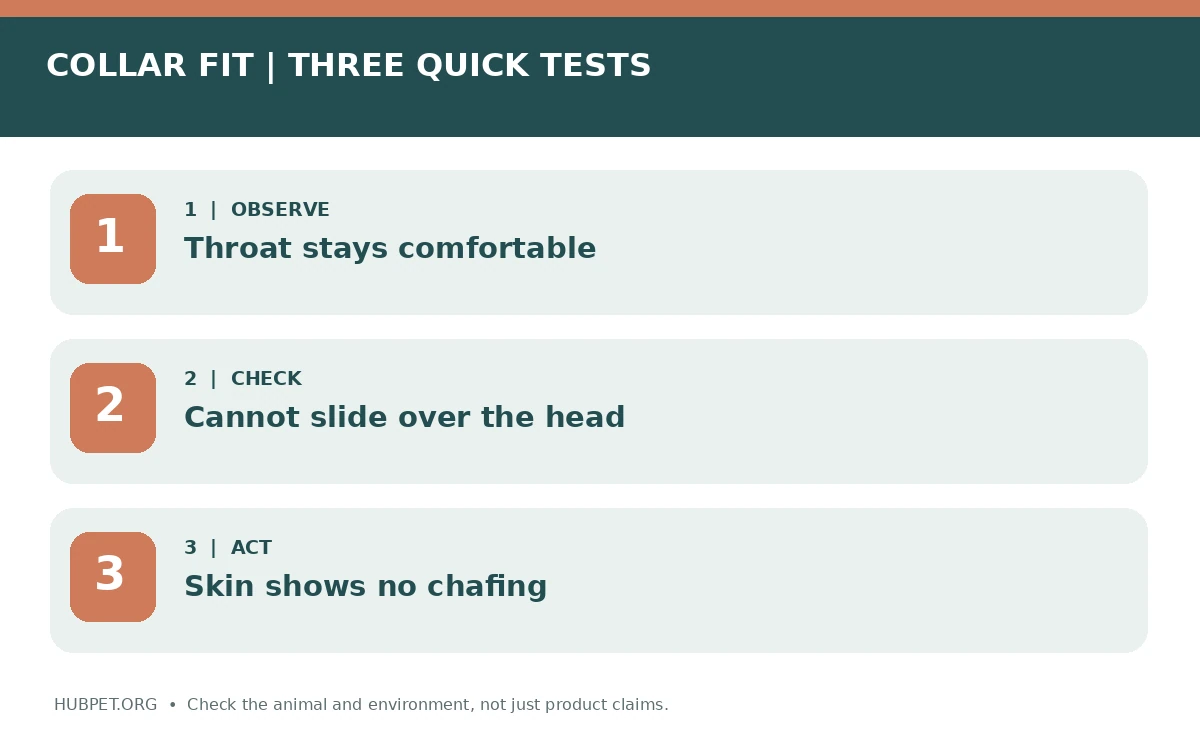
You should not see indentations, coughing, rubbing or a collar sliding over the head. Next, check how the fit changes as the dog lowers its nose and turns. Puppies grow quickly; thick seasonal coats can also change the feel. Record the adjustment point and revisit it rather than leaving a collar unchecked for months.
Check skin and coat contact points
Inspect beneath the collar near the throat and behind the ears. Short-coated dogs may show rubbing early, while long hair can conceal dampness or tangles. Remove the collar for a skin check when it is safe to do so. Also ensure hanging tags do not catch around furniture or kennel bars.
If the dog scratches persistently, develops a red patch or resists being touched, take the collar off and assess whether a veterinarian should examine the skin. Do not simply tighten the collar to stop movement. A wider band may distribute contact differently, but the fit must still allow free breathing and normal movement.
Avoid pain-based walking equipment
Collars that inflict pain or fear are not a humane shortcut for pulling. The American Veterinary Society of Animal Behavior recommends reward-based methods rather than physical punishment. Thus, choose equipment that keeps your dog comfortable while you teach a reliable response around distractions.
If you struggle to maintain control, distance and route choice can prevent rehearsal of lunging behavior. A trainer with evidence-based methods can help you assess the dog and your handling safety. Avoid sudden leash jerks, even with a flat collar, because the neck still receives the force.
Match identification and attachment hardware
Look for strong tag rings, corrosion resistance and secure stitching near the buckle. Ensure the leash clip cannot accidentally attach to a decorative element. Test the real attachment by gently pulling on it before you go outside. Small metal parts may snag long coats or twist a lightweight collar.
When you wash fabric collars, inspect them after drying. If the buckle cracks, the strap frays or rivets loosen, replace the collar. An ID tag should remain readable and updated. A separate backup contact method, such as microchip registration, helps when the collar itself goes missing.
Know when to choose a harness instead
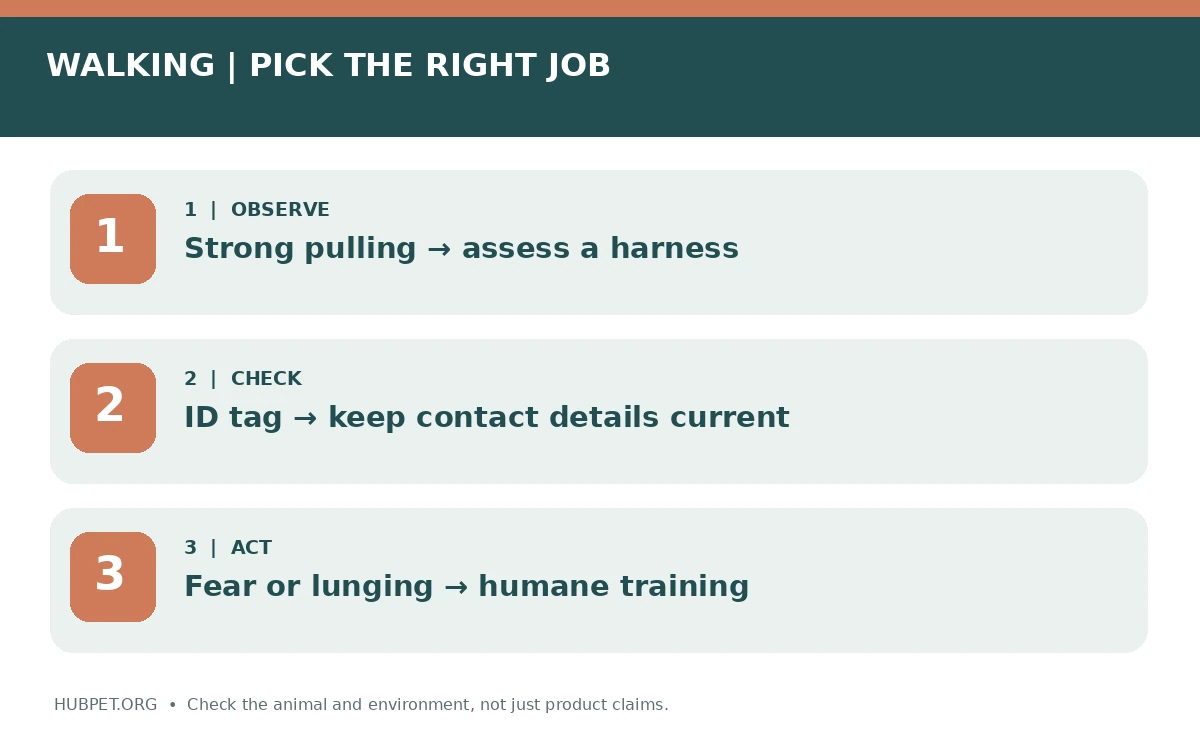
A dog with respiratory issues, neck discomfort or forceful pulling may need a carefully fitted harness for walks. VCA discusses body harnesses as an alternative to pressure on sensitive neck structures. Choose the actual strap geometry with care, because some designs can still rub or interfere with the shoulders.
For a walking routine, see our calm doorway preparation. The goal is not to make the collar carry more force. Instead, reduce stress and teach behavior that leaves the line relaxed. Ask a veterinarian about equipment when discomfort or mobility problems complicate the choice.
Make a short collar inspection routine
Every week, test the buckle, rub a finger along the strap edge and examine the collar for trapped dirt or torn fibers. Confirm that tags remain attached and current. Next, recheck the dog’s skin and neck fit. This habit takes little time but catches small changes before the next walk.
Finally, plan when your dog should wear the collar and when supervised removal is safer. No single collar solves every situation. Reassess size after grooming, weight change or growth, and ask a professional about escape management rather than improvising tightening devices.
How We Research
We developed this guide by comparing veterinary welfare guidance with product-design questions an owner can check at home. We evaluated fit, handling, supervision, cleaning and reasons to stop use instead of ranking brands or claiming hands-on product tests. Sources were reviewed on October 26, 2026. Learn more about HubPet and our editorial approach. This material does not replace advice for a specific animal from its veterinarian.
Sources
VCA Animal Hospitals: Collar and Harness Options for Dogs. Accessed October 26, 2026.
VCA Animal Hospitals: Controlling Pulling on Walks. Accessed October 26, 2026.
AVSAB: Humane Dog Training Position Statements. Accessed October 26, 2026.
Some can, but a dog that pulls strongly or has neck concerns may need a separate comfortable harness for walks.
It should remain secure without rubbing, pressing on the throat or sliding over the head. Use the product guidance and a movement check.
Only if the specific design explicitly supports a secure walking attachment. A breakaway clasp may release when tension rises.
A limited-slip design narrows within an adjusted range to reduce some escape risks. It should not serve as a punishment tool.
Replace it if the closure is unreliable, stitching opens, hardware corrodes or the strap rubs. Recheck sizing as the dog changes.