
This article provides general pet behavior and household safety information, not medical diagnosis or treatment. For suspected swallowing of nonfood material, injury, or abrupt behavior change, contact a veterinarian promptly. See our veterinary disclaimer.
A dog chewing its bed is different from a dog deliberately choosing a chew toy. The bed may smell familiar, move when tugged and offer easy access to seams or hidden stuffing. Once the cover tears, that enticing material may pose a swallowing risk. This guide is about what to do with the sleeping area today, not a promise that any product is indestructible. You will check seams, covers and foam, distinguish occasional settling behavior from repeated destruction, and rebuild a rest routine that supports safe chewing somewhere other than the bed.
Remove a ripped bed and count the missing material
Before offering the bed again, inspect every seam, zipper, corner and underneath panel. Look for exposed foam, batting, thread loops, broken zipper pulls, torn labels or rubber underside pieces. Collect fragments and note any pieces you cannot account for. If your dog may have swallowed stuffing, fabric or hardware, contact your veterinarian promptly. Difficulty breathing, repeated vomiting, painful abdomen, severe lethargy or repeated retching requires urgent attention. Do not assume fabric will pass because it looks soft. An intact-looking washable cover can still conceal a hole in the inner cushion, so remove it and inspect both layers independently.
Separate normal nest-making from destructive chewing
Dogs may paw, circle or mouth the edge of a bed while settling. The difference is whether they puncture fabric, pull seams apart or repeatedly consume pieces. Note when the behavior begins: at bedtime, when everyone leaves, after a busy visit or during unsupervised downtime. Sometimes the bed itself has become a tug object; in other cases the pattern follows distress or unmet needs. The ASPCA explains that destructive chewing has multiple possible motivations. A dog who seems fearful during departures needs assessment for separation-related problems rather than a tougher fabric alone. Use video observation only where it respects household privacy and is safe.
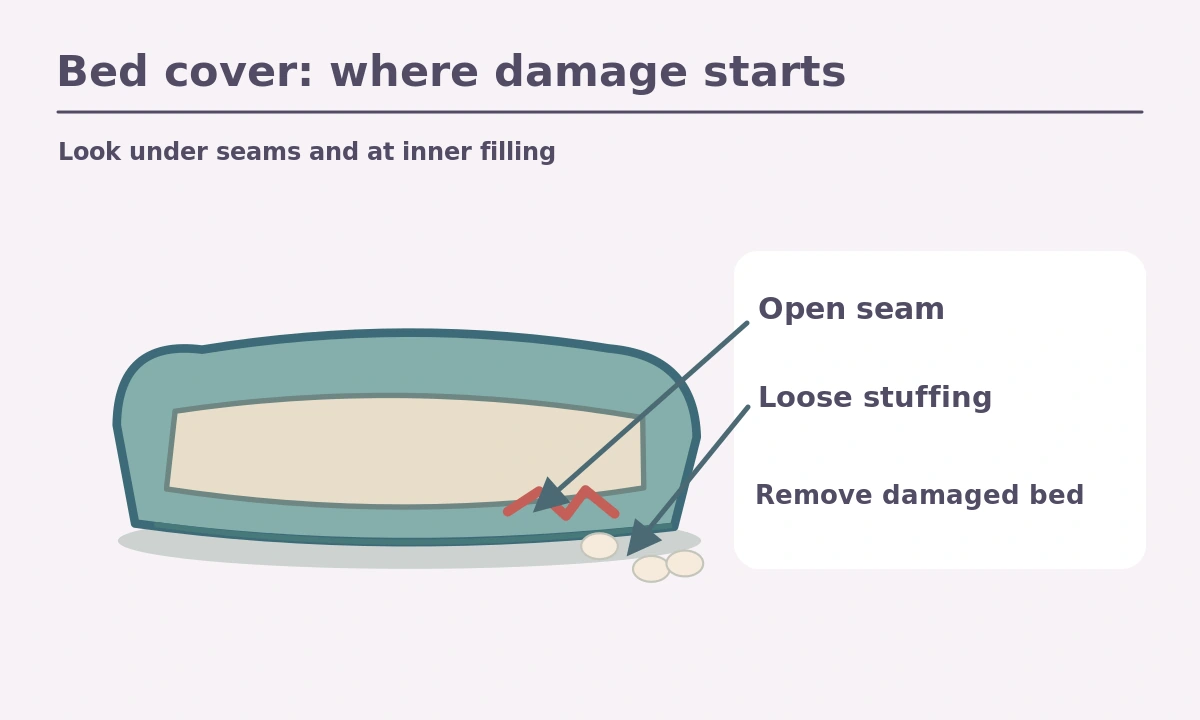
Choose a temporary resting place without loose stuffing
Remove damaged bedding until you can safely repair it or replace it. Offer a clean, comfortable resting surface your dog can use without exposed stuffing, protruding fasteners or small removable parts. Some dogs can rest on a simple secured mat under supervision; others need supportive cushioning because of age, joint discomfort or medical needs. Do not remove necessary comfort as punishment. Ask a veterinarian for an appropriate substitute if the dog requires orthopedic support or has pain when getting up. Ensure the area is away from cords, radiators and drafty door swings, with enough space for the dog to turn and lie naturally.
Look at why the bed is available as a chew target
Beds in busy hallways may invite tugging during exciting traffic, while an isolated bed may become the most interesting object in an otherwise empty room. Provide predictable sleep, supervised play and approved chew choices at separate times. If the dog chews only when confined, check whether confinement has been introduced positively and whether the dog has sufficient space, toileting opportunity and social contact. A bed with dangling piping or a prominent zipper tab may be especially attractive; compare cover construction rather than trusting a generic “chew-proof” label. Even heavy fabrics may fail when a dog repeatedly tears or swallows pieces.
Place the approved chew away from the bed seam
Set up a chew station a short distance from the resting surface. Offer an appropriately sized, flexible chew and reward the dog for engaging with it while the bedding is intact and supervised. Keep the toy separate from the bed if your dog tends to bury or tug objects into seams. VCA advises avoiding extremely hard items and removing toys that shed parts. If the dog moves toward a bedding corner, call them calmly to the chew station or reward settling on the open center of the mat. Do not chase the dog with the torn cover or wrestle fabric from a guarded mouth; build a gentle trade skill separately.
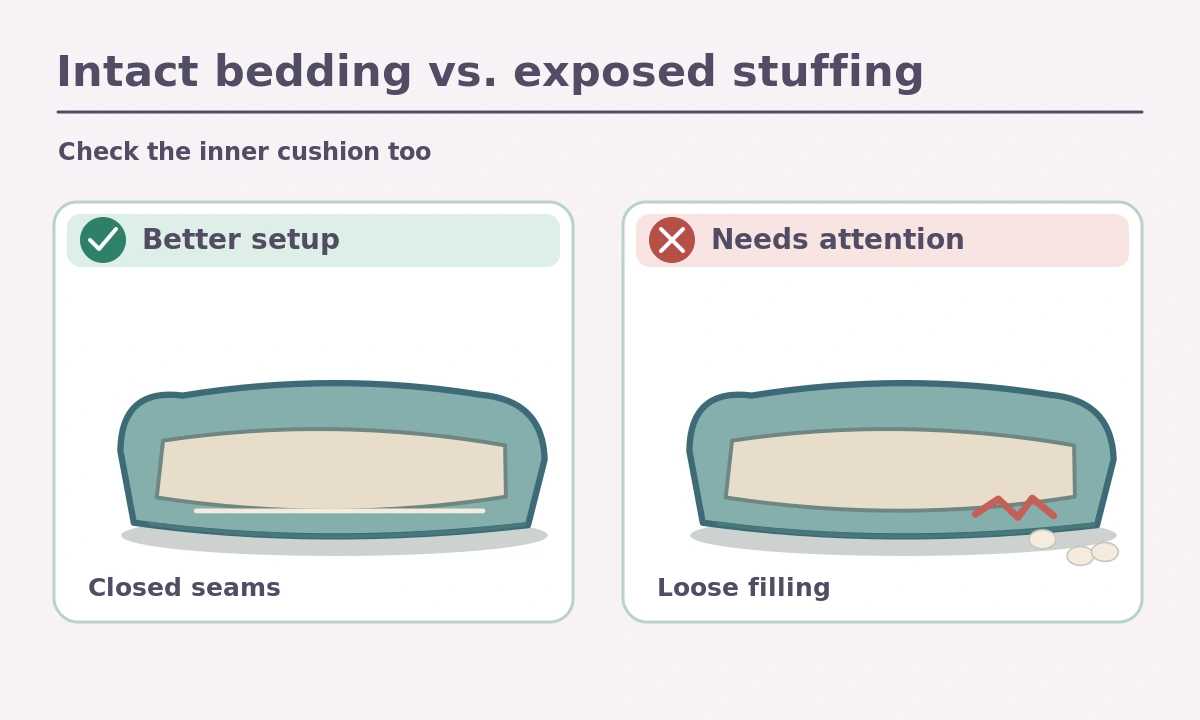
Practice a short settle-and-leave-the-seam routine
Begin when the dog is reasonably relaxed. Guide them toward the intact resting area and reward four paws on the surface, then a brief calm pause. If the dog begins worrying a seam, quietly interrupt the setup by inviting them off for a small reward and providing an alternative chew or a rest break. End before the dog gets repeatedly overexcited. Use several brief sessions rather than one long drill. Keep the bed unavailable between supervised practices until there have been many sessions without tearing. If access causes repeated frustration, simplify the environment and consult a qualified reward-based trainer or veterinarian rather than making the corrections harsher.
Select a replacement by checking construction details
Look at securely sewn seams, concealed zippers, washable surfaces, firm base support and a size that allows the dog to stretch. A cover that unzips easily for washing is convenient for people but may also expose a pull tab to persistent chewers. Check the actual interior material: large chunks of foam and loose fiberfill present different cleaning and damage concerns. Inspect a new bed daily at first and after laundry. Replace any torn or exposed components immediately. If your dog swallows bedding despite management, product shopping is not enough; veterinary or behavior help should come before another expensive purchase.
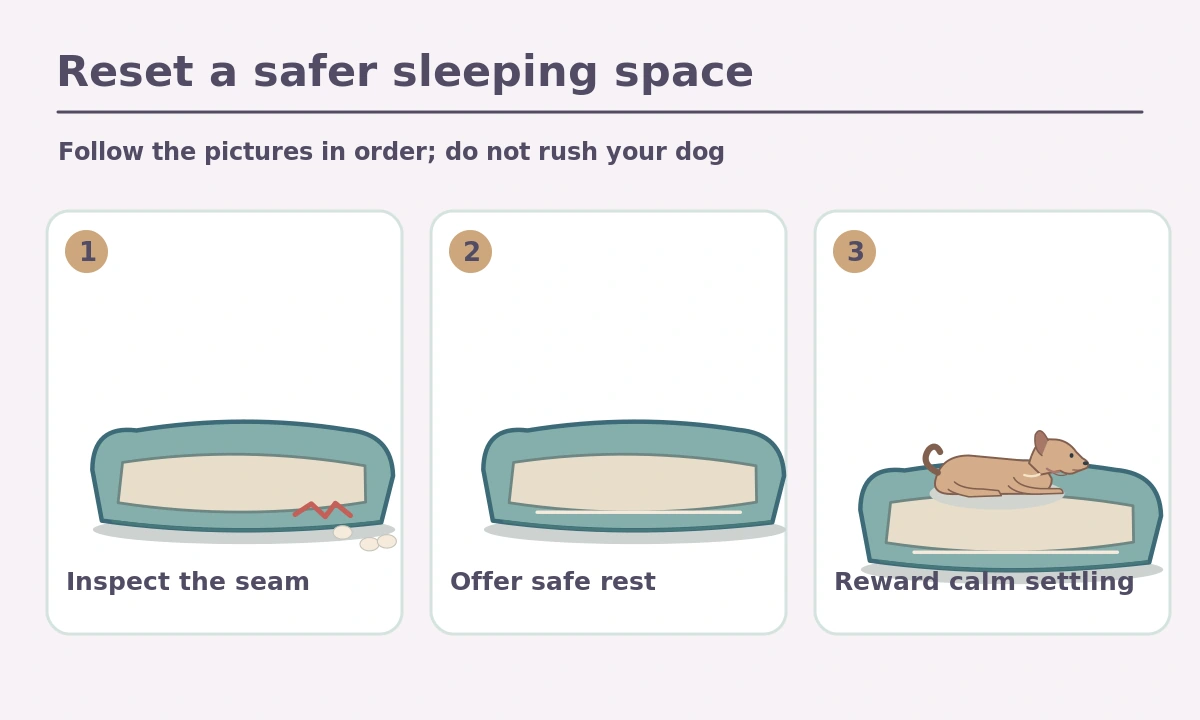
Treat recurrent fabric eating as a health and behavior question
Repeated chewing or eating of fabric, sudden destruction in a previously settled adult dog or marked distress during departures warrants professional assessment. Bring photos of the destroyed bed and a timeline of when incidents occur. Seek urgent veterinary care if there are signs of obstruction or choking. Never give laxatives, oils or other home remedies to move swallowed bedding without veterinary instructions. The aim is both a comfortable place to rest and safe chewing outlets during waking time. Progress means the dog can settle without accessing threads, not simply that the cover survives a few nights.
How We Research
We reviewed original veterinary and animal welfare guidance from ASPCA, VCA Animal Hospitals. We compared recommendations for preventing access to hazardous materials, using gentle replacement behaviors and recognizing when to seek professional attention. The artwork illustrates generic household objects and safer practical setups; it is not a product test, controlled study, or guarantee that a chew object cannot break. Individual puppies and dogs differ in strength, health and behavior. The guidance prioritizes injury prevention and reward-based training. Read our About HubPet information for more on our approach.
Sources
ASPCA, Destructive Chewing. Read the original guidance.
VCA Animal Hospitals, Teeth, Teething and Chewing in Puppies. Read the original guidance.
VCA Animal Hospitals, Dos and Don’ts of Puppy Teething Toys. Read the original guidance.
Safety note: Never use sharp barriers, irritating chemicals, punishment or forced restraint to stop chewing or digging. Seek veterinary advice promptly for possible swallowing of fabric, wood, toy parts or poisonous plants. Trouble breathing, collapse, repeated retching or severe pain requires urgent veterinary attention. If chewing or digging occurs with intense distress, request individual behavior assessment.
Only if the repair leaves no accessible loops, loose thread, damaged foam or tempting hardware. Replace heavily damaged bedding rather than risking another tear.
No bed can withstand every dog or every chewing style. Inspect construction and supervise a dog who has previously torn bedding, regardless of the product label.
No. Remove damaged bedding for safety and provide an appropriate comfortable alternative; withholding necessary rest or comfort is not a training strategy.
Contact your veterinarian promptly, even if your dog seems normal. Repeated vomiting, retching or abdominal pain is an urgent warning sign.
The timing may reflect several factors, including separation distress. Share an observation log with your veterinarian and ask for a behavior assessment.