
Why dogs lick their beds is not answered by the damp patch alone. A dog may notice crumbs or familiar scents, investigate a new fabric or repeat a soothing habit near bedtime. Prolonged licking, however, may accompany stress, discomfort or illness, especially when it appears suddenly. Rather than labeling every lick affection or anxiety, focus on context, frequency and whether your dog can rest normally. This guide helps you check the bedding, record the behavior and choose a calm response.
Begin with the pattern, not the stain
Notice whether your dog licks its bed once after a meal, briefly while turning around or for many minutes without stopping. Ask whether the licking happens on other fabrics too. A few exploratory licks with a relaxed body can differ from rapid repetitive licking paired with restlessness. Record duration, time and possible triggers over several days. A short video may be useful if you later consult a veterinarian. Do not repeatedly call the dog away just to test it; your attention can change the pattern.
Check for traces of food and interesting scents
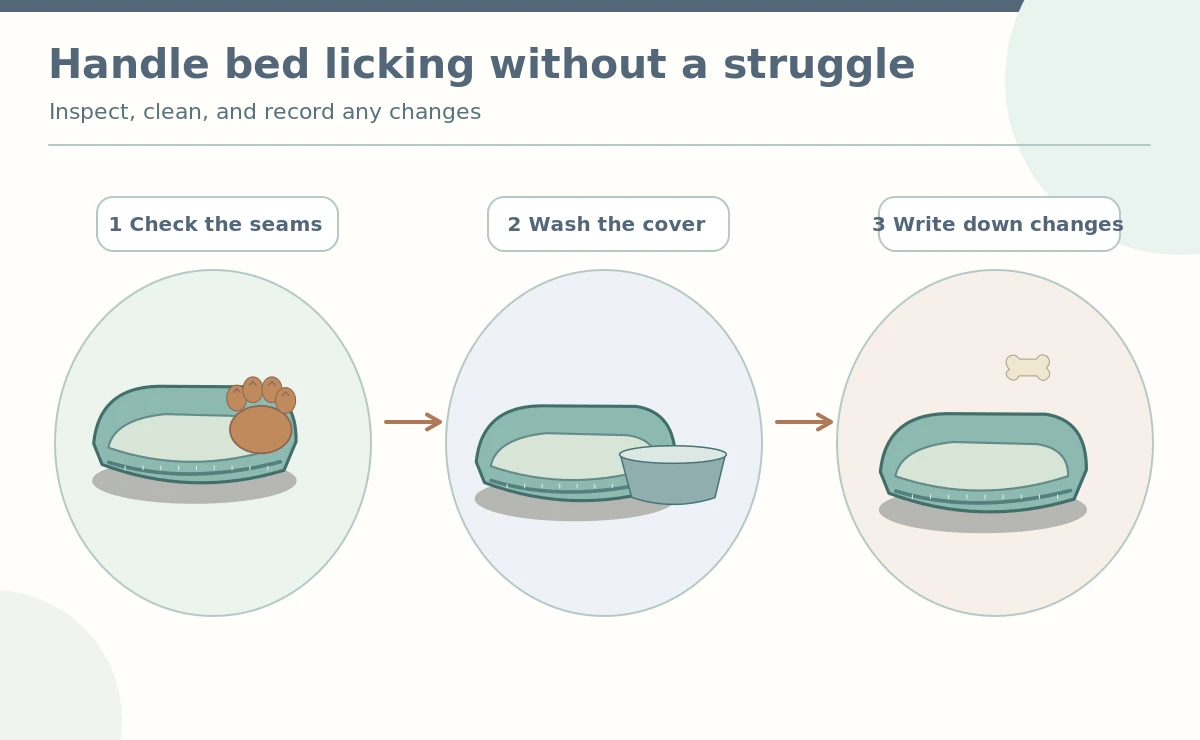
Beds collect crumbs, saliva, skin oils and odors from treats or toys. A dog may lick a spot that smells different or carries a flavor. Remove food residue and wash removable covers according to their labels. Choose unscented, pet-appropriate products and rinse as directed. Do not leave fabric conditioner pods, detergents or cleaning sprays where a dog can reach them. If licking stops after you clean one spot, that is a useful observation, but it does not prove a single permanent cause.

Inspect fabric, stuffing and seams carefully
A wet patch can weaken damaged fabric, and small bits of foam or zipper pull are unsafe to swallow. Remove the bed if seams open, loose filling is exposed or the cover sheds threads. Keep the dog in another comfortable area while you repair or replace it. Some dogs mouth fabric rather than only lick; watch for chewing, pulling or swallowing. Choose a simple intact cover and match the bed to the dog’s size and habits. A washable surface is helpful, but not a substitute for supervision.
Read your dog’s body language as a whole
A dog that licks briefly and then curls up comfortably may be following a routine. If the dog pants, paces, repeatedly changes position, holds a tense posture or cannot rest, the licking deserves closer attention. RSPCA guidance emphasizes the whole body, not one signal in isolation. Avoid describing a dog as guilty when it leaves a damp mark. Your job is to learn what preceded the behavior and whether the dog appears relaxed. The same lick can mean different things in different settings.
Offer a different calm settling activity
After verifying the bed is safe, invite the dog to an already familiar place and reward quiet resting. Some dogs enjoy a supervised food puzzle or a gentle sniffing activity at a different time of day. Avoid introducing a chew that is too hard, breaks into pieces or encourages resource guarding. If the licking is a learned attention habit, predictable interaction and calm rewards can help. If you suspect pain, nausea or a behavior that the dog cannot interrupt, address that with a veterinarian before trying training techniques.

Consider changes in routine and rest
Look back at recent changes: a new dog bed, different cleaner, visitors, less outdoor time or a moved sleeping area. Any one of these may alter sniffing and licking, but a temporal link is not proof. Keep feeding, walks and quiet time predictable where practical. Let the dog choose a comfortable location away from intense foot traffic. If the dog repeatedly moves between resting places, verify that temperature, entry height and surface firmness work for its mobility. A calm environment may reduce arousal without making medical causes disappear.
Avoid popular but unsafe quick fixes
Do not put hot sauce, bitter household chemicals or essential oils on the bed to deter licking. A dog may ingest residues or develop skin and mouth irritation. Do not punish the dog for licking, forcibly hold its mouth or remove every bed without providing a safe alternative. Covering the problem can make it harder to observe. If the dog is currently pulling apart fabric, calmly restrict access to that item and offer a safer resting surface. Safety comes before keeping a particular bed in service.
Compare clean and unwashed covers carefully
If your dog licks one bed but ignores another, compare materials, wash products and the location rather than jumping to a behavioral label. Use only fabric-care directions that fit each cover. Allow both covers to dry fully before use, because damp fabric can attract moisture and make a room smell different. If your dog has been chewing textile pieces, do not conduct an unsupervised comparison. Substitute a safe resting surface while you contact your veterinarian for advice about any swallowed material.
Separate normal curiosity from interruption problems
A dog that sniffs, licks once, stops and settles gives you useful information. A dog that repeatedly returns to lick after gentle interruption may need closer assessment, particularly if its breathing, appetite or posture also changes. Do not stage repeated interruptions as a challenge or assume a puzzle toy fixes compulsive behavior. Collect short, factual observations over ordinary days. If you see episodes that grow longer, happen during the night or prevent sleep, bring that record to a veterinary appointment.
Identify reasons to contact a veterinarian
New, intense or difficult-to-interrupt licking merits a veterinary discussion, particularly if accompanied by vomiting, gulping, reduced appetite, signs of pain, changes in drinking or unusual agitation. Repetitive licking of household surfaces can have medical as well as behavioral contributors, as veterinary references explain. Seek urgent care if you suspect swallowed stuffing or an obstruction, especially with vomiting or a painful belly. Do not diagnose nausea from licking alone or attempt home treatments that could delay care.
Use a practical seven-day observation log
Record where the dog licks, how long it lasts, whether it stops naturally and what happened immediately before. Note changes after cleaning the cover or moving the bed to a quieter place. Keep the log factual rather than writing that the dog is anxious or stubborn. Take photos of new fabric damage. If the behavior persists, share the notes and short video with your veterinarian or a qualified behavior professional. A consistent record is more useful than one dramatic incident.
How We Research
Our review compares veterinary and animal welfare guidance on canine communication, normal behavior and warning signs. The review separates likely motivations from diagnosis and values the whole dog more than any one gesture. Our latest source review took place on October 28, 2026. Read about HubPet to learn our editorial approach. This article does not claim direct testing or veterinary examination.
Sources
American Kennel Club, Why Dogs Lick Furniture. Read the original guidance.
Merck Veterinary Manual, Diagnosing Behavior Problems in Dogs. Read the original guidance.
RSPCA, What Does My Dog’s Body Language Mean?. Read the original guidance.
Safety note: This is general behavior education, not a veterinary diagnosis. If behavior changes suddenly, includes pain, swallowing fabric, distress or unsafe interactions, consult your veterinarian or a qualified reward-based behavior professional. See our veterinary disclaimer.
No. A brief exploratory lick can occur without distress. Watch whether the dog relaxes afterward and whether frequency or intensity changes.
Avoid improvised deterrents and irritating chemicals. Check for scent residue, clean according to the label, and offer safe alternatives.
Yes. Tiny traces of treats or meals may attract a dog to a particular fabric area. Clean and inspect the spot to see if the behavior changes.
Contact a veterinarian promptly for specific advice. Do not induce vomiting or attempt to pull material out without professional direction.
Sudden escalation, inability to settle, gulping, vomiting, appetite changes, apparent pain, or swallowed fabric warrant veterinary assessment.