
This article is general pet-care and carrier-selection information, not veterinary diagnosis or individualized transport advice. If your pet has breathing, spine, mobility or other medical needs, consult a veterinarian before choosing a carrier. Seek urgent veterinary attention for unusual breathing, collapse or severe heat distress. Read the HubPet veterinary disclaimer.
A dog carrier tote bag can look like an ordinary shoulder bag, but its job is very different. It must support a moving animal rather than a collection of flat objects. A soft bottom may sag between the handles. Tall decorative sides can block airflow, and a small leash clip cannot replace a secure enclosure. This guide focuses on everyday short trips with a small dog, not airline certification or crash protection. Use a tabletop fit check, inspect the loaded base, and rehearse carrying in a quiet place before traveling through crowds.
Measure the space the dog actually gets
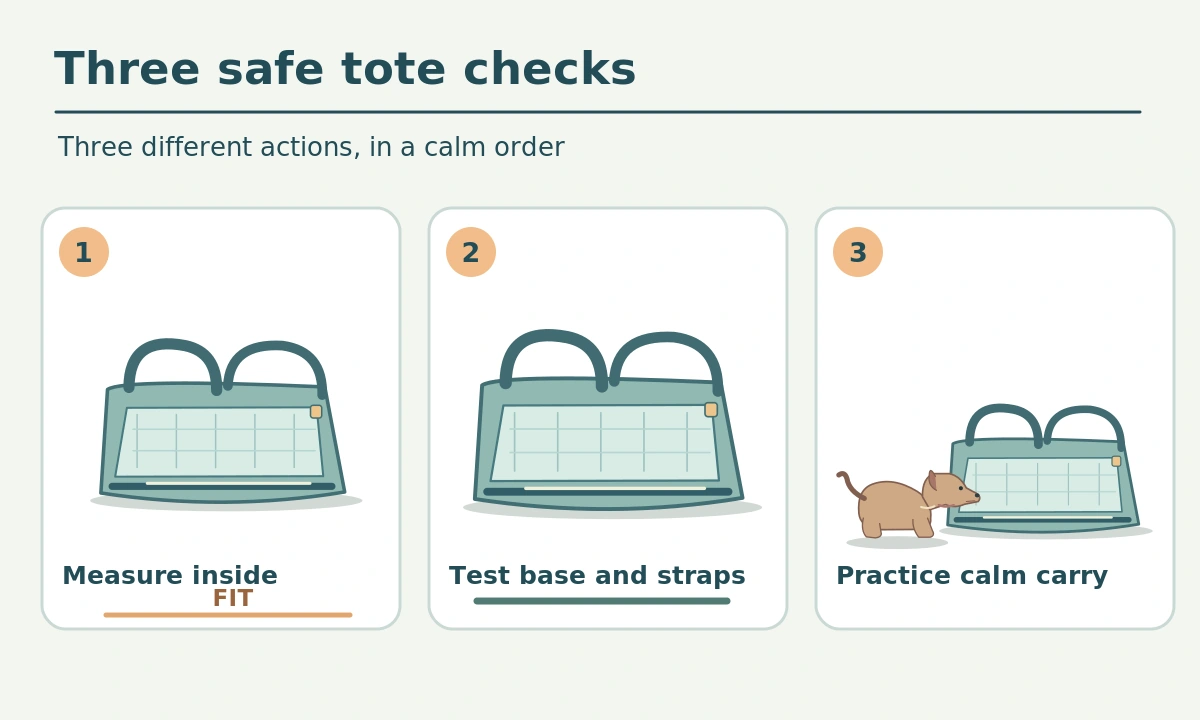
Measure your dog from nose to rump while resting. Then measure from the floor to the head in a natural standing or seated posture. Then compare those dimensions with the usable inside space, excluding thick padding, inward seams and any pocket that steals width. The dog should be able to settle in a natural posture and adjust position without a rigid rim pressing against its body. If you must force the top shut to contain the dog, the tote is too small. Manufacturer weight limits are a ceiling for the entire loaded carrier, not a substitute for measuring floor dimensions or observing breathing and comfort. If the dog cannot settle comfortably, choose a larger supported carrier.
Inspect the load-bearing base
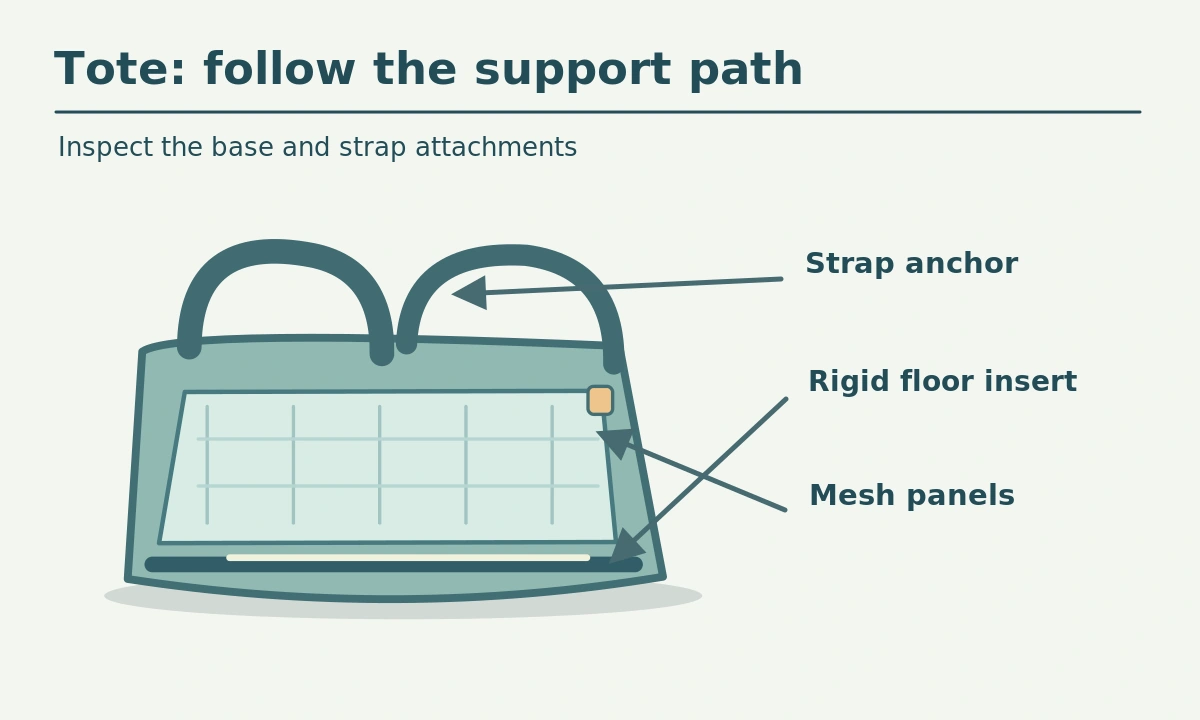
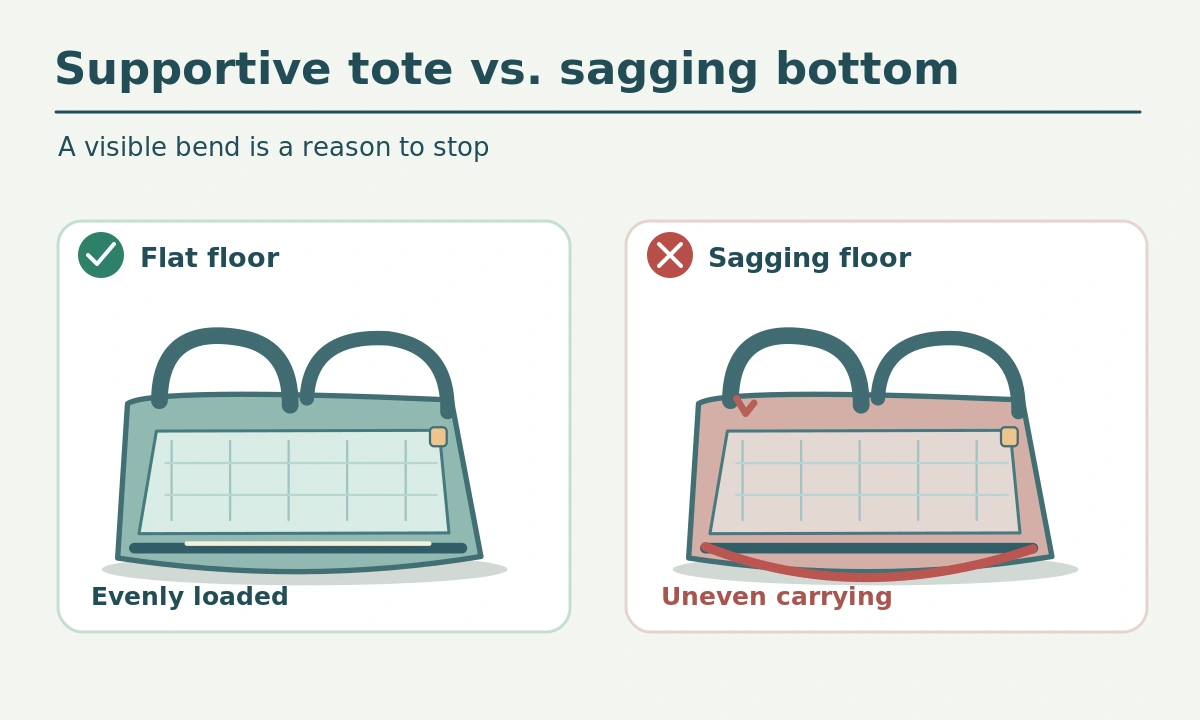
Put the empty tote on a level floor and press gently across the center of the base. Look for a removable rigid panel that stays flat under the intended load and cannot slide into an opening. Now lift the tote with a safely weighted inert test load, not the dog. Watch for a deep V-shaped bend, sideways sliding or tilting toward the strap. The liner should cover the hard panel without leaving exposed sharp corners. A flexible handbag bottom may be acceptable for clothes but can leave a dog’s paws and body unsupported. Do not rely on product photos that show a flat tote only while it rests on a table.
Follow the handle stitching and shoulder load path
Trace each handle and shoulder strap to the points where it attaches to the body. Look for broad reinforced stitching, no unraveling threads, intact adjusters and a strap width that does not dig into the carrier’s edge. Carry the empty, weighted tote near your body, supporting the bottom with one hand. Check that it remains level when you turn or stop. A long single strap may let the bag swing into furniture or twist around a dog. A luggage-style tote with large decorative metal rings is not automatically sturdy: the ring, stitching and fabric around it all carry load. If the attachment or hardware creaks, slips or frays, do not use it.
Choose containment and ventilation together
For public travel, select a fully closable pet carrier with secure openings and mesh ventilation instead of an open fashion purse. The dog should not be able to jump out, chew an exposed zipper or push its face through a weak panel. Check airflow from more than one direction and make sure fabric cannot press against the dog’s muzzle. A tether, where provided, should only supplement the enclosure and attach to a properly fitted harness rather than a collar; never assume it prevents a fall. Avoid covering every mesh panel with a blanket or accessories. AVMA and Humane World guidance on travel carriers emphasizes safe size, secure closures and adequate ventilation.
Rehearse the lift before a crowded outing
Introduce the tote with the top open on the floor. Put a familiar mat inside and reward voluntary investigation; do not force the dog in. Once the dog willingly steps inside, briefly close the opening and reward calm behavior before reopening it. Lift only a little from a stable surface while continuing to support the underside. Practice a quiet one-minute carry, then set the entire base down slowly. Monitor posture, panting, drooling, shaking, frantic scratching or efforts to escape. If the dog remains distressed or overheats, stop and use an alternative transport method. Practice with the actual harness and closure configuration rather than assuming a calm dog will tolerate any tote.
Compare a tote with alternatives for longer travel
A shoulder tote may suit very short, calm transitions where the dog can remain supported and you can watch the carrier. For a long walk, busy commute or an animal that needs extra space, a stable handheld carrier or other supported transport may be preferable. Dogs with back, neck, respiratory or mobility conditions may need individual veterinary advice about posture and transport. A tote is not a vehicle restraint: do not place it loosely on a car seat or assume straps make it crash-tested. Ask a veterinarian how to secure transport safely. Equally, do not put the tote under an airplane seat unless you have checked the exact airline and carrier requirements.
Clean and re-check after every trip
Remove the mat and inspect for dampness or sharp grit. Wipe the base according to its label, dry the rigid insert fully, and examine the strap anchors when the bag is empty. Feel along the zipper tracks for damaged teeth or raised metal ends; inspect mesh for holes and any exposed plastic piping a dog might chew. Keep scented sprays and loose absorbent pads away from the dog’s mouth. Replace a damaged insert or carrier promptly rather than improvising with cardboard or pins. Inspect after every trip. Unlike a stationary bed, a tote undergoes repeated lifts, set-downs and twists.
Know when to leave the tote at home
Do not use the tote if the dog cannot lie comfortably or the loaded base sags. Unreliable straps, insecure closures and blocked ventilation are also reasons to stop. A dog showing distress, repeated struggling, unusual breathing or overheating needs a safe, calm setting and appropriate assessment. For animals with suspected injury or respiratory difficulty, avoid compressing them into a small carrier and seek veterinary guidance. The useful buying question is not whether a bag looks compact and attractive: it is whether the load path, enclosure and dog’s posture remain safe for the actual trip. Try the dimensions before investing in decorative features.
How We Research
We compared original guidance from AVMA, Humane World for Animals, Austin Canine Rehab & Wellness. Our checks emphasize usable interior dimensions, breathing and airflow, secure closure, physical support, and humane carrier familiarization. Our original illustrations depict generic objects; they do not represent brand tests, laboratory heat measurements, crash certification or clinical evidence. A carrier rated for a particular load still requires inspection, individual fit and careful handling. We noted when animal welfare guidance specifically discourages a product category rather than assuming all products are equally appropriate. See About HubPet for additional editorial context.
Sources
AVMA, Traveling With Your Dog or Cat. View original guidance.
Humane World for Animals, Travel Safely With Your Pet. View original guidance.
Austin Canine Rehab & Wellness, Are Dog Carriers and Backpacks Safe?. View original guidance.
Safety note: A carrier is not a substitute for a tested vehicle restraint, disaster response instructions or individual veterinary guidance. Never hang an occupied carrier unattended, squeeze an unwilling pet into a cramped space, block vents or leave a pet exposed to heat. For suspected injuries or breathing difficulty, contact a veterinarian promptly; for collapse or respiratory distress seek emergency assistance.
For travel, use a properly contained and ventilated carrier. An open top creates a fall and escape risk, even for a usually calm dog.
No. Check usable floor dimensions, natural posture, base stiffness, ventilation and the manufacturer’s load limit together.
Avoid pressure on the neck; if the tote has an internal tether, follow its instructions and attach to a well-fitted harness. A tether does not replace secure closure.
An ordinary handbag often lacks a flat supportive base, ventilation and secure pet-safe openings. Choose a purpose-built carrier.
Do not assume that. Choose transport restraints for the car on their own tested merits and follow veterinary and manufacturer guidance.