
This article provides general pet behavior and household safety information, not medical diagnosis or treatment. For suspected swallowing of nonfood material, injury, or abrupt behavior change, contact a veterinarian promptly. See our veterinary disclaimer.
A dog chewing carpet is not simply making a mess. Once a corner lifts, the backing, threads and padding can become an irresistible pull toy, and swallowed pieces may cause serious problems. The practical priority is to remove access to damaged material, not to make the floor taste unpleasant. This guide focuses on carpet seams, bound rug edges and frayed corners. It gives you a damage check, a way to identify when the chewing happens and a short reward-based routine for changing the habit without punishing a dog after the fact.
Start with the fibers, backing, and missing pieces
Block access and look closely at the edge before putting the rug back. Check for loose loops, long strands, crumbling latex or rubber backing, sharp exposed tack strips, and missing pieces of foam underlay. Photograph damage so you can compare it at the next check; do not pull a strand while the dog is beside you. If you suspect your dog swallowed carpet or padding, call your veterinarian promptly. Repeated vomiting, retching, painful abdomen, lethargy or inability to keep water down warrants urgent veterinary assessment. Do not induce vomiting or pull material protruding from a mouth or rectum. A visually tidy trim does not guarantee an edge is safe to leave accessible.
See why the same corner attracts attention
Record where the chewing takes place and what happened beforehand. Does your puppy mouth the rug after waking up, during a lively play session or while waiting near a doorway? Does an adult dog chew only when alone, or when a ball rolls beneath the furniture? Chewing can reflect normal exploration, under-stimulation or distress; the location itself is not a diagnosis. The ASPCA notes that destructive chewing has different causes, including teething and separation-related anxiety. If damage follows departures alongside vocalizing, pacing or escape behavior, ask a veterinarian or qualified behavior professional for an individualized plan rather than treating the carpet as the whole problem.

Use a barrier without creating a new chewing hazard
The simplest temporary fix is a closed room, a stable pet gate or furniture arranged so the torn edge is out of reach. Avoid loose plastic sheeting, electrical cords, tape tabs, sprayed essential oils and improvised metal edging at mouth height. A heavy rug should lie flat, not become a trip hazard for family members. If you use a pen, crate or barrier, introduce it positively and make sure the dog can move and rest comfortably; confinement is not an appropriate substitute for meeting exercise or toileting needs. Repair a frayed seam through a professional or replace the damaged rug if strands cannot be contained.
Offer a chew item that works in that moment
Keep a safe, appropriately sized flexible rubber chew or food puzzle near the former carpet zone. Make it attractive before the dog moves to the rug: scatter a few pieces of regular food into a food-safe puzzle if appropriate for your dog, or reward investigation of the toy. Select items that yield slightly under pressure, inspect them for cracks, and supervise play. The VCA guidance warns that extremely hard items can damage teeth and that broken toy pieces can be swallowed. Do not hand over the chew only after a long session of carpet tugging; aim to reinforce the choice to approach an acceptable object first.
Practice a calm switch, not a chase
With your dog supervised and the frayed edge blocked, place an approved chew within easy reach. Reward your dog for turning toward it. If the dog wanders toward the carpet, calmly call them to a nearby mat or toss a treat away from the edge; then invite engagement with the chew. Keep the practice short and end on a successful alternative choice. Avoid chasing, prying open a resisting mouth or scolding. Those responses may increase guarding, arousal or secretive chewing. Teach a voluntary trade using two equally appealing safe toys; build this skill away from damaged flooring before relying on it in a real incident.
Repair the room as well as the behavior
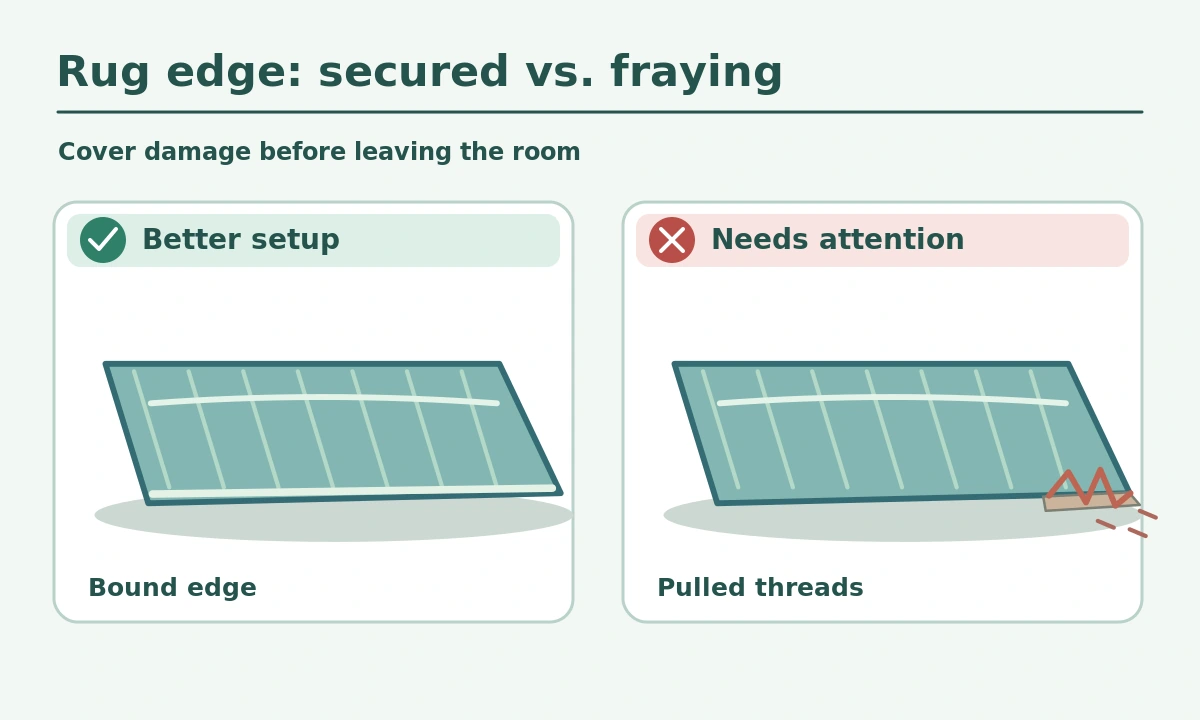
Vacuum stray fibers, secure intact rug edges using flooring-appropriate methods that leave no exposed fasteners, and keep doors clear of loose runners. If you rent, ask the property manager before using adhesive or edge hardware. Carpet transitions are especially attractive when a seam catches a paw or a vacuum head, so check their finish after cleaning. Consider a low-pile, securely bound washable mat as a temporary alternative where it is safe and practical. However, no rug is chew-proof: continue supervised access and inspect for missing material. Combine changes to the space with daily play, sniffing and food enrichment suited to your dog’s age and abilities.
Build a seven-day observation and reward routine
On day one, remove access to damaged fibers and note the dog’s usual chewing windows. For the next few days, arrange two or three supervised short sessions when the dog would normally investigate that corner. Reward approaching an acceptable chew, relaxing on a mat and leaving the rug when called. Keep a simple tally of attempts, not a punishment chart. Gradually increase access only if the dog consistently makes safer choices; return to a gate if chewing resumes. Provide regular movement and sleep. A sudden change in appetite, frantic eating of nonfood material or repeated unexplained ingestion deserves a veterinary discussion regardless of whether the training appears to help.

Know when furniture protection is not enough
An isolated exploratory nibble is different from a dog repeatedly consuming strands or damaging several surfaces. Arrange a veterinary visit for recurrent material swallowing, painful mouth signs, abrupt behavior change or chewing that escalates despite environmental changes. If the behavior occurs only during departures and the dog shows distress, seek help with the underlying separation-related issue. Keep records of the time and setting to share with a professional. Do not rely on bitter sprays or strong smells as a complete solution: they may irritate pets, damage carpets and do nothing about the reason the dog chews. The goal is a safer environment plus an acceptable behavior the dog can repeat.
How We Research
We reviewed original veterinary and animal welfare guidance from ASPCA, VCA Animal Hospitals. We compared recommendations for preventing access to hazardous materials, using gentle replacement behaviors and recognizing when to seek professional attention. The artwork illustrates generic household objects and safer practical setups; it is not a product test, controlled study, or guarantee that a chew object cannot break. Individual puppies and dogs differ in strength, health and behavior. The guidance prioritizes injury prevention and reward-based training. Read our About HubPet information for more on our approach.
Sources
ASPCA, Destructive Chewing. Read the original guidance.
VCA Animal Hospitals, Dos and Don’ts of Puppy Teething Toys. Read the original guidance.
VCA Animal Hospitals, Teeth, Teething and Chewing in Puppies. Read the original guidance.
Safety note: Never use sharp barriers, irritating chemicals, punishment or forced restraint to stop chewing or digging. Seek veterinary advice promptly for possible swallowing of fabric, wood, toy parts or poisonous plants. Trouble breathing, collapse, repeated retching or severe pain requires urgent veterinary attention. If chewing or digging occurs with intense distress, request individual behavior assessment.
Trimming does not solve damage to the backing or underlay. Block access, inspect for missing material, and repair or replace an edge that continues to fray.
No. Sprays cannot address boredom, teething or anxiety and may damage fabric or irritate a pet. Use safe access management and positive redirection instead.
Contact your veterinarian promptly, even if your dog seems fine. Ask for urgent assessment if there is vomiting, repeated retching, abdominal pain or lethargy.
That pattern can have several explanations, including separation-related distress. Record departure behavior and discuss the signs with a veterinarian or qualified behavior specialist.
No. Punishment after the event does not teach which item is safe to chew. Protect the edge and reinforce calmly choosing an appropriate chew or resting spot.