
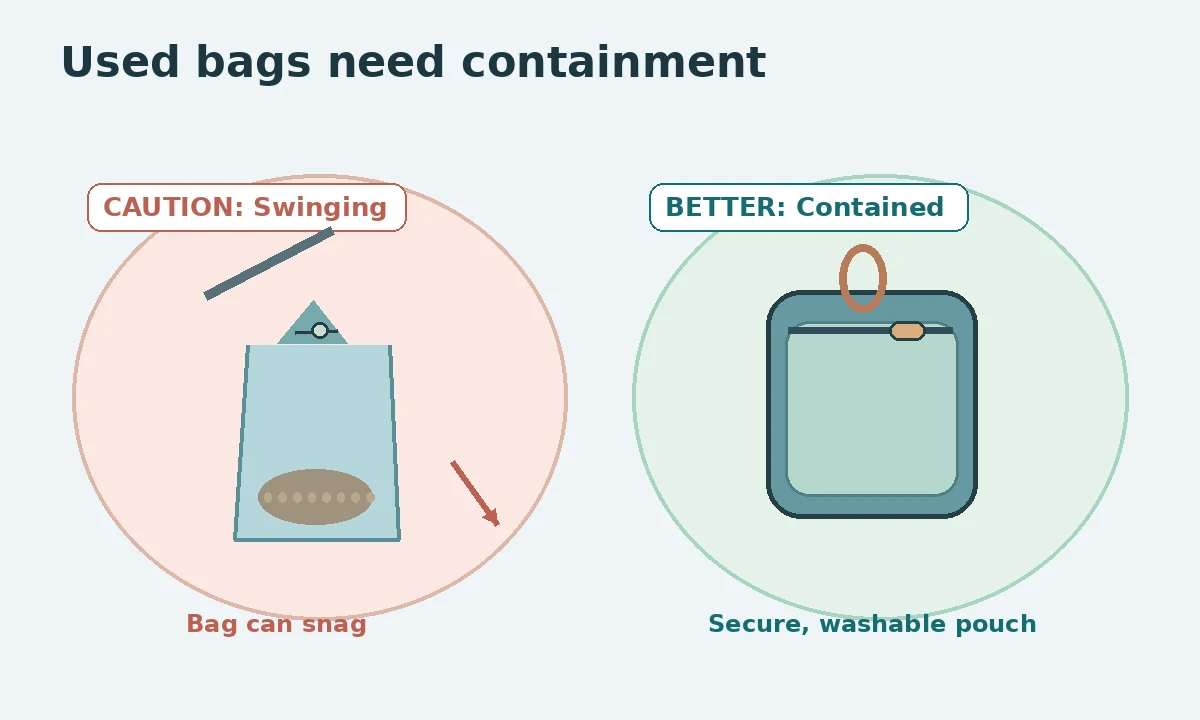
This article offers general pet-care and hygiene information, not individualized veterinary advice. For persistent diarrhea or illness, contact your veterinarian. See our veterinary information disclaimer. A dispenser that holds unused bags and a carrier that holds a tied, used bag have different jobs. After pickup, a walker may still be a long way from an appropriate trash bin. Letting the full bag swing freely from a leash can make it snag, split, or bounce against clothing. A small dedicated carrier can help, but only if it keeps the tied bag contained and does not interfere with leash handling. This guide compares clips, closed pouches, attachment points, and cleaning choices. It does not recommend leaving a bag beside a trail or hanging it in a tree for later.

Separate fresh bags from waste
Look at the carrier’s intended job. Roll dispensers feed clean bags through a slot. Used-bag carriers secure a tied bag, usually by a hook, sleeve, or washable closed pouch. An open hook may be light and convenient but leaves a bag exposed to brush and swinging. A closed pouch creates a barrier between the contents and clothing, yet needs cleaning if a bag leaks. Never put tied waste into the same pocket as treats, keys, or fresh food. The distinction should shape the whole walking kit.
Check the tied-bag attachment
A small slot or notch may hold only the knot of a tied bag. Examine whether the knot could slide out when the leash turns or when you bend to pick up another deposit. Avoid a sharp plastic notch that can puncture thin film. If there is a gate or snap, operate it several times with clean hands before taking it outside. A metal clip must close completely and should not have a rough burr. The best attachment remains secure with normal walking movement, not only while the carrier hangs still for a product photo.
Choose location without compromising control
Place the carrier on the outside of a walking belt or a stable pack strap, where it cannot strike the dog’s legs or dangle into the leash path. Do not clip a heavy full bag to a retractable leash mechanism or a point that obstructs the grip. Keep both hands available for the leash when needed. On crowded paths, a short and stable attachment matters more than a decorative design. Try the setup with a clean empty bag first, then recheck for swinging and snagging during a calm practice walk.
Open hook versus closed pouch
An open clip is compact and makes the full bag easy to see, but it provides no secondary containment if the bag tears. A zippered washable pouch hides the bag and limits direct contact, but may accumulate odors and become difficult to clean around seams. Neither style makes an improperly tied bag leakproof. Do not overfill a pouch beyond the closure. Consider the number and size of deposits a typical walk involves rather than assuming an attractive small pouch holds everything. Empty it into a suitable bin as soon as permitted.
Inspect seams and washable surfaces
Check stitching, zipper teeth, hook edges, and the inside lining with the pouch empty. A fabric pocket with many absorbent seams may retain residue from a leak. A smooth removable liner can make cleanup easier, but inspect its own closure and whether it can dry completely. Avoid putting a contaminated pouch in a washing load alongside pet food cloths. Follow the manufacturer’s care directions and store the clean dry carrier away from pets. A damaged clip or split seam is a replacement sign, not something to fix with tape next to waste.
Do not rely on odor-control claims
Some carriers advertise odor blocking, carbon linings, or special seals. Those claims are not a substitute for a secure knot and timely disposal. Smell can escape when the zipper opens or when contaminated fabric is left damp. A bag that has leaked should be handled with gloves or other appropriate barriers and the pouch cleaned afterward. Choose a setup that you can inspect and wash rather than relying on an unexplained number printed on a label. Avoid adding fragrance to hide waste while the bag remains inside.
Plan for public paths and trails
Use an appropriate waste receptacle when one is available and permitted. If not, carry the secured bag out with you. Do not leave it beside the trail for pickup later; wildlife, weather, and other people may disturb it. Check posted local rules because acceptance of pet waste differs by park or facility. If the route is long, a stable closed pouch can be useful, but do not choose a style so bulky that it interferes with safe dog handling. Your first responsibility remains removing the waste and transporting it properly.
Clean the carrier after a spill
Empty it into the correct trash location, then move the pouch to a separate cleaning area. Remove visible soil before using any disinfectant permitted for that material. CDC advises cleaning with soap or detergent first and following the label for disinfection when needed. Keep the dog and children away from wet cleaning agents. Rinse and dry fully as the label directs. A carrier used only for waste should remain separate from water bottles, food containers, and toys. Wash hands with soap and water after handling tied bags or the contaminated pouch.

Practice a short walk test
Before setting out, tie a clean empty bag with the same knot you normally use and attach it. Walk, turn, and bend while keeping the dog safely leashed. Check if the bag swings across your legs or could catch on vegetation. Test opening the clip without dropping the bag. Then review the actual disposal plan for the route. If the carrier slips, rattles, or blocks your grip, change the attachment position. A reliable system should make you more likely to carry the bag all the way to a proper bin.
How We Research
We compare public health and animal-care guidance with the visible features that an owner can actually inspect, such as the pickup edge, closure, hinge, or washing surface. We keep disposal rules separate from product marketing and explain when local collection instructions or manufacturer-specific guidance control the choice. These illustrations are explanatory diagrams, not product certifications. Learn more about our editorial approach.
Sources
Washington Trails Association — Pack Out Dog Waste — Source guidance on waste handling, sanitation, environmental limits, or equipment care.
CDC — Pet Waste Pickup — Source guidance on waste handling, sanitation, environmental limits, or equipment care.
CDC — Pet Supplies Cleaning — Source guidance on waste handling, sanitation, environmental limits, or equipment care.
No. A dispenser stores clean rolls; a used-bag carrier holds a tied bag until disposal.
No. Carry it out and use an appropriate bin; unattended bags become litter and can be disturbed.
No. Correct tying, an undamaged bag, and timely disposal still matter.
Choose a stable point away from the leash grip, moving legs, and anything that might snag the bag.
Remove solids, wash per product instructions, and use only appropriate label-directed disinfectants if needed.