
A single oversized cushion may look perfect for two dogs, yet it does not guarantee both animals have a comfortable place to rest. Some dogs enjoy sleeping close together; others need distance, a different surface, or a clear path away. Even dogs that cuddle on the sofa may want separate beds at night. Plan for choice rather than assuming the bigger bed is the kinder option. Observe both dogs while they relax, account for each dog’s body size, and keep separate resting places available. Growling, freezing, blocking, or guarding a bed warrants a safer arrangement and qualified behavior help, not forced sharing.
Start with what each dog already does
Watch where the dogs sleep when no one directs them. Do they rest with bodies touching, lie near one another with a small gap, or choose separate rooms? Also notice whether one dog leaves when the other approaches. That quiet departure can be a useful preference signal, not an invitation to insist they share. Record patterns during both busy daytime periods and undisturbed evening rest. Then choose bed locations that respect what you observed. A dog who avoids a crowded cushion may need more options, not a larger invitation from a person.
Measure each sleeper separately
Take a relaxed length and width measurement for each dog while lying naturally. Leave room for paws and changes in position. If one dog sleeps stretched out and the other curls tightly, their usable floor requirements differ. A shared bed must allow both bodies to lie without pushing against a high bolster or hanging over an edge. However, even a cushion that fits both bodies cannot replace two separate choices. Use taped paper on the floor to visualize the actual sleeping area before purchasing a bulky shared bed.
Give each dog an independent exit
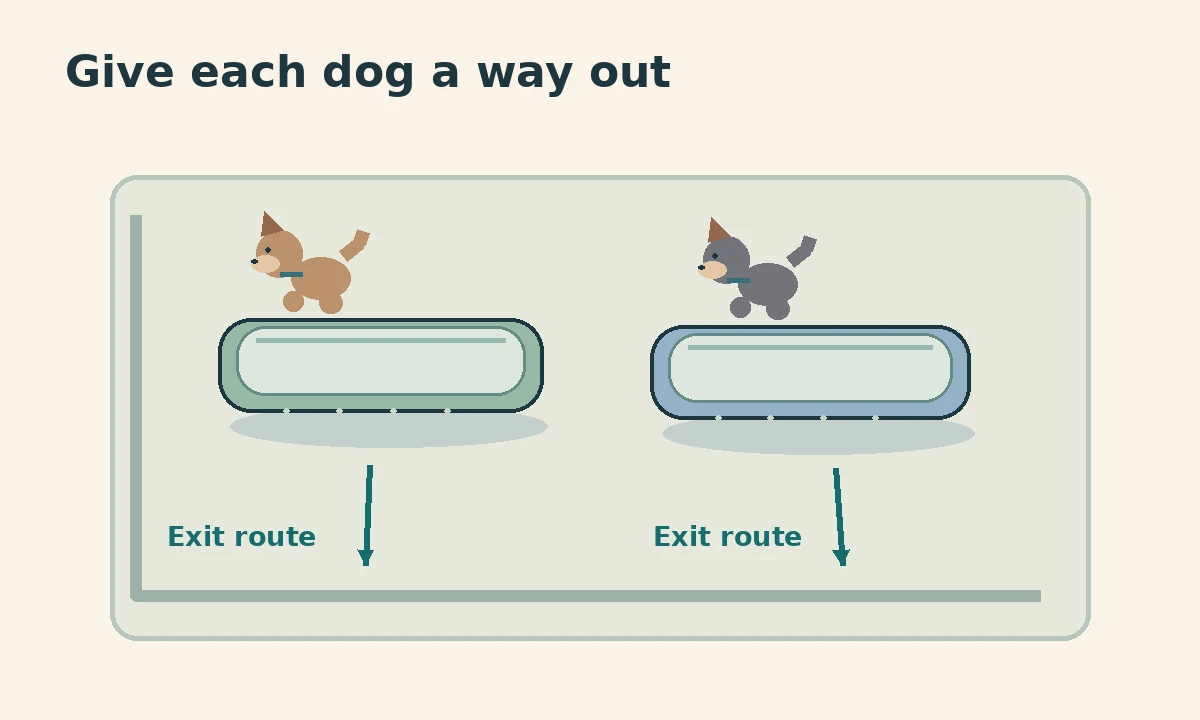
A bed placed between a wall and furniture may create a dead end. One dog could block the only route while turning or getting up. Instead, arrange separate beds with open approaches. Keep the doorway free and avoid placing one animal’s bed inside the other animal’s path to food or water. A dog should be able to leave a resting spot without passing directly across another dog’s body. This matters especially in narrow bedrooms or homes with furniture that creates pinch points.
Compare one large bed with two regular beds
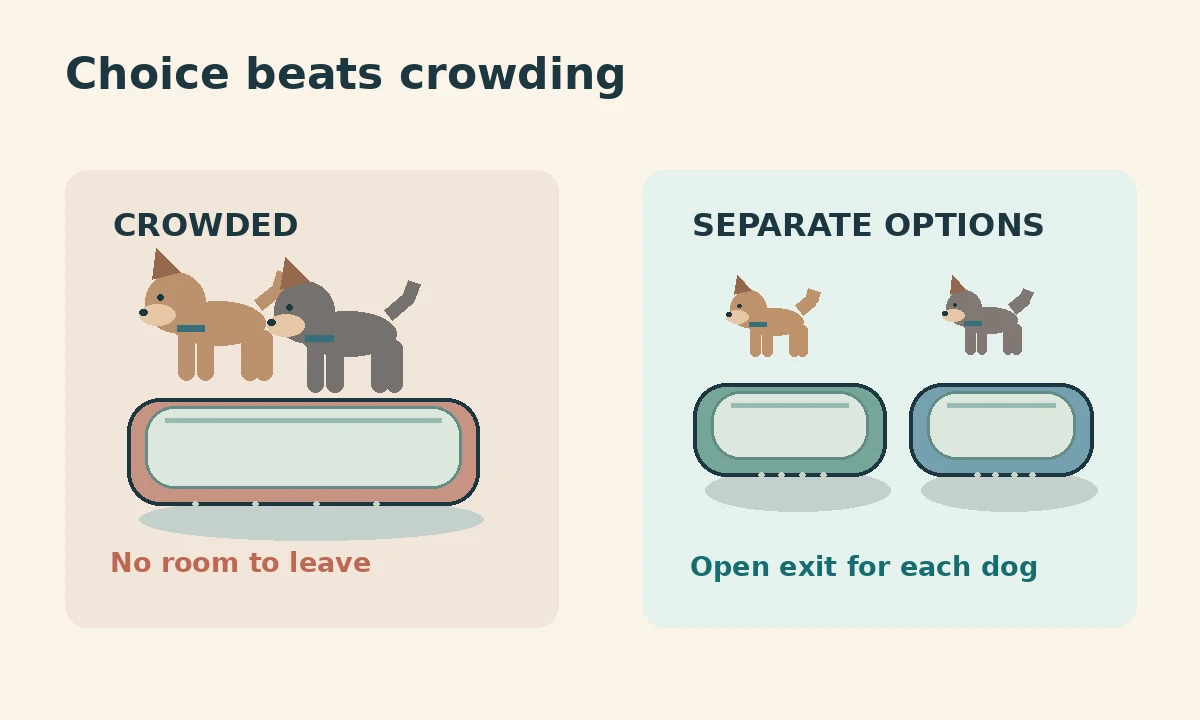
A single extra-wide cushion may suit two affectionate dogs when they freely choose it. But it can become difficult to wash, move, or dry. Two beds offer flexible placement, easier cleaning, and individual support or temperature preferences. They may also reduce competition for a favorite surface. Some households benefit from both options: a shared lounge cushion plus individual beds in quieter places. Do not make the shared cushion the only rest resource. More floor area on paper does not mean greater security in a crowded room.
Match filling and height to each dog
A high bolster may feel cozy to one dog while blocking an easy exit for the other. Soft fiber filling can sink under different body weights, leaving two dogs leaning toward the center. A flatter supportive cushion might offer more predictable space, but preferences vary. Check whether the bed has a level landing surface and whether each dog can stand up without stepping on the other. Never assume that two dogs of equal weight need identical bedding. Comfort is individual, and new stiffness should prompt a veterinary discussion.
Observe subtle signs of crowding
Look for one dog standing over the other, staring, stiffening, blocking, or repeatedly claiming the middle of a resting zone. Also watch whether the second dog waits nearby rather than approaching. Some dogs simply prefer the floor; avoid reading every choice as conflict. Still, take repeated tension around bedding seriously. ASPCA notes that valued resting areas can become guarded resources. Do not reach between tense dogs or force them onto the same bed for a photograph. Provide space and seek a qualified reward-based professional when needed.
Set up different quiet zones
Put one bed where each dog already rests willingly, then add another in a separate low-traffic place. Keep beds out of direct door swings and narrow household paths. If one dog likes a cool area and the other seeks warmth, separating locations lets each choose. Avoid forcing both beds into the same corner merely to make a tidy photo. If you use crates, respect each dog’s separate resting area and never require both dogs to occupy one crate. The goal is predictable access without social pressure.
Use calm invitations, not bed assignments
Show each dog a new bed separately with a calm reward for voluntary interest. Allow sniffing and stepping away without correction. Then observe choices when both dogs have access. You can gently reinforce resting in separate places, but do not use pushing, collar pulling, or food placed between tense animals. Some dogs need more time to learn that a new location feels safe. If a dog guards bedding or threatens another dog, manage distance first and ask a qualified professional for a plan. Never practice sharing during a conflict.

Plan for laundry and replacement
Two medium cushions may fit a washer better than one huge filled bed. However, care instructions vary by fabric and insert. VCA recommends removing fur before washing and allowing bedding to dry fully. Keep a clean spare mat so both dogs retain a comfortable choice while one bed is drying. Inspect exposed seams, loose stuffing, and chewed corners after each wash. A dog who chews and swallows filling requires a different safer design and supervision. Do not treat a clean cover as proof that the center foam is dry.
Revisit the layout as the household changes
Puppies grow, visiting pets change the room, and dogs may prefer different spots with age. Reassess bed sizes and exit routes when furniture moves or another animal joins the home. Watch whether one bed stays unused because of its location, noise, or a competing pet. If a previously relaxed dog suddenly avoids lying down, appears sore, or guards space more intensely, arrange a veterinary check. Your setup succeeds when every dog can relax independently, choose closeness when welcome, and leave without confrontation.
How We Research
We reviewed veterinary and humane handling information alongside practical features of dog beds: entry height, usable floor space, fabric wear, cleaning labels, and the room around a resting animal. These are illustrated inspection guides, not claimed laboratory product tests or guarantees for every dog. Sources were checked for this guide in October 2026. Our editorial information explains our approach, and the veterinary disclaimer explains why behavior changes, distress, and possible ingestion require qualified attention.
Sources
ASPCA — Aggression in Dogs — Behavioral context for dogs that guard valued resting areas; avoid forcing access to a guarded bed.
VCA Animal Hospitals — Should My Dog Sleep in My Bed? — Veterinary discussion of individual comfort, access to resting places, and dogs choosing different surfaces.
VCA Animal Hospitals — Dog Behavior Problems: Stealing and Stay Away — Guidance on providing desirable comfortable resting zones rather than forcing a dog into an area.
They can if both choose it freely, have enough usable space, and show relaxed behavior. Separate beds should still remain available.
Start with at least one independent sleeping option for each dog. An additional shared cushion can be a bonus, not a requirement.
Add distance and separate quiet resting areas. Watch for blocking or guarding, and seek professional help if tension appears.
Do not require two dogs to share one crate. Each needs an appropriately sized independent safe resting option.
Look for loose bodies and free movement. If either dog stiffens, leaves repeatedly, or becomes blocked, give them separate space.