
Dog beds often fail at their seams before the cushion looks worn out. A split corner may release fiber fill, a damaged zipper may expose a hard pull tab, and a loose thread can catch a claw. These are small details with real consequences for dogs that dig or chew while settling. The first step is a careful inspection of the empty bed, not a quick decorative patch. Look for a secure seam, covered hardware, intact filling, and care instructions that make cleaning realistic. If your dog swallows fabric or stuffing, contact your veterinarian; do not wait for a visible problem to resolve itself.

Learn where fabric beds usually wear
Start at the corners, the border between cushion and bolster, and the points where your dog regularly steps. Repeated pawing can abrade thread even when the top panel still looks clean. Turn the bed over and follow every stitched seam with your eyes. A slight surface scuff differs from a gap where filling or lining shows through. A quick look while the dog occupies the cushion can miss hidden damage. Inspect the item when empty and dry, especially after heavy washing or a vigorous digging session.
Check zipper placement and cover flaps
A zipper can make a bed easier to clean, but not every zipper sits safely out of reach. Examine the slider, pull tab, and teeth along their full length. A fabric flap may cover the hardware during normal use; check whether it stays closed when the bed flexes. An exposed metal edge or detachable pull tab invites chewing and snagging. Do not remove a pull tab and leave an improvised sharp replacement. If the zipper catches, pops open, or has missing teeth, follow the manufacturer’s repair guidance or replace the cover.
Identify risky loose filling
Polyester batting, foam chips, and other inserts can escape through a small opening. Even a neat-looking tear may release more filling when a dog digs or curls up. Pick up the loose material and keep the dog away from the damaged bed. Do not allow the dog to investigate fragments as if they were a toy. If your dog may have eaten stuffing or a zipper piece, ask a veterinarian for advice promptly. Avoid trying to make the dog vomit. A covered foam block can still be hazardous if a persistent chewer can reach it.
Decide whether a repair is truly secure
A simple seam separation in an otherwise sound removable cover may be repairable according to the maker’s guidance. But a home patch with staples, safety pins, adhesive tape, loose buttons, or exposed knots adds swallowing or snag risks. Examine the base fabric around the opening; if the material is thin across a large area, stitches may tear out again. A repair must leave no hard edges or accessible loose thread. For a chewer, replacement with a safer design is often more practical than repeated patching.
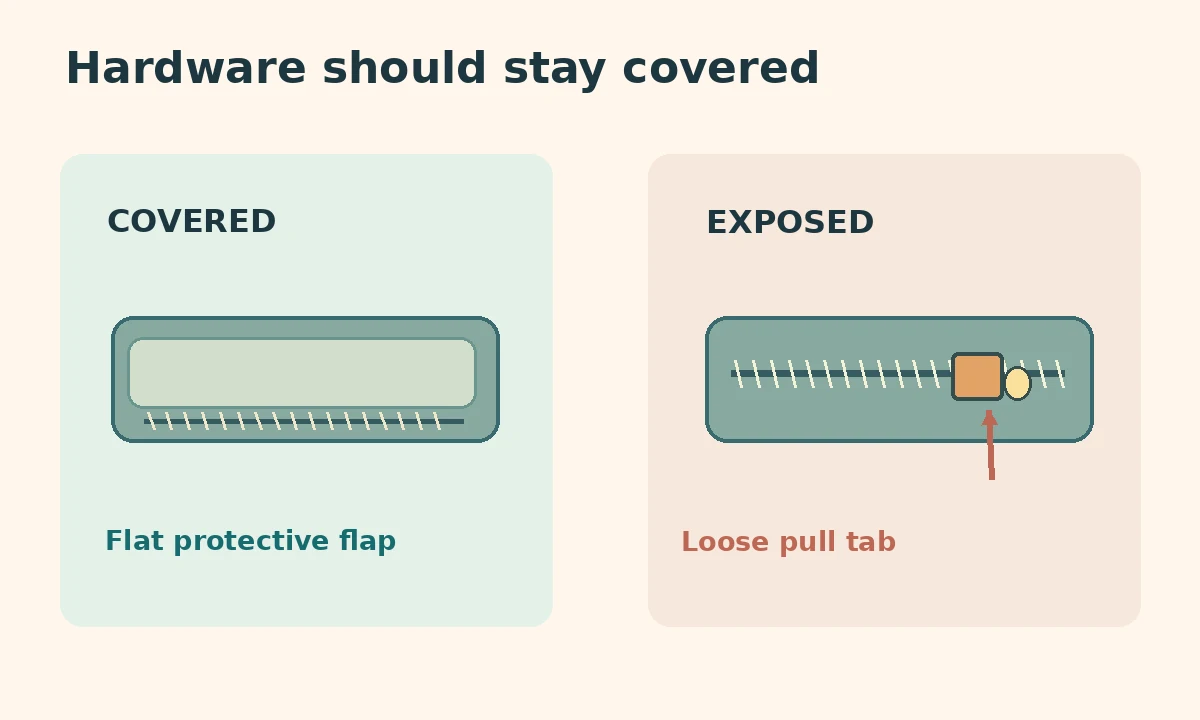
Compare covered and exposed hardware
Put two empty examples side by side: one with the zipper buried beneath a sturdy flap and one with a loose pull tab along the sleeping surface. The first may reduce access to hardware, but it does not guarantee chew resistance. The second offers an obvious grab point. Consider how your particular dog uses the bed. A dog who barely touches the fabric presents different demands from a dog who pulls at corners. Supervise new bedding at first and remove it if the dog begins dismantling seams.
Inspect after every washing cycle
VCA recommends removing loose fur before washing dog bedding and following care instructions. Washing and drying can reveal weak seams, distort a zipper, or loosen a textured backing. Before returning a clean cover, run a fingertip along all edges and check that the zipper closes smoothly without forcing it. Ensure the insert is fully dry. If the filling has clumped permanently or the cover shrunk until the cushion bows, the bed may no longer lie safely flat. Do not overstuff a small cover to make it close.
Watch how your dog interacts with the bed
Some dogs paw a cushion briefly before settling, while others repeatedly grip and shred corners. Watch for persistent chewing, exposed foam, swallowed fibers, or attempts to pull out hardware. Rather than scolding, calmly remove unsafe bedding and provide a suitable supervised alternative. Review exercise and enrichment routines, but do not assume chewing is always boredom. Sudden destructive behavior or signs of distress warrant a discussion with a veterinarian and an appropriately qualified reward-based professional.
Separate cosmetic wear from structural failure
Color fading or a small surface pill may be mostly cosmetic. A rip through a load seam, an opening to stuffing, a zipper that no longer closes, or peeling backing changes the safety of the item. Use a consistent decision rule rather than waiting until most of the bed looks bad. If a component could detach into a chewable piece, stop using the bed. A cover that looks fine from across the room may hide a failing underside; inspect both sides every time.

Fit the cover without stressing its seams
If the bed has a removable cover, follow the insertion method on the label. Fold a foam insert gently only when the maker permits it. Pulling a tight zipper around an oversized insert puts force on the teeth and end seams. Lay the finished bed flat and check that the cover does not strain at the corners. A stretched casing may shorten the useful life of a well-made cushion. If an insert no longer matches its cover after cleaning, use a correctly sized replacement rather than forcing the parts together.
Make inspections part of the rest routine
When you refresh water and pick up toys, take a moment to look at the bed’s corners and zipper. Each week, lift the cushion and inspect the underside and any hidden opening. After washing, inspect again before the dog returns. Keep an alternative rest spot available when you remove damaged bedding. The aim is not to create anxiety over every loose thread but to detect accessible hardware and stuffing early. A sound bed offers a comfortable, intact place to settle, with no tempting detachable parts.
How We Research
We reviewed veterinary and humane handling information alongside practical features of dog beds: entry height, usable floor space, fabric wear, cleaning labels, and the room around a resting animal. These are illustrated inspection guides, not claimed laboratory product tests or guarantees for every dog. Sources were checked for this guide in October 2026. Our editorial information explains our approach, and the veterinary disclaimer explains why behavior changes, distress, and possible ingestion require qualified attention.
Sources
VCA Animal Hospitals — Safe Spring Cleaning With Your Dog — Veterinary guidance on washing and fully drying pet bedding and reducing exposure to cleaning products.
VCA Animal Hospitals — Should My Dog Sleep in My Bed? — Veterinary discussion of individual comfort, access to resting places, and dogs choosing different surfaces.
VCA Animal Hospitals — Dog Behavior Problems: Stealing and Stay Away — Guidance on providing desirable comfortable resting zones rather than forcing a dog into an area.
It can create a chewing or snag point. Look for intact teeth and a protected pull tab, especially with dogs that mouth bedding.
Minor repairs may work if the maker permits them and the result has no loose thread or accessible hardware. Replace badly damaged covers.
Contact a veterinarian promptly. Remove the damaged bedding and do not induce vomiting unless a veterinary professional directs you.
Small cosmetic pills differ from open seams or loose filling. Replace the bed if fibers or hardware detach into accessible pieces.
Check visible edges during daily upkeep and inspect the entire bed after washing or whenever your dog starts digging or chewing more.