
This article provides general pet-product and home safety information, not medical diagnosis or treatment. If your dog shows pain, limping, weakness or persistent reluctance to move, consult a veterinarian before using stairs or ramps. See our veterinary disclaimer.
Foam dog stairs for beds look gentle in photographs, but a plush surface is not automatically an easy staircase. The key question is whether each step stays shaped when your dog puts weight on it. An overly soft riser can collapse into a slope, while a narrow tread may leave no place for a paw to land. This guide is specifically about compressible indoor steps, not a rigid dog-stair buying guide. You will measure the bed, test the foam and cover separately, and decide whether stairs or a ramp better suit your dog’s movement.
Measure the last rise and the real walking path
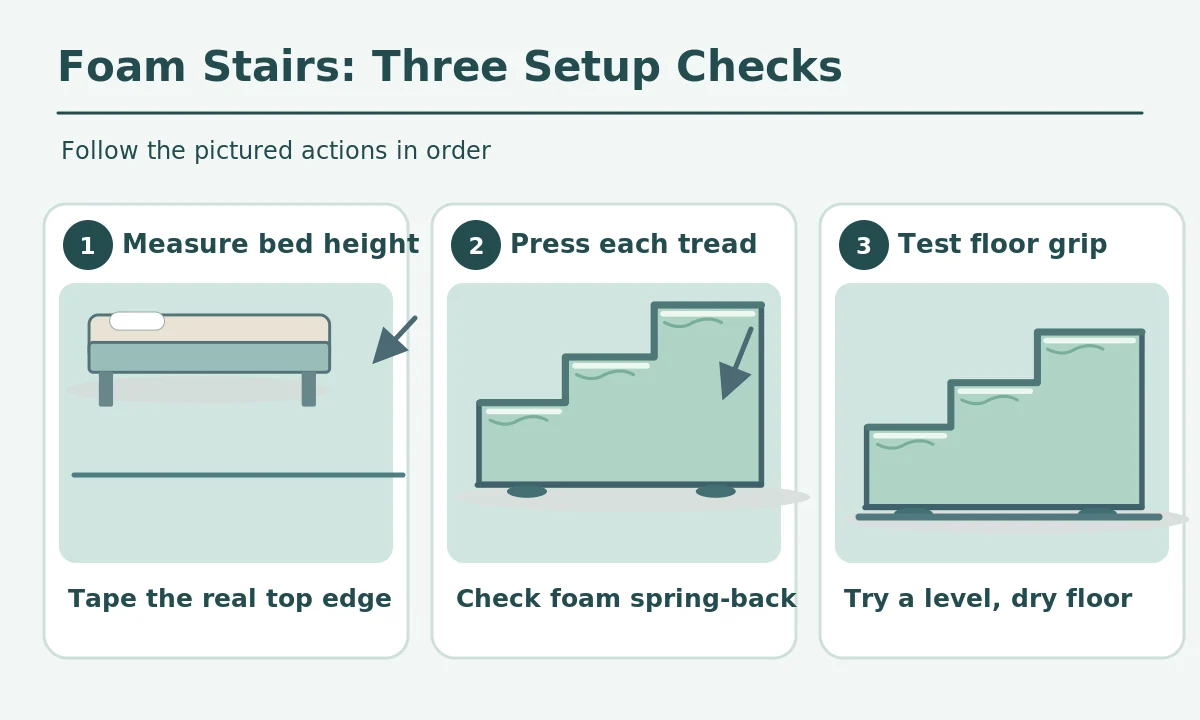
Measure from the floor to the bed surface where your dog actually steps, allowing for mattress compression at the edge. Compare that height with the top of the assembled foam unit; a large final gap can undo the benefit of several smaller steps. Next, measure the horizontal surface on each tread, not the total footprint of the staircase. A dog needs space to put all paws down before starting the next rise. Watch the full approach: if the furniture beside the bed forces a sideways turn, the measured width may not be usable. A less compact model with deeper steps can be more comfortable than a very steep stack. Never place foam stairs on top of another box just to gain height.
Test foam compression on the floor first
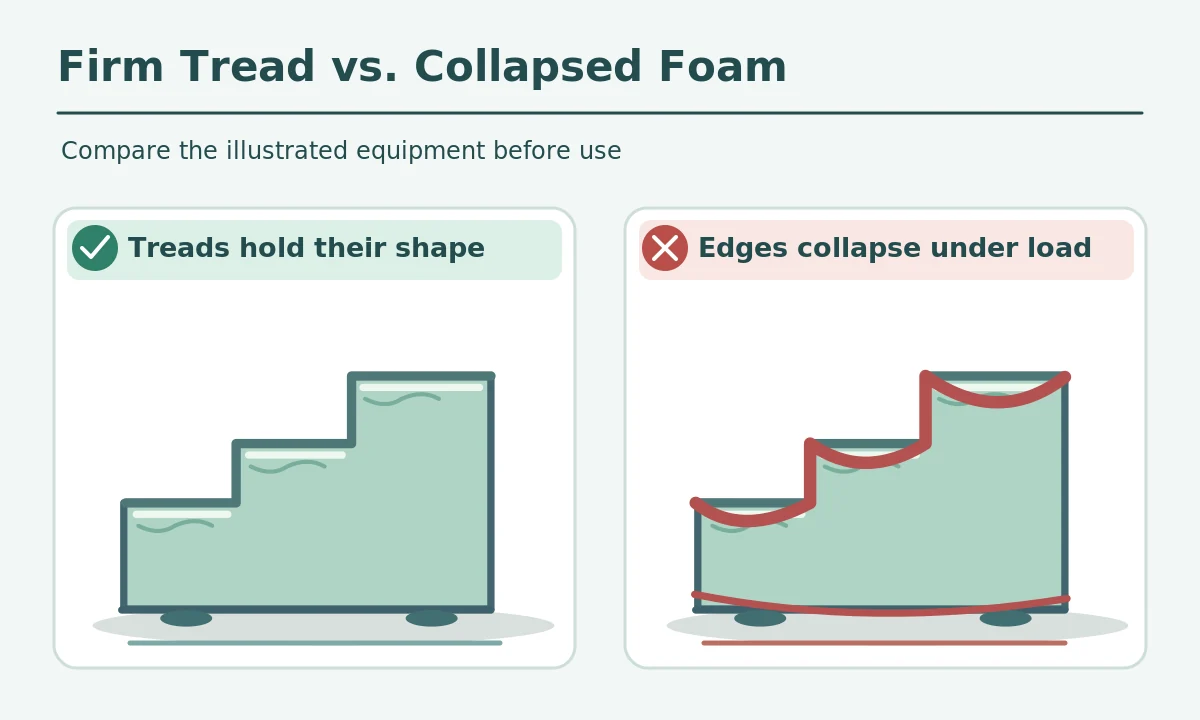
Set the stairs on a hard, level floor and press each tread with a flat hand. Look for a gentle spring-back rather than a deep dent that shifts your wrist forward. Then press along the upper front edge, where paws commonly land during descent. If the edge rolls down or the whole stair shape bows sideways, the unit may be too yielding for confident use. Foam grades are not standardized in listings, and a manufacturer’s capacity claim is not the same as a stability demonstration. Follow the product’s stated weight limit without treating it as a guarantee of fit. If your dog has balance, pain or back problems, ask a veterinarian whether a shallow ramp is preferable.

Inspect the cover and hidden seams
A washable zippered cover is useful only if it fits snugly after laundering. Wrinkled fabric can slide under paws and hide changes in the foam underneath. Stretch the cover gently along each tread and check whether seams sit where paws will land. Look for exposed zippers, loose piping or decorative tassels a dog might chew. Many foam steps use textured fabric for traction; run your hand across the material in both directions, then check it on your actual floor. A smooth velvet-like finish may look inviting but be slippery when a dog moves down. Remove and wash the cover according to its label, dry completely, and retest the fit before returning the stairs.
Keep the whole staircase from creeping
Floor grip is different from paw grip. A dog may have enough traction on a tread yet push the entire foam block backward on a slick hardwood floor. Inspect the underside for a broad rubberized contact area or a stable non-slip pad. Test it without the dog: apply gentle sideways pressure from several directions. A loose bath mat can bunch up and create a new trip hazard; use only a flat, secure product-compatible surface. Place the top snugly against the bed, without creating a pinch point under moving bed frames. Leave clear floor space for stepping off at the bottom. Recheck grip after cleaning because dust and pet hair can reduce friction.
Compare foam steps with rigid steps and ramps
Foam stairs can be lighter to move and often have no hard corners. However, deep compression, shallow steps and fabric movement can make them less predictable than a stable rigid structure. Rigid stairs offer a defined tread but still require the dog to raise each foot onto successive levels. A ramp substitutes a continuous slope, though it needs more floor space. VCA and the American Kennel Club emphasize safe traction, secure placement and the dog’s ability to use the device without distress. Do not buy foam merely because a dog is small or a puppy. Evaluate the individual dog and the intended approach height. Provide a safe alternative if the dog jumps around the stairs.
Introduce one step at a time without pushing
Place the steps flat and motionless beside the bed, with the dog free to sniff them. Reward voluntary investigation, then encourage one easy paw placement with a treat held close to the surface. Avoid pulling the collar, lifting the front paws onto a tread or blocking escape. When the dog comfortably walks onto the lowest step, gradually practice the next one. Start with the bed unavailable if that prevents a sudden leap, then introduce the full route when each step is familiar. The AKC recommends brief reward-based practice and not forcing a reluctant animal up or down. Support any mobility-restricted dog only as your veterinarian instructs. End the session before fatigue or hesitation grows.
Recheck shape after regular use
Foam can gradually retain dents, particularly where paws repeatedly land. Once a week, inspect the upper front edges, underside, zipper and cover tension. Compare the top step height with its original measurement; if the staircase has sagged, a new gap may have appeared by the mattress. Vacuum fur from the fabric according to the manufacturer’s care directions and check that the bottom pad has not curled. Do not wedge cardboard or spare pillows beneath a soft stair to correct a lean. Replace a unit that no longer returns to a stable shape. A useful staircase should feel consistent on the hundredth use, not just on the first day it comes out of the box.
How We Research
We reviewed current veterinary and pet welfare guidance from VCA Animal Hospitals, American Kennel Club, Canine Arthritis Resources and Education. We compared advice about secure traction, access angles, voluntary introduction and supervised use with the physical setups illustrated here. The drawings show simplified generic equipment rather than specific products or independently tested load ratings. We did not perform laboratory slip, strength or water-rescue testing. Always verify manufacturer instructions and any local building or pool requirements before installation. For more information about our approach, see About HubPet.
Sources
VCA Animal Hospitals, Creating a Comfortable Home for Your Mobility Compromised Dog. Read the original guidance.
American Kennel Club, Dog Stairs vs. Ramps. Read the original guidance.
Canine Arthritis Resources and Education, Assistive Devices for Dogs. Read the original guidance.
Safety note: Never force a dog onto steps or a ramp. Inspect the device for shifting and damage before use, and keep children clear of folding hardware. For pain, weakness, a fall or difficulty walking, consult a veterinarian; use urgent care for collapse, trouble breathing or severe injury. Pool exit devices do not replace fencing or attentive adult supervision.
Neither material is automatically safer. Choose the design with stable treads, enough room for paws, reliable floor grip and a height your dog can use comfortably.
Foam compresses under weight, and product measurements may describe the unoccupied unit. Check the effective last rise beside your actual mattress.
A flat, secure low-pile rug may work, but a loose or curled rug can slide or bunch. Test the entire stair unit on the intended surface.
Ask a veterinarian about the dog’s condition before encouraging stairs. A well-supported, gentle ramp or another access plan may be more appropriate.
Follow the product care label, dry the cover completely and confirm that it is snug and the foam is not misshapen before reuse.