
Cat stairs can give a cat another route to a favorite bed, couch or low window perch, but cats vary in how they climb. Some prefer broad stepping platforms; others ignore a staircase and use nearby furniture. The important details are stable placement, comfortable step depth and an easy exit, not an advertised age or breed label. Cats Protection and Cornell describe ramps, steps and rearranged furniture as ways to preserve access for older cats. This article compares designs and shows how to introduce them without forcing contact. A cat that suddenly stops jumping or becomes reluctant to climb may be in pain; contact a veterinarian and consult the HubPet veterinary disclaimer.
Observe the route the cat already chooses
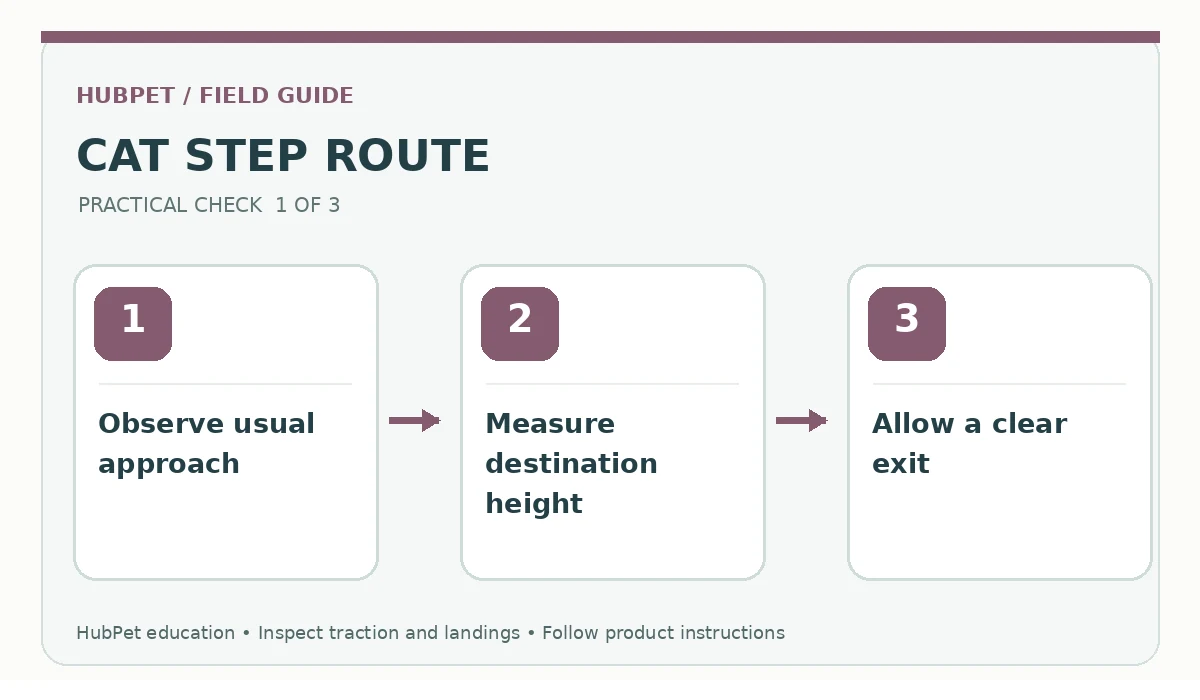
Spend several days noticing where your cat starts a climb, which side of the bed it uses and whether it pauses before jumping down. Some cats prefer a chair as an intermediate platform; others seek a continuous ramp. Record whether the surface underneath is slippery and whether another pet blocks the path. That observation helps you avoid buying a staircase that sits where the cat never walks. For older cats, also watch grooming, play and hesitation at door thresholds. VCA notes that changes in willingness to climb can indicate discomfort. Do not label avoidance as laziness without assessing the broader pattern.
Measure step depth as well as height
Measure the vertical height of the destination and the usable horizontal run on the floor. Then look at the actual flat tread area on each step, excluding rounded noses or decorative trim. A cat needs enough room to place its paws and adjust balance. Tiny, steep steps may be easy for a young agile cat and awkward for an older or less confident one. Wide platforms with clear edges generally give more options for turning. The right dimensions are individual, so observe your cat’s ordinary step length rather than choosing by weight alone. A high weight rating says little about paw comfort.
Prioritize a steady base and non-slip treads
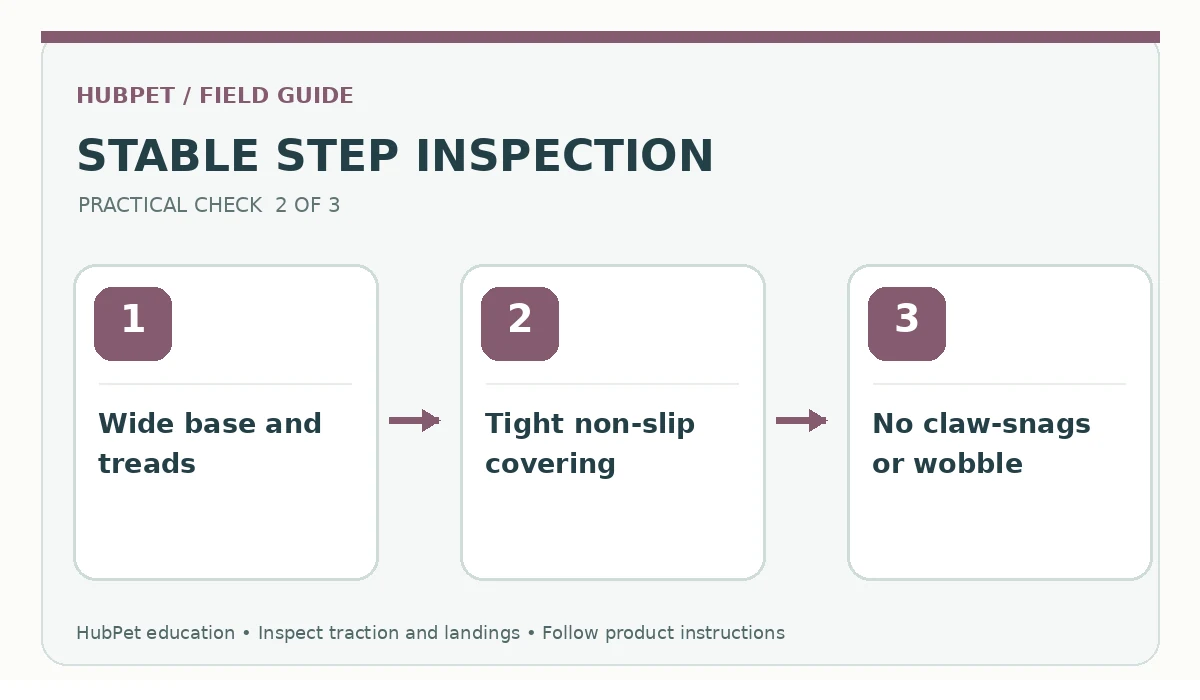
A staircase that wobbles under a hand may move more when a cat leaps off sideways. Check the base width, floor contact, visible joints and any recommended wall or furniture anchoring. Test stability without the cat present. A soft foam staircase may compress or tip unexpectedly if narrow or placed on thick carpeting. A rigid unit may be steadier but must not have sharp corners or slick varnish. Inspect tread fabric for loops that could snag claws. Keep floors underneath dry and free from loose rugs. A staircase cannot function safely if the last step lands on a slippery tile floor.
Choose one clear destination
Place the top platform close to a familiar, reachable spot. A staircase ending inches below a deep mattress can leave one awkward final leap. For a window perch, check that the perch itself is properly secured and the nearby window is protected; stairs do not make an open window safe. Avoid setting the stairs beside a curtain cord or a shelf that could fall. Cornell recommends helping older cats reach favorite areas through firm-footed steps or ramps. Choose one route first and watch actual use before installing extra furniture. Too many objects in a narrow room can make circulation harder.
Keep other animals from blocking the route
In multi-pet households, a narrow staircase can become a point where another cat or dog waits to block access. Provide alternative paths and avoid placing a staircase in a dead-end corner. A resting place needs a way to leave as well as a way to enter. Pay attention to whether a cat waits, freezes or takes a risky jump to avoid another pet. If there is tension between animals, address access and household resources rather than relying on the new equipment alone. An attractive elevated destination is not helpful when a timid cat cannot approach it calmly during busy hours.
Compare carpet, foam, and rigid surfaces
Carpet can provide traction, but loose threads and long pile may catch claws or hold dirt. Foam offers cushioning, yet compression can change the step height with each paw placement. Smooth wood and plastic wipe clean but may need secure textured treads. Check the maker’s cleaning directions and whether the covers fit tightly after washing. A removable mat is useful only if it stays in place. Avoid applying spray adhesive or improvised rough tape to a finished product without understanding whether it changes the surface or creates residue. The best material is the one that stays firm, clean and predictable in your home.
Introduce the stairs with familiar choices
Put the stairs in the chosen location while leaving existing furniture routes open. Let the cat sniff them and walk away. Place a few familiar treats or toys near the bottom, then reward any voluntary exploration. Do not carry the cat to the top and make it descend unexpectedly. If the cat uses only the first step, that still provides useful information. Cats often need time with unfamiliar objects. Watch what happens when the room is quiet and when other pets are nearby. A gradual, choice-based introduction reduces pressure and helps you learn whether the stairs actually suit the cat.
Watch the descent, not only the climb
Cats may climb a new staircase but prefer jumping straight down. That can defeat the purpose for a cat that struggles with landing. Reposition the unit so the first downward step is easy to see and reach. Avoid a high top platform that requires a tight turn toward the wall. A small nightlight can help with consistent navigation, but does not fix unstable furniture. If a cat shows stiffness or an altered gait, discuss it with the veterinary team. Both the 2021 feline senior-care recommendations and Cornell emphasize accessible routes and resources; there is no need to insist that every cat use stairs.
Know when a ramp or intermediate furniture is better
Long, shallow ramps may reduce the need to step sharply between levels, but may take more room. Stable stools can serve as familiar intermediate platforms if it cannot tip and provides adequate footing. Cats with mobility impairment may need an access plan tailored by a veterinarian, especially if moving the rear legs or balancing looks difficult. Do not treat age as a complete explanation for sudden changes. Sometimes the best change is simply relocating a bed and keeping food, water and litter on the same floor. Functional access matters more than buying an elaborate staircase.

Recheck the route as needs change
Inspect the stairs after cleaning and after moving the furniture. Check base movement, loose covers, snagged fabric and the condition of the destination. Watch whether your cat still uses both upward and downward routes comfortably. Record changes in jumping frequency, confidence or grooming, and share concerns with the veterinarian. If the unit becomes a trip hazard for people, move it to a safer position rather than squeezing it into an aisle. A cat-friendly staircase is a stable option the animal can choose, supported by a calm environment and ongoing observation. It is not a substitute for pain assessment or household safety.
How We Research
Our editorial review compared animal-welfare recommendations with consumer safety guidance for pet drinking stations, material safety, cleaning routines, and equipment reliability. Each source supports the specific safety context named above; water circulation and filters do not replace fresh drinking water or cleaning. We did not test specific products in laboratory conditions, certify filtration claims, or receive manufacturer endorsements. Follow equipment manuals and seek veterinary advice when a pet’s drinking pattern changes. We reviewed these sources on October 27, 2026. Read about our editorial standards on the About HubPet page.
Sources
Cats Protection: Making favorite places accessible for older cats. Accessed October 27, 2026.
Cornell Feline Health Center: Supporting older cats with safe stepping routes. Accessed October 27, 2026.
VCA Animal Hospitals: Supporting cats with osteoarthritis and easier access. Accessed October 27, 2026.
American Kennel Club: Dog stairs versus ramps: selection, stability, grip, and introduction. Accessed October 27, 2026.
Either may help; the best choice depends on the cat’s actual movement and household layout. A veterinarian can advise if mobility is changing.
Some may, but check compression, tipping, friction and tread depth. Test the exact unit on your flooring without the cat before use.
It should end at a stable, reachable landing without a difficult final leap or a gap. Measure the destination and the horizontal room available.
Do not force your cat. Leave other safe routes available and reward voluntary investigation. Disinterest can reveal a poor fit or discomfort.
New avoidance, stiffness or changes in jumping can indicate pain or illness. Ask a veterinarian rather than relying on stairs as treatment.