
Dog car ramps can make a high trunk or cargo opening easier to approach, but a model that looks long in a listing may be steep when installed on your vehicle. Measure the ground-to-landing height before shopping and consider the space available behind or beside a parked car. A narrow, slippery or poorly supported ramp can create a new fall risk. This guide explains the critical measurements, practical fit checks, and a low-pressure introduction. VCA and the American Kennel Club advise stable, grippy access and adjustment to an individual dog’s abilities. A sudden reluctance to climb, limping or pain needs veterinary advice, not simply new equipment; see the HubPet veterinary disclaimer.
Measure the actual loading point
Park on level ground and measure vertically from the pavement to the spot where the ramp will rest. That may be a hatch sill, not the top of the bumper. Write down this rise and then measure the clear landing area where the dog’s paws must step off. A hatch latch, raised cargo lip or slippery plastic trim may block a secure landing. Check the same dimensions with the car loaded as you normally use it. Measure at the specific door you intend to use; the rear hatch and side doors can have very different geometry. A ramp advertised for SUVs is not automatically compatible with your SUV.
Estimate how much ground space the slope needs
A longer ramp generally makes a gentler approach for the same rise, but it also extends farther into the parking area. For a rough planning example, imagine a landing 28 inches (71 cm) above the ground and a ramp spanning 70 inches (178 cm) along its sloping surface. That still requires substantial clear space beyond the bumper, plus room for the dog and handler to turn. This is a geometry illustration, not a prescribed medical angle. Some dogs find even a moderate slope difficult. Verify the actual installed angle and the dog’s comfort with a veterinarian when mobility is limited. Never assume the longest ramp is usable in a tight garage.

Look for a firm, grippy walking surface
Run a hand across the tread and consider how it behaves when wet. A slick plastic panel can make a dog hesitate, while overly rough abrasive coating may bother paws. Seek a texture that gives traction without loose grit or sharp edges. Pay attention to how tread sections meet at folding joints; a sudden lip can catch nails. Check that the usable walking width accommodates the dog’s normal stance and room for minor corrections. Side rails may help with confidence, but they do not replace supervision. Test for twisting and bounce on the ground before any dog tries the equipment.
Verify the upper landing and lower feet
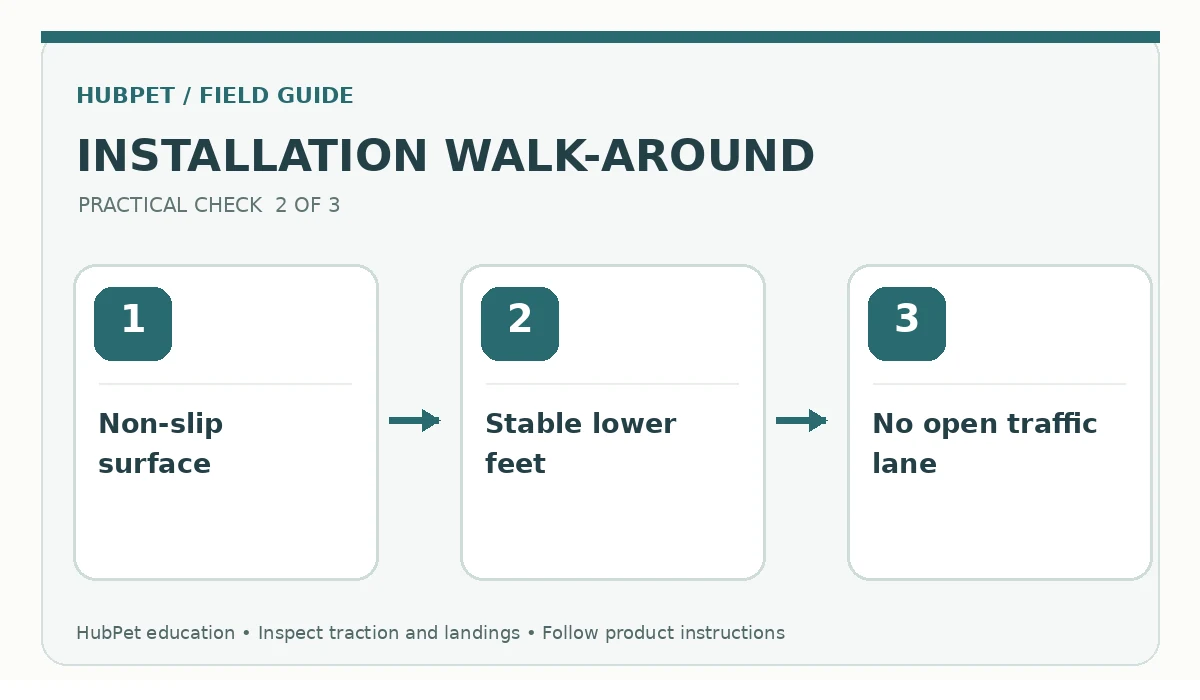
The upper end should sit on the vehicle exactly as the manufacturer instructs. Inspect contact pads and any supplied tether or attachment; never wedge the ramp into a position the manual forbids. The lower feet need a stable patch of ground without loose gravel, ice, oil or a drainage grate. Stand beside the ramp and apply careful pressure to check for slipping or rocking without putting a pet on it. If the ramp shifts, stop. Avoid deploying across active traffic, and choose a quiet parking place with room to guide your dog. A car must be parked, secured, and stationary throughout use.
Match weight rating to the entire setup
Read the maker’s stated load rating and any conditions attached to that rating. The rating may assume level mounting, a specific support position or particular joints locked in place. Your dog’s weight alone is not the whole decision: dynamic movement can load the structure differently, especially if a dog pauses or turns. A thick panel is not automatically stronger than a well-engineered lighter one. Check frame materials, fastening points and the warranty instructions. Avoid improvised repairs to structural hinges or cracked panels. If the pet exceeds the declared safe use range, select different equipment rather than testing the limit.
Practice flat before using the vehicle
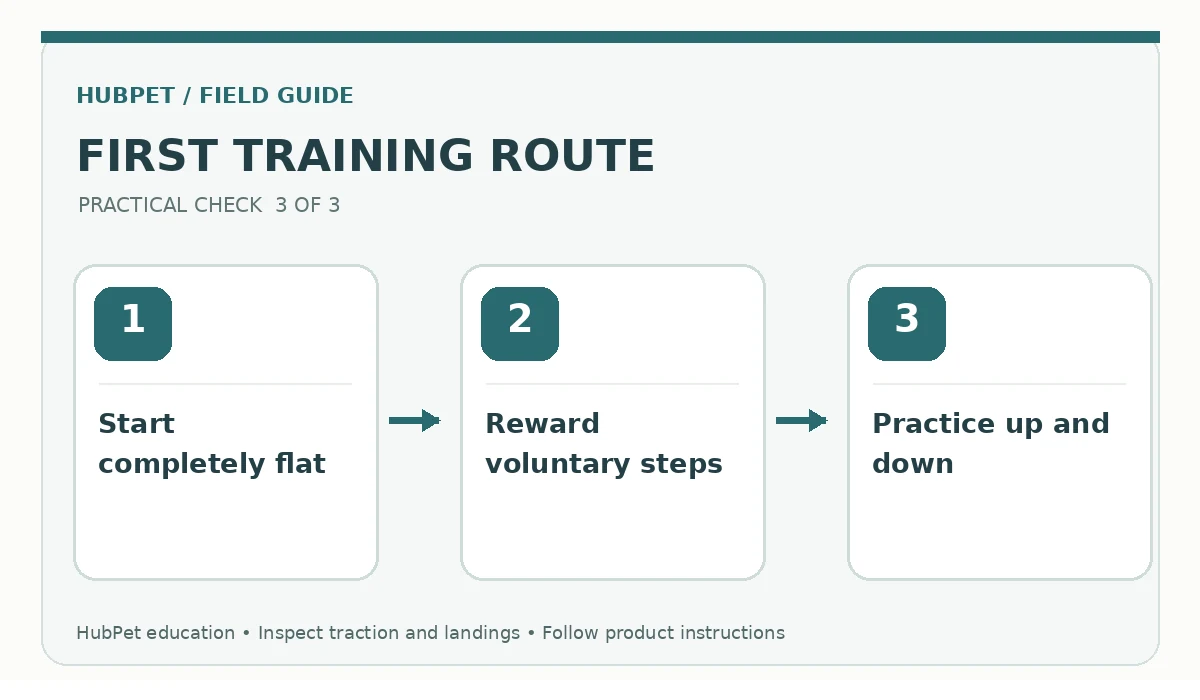
Place the ramp flat on secure indoor ground, away from the car, and let your dog sniff and explore. Reward a glance, a paw placed voluntarily and then a few steps across it. Keep the sessions brief and end before hesitation becomes fear. Ask a helper to steady the equipment according to its instructions; do not hold the dog by the collar or push from behind. Later, practice with a low, secure elevation before trying the actual vehicle height. AKC’s reward-based introduction guidance favors voluntary steps and gradual changes. A frightened dog needs a slower progression, not a stronger pull on the leash.
Plan the return trip and unloading position
Walking down can feel different from walking up. Dogs may accelerate downhill or try to jump from the side near the bottom. Rehearse both directions in controlled, low-stress conditions. Keep a non-slip patch at the upper and lower landings so the first and last steps are stable. If your dog is recovering from an injury or struggles to maintain balance, get a veterinarian’s handling plan before loading. A supportive harness may help the handler stay nearby, but it does not make an unstable ramp safe. Never try the descent for the first time on a busy roadside.
Compare portability with the risk of pinched fingers
Folding and telescoping designs can make a car ramp easier to store, but hinges, sliders and locking buttons are additional failure points. Open and close the unit several times with the dog absent. Check whether it can fold unexpectedly when lifted and whether the grip area keeps hands away from pinch points. Consider the stored dimensions as well as the working length: a ramp that blocks a seat belt or cargo door is a poor fit. A carry handle should remain usable when the ramp is dirty. Store the equipment securely so it cannot slide forward during braking.
Build an arrival and maintenance check
Each time you park, check for adequate clearance, intact joints, dry traction, secure vehicle contact and firm ground. Then give the dog time to approach without pressure. After the trip, remove grit, salt or mud according to the maker’s instructions and inspect hinges for cracks or movement. Replace worn non-slip material only with a manufacturer-approved part. Photograph your installed setup from the side; this helps compare the actual slope when changing cars. Keep a safe alternative for days when conditions make the ramp unusable. A mobility aid works only when caregivers consistently install it correctly.
Know when to seek another access option
A vehicle may be too high, a parking place too narrow, or a dog’s mobility too limited for a portable ramp. Do not force a trial to justify a purchase. Ask the veterinary team about transport assistance, a lower vehicle entrance or a different setup suited to the dog’s abilities. For a dog that suddenly stops jumping, consider pain or illness before assuming stubbornness. The final purchase decision should be based on a tested landing, adequate walking room, non-slip footing and calm voluntary use. No ramp can promise a fall-free outcome; human planning and supervision remain necessary.
How We Research
Our editorial review compared animal-welfare recommendations with consumer safety guidance for pet drinking stations, material safety, cleaning routines, and equipment reliability. Each source supports the specific safety context named above; water circulation and filters do not replace fresh drinking water or cleaning. We did not test specific products in laboratory conditions, certify filtration claims, or receive manufacturer endorsements. Follow equipment manuals and seek veterinary advice when a pet’s drinking pattern changes. We reviewed these sources on October 27, 2026. Read about our editorial standards on the About HubPet page.
Sources
American Kennel Club: Dog stairs versus ramps: selection, stability, grip, and introduction. Accessed October 27, 2026.
Canine Arthritis Resources and Education: Home and vehicle accessibility changes for dogs. Accessed October 27, 2026.
VCA Animal Hospitals: Helping dogs with osteoarthritis at home. Accessed October 27, 2026.
PetMD, reviewed by a veterinarian: When a dog may benefit from stairs or a ramp. Accessed October 27, 2026.
Length depends on the measured vehicle rise, ground clearance, ramp geometry and your dog’s comfort. Compare actual installed angles instead of trusting a generic vehicle label.
Only if the manufacturer supports that installation and the ramp has a stable, unobstructed upper landing. Doors often have different heights and clearances.
A comfortable support harness may help a handler stay close, but it cannot compensate for sliding equipment. Ask your veterinarian for assistance guidance if the dog is unstable.
Begin with the ramp flat, reward voluntary steps and build confidence before elevating it. Stop if the dog freezes, slips or shows pain.
No. Inspect for loose grit, sharp edges, heat buildup and abrasive texture. Dry and clean the tread according to the manufacturer’s directions.