
This guide provides general behavior and safety information, not individual veterinary advice. Seek a veterinarian or credentialed reward-based trainer for persistent fear or possible pain; read our veterinary disclaimer. A backyard fence can become a daily lookout post. The passing dog, moving stroller, mail truck, or neighboring voice may appear only for seconds, yet those seconds can start a long barking episode. Rehearsal matters: repeated unsupervised runs to the fence can make the pattern more automatic. Rather than trying to overpower the bark, change what the dog can see and where they spend time. Wisconsin Humane Society recommends visual barriers and controlled training at a distance. This guide focuses on everyday fence-line arousal and safe recall. It does not suggest tethering a distressed dog outdoors or leaving one alone beside a busy boundary. When fear or aggressive lunging is intense, professional help is safer than repeating exposures.

Find the active viewing gaps
Stand where your dog usually begins to race toward the fence and look from their eye level. A small gap beneath slats can reveal a moving dog before you notice it. Track whether the trigger is visual, auditory, or both. Check for gaps near a gate hinge, broken panels, sharp wires, and climbing footholds. Do not wait for a fence confrontation to begin the inspection. If the dog stiffens at the slightest sound, the training distance must begin farther inside the yard or even indoors. A fence is a property boundary, not a guarantee that dogs on either side feel safe.
Add a safe visual interruption
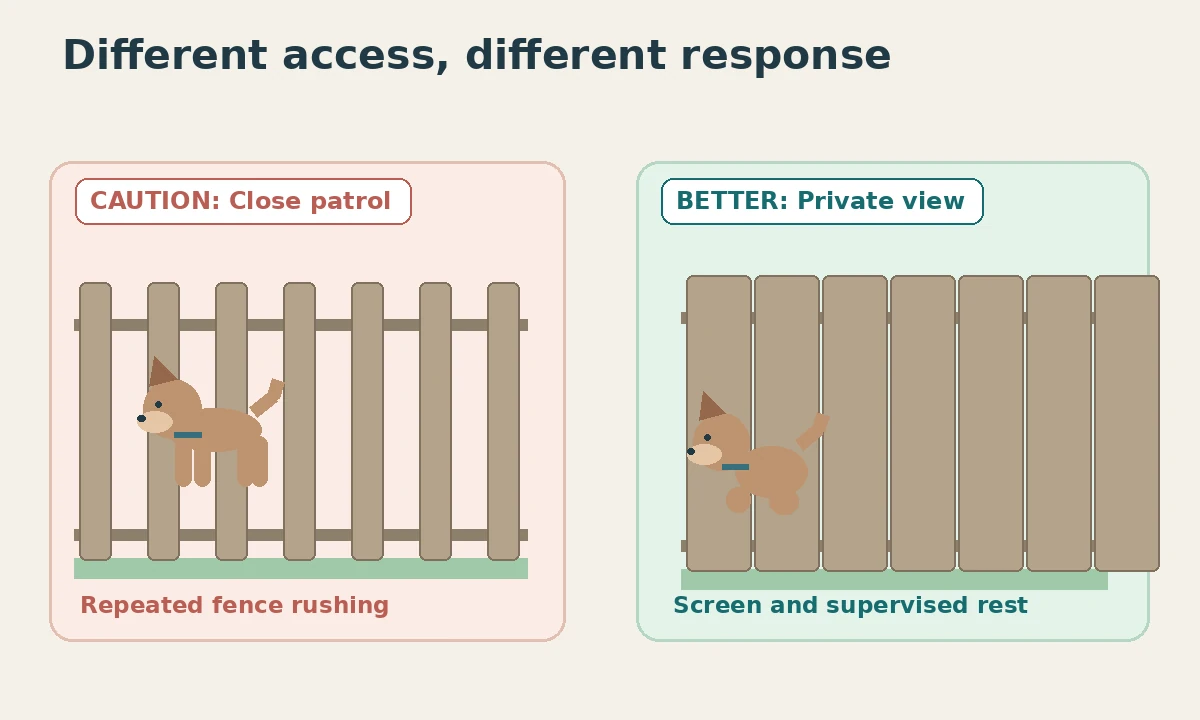
Use secure opaque panels or privacy screening suited to the existing structure and weather. Check that attachments cannot be chewed loose and that the new material creates no sharp ends, trapping loops, or escape gaps. Never rely on fabric loosely tied near a dog who pulls at it. Screen the most active sight line first instead of covering every view at once. A second boundary inside the yard may keep dogs away from close nose-to-nose encounters. If a screen moves in wind, it may become another trigger; inspect it when the area is quiet. Supervise after changes rather than assuming the job is finished.
Give the dog a calmer starting distance
Choose a location where your dog can notice ordinary yard sounds without running to the fence. A patio, back step, or open interior doorway may work. Reward loose posture, checking in with you, and returning from the direction of the boundary. If the dog races away, you were too close or too late to begin. Step farther from the fence, lower the challenge, and practice again later. Do not repeatedly pull a tense dog back toward the stimulus just to practice a command. If dogs across the fence frequently rush or fight, prevent access entirely while you plan safer management with a qualified professional.
Teach a recall before using it near triggers
Indoors, say a cheerful recall cue once, move a few steps away, and reward the dog for coming to you. Repeat in a quiet yard without another animal nearby. Sometimes release the dog back to safe exploration so recall does not always end something enjoyable. Keep sessions short. Use a properly fitted harness and a held leash during controlled practice if necessary, but never attach a line where it may tangle on posts or garden equipment. If the dog cannot turn from a mild distraction, make the practice easier. Do not shout the recall cue dozens of times while the dog is already overwhelmed.
Use a small visible-trigger rehearsal
Once barriers and recall work well in quiet moments, choose a mild trigger that can be observed from a distance. Reward the dog for seeing the movement and staying able to take food or turn toward you. Feed while the stimulus passes if the dog remains comfortable. End before the dog rushes the fence. If barking starts, guide the dog away rather than insisting on continuing. Do not arrange close fence meetings with unknown dogs or ask neighbors to provoke barking. Every rehearsal should preserve a route back indoors. Training helps the dog feel safer at a distance; a barrier handles the rest of the day.
Consider the sounds you cannot screen
A privacy panel does not block a neighbor speaking, delivery brakes, thunder, or another dog barking. Provide a comfortable indoor retreat and let the dog choose it. Try a consistent supervised yard routine with predictable outdoor time rather than leaving the dog to monitor the entire perimeter for hours. Include sniffing, gentle play, rest, and access to water. Do not leave a food toy at the fence if it encourages guarding or attracts wildlife. If a dog begins barking suddenly with other behavior changes, a veterinary check can rule out pain or sensory changes contributing to agitation.
Avoid risky shortcuts near the boundary
Punitive collars, harsh corrections, shouting, and startling sprays can increase fear or frustrate an already aroused dog. A long tether near a fence can catch on posts and is not a substitute for supervision. Do not reinforce a charging pattern by encouraging the dog to chase or guard. Keep children from reaching through the barrier to touch unknown dogs. Inspect screens for wind damage and gates for latch wear after yard work. Consider noise impacts on neighbors as part of a responsible plan. Practical success means fewer rehearsals and easier disengagement, not the removal of every natural bark.
Make a repeatable yard entry routine
Before opening the back door, scan the fence line and close off any unsafe sections. Walk out together to a comfortable point away from the viewing gaps. Reward one calm check-in or easy recall, then allow sniffing and normal movement in the supervised area. When a trigger approaches, invite the dog indoors before arousal climbs. Finish the visit with a calm break rather than repeated fence patrols. Note time, location, and trigger type so you can decide whether a panel or more distance would help. If the dog keeps lunging or cannot recover, stop rehearsals and seek an individualized reward-based training plan.

How We Research
We compare practical advice from veterinary schools, veterinary hospitals, and established animal welfare groups. The specific recommendations focus on the described trigger, safe management, humane reward-based learning, and signs that require individualized help. We do not treat barking as a diagnosis or promise that any device will silence a dog. For our site approach, visit About HubPet.
Sources
Wisconsin Humane Society — Barking Causes and Solutions — guidance on safe barking management, behavior, or related travel considerations.
ASPCA — Territorial Barking — guidance on safe barking management, behavior, or related travel considerations.
VCA — Barking in Dogs — guidance on safe barking management, behavior, or related travel considerations.
No. Visual screening can reduce rehearsals linked to movement, but sounds, frustration, and fear may still need management and training.
No. Unsupervised repeated reactions can strengthen the habit; calmly bring your dog away and reduce access to the trigger.
Begin indoors and in a quiet yard first. Avoid close fence encounters and use distance where your dog can still respond comfortably.
Do not tether an unsupervised dog near posts or gaps. Lines can entangle, and tethering does not resolve the emotional trigger.
Seek individualized help when reactions include lunging, escape attempts, redirected biting, or sustained distress despite distance and barriers.