
This guide provides general behavior and safety information, not individual veterinary advice. Seek a veterinarian or credentialed reward-based trainer for persistent fear or possible pain; read our veterinary disclaimer. A doorbell is a short sound followed by a cascade of movement: people stand up, shoes scuff, and a stranger may appear. It makes sense that a dog begins barking before anyone opens the door. This guide teaches a practical alternative rather than trying to erase normal alert behavior. The dog learns to move away from the entrance to a comfortable mat while you control the visitor route. Practice with a helper on quiet days, not during a busy delivery. Dogs Trust advises starting with a very mild knock and rewarding the dog for calm behavior. Keep the dog physically separate from an exterior door until you are confident in a safe greeting. This plan is for manageable excitement or alert barking, not a substitute for individual assessment when a dog is frightened or aggressive.
Map the actual sound and doorway sequence
Notice whether your dog responds to the chime itself, the approach of footsteps, your sudden movement, or the sight of a person through glass. These are different triggers, and several can occur together. Write down what happens before the first bark. Try a quiet recorded chime without anyone approaching and watch the ears, feet, and breathing. Do not repeatedly play a loud recording to test endurance. A dog who runs for the door may need a closed interior barrier before any sound work. Ask household members to put packages down outside until the dog is safely settled. A training session should not put a guest within reach of an excited dog.
Choose a mat away from the entrance
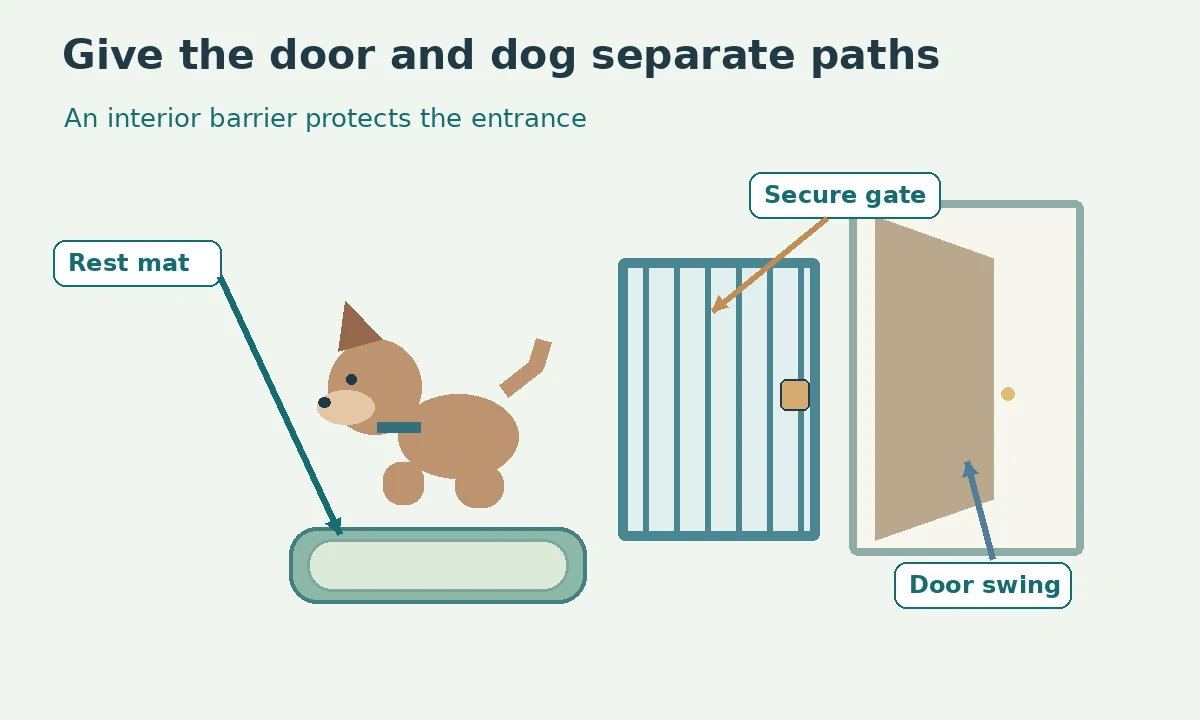
Place a nonslip bed or mat beyond the swing of the front door and outside the visitor walking path. A mat just beside the handle does not change the risky traffic pattern. Make sure the dog can turn around and move away from the mat. Teach the spot without any chime: toss a treat onto the mat, mark when the dog steps there, and let the dog leave before repeating. Gradually reward lying down or resting there when that posture is voluntary. Avoid pushing the dog into position, holding the collar, or using the mat as a punishment. A second gate or interior door is sensible while this habit is new.
Begin with a soft practice knock
Ask a helper to knock softly on a table or play a low-volume doorbell sound. Pair a manageable sound with food on the mat, then stop. The dog should be able to notice the sound and still eat, orient, and move comfortably. If barking escalates, reduce volume, lengthen the distance, or end the exercise. Wait for a relaxed reset rather than trying to shout over the noise. Only once easy sounds become ordinary should you move to a knock at the actual door. This follows reward-based preparation described by Dogs Trust; there is no need to surprise your dog with repeated real visitors.
Make the mat cue practical before opening
Practice sending the dog to the mat while you pick up keys, move a chair, or walk toward the entry. Each movement can predict a door opening, so introduce it separately. Reward the dog for staying comfortable while you take one step closer to the entrance, then return. Do not demand a long stay from a dog who is visibly worried. Check the gate latch and any gaps near the floor. When you must answer an unexpected delivery, management comes first: secure the dog in a familiar comfortable room and open the door only after the pathway is clear. A trained response must never replace a reliable door barrier.
Rehearse with a known helper
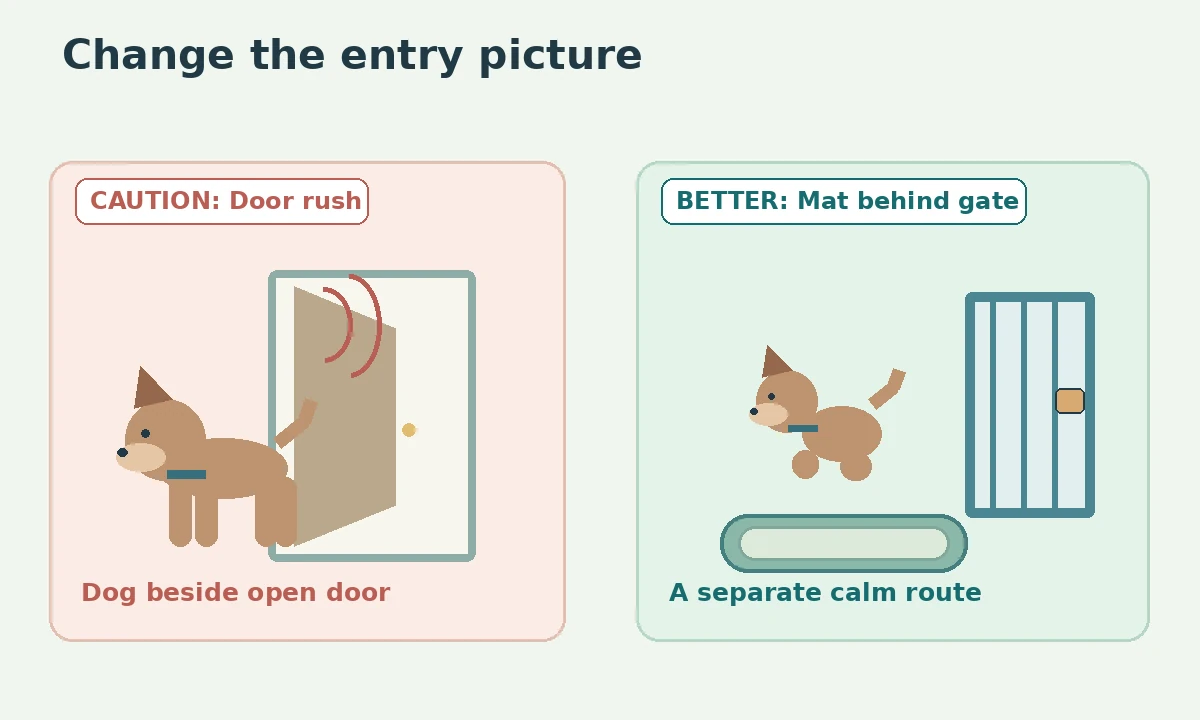
Arrange a helper who will follow instructions and leave if the dog gets overexcited. Begin with the helper outside, a quiet knock, and the dog behind a second barrier. Reward movement toward the mat, calm observation, and recovery after the sound. The helper does not need to pet or talk to the dog. When the dog can remain comfortable, rehearse opening and closing the door while the helper remains still. Use brief sessions and stop at the first sign that your dog is unable to settle. Real visitors can come later. A useful rehearsal ends with the dog relaxed, not with the largest possible challenge.
Distinguish a brief alert from distress
One or two alert barks are not automatically a behavioral disorder. Look at how quickly the dog can disengage and whether the body stays loose. Repeated lunging, rigid posture, frantic scratching at the door, or inability to eat near a visitor call for a gentler plan. Give space and seek guidance from a veterinarian or qualified reward-based behavior professional when reactions are intense. Do not use shock, spray, startling sounds, or punishment to silence the dog. Suppressing a warning may hide a problem while leaving fear intact. Work on the environment and on predictable safe behaviors instead.
Avoid the common training traps
Do not use the real delivery driver as your training partner; their schedule and movement are unpredictable. Avoid moving the mat closer to the doorway simply because your dog succeeds once. Do not have several family members speak conflicting cues at the same time. Repeated loud doorbell practice can make the sound more alarming, not less. Reward the behaviors you want before the reaction builds. If the dog cannot hear a cue during barking, increase distance and simplify the situation rather than shouting. Keep children away from the door and from the dog during arrivals unless an adult has secured both routes.
Use a three-part door plan every time
Before a visit, set up the nonslip mat and close the interior barrier. During the sound, guide or cue your dog toward the familiar calm spot and reward comfortable behavior. After the guest has entered and settled, decide whether the dog should remain in the quiet area or have an optional, supervised greeting. Some dogs prefer not to meet visitors at all. Record which sounds and door movements caused difficulty, then choose an easier starting point next time. Your aim is not a perfectly silent dog; it is a safe entry and a dog who can recover without escalating. Consistency matters more than speed.

How We Research
We compare practical advice from veterinary schools, veterinary hospitals, and established animal welfare groups. The specific recommendations focus on the described trigger, safe management, humane reward-based learning, and signs that require individualized help. We do not treat barking as a diagnosis or promise that any device will silence a dog. For our site approach, visit About HubPet.
Sources
Dogs Trust — Visitor Training — guidance on safe barking management, behavior, or related travel considerations.
ASPCA — Barking and Alarm Responses — guidance on safe barking management, behavior, or related travel considerations.
UC Davis — Barking in Dogs — guidance on safe barking management, behavior, or related travel considerations.
A brief alert can be normal; focus on a safe, predictable route away from the entrance and on how readily your dog settles.
Choose a comfortable location outside the front-door swing and visitor walking path, ideally behind a reliable second barrier.
Yes, at a low level that does not alarm your dog. Gradually progress toward real knocking only while the dog remains comfortable.
Not necessarily. Keep guests separate at first and reward from the safe area; never require a nervous dog to approach a stranger.
Ask a veterinarian or qualified reward-based behavior professional if barking involves panic, lunging, injury risk, or escalating fear.