
This guide provides general behavior and safety information, not individual veterinary advice. Seek a veterinarian or credentialed reward-based trainer for persistent fear or possible pain; read our veterinary disclaimer. You open a laptop or begin a video call and your dog suddenly barks beside the desk. That timing can reflect a learned request for attention, but it can also mean they need water, a bathroom break, rest, or help with discomfort. The answer is not to ignore every sound. First meet genuine needs, then make quiet check-ins easier and more rewarding than repeated barking. VCA explains that human responses such as talking or scolding can unintentionally keep attention-seeking barking going. This article provides a predictable workday routine for an otherwise comfortable dog. Barking accompanied by pacing, panic when separated, or sudden behavior change needs a different assessment rather than an automatic “ignore it” plan.

Check the need before treating it as a habit
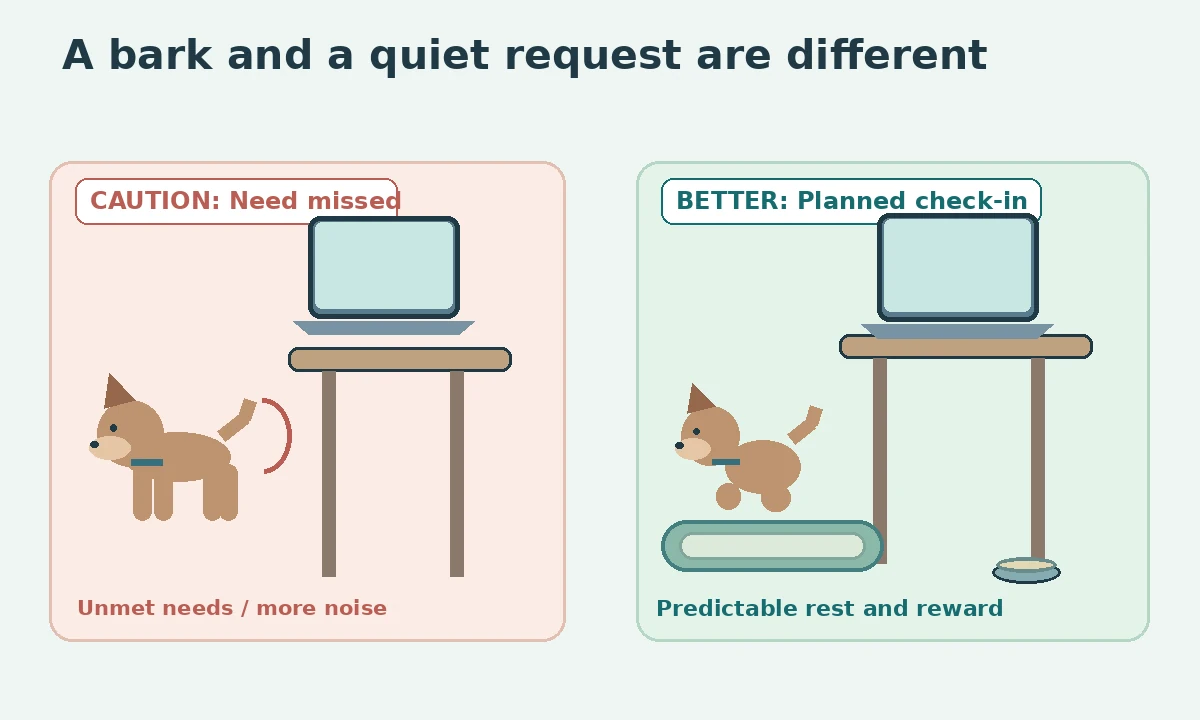
Note the time of barking and what happened in the previous ten minutes. Has the dog had access to water, an elimination break, appropriate activity, and a comfortable place away from the screen? Is the room too warm, noisy, or crowded? A dog may bark because a toy rolled under the sofa or a door blocked access to the yard. Solve practical problems first. If the barking arrives with sudden pain signs, disorientation, or intense distress, consult your veterinarian. Do not label an unmet need as manipulation. A useful behavior plan starts when you can reasonably say the dog is safe and comfortable.
Set a resting mat within easy reach
Put a nonslip bed where the dog can see you without blocking chair wheels, cords, or a frequently opened door. Keep charging cables and small headset pieces out of reach. Teach the mat during breaks, not while your call is already stressful. Reward the dog for approaching, resting, or choosing to move away calmly. Do not tie the dog to the desk or confine them against their will to enforce quiet. A resting area works best when the dog can leave and return. If you use a gate, the dog should already be comfortable on the other side.
Schedule attention before barking starts
Plan short, predictable check-ins around your work blocks. A brief sniffing break, appropriate play, toilet opportunity, or calm touch can make the next period of rest more realistic. Do not assume a dog needs constant stimulation or that every bark calls for an extra game. Match breaks to the dog’s age and comfort. Before a video meeting, provide a familiar safe activity you have already supervised. Avoid introducing a brand-new chew or food toy during a long call. Proactive routines reduce the moments when a dog has to bark to get every need noticed.
Reward calm check-ins instead of demands
When the dog approaches quietly or rests on the mat, offer calm praise, a small food reward, or a short interaction. Mark relaxed behavior before the dog begins a barking cycle. If genuine needs are met and the dog starts familiar attention barking, avoid launching an animated conversation or play session in response. Wait for a comfortable quiet moment and then cue a simple alternative, such as going to the mat. Do not continue ignoring a dog who looks distressed or is trying to reach an essential resource. The target is a clear, rewarding communication routine, not enforced silence.
Plan for the first minutes of a call
Before joining a meeting, check the water bowl, doors, room temperature, and nearby chew hazards. Take a brief planned break with the dog if needed, then offer the familiar mat cue. Keep the dog away from rolling chair bases and dangling headset wires. If barking starts, mute your microphone, check safety, and avoid raising your voice. You may need to pause the call or change rooms rather than force the dog through a difficult episode. Afterward, note what preceded the barking; next time schedule the support earlier. A realistic plan respects both your work and your dog’s welfare.
Use low-pressure enrichment between meetings
Short sniffing activities, easy food puzzles, and gentle walks can provide useful outlets, but toys must match the dog’s chewing habits. Check for loose plastic, exposed batteries, shredded fabric, or pieces that may be swallowed. Introduce each item while you can supervise rather than assuming a quiet dog is safe with any object. Allow rest and sleep; more stimulation is not always better. Dogs may bark when overtired or frustrated by an impossible puzzle. Rotate simple activities thoughtfully and do not rely on food all day to keep a dog silent during work.
Recognize when attention training is the wrong tool
If the dog panics when you leave the desk, scratches doors, refuses food, or cannot settle despite support, consider separation-related distress. Barking with abrupt behavior change can warrant a medical check. Repetitive barking at people outside the window calls for sightline management rather than the same response as workday demands. Watch posture, movement, and recovery time instead of classifying every bark by its sound. Do not yell, spray, startle, or use punishment. A qualified reward-based professional can help you identify mixed motivations and set realistic steps.
Run a simple work-block experiment
For three days, schedule a brief needs check before the same work block. Provide a comfortable mat, reward one voluntary quiet check-in, and record the time when barking begins, if it does. Change only one variable at a time, such as taking the break earlier or moving the mat away from the doorway. Compare patterns rather than promising that a single technique fixes everything. If barking persists, revisit health, exercise, rest, environmental triggers, and whether the dog needs a different arrangement during calls. Success is a dog who can rest and communicate needs without escalating.

How We Research
We compare practical advice from veterinary schools, veterinary hospitals, and established animal welfare groups. The specific recommendations focus on the described trigger, safe management, humane reward-based learning, and signs that require individualized help. We do not treat barking as a diagnosis or promise that any device will silence a dog. For our site approach, visit About HubPet.
Sources
VCA — Tips to Quiet Barking — guidance on safe barking management, behavior, or related travel considerations.
ASPCA — Attention-Seeking Barking — guidance on safe barking management, behavior, or related travel considerations.
UC Davis — Barking in Dogs — guidance on safe barking management, behavior, or related travel considerations.
No. First check safety, water, bathroom needs, and distress. For familiar attention-seeking barking, reinforce comfortable quiet alternatives.
Choose a nonslip mat away from chair wheels, doors, and cords where your dog can comfortably leave or settle.
No. Match activity to the dog, supervise new toys, and include enough rest; frustration or fatigue may also contribute.
Yes. Quiet voluntary check-ins, resting, and other comfortable behaviors are appropriate opportunities for calm reinforcement.
Get veterinary or qualified behavior advice if barking accompanies panic, pain, sudden changes, or inability to settle despite meeting needs.