
Backyard croquet is a slower game than baseball or golf, yet it combines hard balls, swinging mallets, metal wickets, stakes, and small scoring clips. The equipment sits close to the ground where a dog may sniff, pull, or carry an item. Set the course so the dog has an independent path to shade and water without crossing the wickets. A stable, well-organized croquet game is easier for players and less interesting to a curious pet. Choose equipment you can collect and store promptly when the lawn returns to everyday dog use.
Draw a temporary course with a separate dog route
The United States Croquet Association describes backyard nine-wicket arrangements that people can scale to fit different lawn sizes. That flexibility is useful when pets share the property, but it does not justify placing wickets where the dog must pass to reach the door. Mark the playing area and establish a secure boundary. Look for slopes, hidden holes, irrigation heads, exposed roots, and windows in the ball path. Short, even turf helps balls roll predictably, while uneven ground can send a ball toward an unexpected person or animal.
Check the components before placing them
A conventional set includes mallets, hard colored balls, U-shaped wickets, stakes, and sometimes scoring clips. Check each head-to-handle joint, look for splinters in wooden mallets, and inspect metal wicket ends for damage. Separate small clips and storage ties immediately so a dog cannot pick them up. Match the set to the playing age and lawn conditions; a lightweight novelty set and a regulation-style set may have different ball weights and hardware. Neither model belongs with unsupervised pets.
Plant wickets firmly without exposed sharp ends
Plant wickets upright, with both legs in the soil to the depth the equipment and ground require. The USCA rules emphasize firm placement for backyard play. Install them while dogs are in another area, wearing appropriate footwear and following the product instructions. Avoid forcing a bent wire into rocky soil where it may spring back, and do not leave half-installed wickets in the lawn. If one loosens during play, pause and reset it before anyone takes another shot.

Keep scoring stakes out of dog traffic
The scoring stakes define part of the course, but they can also become sharp, rigid obstacles if placed along a commonly used dog route. Choose visible locations within the controlled play area. Use only the included stake hardware and avoid adding a hidden nail or metal spike as a shortcut. If your lawn is too hard to seat a stake correctly, change locations or postpone setup. When the game ends, pull stakes by the recommended method and check the grass for holes or loose fragments.
Control the mallet swing and waiting players
Every hit needs space for the mallet head before and after contact, even when the ball moves only a short distance. Keep observers and the dog outside the active stroke zone. Players should carry mallets with heads controlled and should never swing toward a pet, a person, or another player’s feet. Set mallets on a designated rack or mat between turns rather than leaving handles upright against a fence where they can fall. Adult supervision matters when young players are using heavy or long mallets.
See what an unsafe course layout looks like
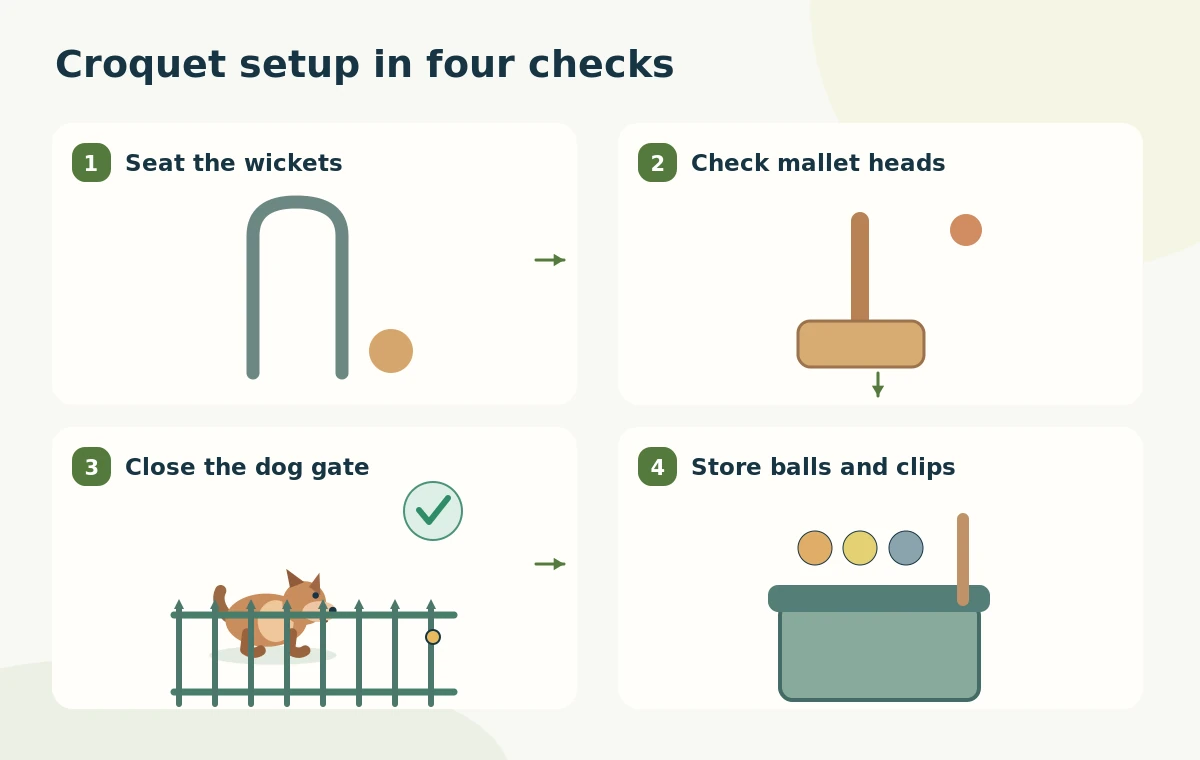
The better visual shows two firm wickets in a marked lane, a mallet parked outside the ball route, and a closed gate for the dog. The caution view places a loose wicket and a hard ball near the dog’s walkway, creating opportunities for chewing or tripping. These scenes show a planning difference, not a test of whether a dog can avoid the hazard. Change the course, not the animal’s access habits, whenever the lines overlap.

Treat croquet balls as equipment, not pet toys
Makers build croquet balls for mallet strikes and may be unusually hard for a dog to bite. Some smaller sets include balls a pet might carry or damage. Even a ball too large to swallow can create tooth or choking problems if a dog tries to chew it. Store the entire set in a sturdy closed container between games. American Humane recommends selecting pet toys by size and durability; that guidance does not turn human sports equipment into suitable pet enrichment.
Adjust for rain and lawn changes
Soft ground may allow a wicket to lean and leaves holes more easily after you remove stakes. A slick patch also changes player footing, so postpone play when people cannot swing safely. After mowing, walk the route for hidden wicket parts or a ball you overlooked. Do not leave the course assembled across a mowing path or dog run. If strong wind or unexpected visitors change how people use the space, stop and clear the activity before restoring normal yard access.
Finish with a deliberate equipment count
Walk the course once with the players and count every ball, wicket, stake, mallet, clip, and bag tie. Inspect any damaged wood or metal before you return it to storage. Fill or make safe holes created during installation as appropriate for your lawn and product, then reopen the yard. If a dog swallows a small clip or fragment, contact a veterinarian rather than trying a home remedy. The Cornell veterinary guidance explains why nonfood items can create serious obstruction even after an apparently minor incident.
How We Research
Our editorial research approach evaluates the visible construction of backyard croquet sets around dogs using the equipment-specific playing rules and assembly guidance cited below. We considered yard traffic, equipment checks, and access to damaged objects. Veterinary and animal-welfare guidance informed that review. The original diagrams explain features rather than measure any particular product. They do not certify a brand or guarantee suitability for your surface. Read the product instructions and local rules. Secure a dog-free playing area before each session. HubPet conducted no independent impact, load, or material tests.
Sources
United States Croquet Association — Nine-Wicket Backyard Croquet Rules. Consult the linked source for its original context and model-specific details.
American Humane — Choosing Safe Toys for Pets. Consult the linked source for its original context and model-specific details.
Cornell University College of Veterinary Medicine — Foreign Body Obstruction in Dogs. Consult the linked source for its original context and model-specific details.
Safety note: This article offers general equipment and pet-access information, not veterinary advice. For injuries, choking, suspected ingestion, or sudden illness, contact a veterinarian promptly. See the HubPet veterinary disclaimer.
Remove temporary wickets and stakes after the game so the dog can use the yard without exposed hardware or obstacles.
No. Makers design croquet balls for mallets and may be too hard or otherwise unsuitable as dog toys.
Stop play and reset it according to the set instructions in appropriate soil, or select a different area.
Yes. Each stroke needs a clear swing zone, with onlookers and dogs outside the playing area.
Count balls, wickets, stakes, mallets, and any clips against the set contents before the dog returns to the lawn.