
A dog backpack carrier may help a small dog join a short outing without walking the entire route, but a striking product photo does not show how the dog sits when someone moves. Some designs leave limbs dangling or keep the dog upright for long periods. Others support the body inside a more stable enclosure. The right choice depends on the individual dog, not the bag’s appearance.
Backpack carriers are not a substitute for a veterinarian’s advice about mobility, breathing, injury, or exercise tolerance. Dogs can also become overheated when carried close to a person’s back. Begin with the dog’s comfort and whether travel is appropriate. See our veterinary disclaimer before applying general advice to a dog with medical needs.
Decide whether backpack transport is necessary
Consider the actual reason for carrying your dog. An occasional short stretch away from crowded pavement is different from an all-day hike. Your dog still needs breaks, water, relief opportunities, and the ability to move normally. A backpack should support a limited transport task rather than function as constant confinement during recreation.
Ask whether a ground-level carrier, stroller, vehicle trip, or adjusted walking route would meet the need with less strain. If you are carrying a dog because it cannot walk comfortably, consult a veterinarian about the cause before choosing exercise equipment. Buying a bag should not hide pain or weakness.
Study posture instead of a maximum weight number
Many backpack listings emphasize weight limits while showing little about the dog’s body position. Check head clearance, spinal posture, chest support, hindquarter support, and whether the animal can rest without pressing against rigid edges. An upright, legs-out design may not suit a dog that needs a natural resting position.
Measure chest depth, back length, shoulder width, and body weight. Compare the manufacturer’s actual internal space with the dog’s shape. If your dog is suspended mainly by fabric around its shoulders or abdomen, seek a more supportive design. A photo of another breed wearing the same size is not a reliable fit test.

Check heat and airflow at the wearer’s back
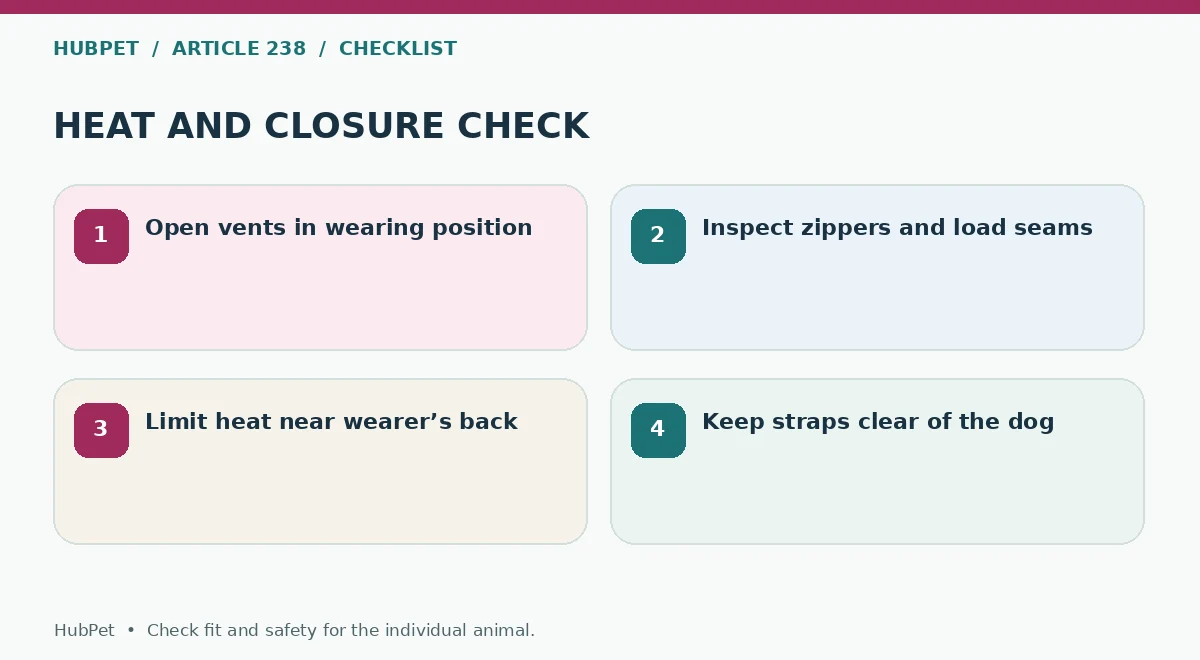
A backpack sits against a warm human body and may have less air movement than an open carrier. Inspect ventilation panels in the exact wearing position, with straps adjusted and any storage pockets filled. Material that looks breathable on a product page can still block airflow when pressed against clothing.
Short-nosed dogs, older dogs, and dogs with cardiopulmonary problems may be especially vulnerable to heat and breathing stress. Choose cooler outings and shorter distances, but do not treat those precautions as permission to ignore distress. Move the dog to a cool safe space and seek urgent veterinary help if severe overheating symptoms appear.
Examine every opening and internal restraint
Check that an opening cannot gape when the wearer bends or leans sideways. Zippers, flaps, and mesh need to stay shut even if the dog shifts weight suddenly. Inspect exposed buckles and seams that might rub the chest or shoulders. A neck opening must not bear the dog’s weight.
Do not attach a short interior tether in a way that could tighten around the neck or entangle the dog. Use only hardware and attachments the maker describes as safe. Keep a hand near the carrier when loading, unloading, or reaching for gear because falls can happen in a moment.
Fit the human wearer without losing dog stability
Adjust the shoulder and waist straps so the carrier does not bounce or tilt during normal walking. The dog should not swing against your back whenever you turn. Try the empty bag with a similarly weighted object before placing a dog inside. A stable load is easier to manage and less startling for the animal.
Notice your balance on stairs, doorways, and uneven paths. If the bag sits too low or blocks your view when turning, it creates a risk for both of you. Do not use a backpack carrier while cycling, climbing, or performing another risky activity unless the specific activity and product are demonstrably appropriate.
Introduce the bag at floor level first
Set the carrier on a stable floor with all openings accessible. Invite your dog to investigate voluntarily. Give rewards for placing paws inside or standing calmly next to the bag. Later, when the dog is comfortable, practice correct positioning for a few seconds while the bag remains supported by the ground.
A first lift should be brief and close to the floor, with another adult available if needed. Stop if your dog braces, whines, pants excessively, or tries to jump out. Our cooperative handling guide explains how to keep practice low pressure.
Use a short field test, not an endurance trial
Once indoor fitting is comfortable, take a very short walk in a quiet, cool location. Pause to look at the dog’s breathing, facial expression, body position, and willingness to exit. Carrying removes some walking demands but adds confinement and movement with the wearer. The dog may find those sensations tiring or unsettling.
Inspect rubbing points after the outing. Stop if fur is trapped, skin becomes red, or weight settles unevenly. A bag that works for a few minutes cannot automatically be assumed comfortable for an hour. Build time slowly and follow the dog’s response, not the carrier’s advertising.
Pack lightly and keep quick access available
Do not fill storage compartments until they press against the animal or obstruct mesh. Keep water and simple supplies separate from the dog’s interior space. A carrier should be easy to take off without twisting the dog into a tight opening. Practice unloading at home before trying a busy walkway.
Avoid decorative accessories, dangling leashes, and small loose objects where paws can catch them. If the dog needs a break, place it on safe ground or move to an appropriate resting location. Never leave an animal in a backpack that is hanging from a hook or standing unsupported.
Spot situations that call for another transport plan
Dogs with severe heat sensitivity, respiratory problems, suspected spinal pain, or marked anxiety may not tolerate being carried this way. A large or heavy dog may be unsafe for the human to carry, even if the product lists a high weight limit. The safest design still cannot compensate for poor fit.
When movement itself causes discomfort, veterinary assessment should come before equipment shopping. For anxiety caused by handling, start with voluntary practice and a different way of moving the dog. Our travel-anxiety guide addresses a separate common source of distress.

Choose by pass-or-stop criteria
A suitable backpack supports the dog evenly, protects breathing space, closes securely, stays ventilated, and remains stable while you walk. The dog should enter willingly and show relaxed behavior during short trials. Take the carrier off immediately if the fit slips or the animal appears uncomfortable.
Reject marketing claims that replace these tests with a photo, breed list, or large maximum-load figure. Keep proof of purchase and read the return policy before an outdoor trial. Your dog’s response after a brief calm session is more informative than a product’s popularity score.
How We Research
We compared this article’s choices with current veterinary, animal-welfare, and transport guidance, checking the cited sources on October 26, 2026. Recommendations focus on observable fit, safe handling, and real-world limits rather than unverified brand claims. Product specifications and travel rules can change, so confirm them with the provider and your veterinary team. We have not purchased, laboratory-tested, ranked, or endorsed individual models. Read more at About HubPet.
Sources
AVMA: Traveling with your dog or cat. Accessed October 26, 2026.
Cornell University College of Veterinary Medicine: Traveling safely with your dog. Accessed October 26, 2026.
AVMA: Warm weather pet safety. Accessed October 26, 2026.
No. Size and weight ratings do not prove supportive posture, airflow, or the human wearer’s balance. Very large dogs and medically vulnerable dogs may need a different transport method.
Avoid prolonged unsupported postures. Look for reliable support of the body and comfortable head, chest, and hindquarters. Ask your veterinarian if you are unsure about a specific dog.
Use a well-ventilated design, avoid hot outings, keep sessions short, and monitor continuously. Any significant breathing trouble or overheating signs require immediate action and veterinary advice.
Do not assume ordinary walking backpacks are safe for biking or other high-speed activities. Falls and poor restraint can cause serious injury; choose a safer transport arrangement.
Do not force entry. Practice voluntary exploration at floor level and reward calm behavior. If fear persists, choose another option or seek qualified humane behavior guidance.