
“Airline-approved cat carrier” is a shopping phrase, not a universal certification. The Federal Aviation Administration lets individual airlines set cabin-pet policies, and some do not allow pets in the cabin. Even a carrier sold as approved may be too large for a particular aircraft seat or unsuitable for your cat. Buy only after matching your airline, itinerary, and animal.
Flying may not be the kindest option for every cat. The American Veterinary Medical Association advises evaluating temperament and health, while IATA recommends advance planning and confirming the airline’s container requirements. Speak to your veterinarian about an anxious, ill, or short-nosed cat before booking. HubPet’s veterinary disclaimer explains the limits of a general travel guide.
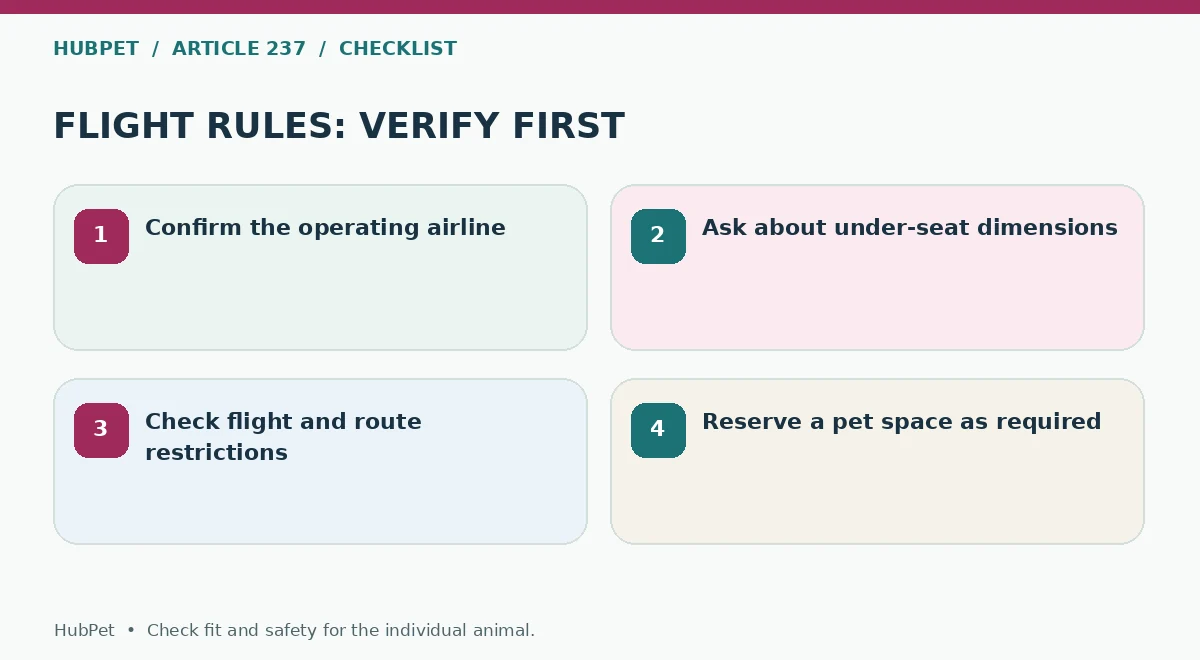
Ask the airline what type of pet travel it permits
Start with the airline’s current pet policy and your complete itinerary, including connecting flights. Confirm that a cat can travel in the cabin, whether you need to reserve a pet space, and whether your route has restrictions. Capacity limits or codeshare arrangements can affect the answer even when the carrier itself looks appropriate.
Ask about required documents, cat and carrier weight limits, and whether the animal must remain inside the bag throughout the flight. Confirm the policy directly before paying for a ticket. A retailer’s label or another traveler’s experience on a different route cannot replace your own booking details.
Check the actual under-seat space
The FAA states that an in-cabin pet container must fit beneath the seat and be stowed correctly when required. Airlines often publish permitted dimensions, but available space can differ by aircraft and seating position. Request the limits for your itinerary and compare them with the carrier’s full outer dimensions.
Measure the bag with handles, wheels, side pockets, and any stiff frame in their normal travel positions. Soft sides may compress slightly, but the cat still needs usable space and ventilation. Do not plan to squash a carrier around the cat merely to satisfy a seat measurement.
Measure the cat before ordering the bag
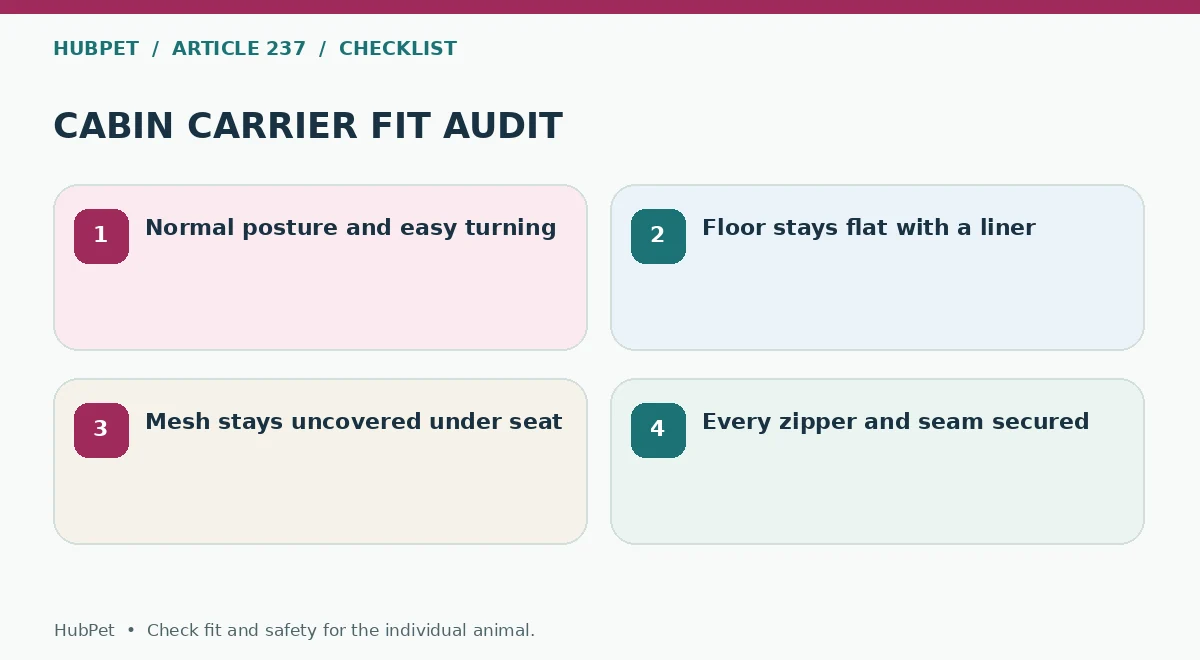
Check the cat’s normal standing height, body length, and resting position. Look for an interior that lets the animal turn and lie comfortably without folding its neck or pressing against mesh. A weight allowance alone cannot show whether a long-bodied cat fits. A liner and raised seams reduce real internal room.
If cabin size limits prevent an appropriate fit, reconsider the flight or ask the airline about alternatives. IATA’s travel guidance emphasizes a container in which the animal can turn, sit, and lie naturally. No trip is worth forcing a cat into a bag that makes normal movement impossible.
Choose ventilation that stays open under the seat
Mesh should permit airflow without allowing teeth or claws to open a route out. Check where each air panel sits when the carrier is placed under the seat. A side pressed tightly against a solid barrier contributes little ventilation. Avoid covers, bulky luggage, or blankets that block the available vents.
Test an empty bag on a flat surface and confirm that the frame does not collapse across the mesh. Cats can become stressed in warm, crowded travel spaces. A short-nosed or medically vulnerable cat warrants veterinary advice before flying rather than a promise that extra mesh will eliminate the risk.
Inspect doors for both security and gentle handling
Check zipper ends, slider locks, door seams, and any opening that could part when the cat pushes. The entry should permit calm placement and removal without twisting the animal. A removable or top-access panel can help in a veterinary setting, but each extra opening also needs a dependable closure.
Practice opening and closing with the carrier empty until there is no snag. If the cat claws at the mesh or bites the door in home trials, pause training and seek advice. Strong zippers are not a solution for escalating panic or a cat whose confinement distress remains unresolved.
Prepare for airport screening without a loose cat
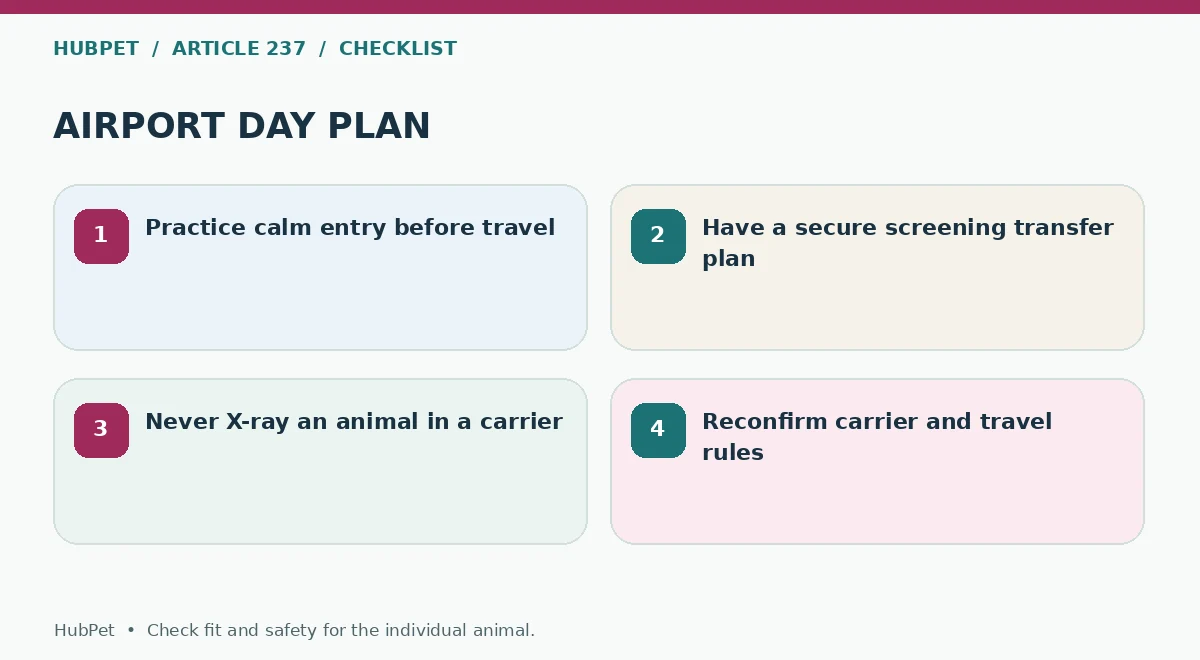
Ask the airport and airline about the screening procedure before the travel date. AVMA describes situations where a pet must leave the container while the empty carrier goes through screening. Prepare an appropriately fitted harness or other approved safe handling plan and request help when needed.
Never put a cat through an X-ray conveyor inside the bag. Keep identification details current and avoid opening the carrier in a busy uncontained space unless directed by trained staff. A nervous cat can slip away quickly. Plan a safe transfer method rather than improvising at the checkpoint.
Teach the carrier weeks before the flight
Leave the travel carrier open in a quiet room and allow the cat to approach on its own. Place familiar bedding inside if safe, and reward brief voluntary visits. Later, practice short, calm door closures followed by immediate release. The aim is predictable comfort, not shutting the cat in for a long rehearsal.
Move on to brief lifting and very short trips when the cat remains settled. A cat that freezes, pants, vocalizes persistently, or throws itself against the opening needs a slower plan and possibly veterinary behavior input. Our carrier introduction article explains gradual training.
Pack for clean, stable travel rather than decoration
An absorbent removable pad, stable floor, and accessible carrier handle are more helpful than decorative pockets. Check how you will clean the bag after an accident and how soiled fabric can be replaced. Avoid attaching charms, straps, or loose toys where they could block ventilation or become entanglement hazards.
Keep the carrier level when lifting it. The shoulder strap attachment should not pull the base into a slope. Record your airline’s policy, flight confirmation, carrier dimensions, and veterinary documents in a travel note that you can reach without opening the enclosure.
Do not assume a cargo kennel follows cabin rules
Cabin carriers and cargo containers are not interchangeable. Cargo travel may require a hard shell, different locking hardware, specific ventilation, and an airline-approved handling route. IATA and AVMA explain that cargo arrangements have separate considerations, particularly for animals with breathing vulnerabilities.
If your cat cannot travel comfortably in a compliant cabin bag, ask the airline and your veterinarian about realistic options rather than buying a marginal fit. Recheck both airline and destination requirements close to departure. The rules and available services can change.
Use a final go-or-no-go checklist
A suitable carrier meets the airline’s verified rules, fits the actual cat, closes securely, keeps the floor level, and stays ventilated in the intended position. Your cat should also have time to become comfortable with it. Treat each item as a necessary check rather than an optional convenience.
If one condition fails, do not hide it under a blanket or force the frame into position. Change carriers, adjust the travel plan, or postpone travel. For additional stress-reduction ideas outside the airport, see our guide to calmer car rides with cats.
How We Research
We compared this article’s choices with current veterinary, animal-welfare, and transport guidance, checking the cited sources on October 26, 2026. Recommendations focus on observable fit, safe handling, and real-world limits rather than unverified brand claims. Product specifications and travel rules can change, so confirm them with the provider and your veterinary team. We have not purchased, laboratory-tested, ranked, or endorsed individual models. Read more at About HubPet.
Sources
FAA: Flying with Pets. Accessed October 26, 2026.
AVMA: Traveling with your dog or cat. Accessed October 26, 2026.
IATA: Traveler’s Pet Corner. Accessed October 26, 2026.
No. There is no universal retailer label that replaces the operating airline’s rules. Confirm your route, aircraft, bag dimensions, and current pet policy directly.
Sometimes. It must meet the airline’s current requirements, remain secure and ventilated, and allow reasonable movement. A collapsible bag must not crush the cat.
Do not force a cramped fit. Ask the airline about acceptable options and discuss the animal’s fitness for travel with your veterinarian before proceeding.
Screening may require removal of the animal while the empty carrier is checked. Ask about the procedure and prepare a secure handling plan; never place a cat inside an X-ray machine.
Do not give sedatives or tranquilizers on your own. AVMA advises veterinary consultation because travel medication can have important risks and airline restrictions.