
An indoor cat might use a scratching post daily and still have a sharp claw that catches a blanket. Another cat may go months without an obvious trimming need. The key question is not whether the cat lives indoors, but whether each claw remains comfortable and functional. Scratching removes outer sheaths and supports normal behavior; it does not guarantee that every tip stays short. Learn to check claws, choose scratching outlets, and distinguish routine maintenance from warning signs that call for a veterinarian. See our veterinary disclaimer for pet health questions.
Scratching and trimming solve different problems
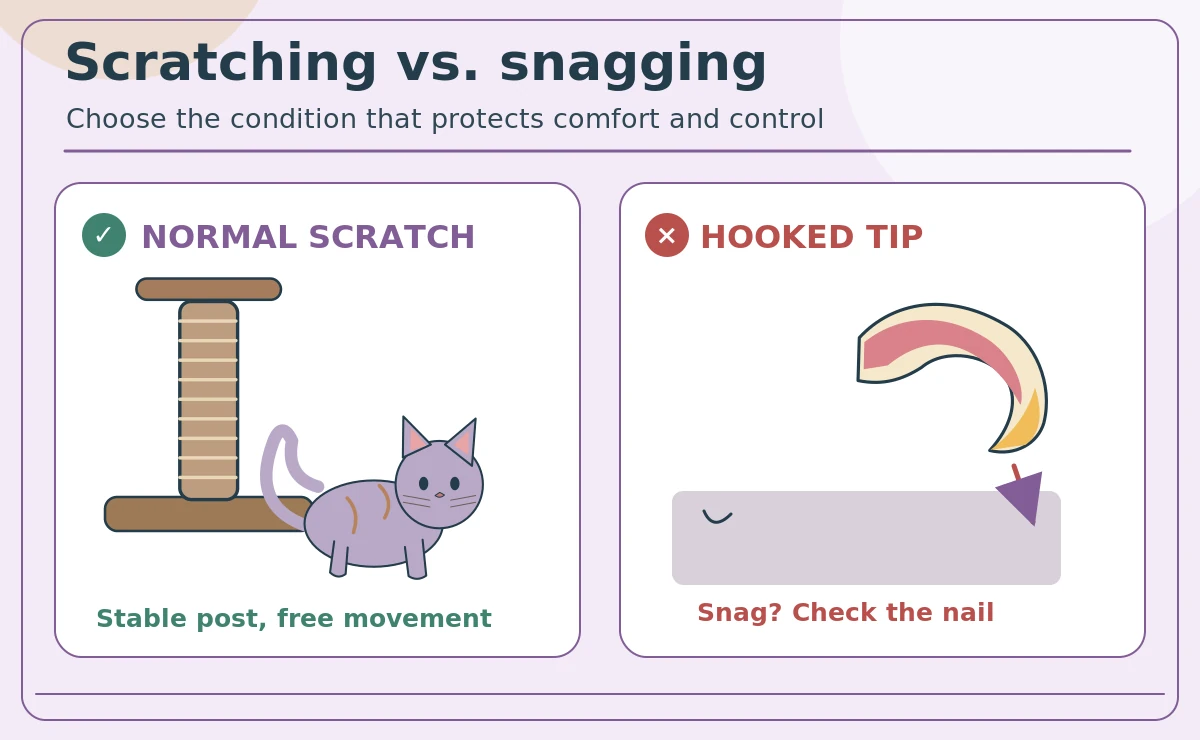
Cats scratch to stretch, communicate, and maintain their claws by shedding outer layers. A scratch post is not the same as a nail clipper. It may leave the pointed tip sharp even after a satisfying session. Nail trimming reduces an overlong or snagging tip when appropriate. Neither process should replace the other. Your cat still needs stable scratching surfaces after you trim the claws. Start by observing use rather than assuming a post automatically eliminates all grooming needs.
Look at the tip, not the room the cat lives in
When your cat is relaxed, glance at the visible nails and how they curve. Watch for snagging on upholstery, a sharp point projecting beyond the usual nail shape, or a claw curling toward the pad. If the cat pulls threads while walking, check the corresponding toes. Lightly encourage paw handling only if your cat accepts it. Avoid forcing a paw open for an inspection. Sudden limp, swelling, blood, or one claw that will not retract normally deserves professional attention.

Why different cats need different schedules
Activity, age, claw shape, scratching habits, and mobility all influence maintenance. Some young, active cats keep their nails in good condition without frequent trims. Older cats and cats with limited movement may be less able to shed sheaths effectively. A scheduled check every few weeks is more useful than automatic clipping on every date. You may find that front claws need a look more often than hind claws. Record actual snags or changes before setting a routine for your household.
Offer stable places to scratch in real locations
Place a tall, sturdy post near a favorite sleeping or stretching spot, and try a horizontal board for a cat that scratches rugs. The post should not wobble or tip when the cat leans into it. Use materials the cat likes, such as sisal or corrugated cardboard, and replace worn surfaces with exposed staples. More than one surface can help cats with different preferences. Reward voluntary use and avoid spraying or physically forcing the cat against the post. Observe which location the cat chooses.
Know what a normal claw sheath looks like
You may find thin curved translucent pieces on the floor near scratching furniture. They are often the outer sheaths, not entire claws that have fallen out. A normal shed sheath differs from a fresh broken nail that may leave blood, pain, or a rough exposed base. If you see a nail fragment with tissue attached or notice your cat guarding a paw, contact your veterinary team. Inspect the cat, not just the debris. Photograph the object if the distinction is unclear.
Reduce snagging without removing all sharpness
If a claw hooks blankets repeatedly, a tiny conservative tip trim may help when the cat is relaxed and the quick is visible. Use a sharp pet-appropriate clipper and reward short handling sessions. Do not cut into the pink quick, pull the nail, or try to blunt every claw completely. Check blankets and toys for looped threads that can trap a toe. Better textile choices and a comfortable scratching area can reduce everyday snags. Persistent hooking from one unusually curved claw needs a veterinary check.
Consider older and less mobile indoor cats
A cat that no longer climbs or scratches frequently may need more regular paw checks. Thickened claws, curling tips, and difficulty accessing favorite scratching surfaces can develop alongside mobility changes. Make a low-effort horizontal board available, but do not assume a new board solves painful joints or overgrown nails. If movement or grooming habits change, ask your veterinarian about both the paws and overall comfort. Do not use force to straighten a curled nail or attempt an embedded-claw trim at home.
What the cat is telling you during handling
Relaxed body language, soft muscles, and the ability to leave are signs a paw check is staying manageable. Tail lashing, frozen posture, growling, repeated pulling away, or sudden biting mean it is time to stop. Schedule another short attempt when the cat is calmer. Let the cat sniff a closed clipper and pair a brief toe touch with a familiar reward. A cat that refuses trims is not being stubborn; the task may be frightening or painful. Professional help is appropriate.
Avoid nail caps as a quick substitute for enrichment
Plastic nail caps are sometimes advertised to prevent furniture damage, but welfare guidance is mixed and fitting can interfere with normal claw use or cause distress. Discuss any proposed use with your veterinarian and consider the cat’s individual behavior. Caps do not eliminate the need for paw inspection or scratching opportunities. Never use adhesives or home glue on a cat’s nails. Start with posts, household layout, and safe claw checks. Declawing is not an appropriate routine grooming solution.

A home check that takes less effort than a full trim
Make the check a familiar grooming moment. Notice how the cat walks, inspect a visible front paw, and then allow the cat to leave. On another day, look at the back paws if tolerated. Note snags, painful movements, and claw shapes. Maintain posts and avoid sharp edges on scratching furniture. If nothing needs clipping, finish without a cut. This approach helps you learn your cat’s ordinary baseline. It also makes a new claw problem easier to notice before it becomes more serious.
Seek help for curled, embedded, or painful nails
A claw growing into a paw pad can cause serious pain and infection. Do not attempt to free or cut an embedded nail. A torn nail, persistent bleeding, swelling, and new limping also call for veterinary advice. A groomer may help with an ordinary maintenance trim, but skin injuries and abnormal nails belong with a veterinary professional. Ask for a demonstration before cutting a claw whose quick is difficult to see. Comfort and safe movement matter more than a neat appearance.
How We Research
We reviewed independent veterinary guidance and animal-welfare resources on do indoor cats need nail trims. We separated ordinary preventive care from painful or abnormal nail conditions and checked that each illustration shows a conservative action rather than a precise cut line. The diagrams are conceptual and cannot identify the quick in a real pet. We favor gradual, voluntary handling and referral when the toe, claw, or behavior is abnormal. Learn more about our editorial approach.
Sources
Cats Protection — How to Trim Cat Claws — https://www.cats.org.uk/help-and-advice/caring-for-your-cat/how-to-trim-cat-claws (accessed October 2026).
Cats Protection — Grooming Your Cat — https://www.cats.org.uk/help-and-advice/caring-for-your-cat/grooming (accessed October 2026).
HumanePro — How to Clip Your Cat’s Claws Safely (September 2026) — https://humanepro.org/magazine/articles/fact-sheet-how-clip-your-cats-claws-safely (accessed October 2026).
San Francisco SPCA — Cat Claw Clipping — https://www.sfspca.org/resource/claw-clipping/ (accessed October 2026).
Safety note: Stop handling if your pet becomes distressed. A claw embedded in skin, significant bleeding, severe pain, or a newly abnormal paw warrants veterinary assessment; an illustration cannot diagnose a problem.
Not always. Scratching supports natural behavior and sheath shedding, but some cats still develop snagging or overly long tips.
No single schedule fits every cat. Check the claws regularly and decide with your veterinarian based on actual growth, comfort, and activity.
They are often shed claw sheaths. If you see blood, a damaged nail base, or a cat favoring one paw, contact a veterinarian.
No. Scratching is normal communication and exercise, so provide appropriate scratching surfaces even if you trim sharp tips.
A claw embedded in the pad, a torn bleeding nail, or a painful limp needs veterinary attention; do not try to extract an embedded claw.