
This article offers general pet-care information, not a diagnosis or a substitute for veterinary assessment. Stop if your pet shows pain, bleeding, repeated fear, or abnormal movement. Do not force handling or guess at the location of the sensitive nail quick. Read the veterinary disclaimer.
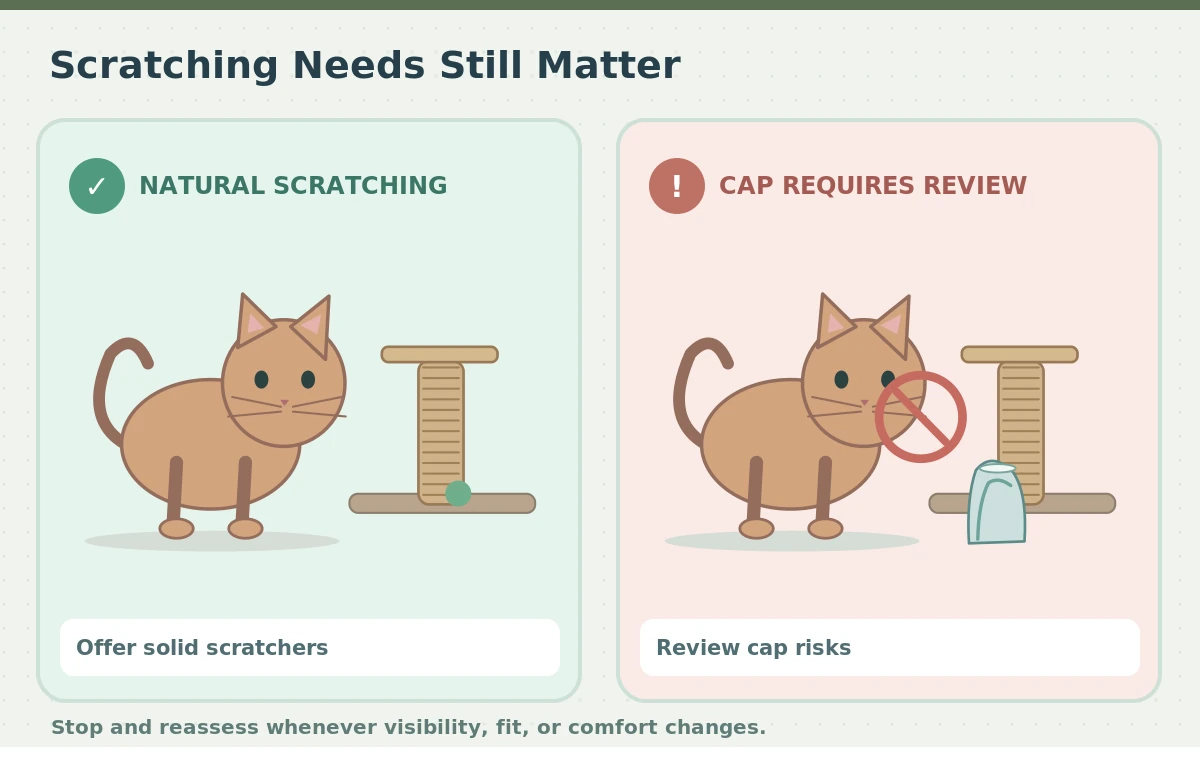
Soft nail caps are sometimes marketed as an easy answer to furniture scratches, but the welfare picture is not simple. Some veterinary sources describe properly fitted temporary caps as a possible tool; Cats Protection advises against covers because they may restrict normal claw use and stress cats. This is a genuine disagreement worth understanding before buying a kit. Caps do not teach a cat where to scratch, replace veterinary advice or make declawing acceptable. The most reliable starting point is to provide sturdy scratching surfaces, protect vulnerable furniture temporarily and keep claw-care handling gentle.
Understand what the product is supposed to do
A nail cap is a lightweight sleeve placed over a claw with an adhesive. Manufacturers often sell multiple sizes and colors, but color does not indicate fit or welfare. Caps are intended to blunt contact with household surfaces; they do not shorten the claw underneath or address why a cat scratches. Scratching stretches muscles, communicates through scent and helps maintain claws. No household should treat natural scratching as misconduct. A cap purchase decision needs to consider comfort, grooming, the cat’s ability to retract claws and the quality of professional guidance available.
Recognize the disagreement in professional advice
Some VCA educational material describes temporary caps as one furniture-protection option. Cats Protection explicitly discourages claw covers, warning that they may be uncomfortable and interfere with normal claw function. Neither position supports putting products on a distressed cat through force. Because recommendations conflict, do not present nail caps as a universally humane fix. Ask your own veterinarian whether there is any appropriate reason for this individual cat to use them, and request a demonstration and follow-up plan if they recommend them. A sales listing cannot replace that discussion.
Fit is more than a printed size chart
A sleeve that looks short or roomy on the package can still be unsuitable for a particular claw. The relevant questions include whether it changes natural extension and retraction, catches in fabric, rubs near the skin or prevents comfortable grooming. Do not try to solve an uncertain fit by pressing, stretching or adding extra adhesive. Adhesive should never contact skin or fur, and owners should not improvise with household glues. If the product requires training or restraint the cat does not accept, the better choice may be to leave it unused.

Watch how your cat moves and grooms
After any veterinary-approved trial, observe normal walking, climbing, grooming, scratching and resting. A cat that chews at a paw, flicks it repeatedly, limps, hides or reacts suddenly to touch may be uncomfortable. Do not wait for visible injury to take such signals seriously. Stop using the product and speak with the veterinary team about safe removal rather than pulling it off yourself. A cap that stays attached does not prove the cat is comfortable. Behavior and paw condition matter more than product durability.
Offer alternatives that meet the real need
Place sturdy vertical and horizontal scratchers close to the sites your cat already chooses. Different cats prefer cardboard, sisal or wood-like textures. A stable post must not wobble when the cat stretches or pulls. Reward the cat for using an approved surface and protect the furniture during training with removable barriers that do not trap paws. Provide play, resting spaces and routes away from other pets. The goal is to channel ordinary feline behavior toward acceptable places rather than preventing the behavior entirely.
Keep nail care separate from behavior correction
For cats that need nail trimming, use a suitable feline clipper, expose only the tip with gentle paw pressure and avoid the quick. Some active cats maintain their claws through scratching and may require little trimming. Older or less mobile cats can need more attention. A proper trimming plan addresses nail length; enrichment and scratching surfaces address where the cat scratches. Caps are not a substitute for either task. If a claw curves toward a pad or becomes painful, book a veterinary examination rather than experimenting with covers.
Consider the hidden upkeep burden
Caps may loosen, detach or require periodic replacement as nails grow. That means repeated handling sessions, inspection and potentially veterinary visits, not a one-time purchase. Consider how the cat responds to paw touch before assuming repeated application will be practical. Storage of adhesive, loose caps and applicators also matters in homes with children or pets that chew objects. Do not leave a detached cap where it could be swallowed. If checking and maintaining caps becomes a struggle, reconsider the plan with a professional.
Protect furniture without escalating fear
A scratch-damaged couch can be frustrating, but punishment, spraying water, yelling and forced paw restraint can make the home less predictable. Place an attractive scratcher directly beside the damaged corner, protect the furniture with a removable cover and reward voluntary use. Adjust the surface angle if the cat ignores the post. Make sure there are enough scratching options for every cat in a shared home. If scratching changes abruptly alongside hiding, appetite or movement changes, consult your veterinarian. A new behavioral pattern may require more than furniture protection.

Make a decision with welfare first
Before purchasing caps, write down the exact problem you want to solve, the alternatives you have tried and how your cat responds to gentle paw handling. Discuss the product and the conflicting welfare guidance with a veterinarian who knows your cat. Do not use caps as a shortcut to stop normal scratching or as a substitute for supervised veterinary care. If the cat refuses paw touch, shows stress or cannot groom normally, choose environmental changes instead. A good decision is measured by your cat’s comfort, not an untouched sofa.
How We Research
HubPet compared current veterinary and animal-welfare guidance on nail handling, grooming comfort, and the relevant equipment. We focused on fit, visibility, common failure points and situations where a professional should take over. We have not physically tested specific products or examined your pet; this is an evidence-informed practical guide, not a certification or clinical treatment plan. Read how HubPet researches pet-care products.
Sources
Cats Protection — How to Trim Cat Claws (Claw Covers)
VCA — How to Stop a Kitten Scratching Furniture
ASPCA — Destructive Scratching
No. Veterinary and welfare sources disagree about their use. Discuss individual risks with a veterinarian before treating caps as a solution.
No. Cats still need accessible scratching surfaces for stretching, marking and normal claw maintenance, regardless of furniture concerns.
No. Do not improvise adhesives or application methods. Ask a veterinarian about suitability, fit and safe handling.
This may signal discomfort or stress. Contact your veterinary team about the safe next step rather than forcibly peeling a cap away.
Offer stable scratchers in preferred positions, protect vulnerable surfaces temporarily and reward appropriate scratching without punishment.