
Bentonite clay cat litter usually uses absorbent clay granules that can form scoopable clumps when wet. Yet one bag can feel very different from another under a cat’s paws. Grain size, powder, fragrance, clump shape and the litter box itself all affect the experience. This guide shows how to compare those physical properties without assuming that every clay product performs alike. It also explains why scooping and the cat’s willingness to enter matter more than a dramatic odor claim printed on a package.
Identify the material before comparing bags
Read the ingredients or product description rather than relying on a large front-panel word such as “premium.” Bentonite usually refers to a swelling clay; some commercial blends also contain other minerals or additives. A label may say fast clumping without identifying how tightly a clump holds during scooping. Look for unscented options when possible, then compare similar quantities under your normal household conditions. Do not assume that a product with more perfume is cleaner. The cat’s comfort, predictable maintenance and the absence of loose powder in the air are better starting points.
Look closely at grain size and surface feel
Fine granules can resemble sand, a texture many cats prefer, but fine dust is not the same as useful grain size. Observe whether particles look like individual grains or whether a cloud rises when you pour. A large hard granule can feel different under sensitive paws, especially for an older cat. Keep a familiar litter available when you test a new texture. The Cornell Feline Health Center notes that most cats favor unscented finer litter, yet individual preferences matter. Choose by what your own cat uses comfortably, not appearance alone.

Examine a clump without turning it into a laboratory test
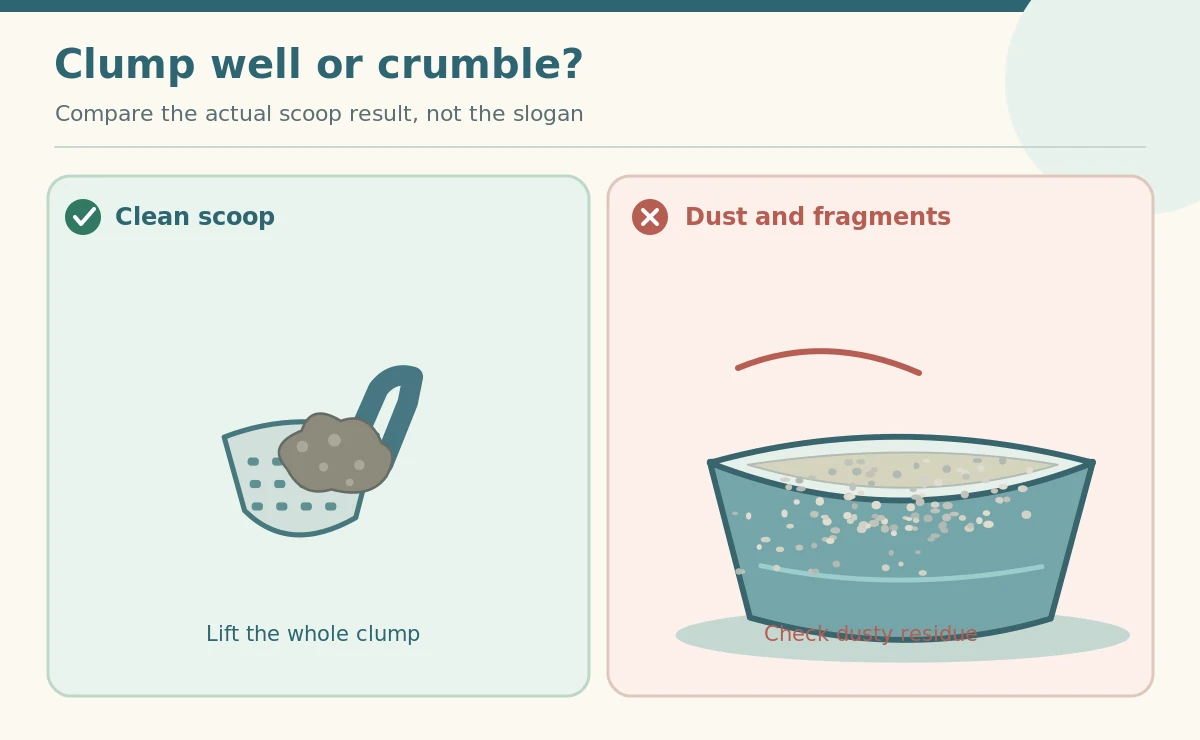
During normal scooping, notice whether wet litter forms a neat scoopable mass or breaks into damp fragments. A fragile clump can leave soiled pieces behind; an oversized one may waste clean litter. Use the same scoop and a similar delay after the cat uses the box when comparing products. There is no need to add artificial liquid or place your hands into used litter. Watch how much clean material falls through the scoop slots and whether the bottom of the tray needs extra scraping.
Keep dust down during every refill
Pour slowly and close to the tray rather than dumping from a high shelf. Ventilate the room without placing a draft directly across the cat’s toilet. If dust settles on nearby objects or irritates you during routine pouring, compare another formulation. Products sometimes advertise “low dust” without a standardized household test, so use the label as a starting question, not a guarantee. Never spray fragrance or water into dry litter to disguise a powder problem. Store the container away from living areas and wash hands after cleaning.
Understand tracking before buying a bigger mat
Small clay grains may cling to fur or paws and travel through a doorway. A large washable mat directly outside the exit can catch some particles, provided it lies flat and does not trap paws. Keep the box accessible and avoid creating a narrow obstacle course. Check whether litter scatters because your cat digs vigorously, the tray is too small or the exit faces a busy path. Sometimes a larger open tray solves more mess than swapping to a harsher texture your cat dislikes.
Compare a comfortable box with a difficult one
A reliable product can still fail in a poorly placed box. Choose a roomy open tray in a quiet location with an easy approach and a clear way to leave. If another pet blocks access, add a separate location rather than blaming the granules. AAHA recommends different accessible locations and, as a general guide, one box per cat plus one. A cat balancing on the rim or approaching and retreating may object to the substrate, the box or the location. Watch the entire visit rather than one gesture.
Scoop consistently instead of covering smells
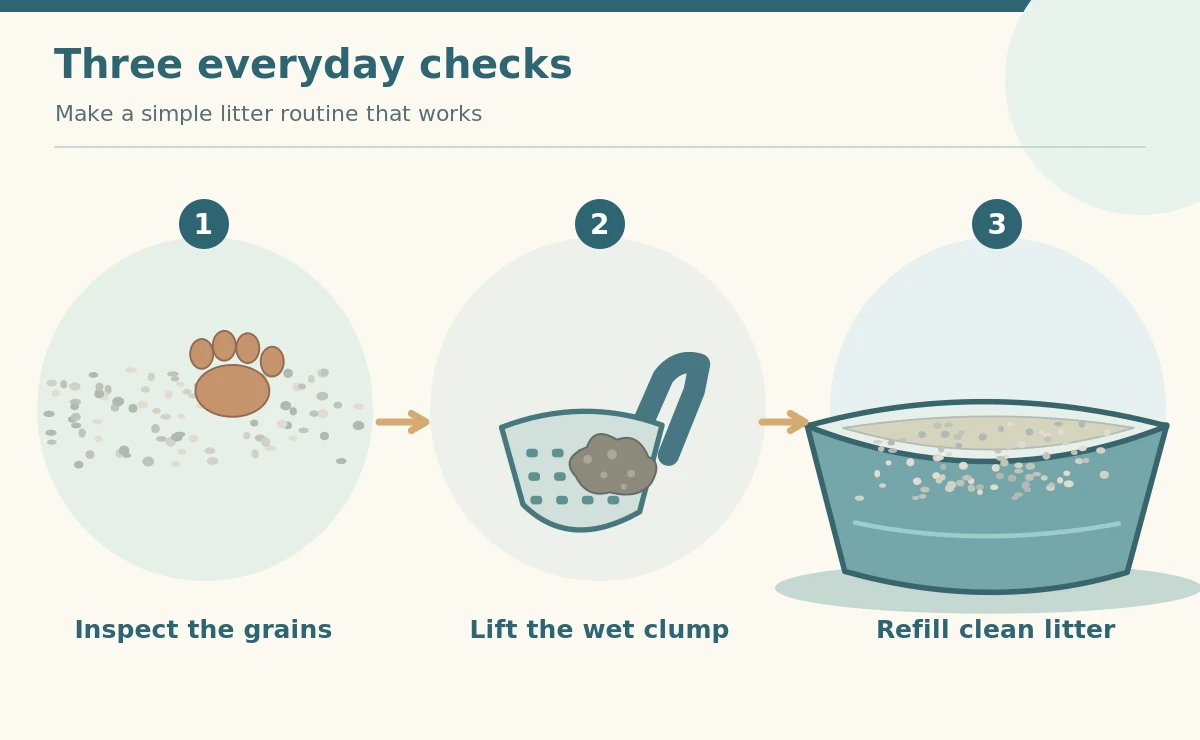
Remove waste and clumps at least daily, then restore an appropriate depth with fresh litter. Cornell advises frequent cleaning and notes that strong odors can discourage use. Scrub the emptied box with a suitable mild cleaner, rinse and dry it thoroughly before refilling; avoid strong perfume. Do not rely on a scented deodorizer to replace scooping. If the product repeatedly sticks into a cement-like mass against the tray, note whether the layer is too shallow, the box needs a fresh surface or a different clumping formulation works better.
Introduce a change without forcing the cat
Place a separate familiar box beside a second box containing the candidate material when space allows. Keep the settings similar, and observe actual use across several normal visits. A sudden switch can lead to avoidance, which makes it hard to judge whether scent, texture or location caused the problem. If you cannot provide a second box, make changes gradually while retaining the familiar surface. Never shut your cat inside a room with only an unfamiliar litter as a trial. Choice provides useful feedback.
Calculate real use rather than relying on bag size
Two bags with equal volume can weigh differently, so compare how many routine cleanups they support rather than comparing advertised pounds alone. Track when you open a bag, how often you top up and whether clumps carry away a lot of clean material. Account for transport and storage if a heavy sack is difficult to handle. A modestly priced litter that your cat refuses is not good value; neither is a product that forces an extra deep-clean because clumps crumble in the tray.
Dispose of used clay without spreading dust
Scoop used litter into a secure waste bag and follow your local trash rules. Do not flush clay granules, which can obstruct plumbing, or dump used litter outdoors. Handle dried material gently to limit airborne particles. The CDC recommends daily cleaning and handwashing after touching litter equipment, especially with concerns about exposure to cat feces. People who are pregnant or immunocompromised should follow the CDC’s extra precautions and ask another household member to handle the box when possible.
Know when the problem is not the litter
If a cat suddenly stops using its box, strains, cries, urinates frequently or changes behavior sharply, contact a veterinarian rather than simply trying a stronger scent or different clay. House-soiling can involve medical and environmental factors. Do not diagnose a urinary condition from the shape of a clump. Preserve access to the clean familiar box while you seek advice. A short record of box visits, changes in litter and other signs can support that conversation without delaying care.
How We Research
We review established guidance from veterinary schools, cat welfare organizations and public health agencies, alongside product attributes that readers can inspect. We distinguish general cat preferences from guarantees about any specific brand. Sources were checked on October 28, 2026. We have not performed laboratory testing or a veterinary examination for this article. Learn more about HubPet.
Sources
Cornell Feline Health Center, Feline Behavior Problems: House Soiling. Read the original guidance.
Cats Protection, How to Choose the Best Cat Litter for Your Cat. Read the original guidance.
AAHA, General Litter Box Considerations. Read the original guidance.
CDC, About Cleaning and Disinfecting Pet Supplies. Read the original guidance.
Safety note: This is general litter and hygiene guidance, not medical diagnosis. If your cat strains, has trouble passing urine, appears painful, or suddenly avoids the box, contact a veterinarian promptly. People who are pregnant or immunocompromised should follow CDC litter-handling precautions. See our veterinary disclaimer.
Many bentonite products clump, but blends and formulas vary. Confirm the package instructions and watch how it scoops during normal use.
Many cats favor fine, unscented textures, but individual cats differ. Offer a familiar alternative and observe comfortable, consistent use.
It may reflect formulation, timing, depth or scoop handling. Compare routine scooping conditions rather than judging from one clump.
Do not flush clay granules. Bag used material and follow local waste rules to protect plumbing and the environment.
Pause product experiments and speak with a veterinarian if your cat strains, seems painful or suddenly stops using the box.