
A step-by-step buying and bathing guide to flexible silicone scrubbers without harsh scrubbing. These are general pet-care selection criteria, not veterinary advice. For painful skin, significant irritation or other health concerns, consult your veterinarian and read our veterinary information disclaimer.
What a dog bath brush changes
A bath brush is a handheld silicone or rubber tool designed to move shampoo through the coat and loosen surface dirt. It may feel easier to grip than wet fingers, especially on broad back and side areas. However, it does not make more shampoo or stronger scrubbing necessary. The goal is gentle contact and complete rinsing, not polishing skin. A dog with tight mats, a sore patch or a dense undercoat needs an appropriate pre-bath plan. Consider the brush an optional accessory rather than a replacement for careful coat inspection.
Inspect the nubs and the edge of the head
Press the flexible nubs between two fingers to check whether they bend easily and spring back. A stiff spike, rough molding seam or cracked edge can scrape delicate skin when wet. Prefer a smooth rounded border so a hand turning in the bath does not snag a fold of skin. Look underneath any detachable head for crevices where shampoo or hair can accumulate. A brush with dramatic long teeth may not penetrate thick hair as promised; trying to force it through can pull at the coat.
Select a secure wet-hand grip
A strap that stays over your hand may feel secure, but it should not tighten painfully across your knuckles. Try the tool with wet hands away from the dog. An oversized brush can cover too much area, making it easy to miss a skin reaction; a tiny brush can tempt the user into too many repetitive passes. Make sure you can put the tool down immediately when the animal moves. A suction-mounted brush requires extra care because a dog should never be positioned where pushing against it might cause a slip.

Brush and detangle before adding water
Look through the coat in good light, removing loose debris and minor tangles with suitable dry tools. Do not expect water or shampoo to dissolve a compacted mat. Veterinary coat-care guidance notes that wetting tangled hair can make removal harder, and severe matting calls for professional attention. Set towels, pet-formulated shampoo, a cup or shower sprayer and a non-slip mat within reach. Check that the water feels comfortably lukewarm to your hand. Keep the pet calm before you begin the actual wash.
Use tiny circles rather than force
Apply shampoo as directed on the product label and distribute it gently with your fingers first. On the back or flank, make a few small circles or smooth passes with the brush using minimal pressure. Move the brush over hair, not aggressively into the skin. Avoid scrubbing around eyes, the ear canal, muzzle creases or any irritated spot. For nervous dogs, skip the tool entirely and use your hands. If the dog stiffens, pants unusually or tries to climb out, stop and reset rather than holding the animal in place.
Rinse until residue is gone
A foamy coat is not evidence of cleanliness if shampoo remains near the skin. After gentle lathering, remove the brush and rinse thoroughly using clean lukewarm water. Part a section of coat with your fingers and check whether any slippery residue remains. Long, dense hair may require extra attention to hidden areas without hard water pressure. Keep the spray away from the face and direct water so it cannot pool into ears. A clean bath brush does not compensate for incomplete rinsing; skin comfort depends heavily on the whole routine.

Avoid using the tool for medicated skin care
Veterinary shampoos and skin conditions require specific instructions about contact time, dilution and handling. Do not improvise an extended scrubbing routine with a bath brush. If a veterinarian has prescribed a product, follow those directions and ask whether mechanical brushing is appropriate. For unexplained redness, open areas, persistent itching or sudden coat changes, arrange an examination. A bath brush cannot diagnose or treat skin disease. Stop the wash if a dog appears painful or distressed, and use professional help if safe bathing is not possible.
Clean after every wet session
Rinse hair and shampoo out of the nubs, then wash the tool following its directions. Inspect drainage holes, hollow backs and removable reservoirs for trapped liquid. Let pieces air-dry separately before reassembly; sealed moisture can make a tool unpleasant to use next time. Do not leave a suction brush stuck to a dirty tub wall for weeks. Keep the brush away from dogs who may chew and swallow pieces. A tool that develops cracks, persistent odor or separated joints no longer meets a reasonable hygiene standard.
Compare bath brush, mitt and bare hands
Bare hands provide the clearest feedback about pressure and sensitive skin, and may be the right choice for a worried dog. A grooming mitt distributes contact over the palm and can work for light coat cleanup. A molded bath brush offers a defined grip and flexible nubs but introduces hard edges and cleaning spaces. None of these tools should be used to push through dense mats. Choose according to the dog’s comfort, how well you can rinse afterward, and whether you can clean the tool between baths.
Plan a calm wash from entry to exit
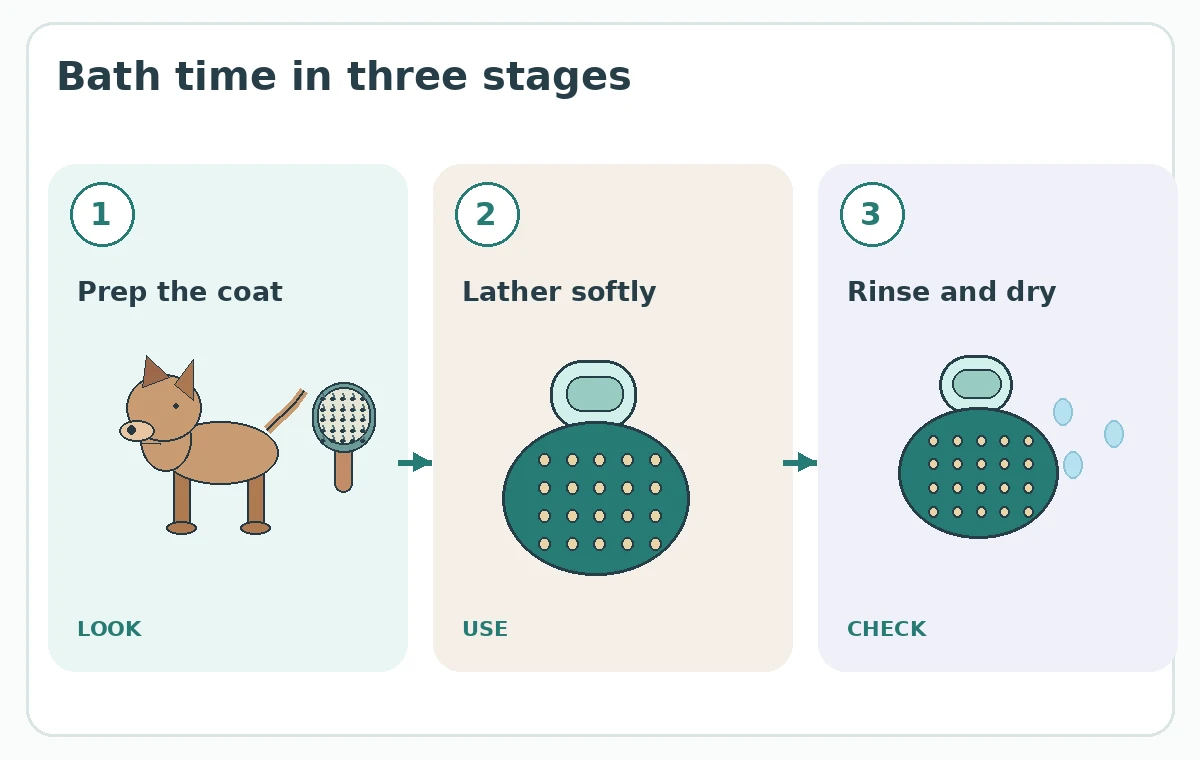
Before the dog enters, clear the floor of clutter and place a non-slip surface underfoot. Wet the coat gradually, lather gently with the optional brush and rinse completely. Then turn off the water, towel-dry and allow a relaxed exit on a secure surface. Finish with a treat, not another round of scrubbing to chase a perfect shine. Note whether the coat or skin looks different after drying. If your dog dislikes the brush, there is no need to persevere; a quiet hand wash often works well.
How We Research
We evaluated dog bath brushes using veterinary coat-care guidance, humane handling standards and practical inspections of material, fit, surface safety, maintenance and situations that call for professional help. We do not claim to have tested specific products in a laboratory or examined each dog individually. Our recommendations prioritize observable features over marketing scores, with our editorial approach explaining our research practice. Sources reviewed October 28, 2026.
Sources
AKC, Dog Brushes: How to Choose the Right Dog Brush. Read source guidance. Reviewed October 28, 2026.
VCA Animal Hospitals, Grooming and Coat Care for Your Dog. Read source guidance. Reviewed October 28, 2026.
Virginia Tech Veterinary Teaching Hospital, Safe bathing practices. Read source guidance. Reviewed October 28, 2026.
Safety note: Stop grooming when your dog shows pain or intense distress. Seek a veterinarian for new or persistent skin changes; ask a qualified groomer for dense mats and high-risk coat removal. Never use equipment as a substitute for gentle handling.
Avoid the eyes, ear canals and sensitive muzzle; use a soft damp cloth or follow your veterinarian’s grooming instructions.
A very soft tool may be acceptable for a calm puppy, but your hands and a gradual introduction may be gentler.
No. Brush and check the coat before wetting. Ask a professional for help with dense, painful mats.
Part the coat and check several areas for remaining slippery residue; rinse carefully with clean water.
Dry and clean it after use instead. Suction surfaces and cavities can collect moisture and residue.