
Is More Exercise Always the Solution?
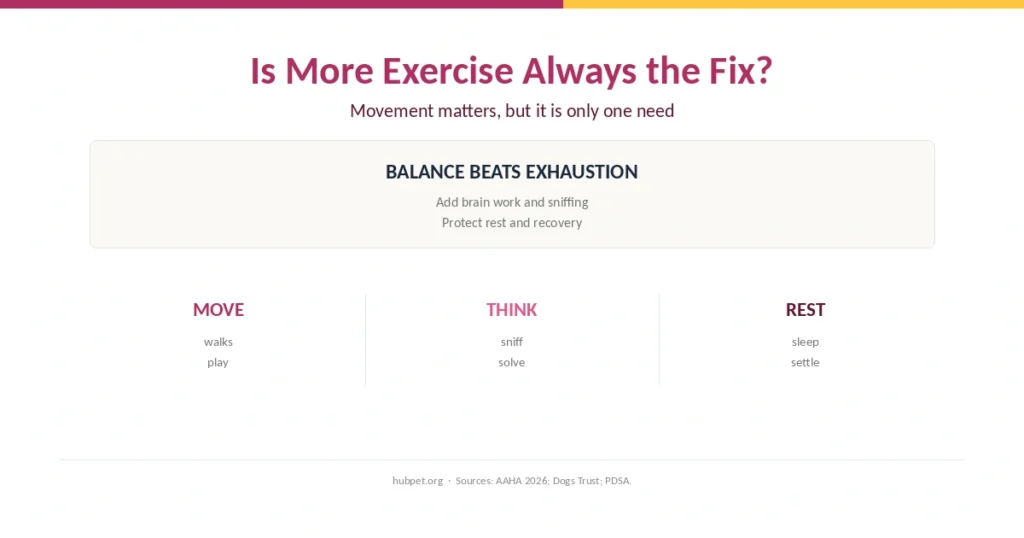
More exercise can help some pets, but it is not a universal fix for restlessness or unwanted behavior. Balance movement with enrichment, rest, and training.
More exercise can help some pets, but it is not a universal fix for restlessness or unwanted behavior. Balance movement with enrichment, rest, and training.

“Stubborn” can describe how a situation feels, but it rarely explains behavior. Check learning, motivation, environment, stress, and health instead.

Cats can learn practical behaviors and cues. This guide explains how reward-based training works and how to keep practice clear, voluntary, and useful.
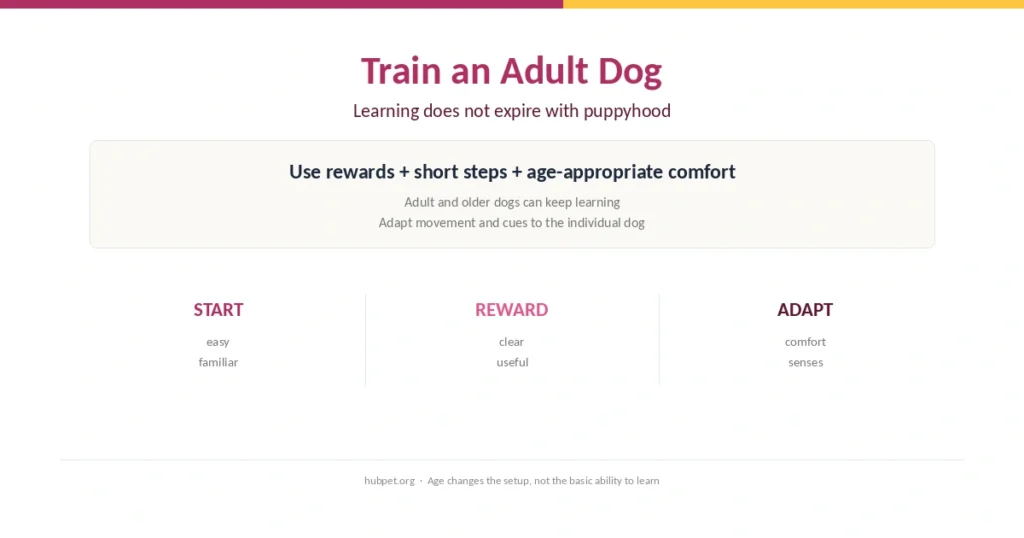
Adult dogs can learn new skills and change practiced habits. Use reward-based training, short sessions, realistic setups, and adaptations for comfort or sensory changes.
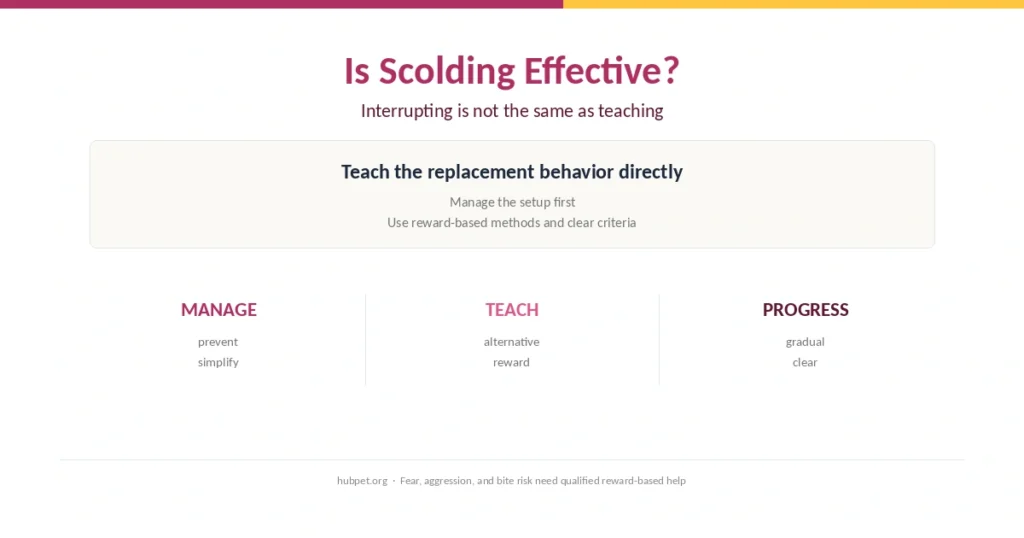
Scolding may interrupt a pet, but it does not clearly teach the replacement behavior. Use management, reward-based alternatives, and qualified help when safety is a concern.

One long walk is not a universal formula. Match exercise to the individual dog and balance movement with enrichment and rest.

Cats are socially flexible, not uniformly distant. Research shows human-directed preferences and attachment-like patterns alongside major individual differences.

Pets can respond to human emotional cues, but the research supports cue-reading rather than telepathy or certainty about what a person feels.

“Spite” is usually a poor explanation for unwanted pet behavior. Look at triggers, consequences, normal needs, stress, learning, and sudden medical changes instead.

Dominance can describe specific animal relationships, but it is not a sound catch-all explanation for pet-dog behavior or a reason to use coercive training.