

Senior Dog Stroller Setup: Low Entry, Floor Support, and Gentle Rides
Make a stroller easier to enter and more stable to rest in without treating it as a replacement for veterinary care or gentle movement.
Make a stroller easier to enter and more stable to rest in without treating it as a replacement for veterinary care or gentle movement.
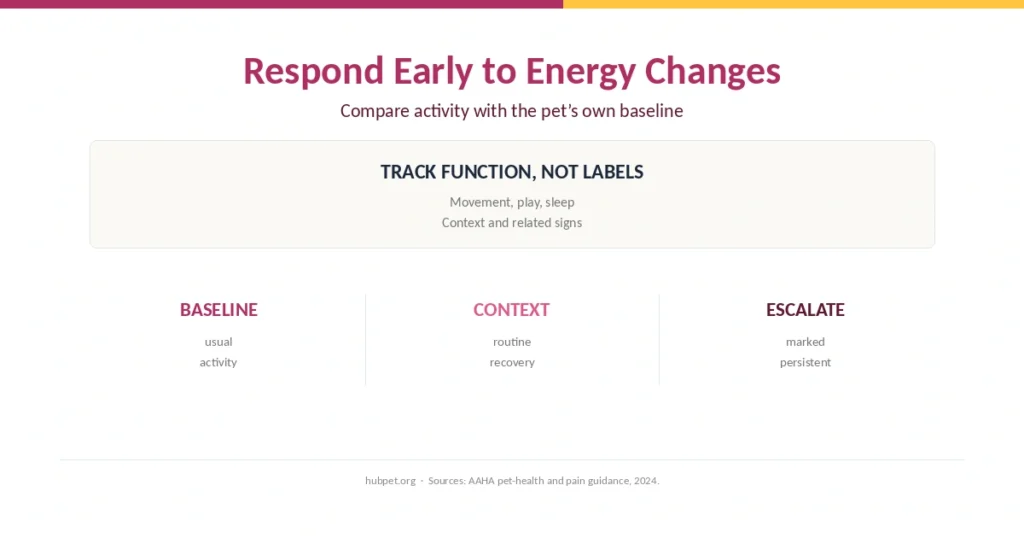
Track meaningful changes in activity, rest, movement, and recovery without diagnosing at home, and know when lower or unusual energy needs veterinary attention.
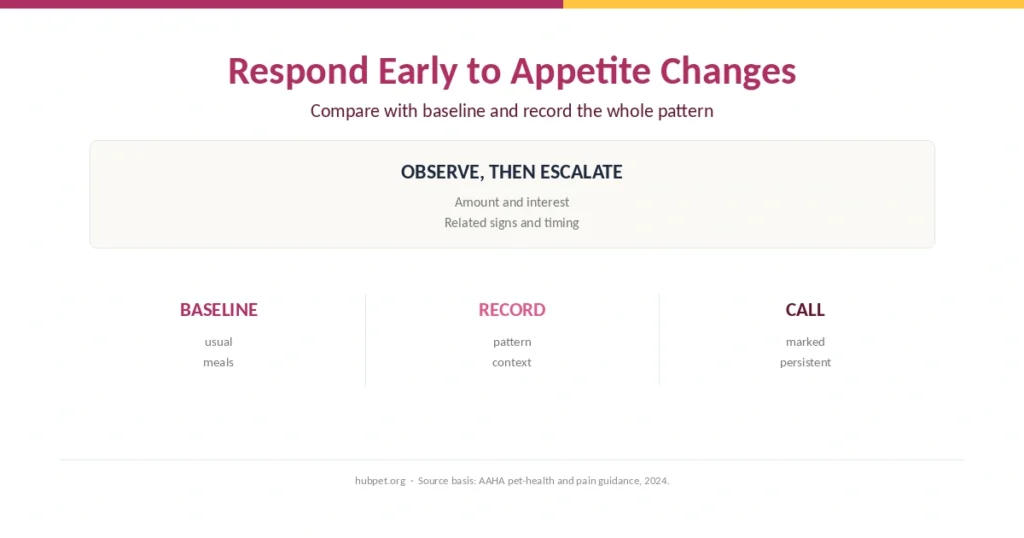
Use a simple observation plan for sudden appetite changes, including what to record, what not to assume, and when veterinary care is appropriate.
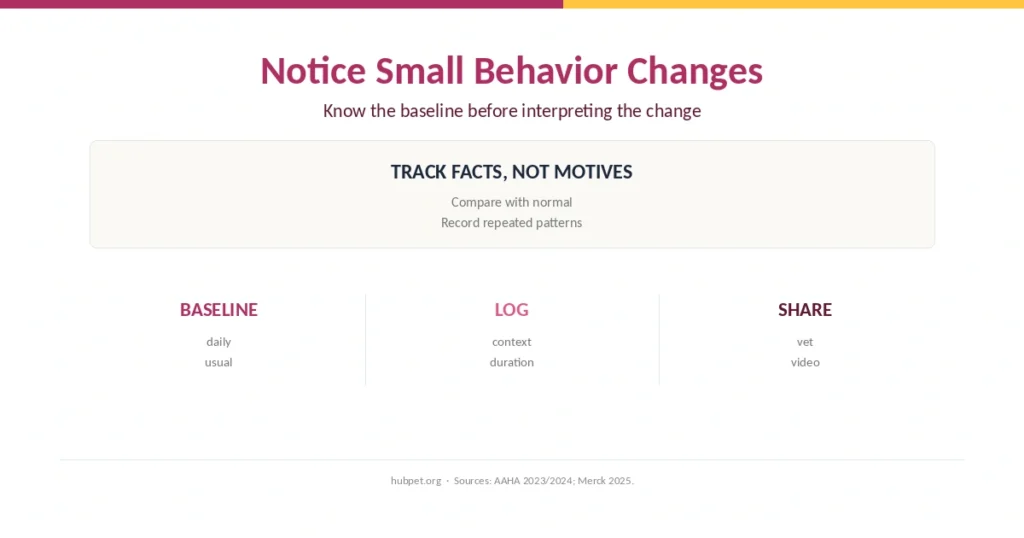
Small behavior changes are easier to recognize when you know your pet’s baseline. Track facts, not motives, and share persistent changes with your veterinarian.

A safe room gives a newly arrived dog or cat a quiet base with essential resources and an exit from social pressure. Set it up by species and expand gradually.

A quiet base, reliable resources, hiding and climbing options, and control over social contact can make a new home easier for a cat to learn.

Trust grows through predictable routines, protected rest, voluntary contact, and reward-based interaction. Use the dog’s behavior, not a fixed deadline, to set the pace.
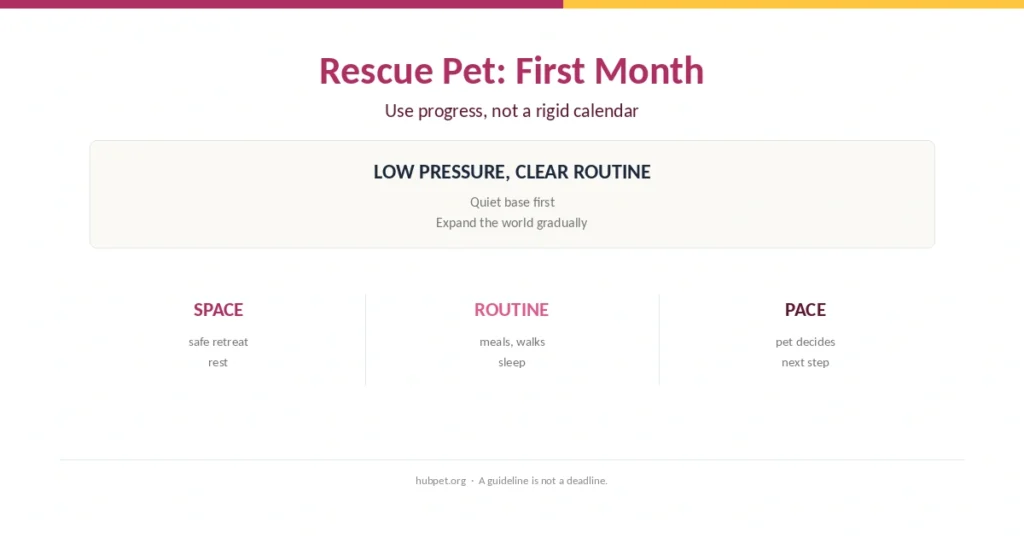
A practical first-month plan for helping a newly adopted rescue dog or cat settle without forcing interactions or following a rigid adjustment timeline.
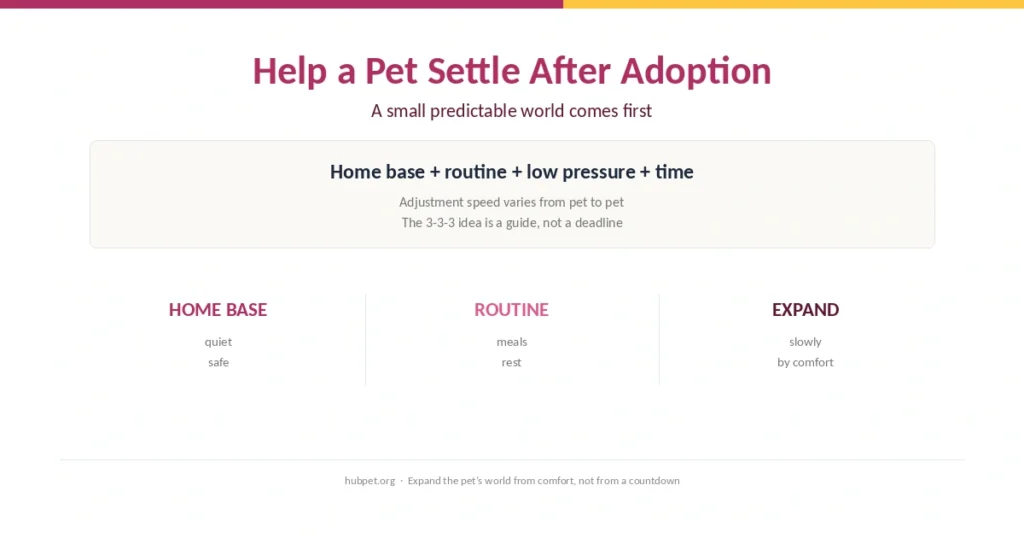
A quiet home base, predictable routines, gradual introductions, and realistic timing can help a newly adopted dog or cat settle in.

Protect winter paws by reducing salt contact, cleaning residue after walks, checking pads and toes, and knowing when cold or de-icer exposure needs veterinary help.