

Why Cats Hunt Even When Well Fed: Predatory Behavior Explained
Cats can hunt after eating because hunger alone does not drive predatory behavior. Safe stalking, chasing, and capture play gives that motivation an outlet.
Cats can hunt after eating because hunger alone does not drive predatory behavior. Safe stalking, chasing, and capture play gives that motivation an outlet.

Dogs may dig for exploration, comfort, burying, escape, or stimulation. The pattern around the behavior points to the most useful response.

Laptop sitting can combine warmth, closeness, height, and attention. The exact motive varies, so give your cat a better nearby option instead of punishing the habit.

Moving feet can mimic prey and become a learned play cue. Use scheduled interactive play, stop foot games, and redirect pounces to appropriate toys.

Not every cat avoids water, and there is no single proven explanation. Learn how choice, handling, and past experience shape the response.

Dogs may raid litter boxes because cat feces are rewarding scavenging targets. Block access, reward alternatives, and check new or persistent cases with your vet.
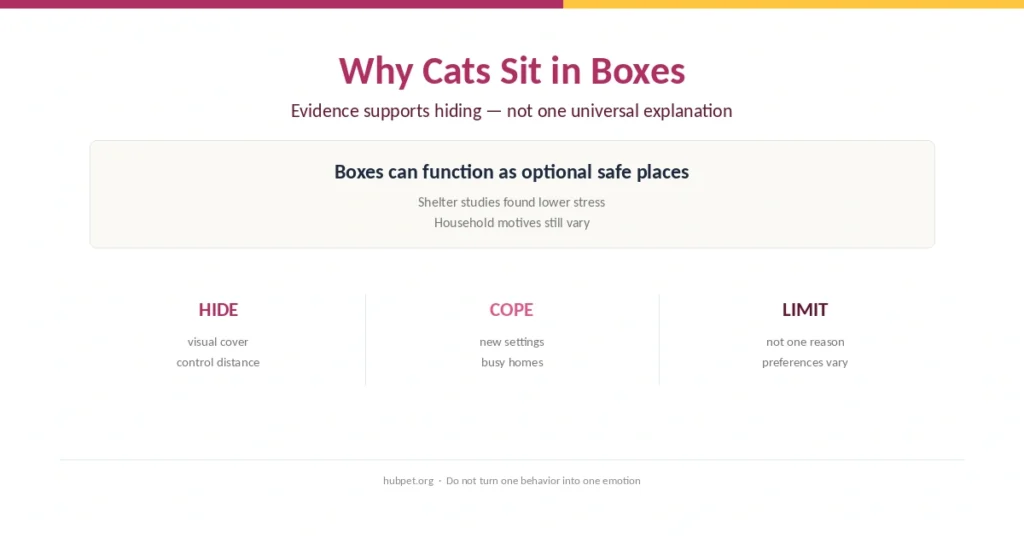
Boxes can serve as safe hiding spaces, especially during stress or novelty. Research supports that function without proving one reason for every box-sitting cat.

Slow blinking has experimental evidence as a positive cat-human signal. Read it in context and distinguish it from persistent squinting.

Dog licking has several possible functions, so context matters more than a one-word translation. Here is what VCA and Merck support.

Coprophagia has no single proven explanation. Research supports practical cleanup and supervision, while sudden changes deserve veterinary context.