
This article is general information, not veterinary advice. If your pet seems unwell, is in pain or may have eaten something harmful, contact your vet or an animal poison control line right away. Read our vet disclaimer.
Why cats sit on laptops and keyboards does not have one proven explanation. Warmth is plausible, proximity to a person can matter, and the desk may simply be a convenient elevated resting place. A 2016 review of feline housing notes that domestic cats have a relatively warm thermoneutral zone and benefit from opportunities to choose warmer resting spots. Meanwhile, the 2013 AAFP/ISFM environmental-needs guidelines include safe resting places and predictable human interaction among core feline needs.
That evidence does not prove that a particular cat chooses a keyboard for warmth or attention. In practice, the useful question is what the cat gains in that moment: heat, closeness, height, a predictable response from you, or simply a comfortable surface. The same evidence-first approach matters when reading other feline habits such as sitting in boxes or knocking things off surfaces.
Why Cats Sit on Laptops and Keyboards: The Short Answer
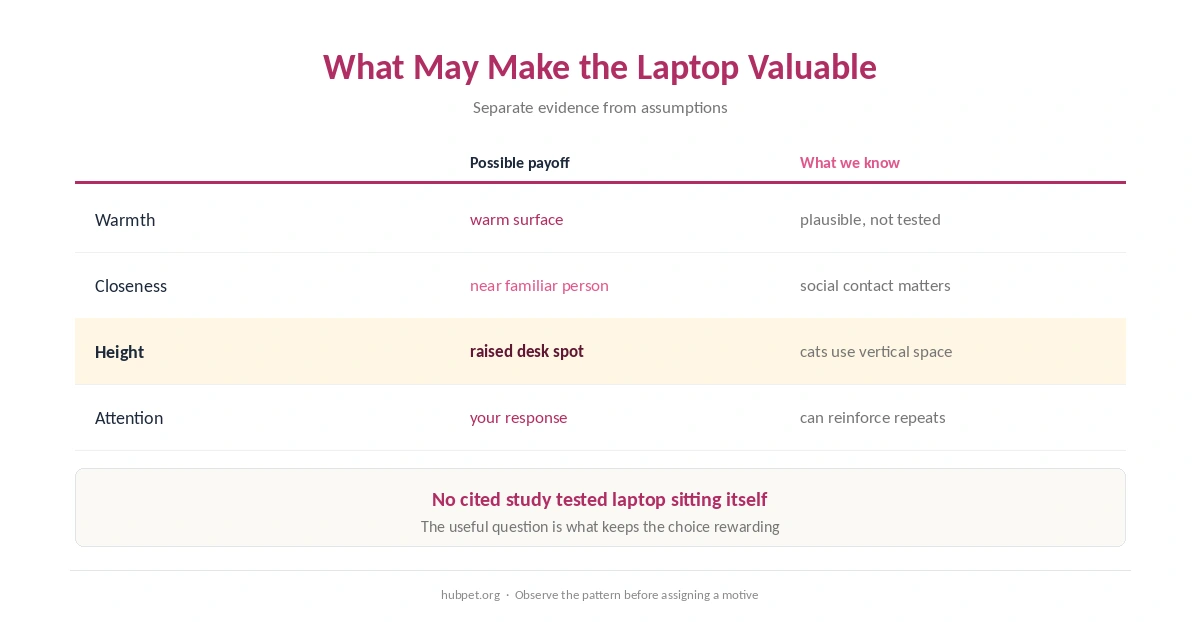
A laptop can combine several things cats may value. Why cats sit on laptops and keyboards may sometimes involve access to warmth, but the cited research did not test computers directly. The 2016 review of environmental aspects of domestic-cat care reports a feline thermoneutral zone of 86–100°F (30–38°C), while many homes are cooler. It recommends giving cats ways to regulate temperature through warm bedding or resting areas.
Location matters too. A laptop is often on the desk directly in front of the person the cat knows. The AAFP/ISFM guidelines describe positive, predictable human-cat interaction as an environmental need. Why cats sit on laptops and keyboards may therefore be shaped by what happens after the cat arrives. Talking, touching, eye contact, or moving the cat can all make the location consequential. For more context on feline social needs, see whether cats get lonely.
| Possible payoff | What the evidence supports | What it does not prove |
|---|---|---|
| Warm surface | Cats benefit from thermal choice and often live below their thermoneutral zone | That every laptop visit is caused by heat |
| Near the person | Predictable positive human interaction is a recognized feline need | That the cat is deliberately interrupting work |
| Raised desk location | Cats use elevated resting and observation spaces | That the keyboard itself has special status |
| Attention after sitting | Consequences can reinforce repeat behavior | That the cat planned the interruption in advance |
Why Cats Sit on Laptops and Keyboards More When You Are Working
Your work routine can make the desk unusually predictable. The cat learns where you will be, when you will be still, and which surface puts them close to your hands and face. Therefore, a nearby alternative has the best chance of competing with the keyboard. Use ideas from an enrichment corner and indoor cat stimulation rather than relying on repeated removal.
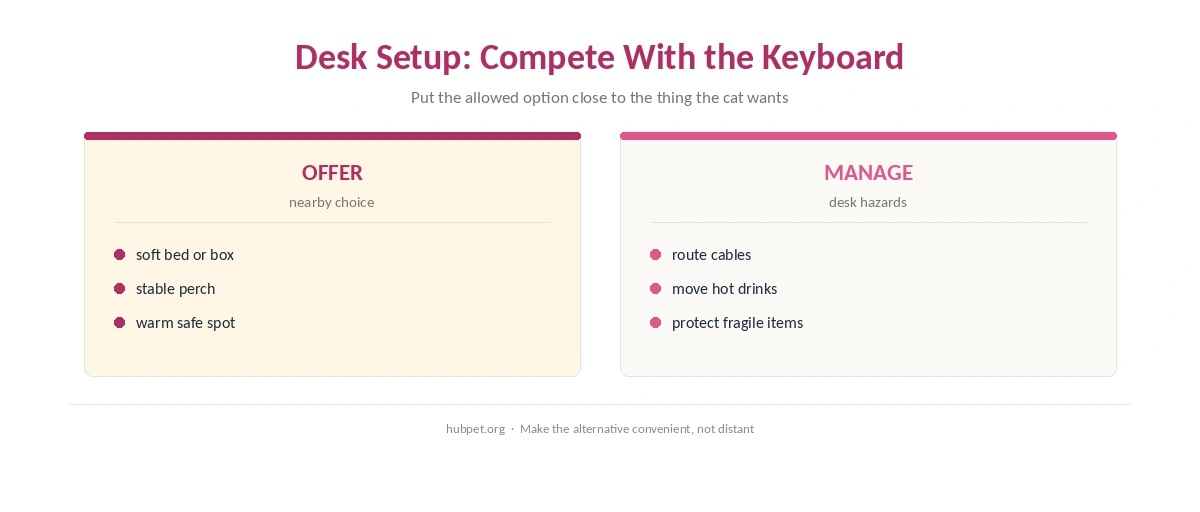
Place an allowed resting spot beside the work area, not across the room. A soft bed, box, stable perch, or other familiar surface can offer warmth and proximity without covering the keys. If your cat already likes enclosed resting places, a calm-space setup can help you design the alternative around choice rather than confinement.
- Set up an allowed resting spot close enough that the cat can still be near you.
- Make the alternative comfortable before the next work session instead of waiting for a conflict.
- Reward the cat when they choose the allowed spot with calm attention, play, or another preferred reinforcer.
- Keep interesting toys available away from cables and fragile desk items.
- Use a keyboard lock, closed laptop, or physical desk management when you cannot supervise.
- Avoid turning every keyboard visit into an exciting chase or wrestling game.
Rotate what happens away from the desk so the keyboard is not the only reliable source of stimulation. Toy rotation can renew interest without requiring a fixed schedule, while the indoor-cat boredom guide explains why variety should include play, exploration, and rest rather than constant activity.
What Not to Do About a Cat on the Keyboard
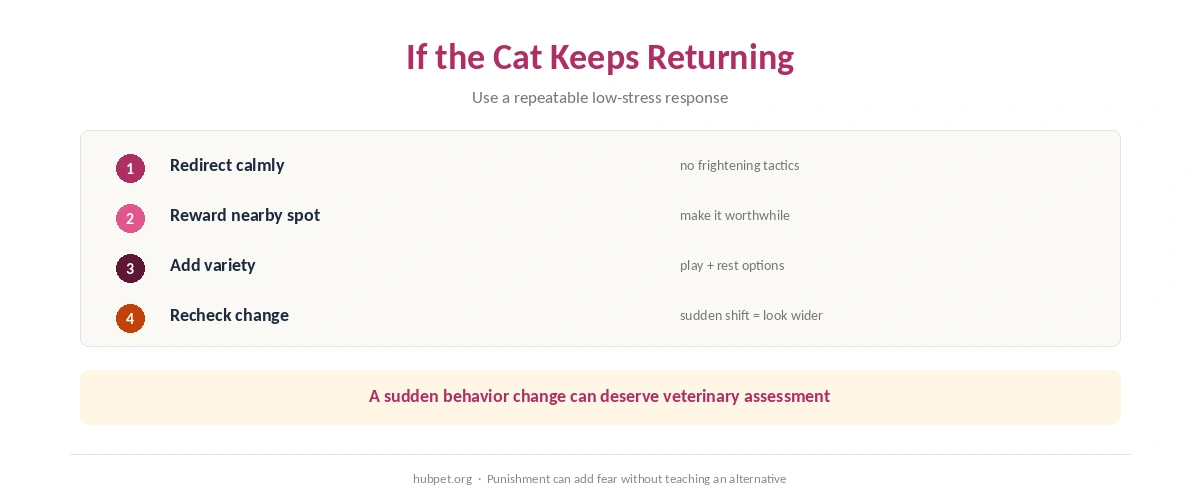
Do not frighten, spray, shout at, or physically force a cat off the desk. The FelineVMA positive-reinforcement toolkit explains that punishment can increase fear and interfere with learning. Instead, manage the surface and reinforce the place you want the cat to use.
Also avoid assuming a sudden change is merely quirky. If a cat abruptly becomes much more clingy, restless, withdrawn, vocal, or unable to settle, compare the change with signs of feline stress and sudden hiding. Behavior changes can have many causes, so a veterinarian should assess a new pattern that comes with signs of illness or discomfort.
Keep the workspace physically safe as well. Route charging cables so the cat cannot chew or become tangled, move hot drinks and fragile objects away from the edge, and use the broader setup in the pet-proofing guide. If your cat targets plants on the desk, use the plant-chewing guide and confirm that every plant in reach is pet-safe.
How We Research
HubPet reviewed feline environmental and learning sources on October 11, 2026. We used the 2016 review of domestic-cat environmental care, the 2013 AAFP/ISFM Environmental Needs Guidelines, and the FelineVMA positive-reinforcement environment guidance. Our research process separates direct evidence from plausible explanations when no study has tested the exact household behavior.
A laptop may combine warmth, closeness to you, and a raised desk location. No single explanation has been proven for every cat.
Possibly. If keyboard sitting reliably produces interaction, that consequence can reinforce the behavior, but warmth or resting preference may also contribute.
You can calmly redirect the cat, but make an allowed nearby spot more rewarding so repeated removal is not your only strategy.
No. FelineVMA guidance favors positive reinforcement and warns that punishment can increase fear and interfere with learning.
Look for other behavior or health changes. If the change is abrupt or comes with signs of discomfort or illness, contact your veterinarian.
The Bottom Line on Why Cats Sit on Laptops and Keyboards
Why cats sit on laptops and keyboards is best treated as a choice with several possible rewards, not a mystery with one universal answer. Offer a warm or comfortable nearby alternative, reinforce that choice, manage desk hazards, and avoid punishment. If the whole pattern changes suddenly, look beyond the keyboard and consider whether the cat needs veterinary assessment.