
A cat water fountain filter can trap hair and some debris. Depending on its design, it may also contain carbon to reduce certain tastes or odors. Yet a filter does not turn standing reservoir water into a maintenance-free supply. The pump, corners, drinking tray, and cartridge still need attention. This guide explains the difference between foam screens and carbon cartridges, how to check replacement compatibility, and how to build a cleaning routine. Cornell notes that some cats favor running water, but preferences differ. Always offer a separate fresh bowl too. If drinking changes suddenly, contact your veterinarian and see the HubPet veterinary disclaimer.
Know what your filter actually does
A fountain may use a foam prefilter to catch hair, a carbon element for taste, or a combined cartridge. These parts serve different purposes. Foam keeps larger debris away from the pump but cannot remove every dissolved substance. Carbon may change the taste or smell of water, yet performance depends on the actual cartridge. Check the maker’s exploded diagram rather than trusting a broad claim such as ‘multi-stage purification.’ Also look for the direction of flow. A cartridge placed backward may allow water to bypass the media. If the unit has no filter, that does not excuse poor cleaning.
Match a cartridge to the exact fountain
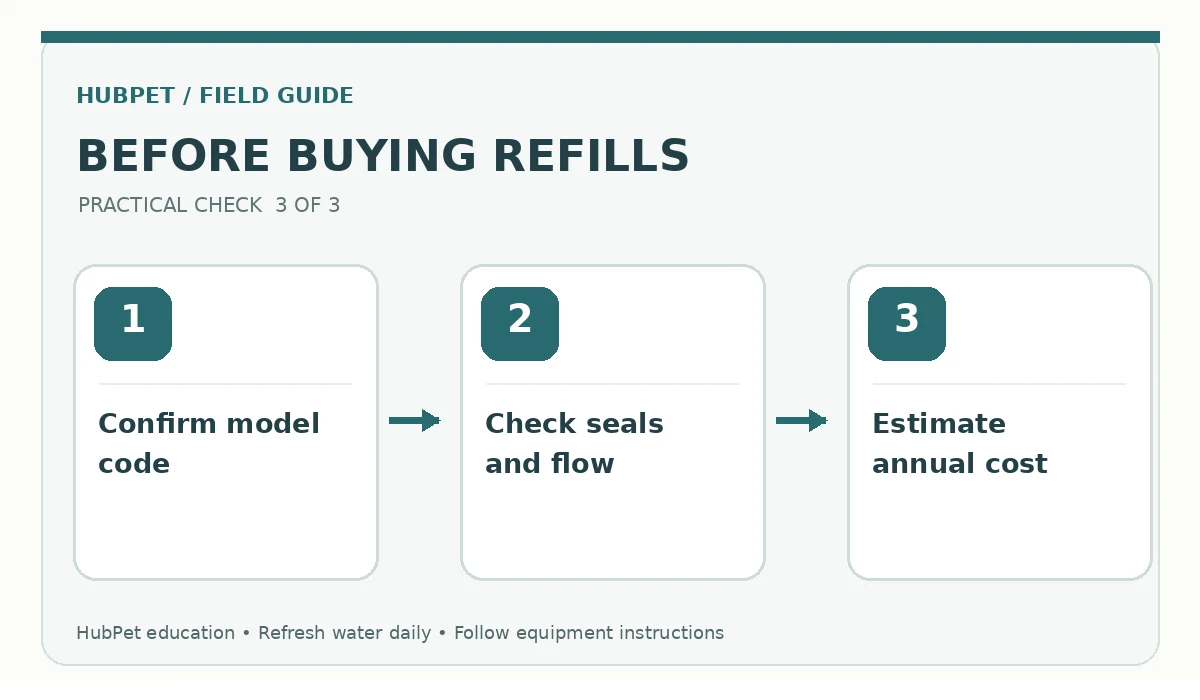
Measure the existing cartridge and compare its attachment points, seals, and water path. A cartridge that fits into a cavity may still leave a gap along one edge. Instead of shopping by appearance, record the fountain’s model code and the filter part number from its manual. Check whether a compatible replacement has the same dimensions and stated media. Avoid cutting filter pads to fit near a motor unless the manufacturer allows it. Loose fibers can obstruct water flow. Keep the packaging for the first replacement so you can repeat the purchase without guessing later. If replacements vanish from sale, ongoing ownership becomes harder.

Treat replacement intervals as a starting point
Filter schedules vary by manufacturer, water quality, number of pets, and the way a fountain runs. Therefore, a calendar reminder helps, but it cannot replace observation. Inspect a cartridge for trapped hair, discoloration, unusual odors, or reduced flow when the unit is off and safely unplugged. Some washable foam screens may tolerate gentle cleaning; carbon cartridges often require replacement rather than scrubbing. Follow the specific product instructions. Do not extend the interval simply because water looks clear. Equally, changing a cartridge daily cannot compensate for an unwashed reservoir. Write the install date on a reminder card near your cleaning supplies.
Wash the reservoir and drinking surface separately
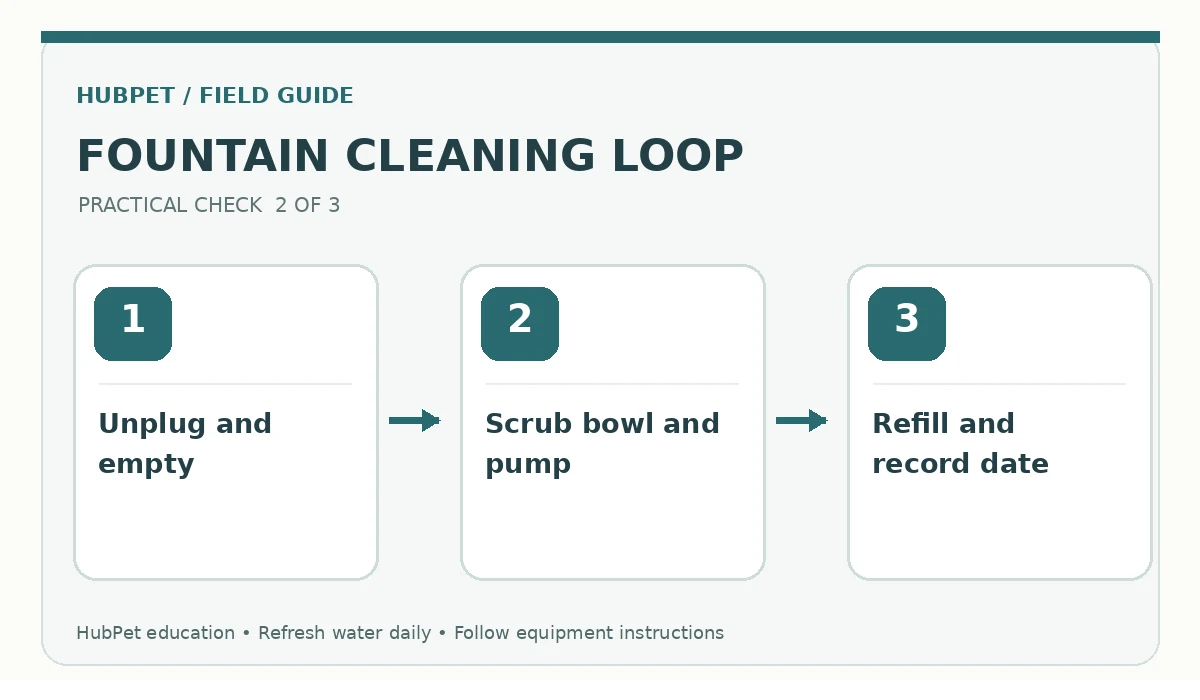
The CDC advises cleaning water bowls daily. Apply the same hygiene principle to a fountain’s exposed drinking area and change the water regularly. Turn the device off and disconnect power before opening the pump housing. Then remove accessible components and wash them according to the maker’s instructions. Use a dedicated small brush for crevices that gather residue. Rinse away soap and allow cleaned parts to dry when appropriate. Never assume a dishwasher-safe basin means the pump or power cable can enter a dishwasher. Watch for a slippery film, not just visible food or hair. Fresh refill water should enter a clean container.
Keep the impeller and intake clear
A weak stream does not always mean the filter has expired. Hair can clog the intake, and mineral deposits may affect an impeller. First unplug the fountain. Next inspect any accessible pump cover and the parts the manual permits you to remove. Clean them gently with suitable tools. Avoid pushing sharp objects into the motor. If the pump hums but barely moves water after cleaning, check water level and assembly before replacing parts. Do not keep a dry-running unit plugged in. A mechanical fault needs troubleshooting from the manufacturer, not improvised wiring. Leave a regular bowl out while the fountain is unavailable.
Plan around taste-sensitive and timid cats
Some cats notice a fresh carbon filter’s smell or a change in water temperature. Others dislike pump noise or the location. For example, a cat may stop using a fountain that sits beside a busy hallway even though the filter works correctly. Keep a familiar water bowl during changes, and offer the fountain as an option rather than the sole source. Try a quiet corner away from litter areas and competing pets. If a cat ignores the moving stream, do not force contact. Cornell emphasizes accessible fresh water and individual preferences. The goal is steady voluntary drinking, not convincing every cat to use a particular appliance.
Compare ownership cost, not just purchase price
Before buying, check the number of cartridges per package and how often the maker recommends replacement. Multiply that recurring expense across a year, then include cleaning brushes and any pump parts. A cheap fountain with hard-to-find filters may be a poor fit for a busy household. However, a premium cartridge does not establish medical value by itself. Look instead for readily available parts, clear instructions, washable surfaces, and stable operation. Consider whether you can disassemble the fountain in a few minutes. If maintenance feels difficult during a normal week, that design may not suit your home regardless of its advertised filtration stages.
Recognize the signs that need a veterinarian
Dirty fountain parts can reduce water appeal, but they do not explain every drinking change. A cat who suddenly drinks much more or less, urinates differently, stops eating, or seems weak needs veterinary assessment. Do not diagnose dehydration from one glance at the bowl. Also remember that cats eating wet food may drink less from a fountain than cats eating dry food. Track the animal’s normal routine rather than chasing a fixed volume from online advice. If you see repeated vomiting, marked lethargy, or difficulty urinating, seek prompt veterinary guidance. Replace damaged electrical parts rather than continuing to operate an unreliable fountain.
Use a simple weekly maintenance log
Put three checks on a small card: daily water refresh and drinking-surface wash, planned full disassembly, and the filter replacement date. Add a fourth note when flow drops or the pump sounds different. For example, a caregiver might notice reduced flow after brushing a shedding cat. This points toward cleaning the prefilter and intake before assuming a motor failure. Share the log with everyone who refills the unit so tasks do not quietly lapse. However, never let a schedule override a visibly dirty basin. A separate bowl gives the cat water access while you clean. Routine care matters more than extra features.
Make the final buying decision
Choose a fountain only when you can identify the filter type, obtain refills, and clean the pump safely. Next, verify that the water surface suits your cat and the cord location suits your home. Check for secure seals, stable feet, and a quiet water path. If a unit demands unusual tools every week, ask whether a simpler bowl would serve your cat better. The right choice is one you can maintain consistently. Keep written instructions, spare filters, and the manufacturer contact details together. No filtration feature replaces fresh accessible water, daily attention, or veterinary care when drinking behavior changes.
How We Research
Our editorial review compared animal-welfare recommendations with consumer safety guidance for pet drinking stations, material safety, cleaning routines, and equipment reliability. Each source supports the specific safety context named above; water circulation and filters do not replace fresh drinking water or cleaning. We did not test specific products in laboratory conditions, certify filtration claims, or receive manufacturer endorsements. Follow equipment manuals and seek veterinary advice when a pet’s drinking pattern changes. We reviewed these sources on October 27, 2026. Read about our editorial standards on the About HubPet page.
Sources
Cornell Feline Health Center: Hydration and the role of water access. Accessed October 27, 2026.
Centers for Disease Control and Prevention: Cleaning and disinfecting pet supplies. Accessed October 27, 2026.
VCA Animal Hospitals: Tips to encourage cats to drink more water. Accessed October 27, 2026.
No. Filters may catch debris or affect taste, but they are not a guarantee against all germs or contaminants. Supply fresh drinking water, clean the equipment as directed, and follow local drinking-water advice.
Not necessarily. Many carbon cartridges need replacement rather than aggressive washing. Follow the maker’s instructions for that exact filter and keep washable foam screens separate from disposable media.
Check that the filter faces the correct direction and sits flush. Also inspect water level, trapped air and pump intake after unplugging the unit. Contact the maker if proper assembly does not restore flow.
No. A separate stable bowl offers backup water during cleaning, a power outage or a rejected fountain. It also lets you notice which option your cat chooses without forcing a change.
A sudden increase or decrease in drinking, changes in urination, weakness or poor appetite warrant veterinary advice. A new filter should never delay that evaluation or serve as a treatment.