
A cordless cat water fountain can sit away from outlets and trailing cables. That flexibility helps in homes where a cord crosses a walking route or tempts a curious cat. However, ‘cordless’ may mean a rechargeable battery, an intermittent sensor, or simply a pump with a hidden cable. Each design creates different maintenance chores. This guide shows how to compare battery operation, charging exposure, flow modes and cleanability without accepting unsupported promises. Water access must never depend on an untested battery indicator. Keep a separate bowl available. Cats with new thirst or urination changes need veterinary advice; see the HubPet veterinary disclaimer.
Decode the word cordless before shopping
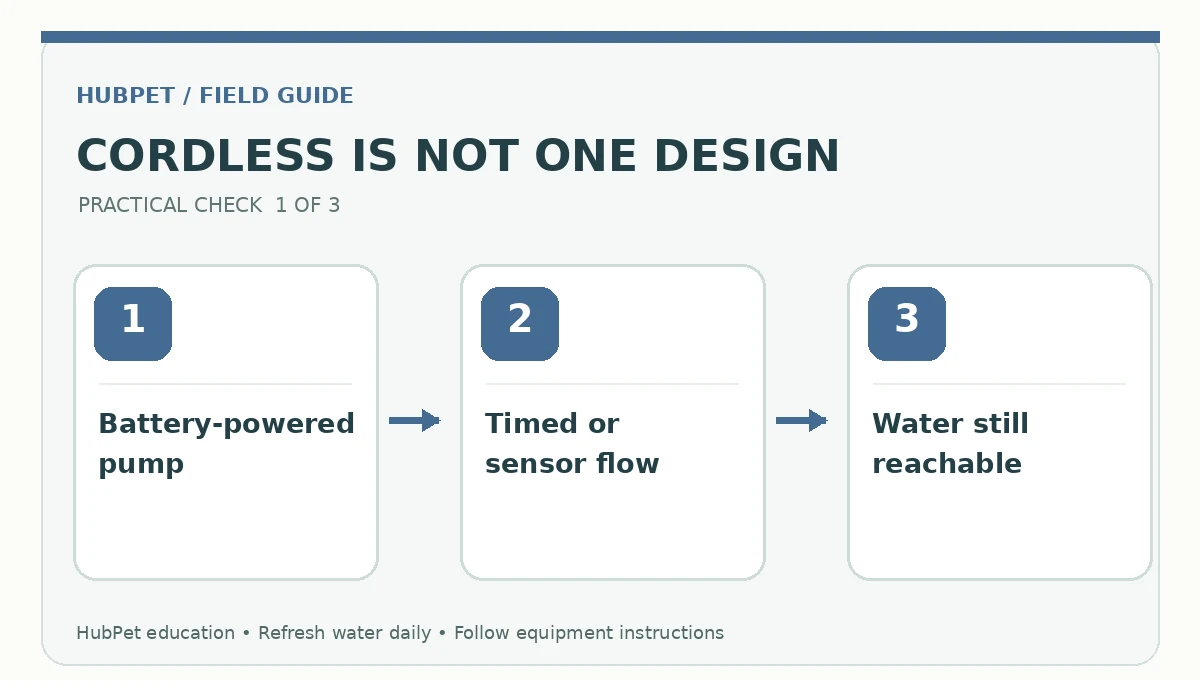
Read the technical specifications rather than the product name. A fully rechargeable fountain stores energy in a battery, while a docked pump still requires nearby power. Motion-sensing modes may run only when movement occurs, and scheduled modes may pause between cycles. These are operating choices, not proof that the water stays cleaner. Ask whether water remains reachable when the pump stops. Look for an open drinking surface that does not drain completely with power off. If the reservoir leaves no accessible water when the battery dies, a separate bowl becomes especially important. Never assume all cordless designs behave alike.
Check how the battery charges
Find the charging port and the maker’s rules about moisture. A port near splashes deserves extra care, even if the device advertises water resistance. Never charge a wet appliance or a visibly damaged battery. Use only the charger and cable specified for the model, and keep the connection away from curious paws. If the fountain charges through a removable power module, check how cleanly you can lift it out without spilling. Avoid makeshift adapters or household repair attempts. For a cat who chews cables, route any charging lead completely out of reach and supervise the first setup.
Ask for realistic runtime information
Advertised days per charge depend on pump mode and operating conditions. Continuous circulation typically uses energy differently from an intermittent or motion-triggered setting. Therefore, compare the maker’s claimed runtime with the exact mode you intend to use. Check how the unit indicates a low battery and whether it shuts down before the reservoir runs dry. A transparent reservoir or clear level mark helps you notice the real water supply. Do not leave a new unit unattended for an entire weekend to test a marketing claim. Record its first recharge interval in your own home and keep ordinary water bowls in place.
Think about the cat, not just the outlet
Cats Protection advises offering fresh water in accessible, quiet locations away from food and litter areas. Cordless placement can support that goal if the fountain sits on level flooring. However, a narrow shelf or unstable counter adds fall and spill hazards. Watch whether the cat approaches the basin willingly. A nervous cat may dislike intermittent pump noise or an unexpected sensor start. Some models use flashing lights, which may disturb a resting animal at night. A good location permits easy approach and retreat without a competing pet blocking the way. The absence of a cord does not solve a crowded floor plan.
Understand sensor and timer trade-offs
Motion activation can reduce pump activity, but sensors may miss a small cat or trigger from passing people. Meanwhile, a timer may circulate water on a schedule rather than at the moment an animal approaches. Check whether standing water remains available between cycles. If a sensor fails to notice your cat, switch to a compatible operating mode or return to a plain bowl. Never use a sensor feature to infer how often a cat drinks. For meaningful monitoring, observe normal routines and seek veterinary help for abrupt changes. An app alert alone is not a reliable hydration assessment.
Clean the device as thoroughly as a corded fountain
A rechargeable battery does not change hygiene needs. The CDC recommends cleaning pet water bowls daily. Empty and refresh fountain water regularly, and disassemble the drinking parts following their instructions. Keep electronics and charging contacts away from wash water unless the manufacturer explicitly identifies them as washable. Scrub residue from seams, spouts and the pump intake. Also check for pet hair around any sensor window. Dry parts before reconnecting the battery module. If the pump needs a separate cleaning process, write that step into your routine. Fancy wireless controls cannot remove film from a neglected basin.

Plan for outages and travel days
A battery fountain may keep running during a power outage, but it does not provide unlimited water. Someone must still check the reservoir, wash it, and replace water. Before leaving the house for an extended period, set out additional stable bowls. Likewise, traveling with a fountain can introduce leaks, charging difficulties and unfamiliar sounds. A small plain bowl may work better in a new room. Test any rechargeable unit at home under supervision before trusting it for a normal day. Check weather and room temperatures so that stored water stays appealing. A powered accessory should remain optional rather than the sole drinking source.
Look for sensible parts and repair support
Inspect the availability of replacement pumps, filters, charging components and lids. Batteries lose capacity over time, so ask whether the maker offers a safe replacement path or expects disposal of the entire appliance. Check written cleaning instructions and warranty terms, not just promotional pictures. A design with a sealed electronics compartment may simplify splash protection but complicate repair. On the other hand, exposed connectors may require more cautious handling. Choose durable construction and accessible customer support over novelty settings. Do not open a damaged rechargeable cell or attempt to rebuild the battery pack yourself.
Compare overall upkeep with a plug-in alternative
Make a small decision sheet. On one side list reasons for cordless placement: no visible cable, a preferred cat resting area, or flexible room arrangements. On the other side list charging frequency, cost, cleaning time and replacement parts. For example, an apartment with a safe outlet behind furniture may not gain much from a battery. A household with multiple water stations might find one cordless unit useful while keeping simple bowls elsewhere. Be wary of claims that intermittent flow means sterile water. What matters is practical access and reliable cleaning, not whether an app labels the fountain smart.
Set up a safe trial week
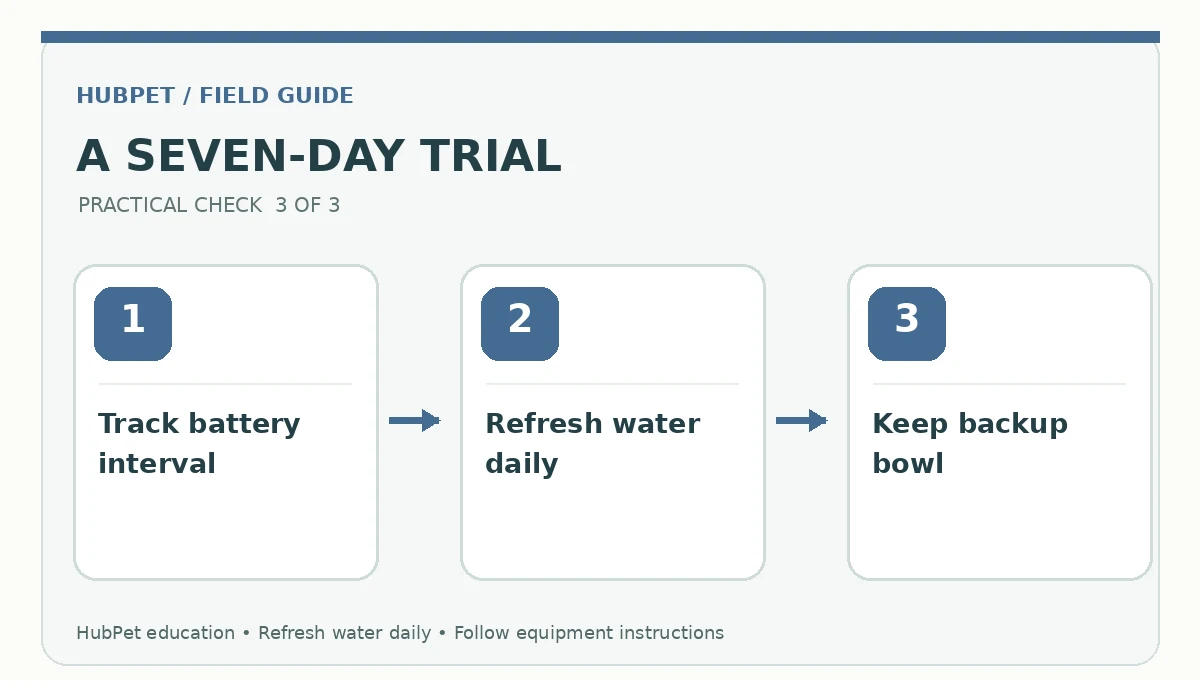
During the first week, keep your cat’s usual bowl nearby and observe voluntary fountain use. Charge the new unit exactly as directed, then record how the water level and battery indicator change. Check that the pump starts consistently and stops safely at low water. Clean the drinking surface daily and complete the first full maintenance cycle with the manual beside you. If your cat avoids the fountain, reduce noise or move the location rather than forcing interaction. If drinking patterns change markedly, ask your veterinarian. The successful purchase is a dependable water option that fits the household’s routines.
How We Research
Our editorial review compared animal-welfare recommendations with consumer safety guidance for pet drinking stations, material safety, cleaning routines, and equipment reliability. Each source supports the specific safety context named above; water circulation and filters do not replace fresh drinking water or cleaning. We did not test specific products in laboratory conditions, certify filtration claims, or receive manufacturer endorsements. Follow equipment manuals and seek veterinary advice when a pet’s drinking pattern changes. We reviewed these sources on October 27, 2026. Read about our editorial standards on the About HubPet page.
Sources
Cornell Feline Health Center: Hydration and the role of water access. Accessed October 27, 2026.
Cats Protection: What cats drink and where to offer water. Accessed October 27, 2026.
Centers for Disease Control and Prevention: Cleaning and disinfecting pet supplies. Accessed October 27, 2026.
A charged battery may keep the pump running, depending on the model and remaining charge. Yet runtime is limited. Always provide stable, accessible water bowls as backup during outages.
Not automatically. A sensor may reduce pump activity, but some cats dislike sudden starts or the device may fail to detect them. Test the operating mode with your cat present.
Follow the maker’s exact charging instructions. Keep charging ports, cables and adapters dry, and never charge damaged electronics. If the directions are unclear, stop and ask the manufacturer.
Treat the exposed water surface like another water bowl: clean it daily, refresh water, and follow the manufacturer’s schedule for the pump and internal parts. Battery power changes neither hygiene nor the need for inspections.
Some cats prefer flowing water, while others favor a regular bowl. Cornell reports that preferences vary. Maintain several appealing sources and consult a veterinarian about sudden drinking changes.