
A fountain marketed as quiet may still produce a buzz on a hollow shelf, a trickle that sounds loud at night or a rattle as its reservoir empties. Noise is a combination of pump behavior, water drop, hard surfaces and room acoustics. A quiet cat water fountain should suit both your household and the cat who will use it. Instead of trusting an unverified decibel claim, examine how the unit rests, where the water lands and whether the pump remains fully submerged. Cats vary in their reactions to running water, so a silent bowl nearby stays an important option. For veterinary questions, read our veterinary disclaimer.
Separate three different sound sources
Start by listening from the cat’s approach path and from the spot where you usually sit or sleep. Splashing comes from water falling through air into the tray. The low hum may come from the pump transmitting vibration through its base. Sharp rattling can point to a loose lid, dry-running inlet or poorly seated impeller. These sources require different fixes. Reducing the stream height may soften splashing; a level surface can reduce the lid’s chatter; cleaning or correctly seating pump parts can resolve some mechanical noise. Never cover the pump with cloth or foam inside the water, which may restrict flow or introduce unsafe material.
Inspect the surface before buying a quieter unit
A lightweight fountain on a thin metal tray or hollow cupboard may sound louder than the same fountain on a level, solid countertop. Check whether four feet contact the surface evenly, and whether the lid rocks when touched. A washable non-slip mat can protect the floor and limit vibration if it stays outside ventilation and electrical areas. Choose a flat mat that cannot curl under the fountain or become a chewing target. Do not put a reservoir on a thick soft cushion where it might tip. Test the selected surface with the fountain full and again after ordinary water use.

Look at the shape of the water return
A high, narrow stream dropping into an empty-sounding basin often splashes more than a short return that touches the water surface. A broad bubbling dome may have a different sound than a raised spout, though neither design is universally quieter. Check the spout’s position and the maker’s flow adjustment options. A detachable outlet needs to seat securely so a cat cannot knock it off. Beware of solutions that redirect water outside the bowl or raise humidity around an outlet. When shopping, compare video demonstrations with the same water level instead of assuming the label quiet means silent.
Keep pump water above the minimum line
Some pumps change pitch when air enters the intake, especially as water evaporates or a dog drinks from a shared bowl. Follow the printed fill marks and never allow the motor to run dry for a noise test. Refill with fresh drinking water and check whether the hum changes. A dirty impeller chamber can also create friction and irregular noise, so consult the cleaning guide for your exact model. If the pump sounds like hard grinding despite proper water level and maintenance, stop using it and seek a compatible replacement. If a fountain suddenly becomes loud, inspect it instead of adding a makeshift cover.
Compare a calm site with a high-traffic setup
A level, quiet corner away from litter boxes lets a cat approach without a dog, child or loud appliance moving past the bowl. By contrast, a narrow hallway beside a washing machine can add startling sounds and force a cat to drink in the path of foot traffic. Keep the fountain visible enough to inspect and easy enough to unplug safely. Avoid a position where splashing reaches extension cords or wall outlets. A location near favorite resting spots may work, but leave more than one water resource in a multi-pet home. Cornell emphasizes that access and social conflicts influence whether cats drink comfortably.
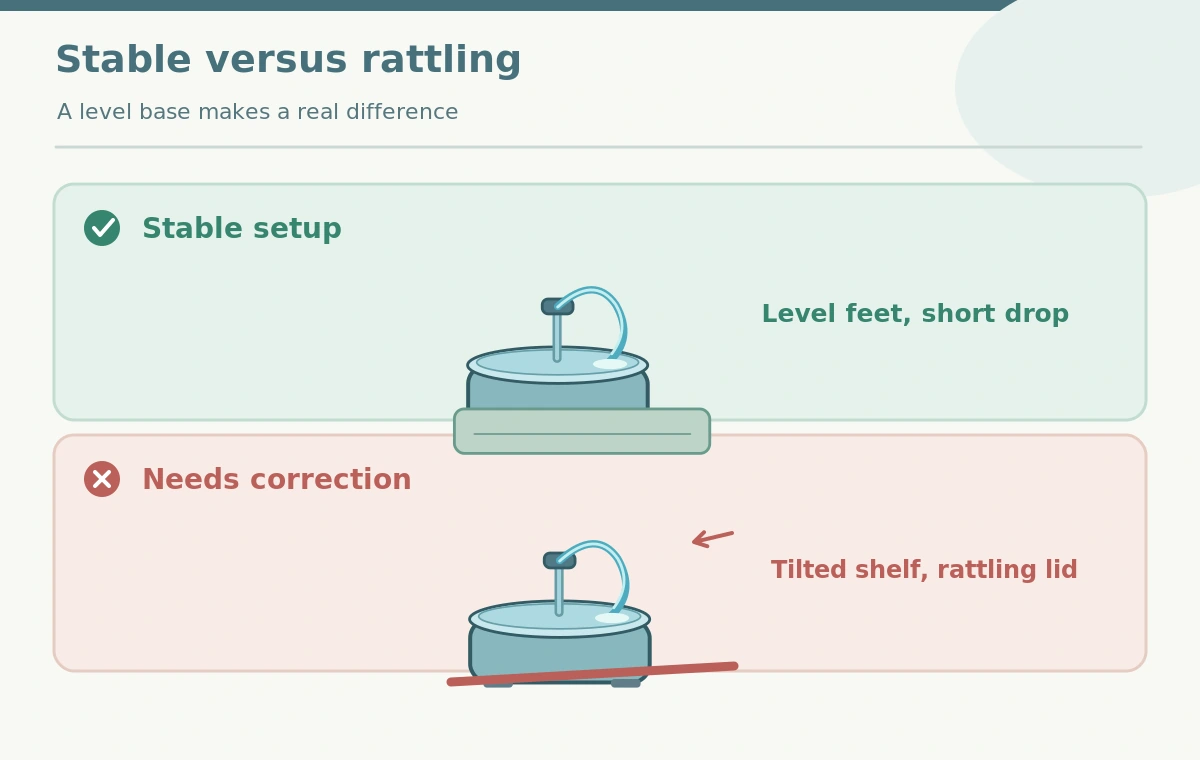
Make the room quieter without making it unsafe
The simplest changes are to seat the lid properly, clear the impeller of debris and move the unit to a stable surface. A mat beneath the exterior base can help if the maker permits it and it does not hide leaks. Do not tape vents shut, wrap cords in fabric, glue the spout or insert random objects inside the water to dampen sound. Those changes can create contamination, electrical or choking hazards. If the fountain includes a removable filter, fit it according to the instructions rather than leaving a required compartment empty. Preserve the intended water path while you reduce noise.
Test the cat’s response, not just your hearing
Introduce the fountain next to a familiar clean water bowl with the power off so the cat can sniff it. Then run the device while the cat is at a comfortable distance. Let the cat choose to approach without lifting, pushing or confining them at the fountain. Some animals like a gentle stream; others prefer still water or dislike the pump sound. VCA and Cornell describe individual drinking preferences rather than a universal fountain benefit. Watch where your cat actually drinks over several days and keep the familiar bowl available during the trial. If the cat avoids both stations, contact your veterinarian promptly.
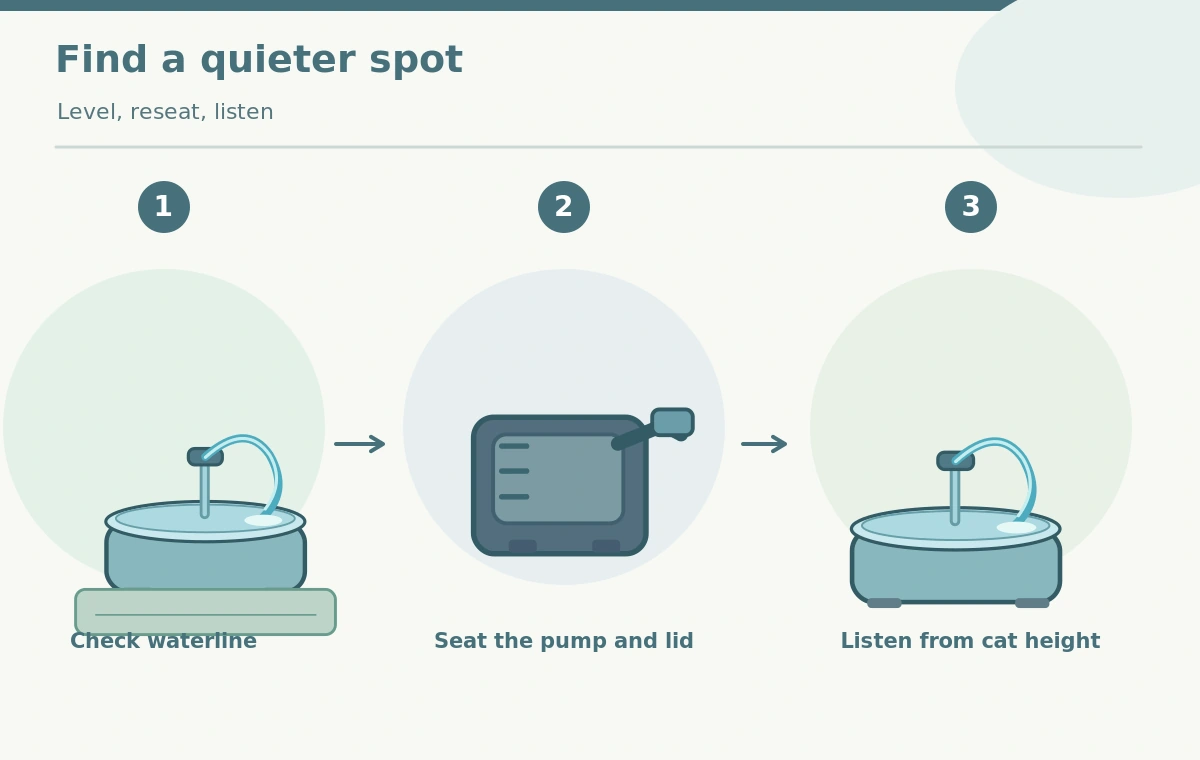
Plan for nighttime, outages, and cleaning
Choose equipment that you can unplug, open and wash without awkwardly moving heavy furniture. A quiet device still needs daily fresh water and regular washing of water-contact parts. Turn off a unit if the pump needs repair and leave a separate full bowl, especially overnight or during power interruptions. Confirm that a motion-activated pump can provide water when the animal approaches; do not assume a product’s marketing describes every pet’s experience. Review return policies and spare-pump availability before purchase. A useful fountain is one you can maintain and your cat willingly uses, not merely one that measures well in an advertisement.
How We Research
We reviewed veterinary hydration guidance, public-health cleaning recommendations and manufacturer instructions for relevant water equipment. Product diagrams illustrate features readers can inspect, not a tested brand or a certification. We did not independently measure pump output, material safety or drinking behavior. We checked these sources on October 28, 2026.
Sources
Cornell Feline Health Center, Hydration. Read source.
VCA Animal Hospitals, Tips to Encourage Cats to Drink More Water. Read source.
PetSafe, How to Take Apart a Drinkwell Fountain Pump for Cleaning. Read source.
Centers for Disease Control and Prevention, Cleaning and Disinfecting Pet Supplies. Read source.
Safety note: This is general pet equipment and hygiene information, not a veterinary diagnosis. Seek veterinary advice for a sudden change in thirst, appetite, urination, or suspected dehydration. Recognize urgent pet warning signs.
A motor can transmit vibration through a rigid surface. Check level feet, water height, pump seating and a suitable washable external mat.
Not always. Sound depends on drop height, flow, reservoir shape and vibration, so compare designs under realistic conditions.
No. Unapproved material can block the pump or contaminate drinking water. Use only components approved for the model.
It may help an individual cat, but there is no guarantee. Offer a still bowl and watch the cat’s actual drinking preferences.
Check for low water, a loose part or buildup after unplugging. Persistent grinding, damage or electrical concerns call for replacement.