
Pet-care safety note: If your animal is ill, has injured skin, or may have contacted a household chemical, contact your veterinarian. Read our veterinary information disclaimer for the limits of general website guidance.
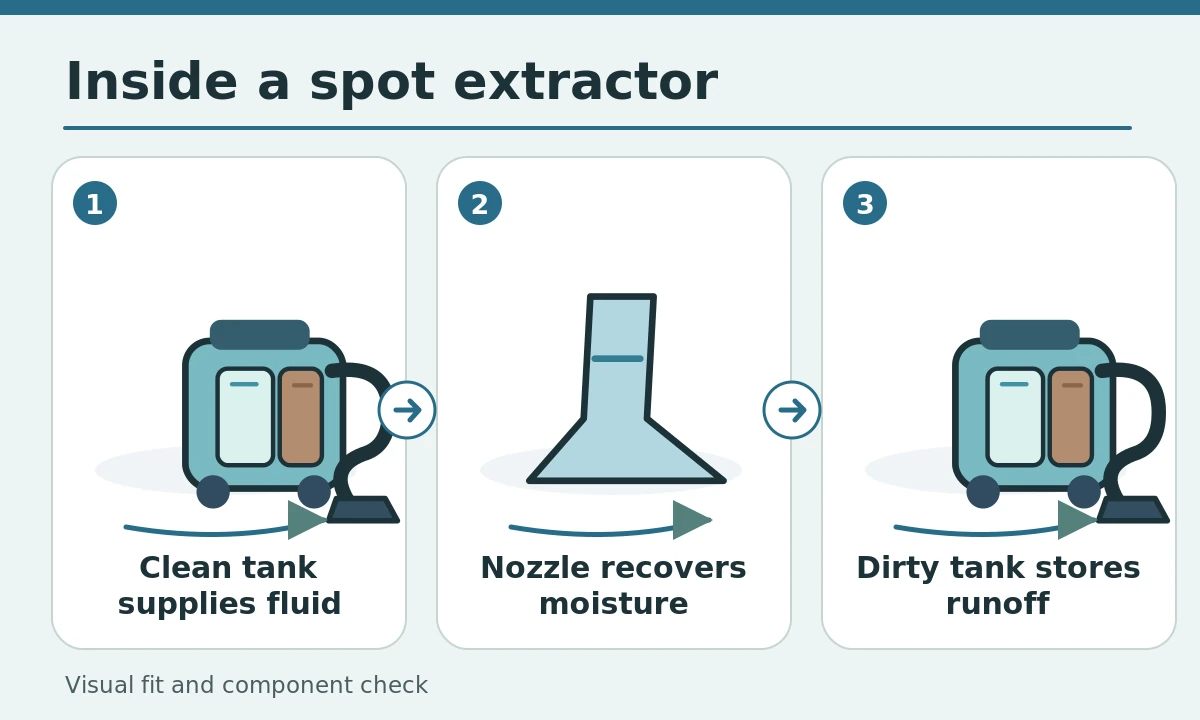
A portable spot cleaner for pets typically dispenses a compatible cleaning solution, agitates a small section, and vacuums the dirty liquid into a recovery tank. That is useful for isolated spills and accidents, but it is not the same as a full-room deep clean or complete odor elimination. The Carpet and Rug Institute describes small hand extractors as tools for quick pet-accident cleanups, not replacements for periodic deeper maintenance. Begin with a clear problem: occasional fresh spots, recurring small tracked-in mud, or upholstery that the manufacturer explicitly approves for wet extraction.
Prioritize recovery over a dramatic spray
A machine can soak a rug while leaving too much liquid behind. Ask how the head picks up moisture, how many extraction-only passes the instructions recommend, and whether the nozzle remains flush against your carpet’s surface. Weak recovery extends drying time and risks wet backing or padding. CRI’s extractor tests evaluate soil removal, carpet appearance, and residual moisture—three more useful measures than an advertising photo of a dirty tank. None of those tests means a household machine is suited to every fiber or accident. Read the model’s specifications and fabric restrictions.
Compare brush heads with delicate pile
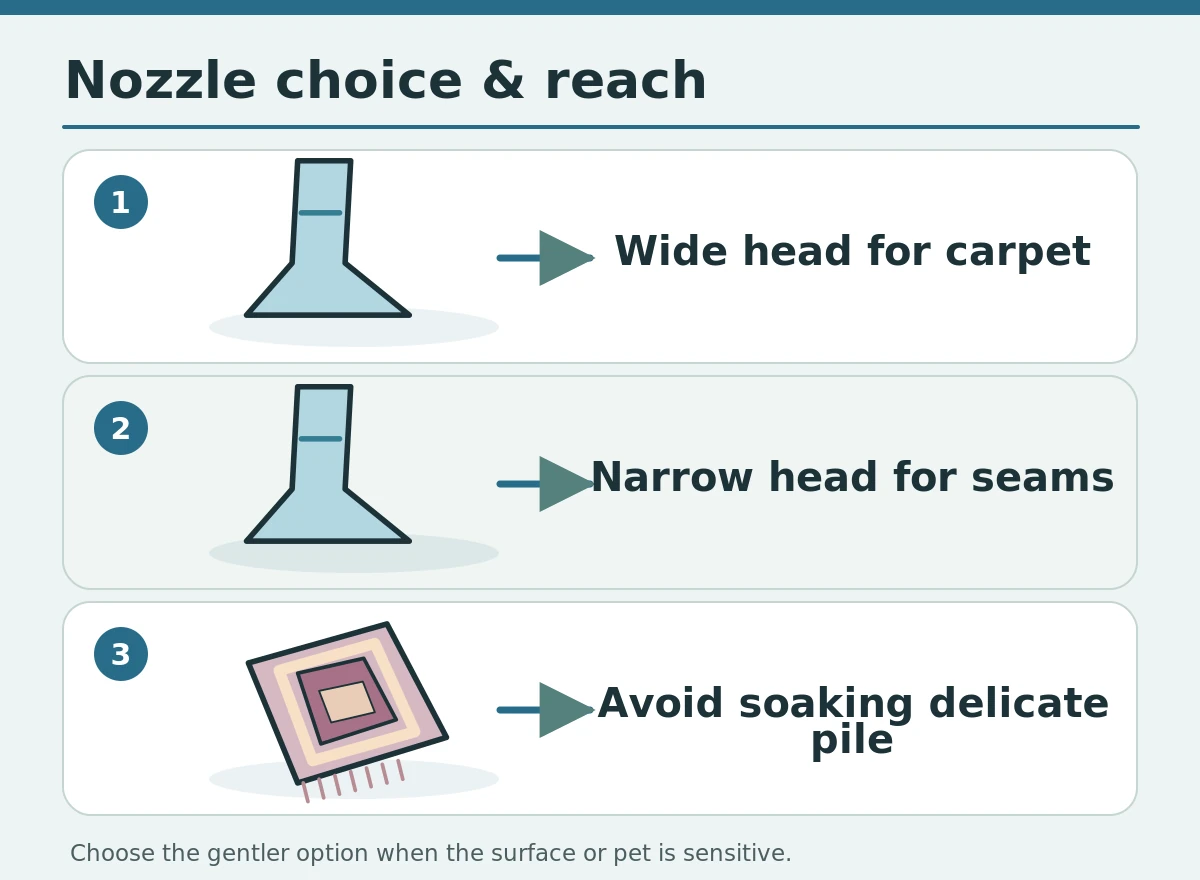
Stiff powered brushes can be helpful on some durable installed carpets and too aggressive on loops, delicate upholstery, or raised textures. A transparent suction nozzle lets you see whether wastewater is still moving, while removable brush inserts make maintenance easier. A narrow crevice head reaches seat seams but cannot efficiently clean an entire area rug. Check whether the unit has a truly smooth extraction tool for fabrics you want to protect. Stop if a looped pile snags in testing. Never increase pressure on a snagged loop. Upholstery cleaning codes and care labels take precedence over the machine’s general marketing.
The hose matters as much as the motor
Measure the distance from a safe floor position to the sofa or stair landing you actually need to reach. A short, stiff hose can pull the base unit over or make nozzle movement awkward. Inspect hose joints for pockets where dirty water can remain after use. Prefer a design that lets you flush the hose and dry attachments thoroughly. Check that the machine remains stable when the recovery tank is partly full. A larger motor is not an adequate substitute for hose reach, tight fittings, comfortable grip, and reliable separation of clean and dirty water.
Size the tanks for the smallest repeated job
Tiny clean-water tanks require more refills; large tanks add carrying weight and take storage space. Choose capacity based on the number and size of spots you normally manage, not the largest possible accident imaginable. Mark the recovery tank’s maximum fill line and make sure you can empty it without touching dirty liquid. Removable, wide-mouth tanks are easier to rinse and air-dry. Check replacement parts availability for caps, gaskets, and nozzles. A unit that is annoying to clean may remain in the closet precisely when you need it.
Begin with solids and blotting
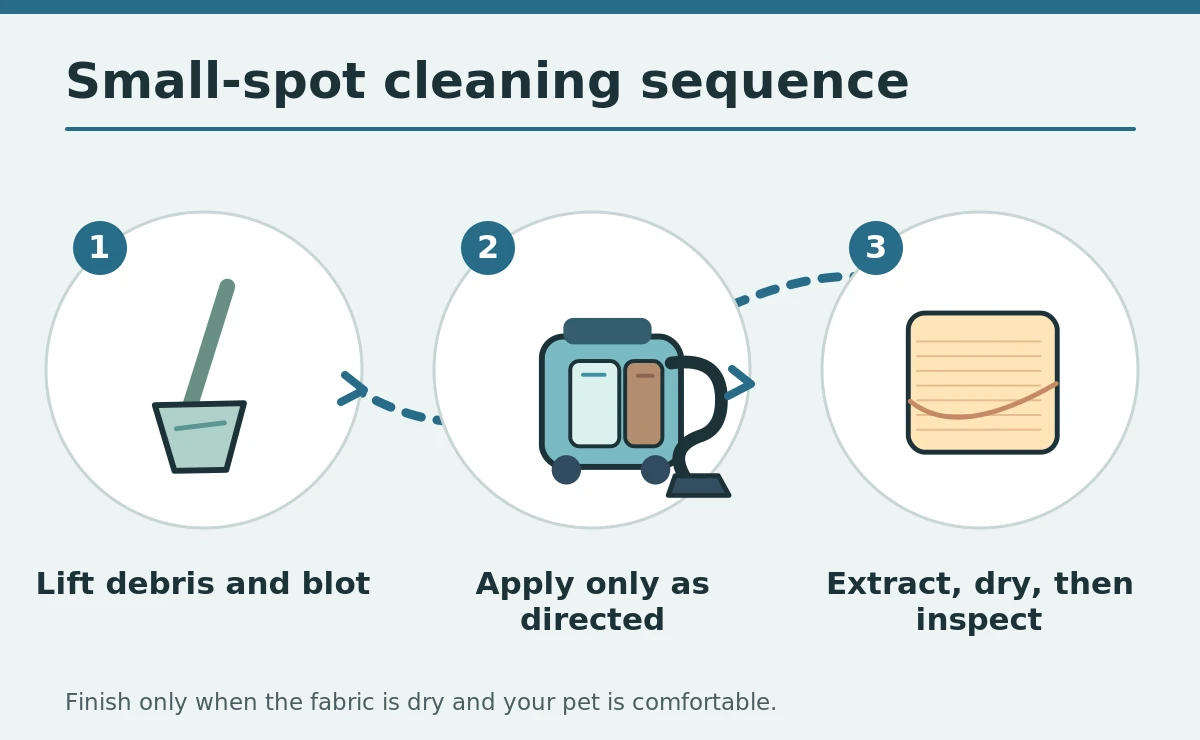
Keep the pet away from the area. Put on gloves when handling feces, scoop semi-solid material gently with a rounded tool, and use plain white absorbent towels to blot remaining moisture. Never force waste deeper by scrubbing. Before introducing a solution or machine, inspect the carpet material and pretest in a hidden location for dye transfer or pile change. CRI recommends acting quickly, blotting rather than rubbing, and testing any spot treatment. A portable extractor works best after the excess material has been removed, not as the first pass through a pile of debris.
Use only manufacturer-compatible solutions
Some units require low-foaming formulas to protect seals and the vacuum motor. Concentrates need exact label dilution; stronger is not automatically cleaner. Choose a product approved for the surface and the machine, and avoid combining cleaners or adding bleach, ammonia, or essential oils. ASPCA advises using household cleaners according to their labels, restricting pet access while products are used, and waiting for treated carpet to dry. Follow both the machine and chemical label if they differ; do not create a homemade mixture to improve suction or scent.
Extract without soaking the backing
Work a small zone from outside the spot toward the center where practical. Limit solution passes; after pickup, make additional suction-only strokes if the manual recommends them. Check the clear nozzle and recovery tank rather than repeatedly spraying because the fibers still look dark. Moisture can travel beneath carpeting where you cannot see it. A heavy, deep, or recurring urine contamination may require professional inspection of pad and subfloor, not another cycle of overwetting the visible pile. Keep people and pets off the treated area until it is fully dry.
Clean the extractor after every use
Empty wastewater promptly, wearing gloves where appropriate. Rinse recovery and solution tanks as directed, flush the hose, clear lint from the intake, and spread parts out so air circulates. Never store a closed wet dirty-water tank. Inspect the nozzle gasket and filters before the next use; lost seals can sharply reduce extraction performance. Do not assume an apparently clean tank means the hose contains no residue. If the machine has a self-rinse function, confirm what it actually cleans. It may not sanitize the entire dirty-water path.
Know when to hire professional help
Stop DIY extraction if dyes bleed, colors transfer to white towels, or the backing stays damp. A recurring odor or specialty rug also calls for a professional. Large floods and widespread contamination exceed the intended job of compact machines. Call a rug-care specialist for wool, silk, unknown dyes, and rugs with fringe or unstable backing. For repeated accidents, address the animal’s needs as well as the fabric: new housetraining issues or changes in elimination can warrant veterinary guidance. Cleaning machinery cannot fix the reason an accident occurred.
Make a realistic purchase decision
Run four checks: Can the hose reach the target, can you control liquid application, can the machine recover moisture efficiently, and can every dirty component be cleaned and dried? Compare storage footprint and noise with the space you have. If your only need is an occasional fresh spill, towels and a suitable spot cleaner might be enough. If cleaning stairs and furniture is frequent, a portable extractor with stable placement and a removable nozzle earns its space. Reject universal stain-removal and sanitizing promises.
How We Research
We used the Carpet and Rug Institute’s consumer cleaning guidance and extractor test criteria, together with ASPCA household cleaner safety advice. We focused on mechanical tradeoffs, residue management, and limits of wet extraction; we did not conduct hands-on equipment testing or rank models. See About HubPet for our editorial approach.
Sources
Carpet and Rug Institute: Cleaning and Maintenance for Homes: Read the original source. Accessed October 27, 2026.
Carpet and Rug Institute: Seal of Approval Program: Read the original source. Accessed October 27, 2026.
Carpet and Rug Institute: Pet Stains, Odors, and Maintenance: Read the original source. Accessed October 27, 2026.
ASPCA: Pet Poisons, Household Products and Cleaning Agents: Read the original source. Accessed October 27, 2026.
Not by default. Check the rug maker’s care instructions and test for color transfer. Fine wool, silk, hand-dyed, or antique rugs are safer with a qualified rug-care professional.
Too many spray passes, weak suction, a poor nozzle seal, or a full recovery tank can leave moisture. Follow the manual for suction-only passes and allow the area to dry fully before pet access.
Only if both the extractor and the specific cleaning product permit that use. Never assume a spot spray belongs in the machine, and do not mix detergents.
No machine guarantees that. Liquid can reach carpet backing or padding outside the nozzle’s reach. Persistent odor may need professional evaluation and correction of the underlying contamination.
No. It is a targeted spot-treatment tool. Maintain regular vacuuming and follow carpet-manufacturer recommendations for periodic deep cleaning.