
A cat scratcher bed combines a shallow nap spot with a cardboard surface for claw use. The combination can be convenient, but a pretty bowl shape does not prove the cat can stretch or scratch comfortably. Evaluate the corrugated surface, base stability, and how the product sheds with use. Some cats want a horizontal scratch pad and a separate soft bed instead. You can make a practical choice by looking at your cat’s behavior and the item in front of you. For unusual chewing or appetite changes, consult a veterinarian; see our veterinary disclaimer.
Separate scratching room from sleeping room
A shallow curved scratcher may look spacious from above, but a thick raised rim reduces the level area inside. Watch whether your cat curls in the center or stretches across the outer edge. For scratching, there should be enough exposed board for a comfortable foreleg reach. For sleep, the cat should be able to settle without balancing on a fragile raised border. A broad, shallow oval often gives different usable space than a narrow deep bowl. Consider both functions separately rather than judging by one product photograph.
Inspect the corrugated direction and surface
Run your hand gently over the cardboard to feel for sharp lifted edges or wet patches. Horizontal scratchers let cats rake back with their forepaws. Some prefer vertical or slanted surfaces instead, and one bed will not serve every preference. ASPCA recommends offering sturdy scratchers in different surfaces and orientations. Look for tight, even corrugations that do not separate immediately with a light touch. Cardboard should stay contained in the frame rather than falling out in large loose panels.
Test the base before the cat jumps on
Set the bed on the actual floor where it will sit. Nudge the rim from several directions. A light cardboard piece may skid on tile, especially if the cat launches off it during play. Check for a stable base or a washable non-slip pad that lies flat underneath. Avoid unsecured feet or small adhesive bumpers that can detach. If the whole bed tips when the cat presses one edge, choose a wider or flatter style. Stability matters during both naps and full-body stretches.
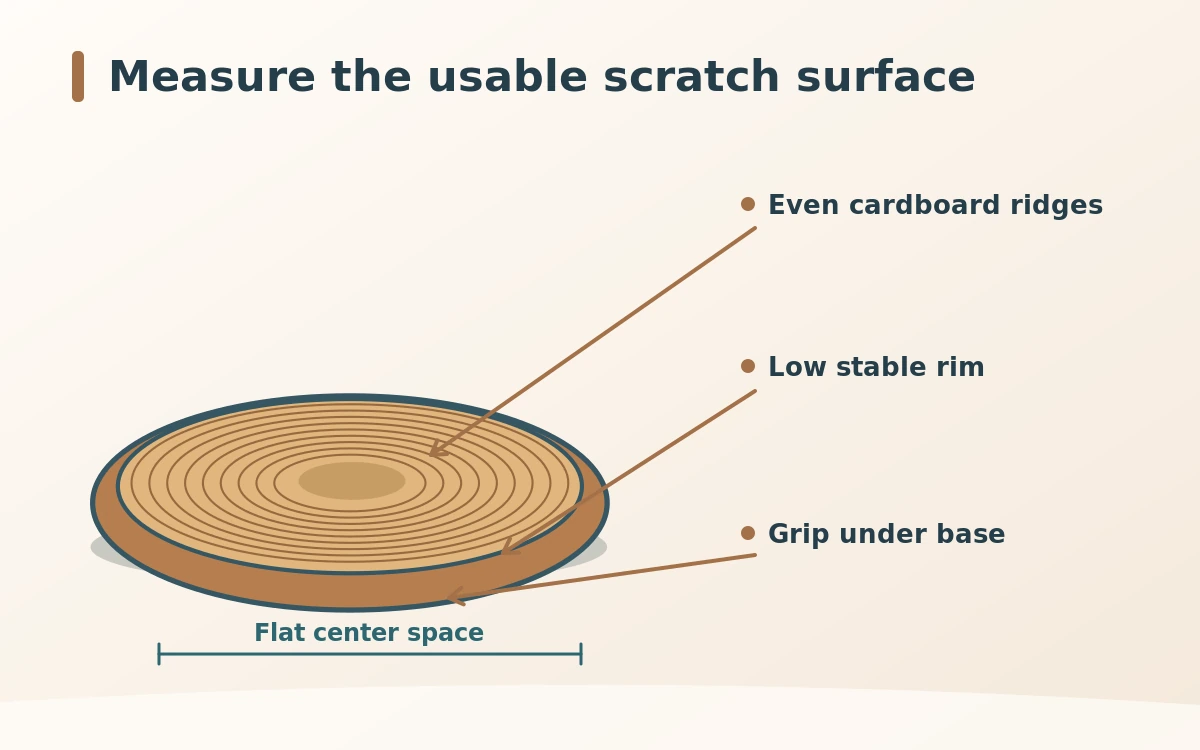
Check whether the rim helps or gets in the way
A low rim can provide a place to rest the head and may keep shredded bits within the tray. A tall steep rim can reduce access or encourage a cat to perch awkwardly. The right shape depends on your cat’s usual posture. A cat that sleeps stretched out may use a flat mat more often. If a rim is covered in decorative cloth, inspect the seam where cardboard meets fabric. Frayed threads or loose glue are reasons to retire the product, not cosmetic details.
Compare a scratcher bed with a dedicated pad
A combined item saves floor space but can become messy as scratching wears down the nap surface. A separate flat scratch pad is easy to relocate and replace, while an ordinary washable cushion stays cleaner. Neither configuration is automatically superior. If your cat regularly scratches then curls up, the combination may be useful. If the cat rejects the dusty center, keep scratching and sleeping supplies separate. Offer more than one restful area so the cat is not dependent on a worn cardboard surface.
Choose a location that matches scratching habits
Many cats scratch after waking or during transitions between activities. Place a scratcher bed near an existing resting route rather than hidden behind a closed door. Avoid damp bathrooms or spots where a wet mop touches the cardboard. Set it away from heaters and food bowls. A cat may mark a favorite area with scratching, so moving it every day can reduce interest. Where pets share a room, leave open access and another resting surface so one cat cannot block all choices.

Avoid treating catnip as a safety feature
Some products include loose catnip or silvervine packets. Use only in a way the manufacturer recommends, and keep packaging away from cats. These additives are optional; many cats choose a scratcher without them. Never glue loose toys onto the bed or hang long strings over the surface. If your cat chews and swallows cardboard, remove access and discuss the behavior with a veterinarian. A scratcher is for normal claw use, not eating the core material.
Have a realistic debris routine
Cardboard shedding is normal with use, but large detached chunks and exposed adhesive call for replacement. Sweep or vacuum small bits without startling a resting cat. Inspect the underside for moisture and for staples or fasteners if the structure uses them. The surface should stay dry and free of cleaning chemicals. A wet scratcher may soften and lose strength even after the top appears dry. Choose a product whose worn insert can be replaced if the manufacturer offers a secure fit.
Introduce the bed next to an accepted scratcher
Place the new bed near a route your cat already uses. Keep the familiar scratcher available rather than taking it away immediately. Let the cat sniff and paw the cardboard. Praise or reward voluntary appropriate scratching; never press paws against the surface. A cat may use the item first for clawing and begin napping later, or never nap in it. Both outcomes reveal a preference. Remove a damaged model rather than trying to teach the cat to avoid dangerous edges.

Learn the replacement signs
Retire the bed when the surface develops deep holes, a loose rim, exposed glue, or unstable base. Persistent dampness, moldy odor, and detached large fragments are additional reasons to discard it. Surface wear alone does not require immediate disposal if the structure remains sound and the cat uses it safely. Check during ordinary cleaning instead of waiting for a visible collapse. The cost of a replacement surface matters more than claims about a product lasting forever.
Make the final buying comparison
Ask whether your cat likes horizontal cardboard, whether the bed allows the cat’s usual sleep posture, and whether the base stays still. Then consider cleanup and replacement availability. A scratcher bed can be a useful extra resource, but it should not replace an accessible clean sleeping spot or a preferred vertical post. For cats with mobility limits, choose a low entry and stable surface. The cat’s willingness to use the object is the final practical test.
How We Research
We reviewed feline welfare guidance about secure resting places, access to separate resources, normal sleep choices, and material safety. We then evaluated the practical product details that owners can inspect: usable dimensions, stability, pathways, seams, and cleaning. The drawings show the intended checks rather than a promise that a product is approved or suitable for every cat. We do not treat marketing labels as evidence of comfort. Read more about our editorial approach.
Sources
ASPCA — Destructive Scratching — ASPCA — Destructive Scratching (reviewed October 2026).
AAFP/ISFM — Feline Environmental Needs Guidelines — AAFP/ISFM — Feline Environmental Needs Guidelines (reviewed October 2026).
Cats Protection — Preparing Your Home for a Cat — Cats Protection — Preparing Your Home for a Cat (reviewed October 2026).
Cornell Feline Health Center — Feline Behavior Problems: Destructive Behavior — Cornell Feline Health Center — Feline Behavior Problems: Destructive Behavior (reviewed October 2026).
Safety note: Remove bedding with exposed stuffing, wires, detached trim, or chewable strands. For sudden changes in hiding, movement, sleep, or appetite, contact a veterinarian. Never force a cat into a sleeping space.
Many cats choose to nap on cardboard, while others prefer fabric. Offer another comfortable resting surface so the cat can select what feels good.
Look at the flat usable area. If your cat cannot curl or stretch comfortably without balancing on a rim, consider a wider model.
Small shreds can appear during scratching. Remove large detached pieces and replace any bed with exposed glue, soggy layers or unstable structure.
Do not soak cardboard unless the product explicitly allows it. Usually you remove loose debris and replace the cardboard when it becomes wet or worn.
No single texture or orientation works for every cat. Keep a sturdy vertical or slanted option if your cat likes it, plus a separate clean nap spot.