
Some cats greet visitors at the door. Others vanish behind a sofa as soon as footsteps or voices change. Hiding during a visit often gives a cautious cat the distance it needs to feel safer. Your job is not to convince the cat to attend the gathering. Instead, design a retreat with water, litter access, and reliable ways in and out. Then explain simple rules to visitors. A sudden increase in hiding outside guest visits can also signal illness or discomfort and deserves veterinary attention.
Prepare the quiet room before the doorbell
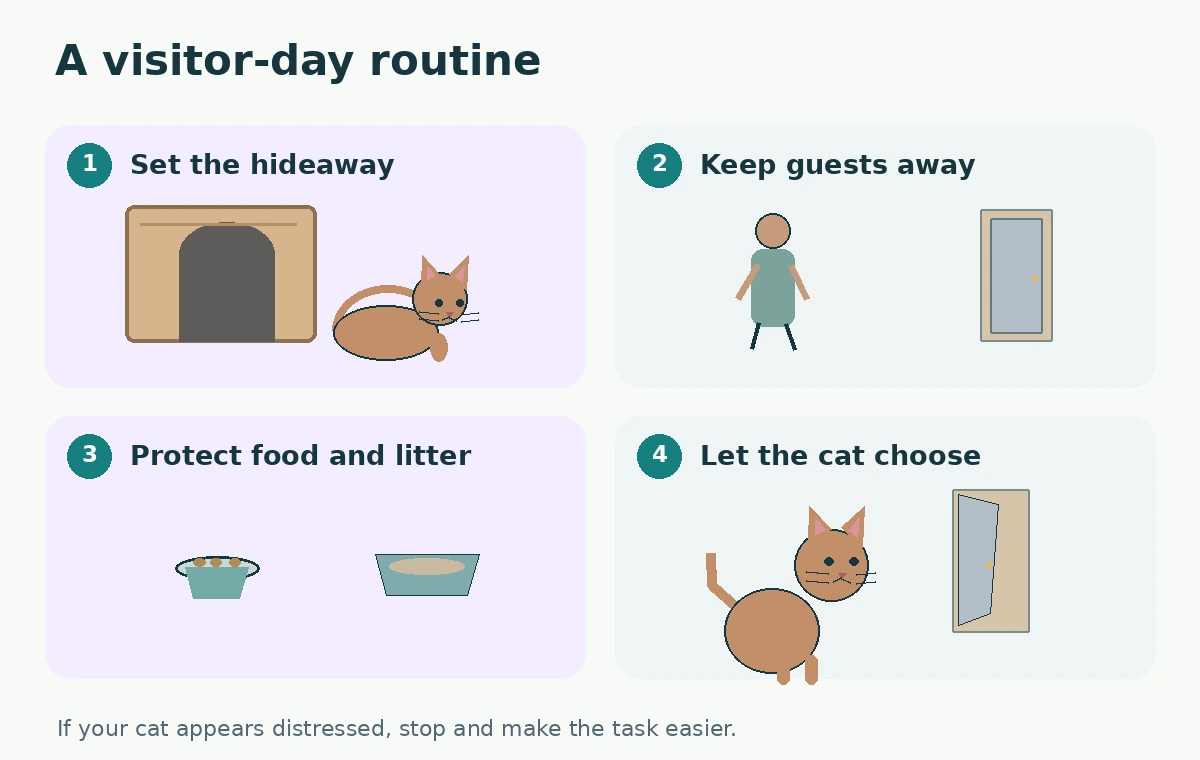
Choose a room away from the main entrance and loud conversation. Place a familiar bed, a sturdy covered hide, water, and an accessible litter tray, with the feeding station away from the litter. Make sure doors and windows latch securely. Do not wait for the first knock to carry a frightened cat through a crowded hallway. Instead, offer access to the retreat well before the visit begins. The room can stay open to the home if the cat can move without passing guests or a dog.
Give the hideaway a safe entrance and exit
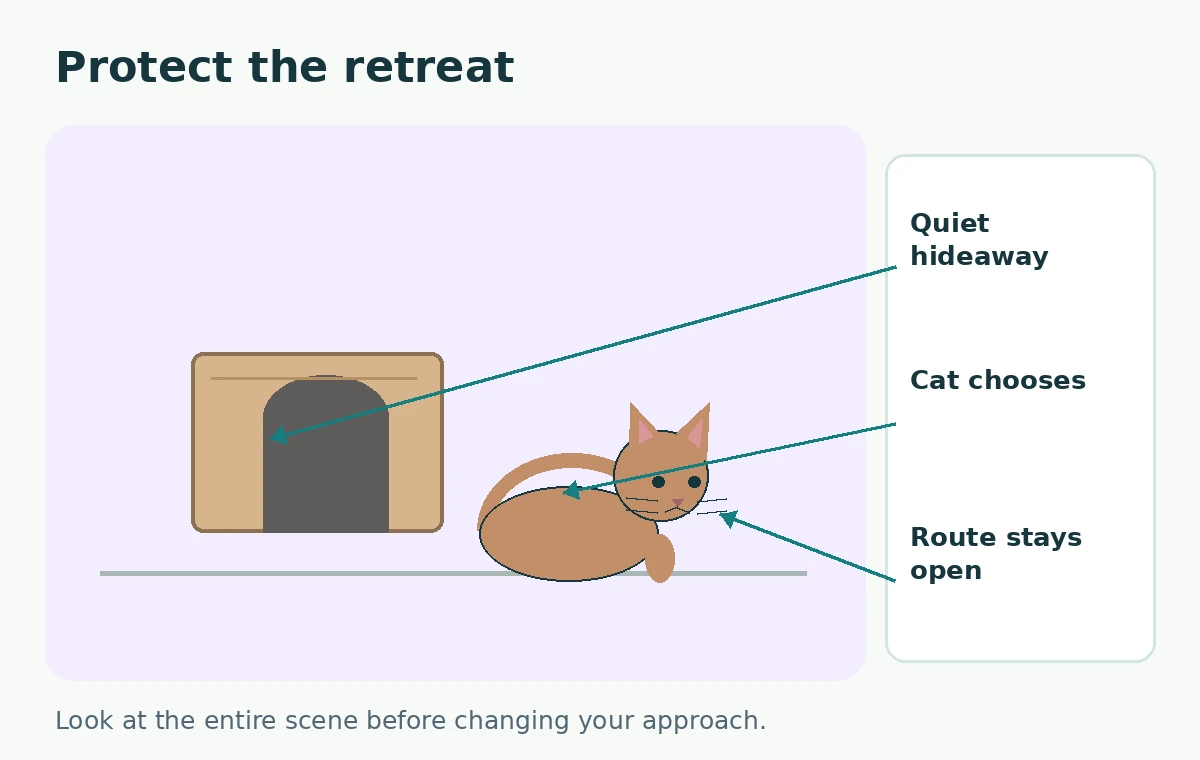
Put a box or covered bed along a wall with its opening facing away from heavy traffic. A stable shelf may suit a cat that prefers height, but it needs a secure route down. Never position a hide above dangling cords or unstable furniture. Leave enough room for a cat to turn inside. If the room connects to a hallway, keep the route clear of coats, luggage, and shoes. A cramped exit or blocked doorway can make the same hiding spot feel like a trap.
Tell guests not to pursue the cat
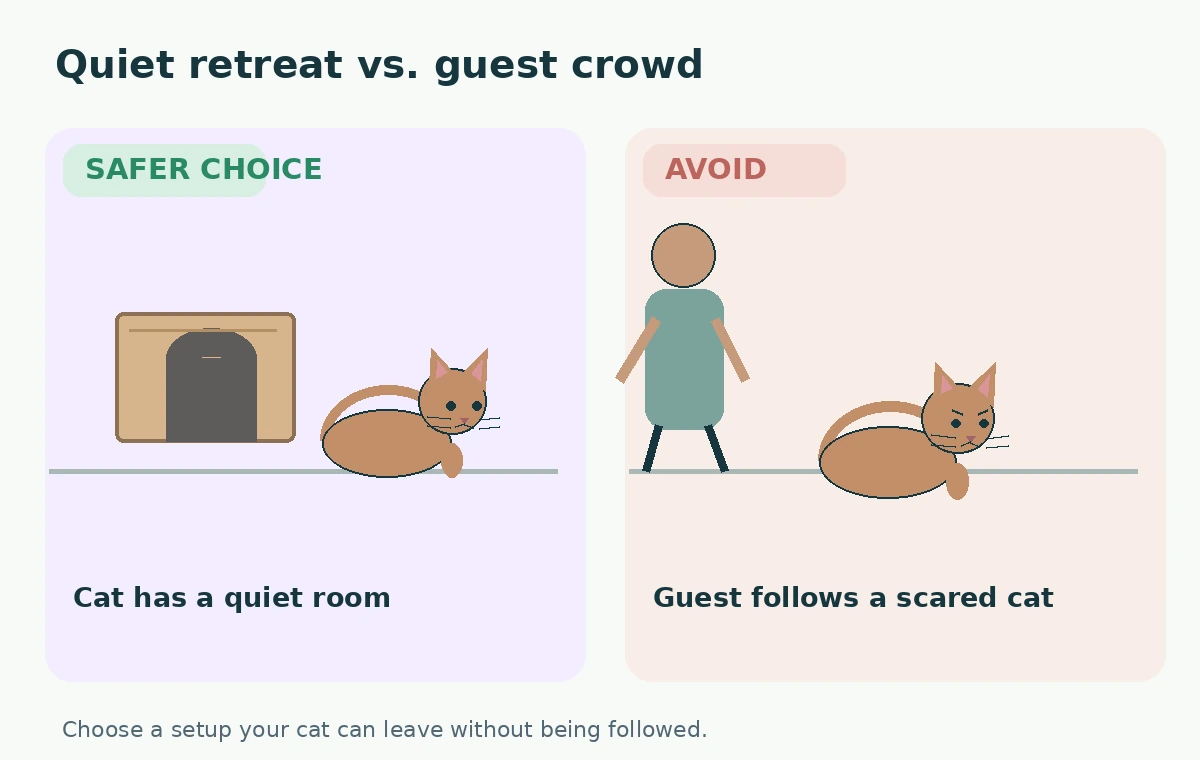
Before anyone arrives, explain that the cat chooses whether to appear. Visitors should not reach under furniture, call repeatedly into the hide, or pick up a cat who walks past. Ask children to remain in common spaces rather than following the cat into its retreat. Keep doors to outdoor areas closed while people arrive and depart. In addition, avoid large numbers of unfamiliar people standing in the narrow hallway where the cat normally walks. Respect for distance is the practical safety rule.
Reduce the pressure at the front door
Doorbells, opening doors, and quick footsteps can stack several triggers together. If possible, ask guests to text rather than knock loudly, or use another predictable arrival routine. Move shoes and bags away from the cat’s usual route. Close off unsafe exits and keep the cat indoors. Meanwhile, provide a separate place for visiting dogs rather than expecting the cat to face a new animal. Do not introduce unfamiliar pets during a party. A quieter entrance can prevent the first big fright.
Let the cat control visibility
Some cats relax when they can observe from a shelf or a partly screened doorway. Others prefer a fully enclosed bed. Offer both choices if space allows. Do not lift the cat onto a perch where it must pass a visitor to climb down. Watch for loose posture and normal grooming instead of interpreting a peek as a request to be touched. If the cat enters the living room, let it leave immediately. Visitors can remain seated and avoid extending hands until the cat voluntarily approaches.
Keep food and litter accessible throughout
Do not put essential resources on the visitor side of a closed door. The retreat should offer water and litter access, and food as appropriate for the cat’s normal schedule. Keep litter away from the feeding area. If noise stops the cat from eating, offer a calm period after the guests leave. Track actual eating and elimination rather than assuming the cat is fine because it is quiet. If basic functions change or the cat becomes lethargic, contact the veterinarian promptly.
Use familiar scent and predictable routines
Leave a familiar blanket or cat bed in the retreat rather than filling it with strongly scented new products. Feed and play at the regular times as closely as possible. Avoid scent sprays or essential oils around the cat. A short interactive play session before guests arrive can suit a cat that already enjoys play. However, do not force activity when the cat is hiding or tense. Routine matters because it reduces the number of changes the cat must process at once.
Invite gentle contact only after the cat is ready
If the cat voluntarily enters the room, ask visitors to stay still and turn slightly sideways. A guest can place a treat on the floor at a distance, provided the cat’s diet allows it. No one should use food to lure a cat close enough to grab. A cat who approaches may still prefer not to be stroked. End the opportunity at the first signs of retreat or tension. Repeated calm visits are more useful than expecting a nervous cat to become social in one evening.
Look for triggers that can change
Keep notes about the number of visitors, noise level, visit length, and whether the cat had access to a safe room. Perhaps one quiet guest causes little concern while several people moving through the kitchen trigger hiding. Change the environment rather than labeling the cat unfriendly. If a regular visitor wants to build trust, begin with short calm arrivals and no touch. Each successful session should let the cat decide how much to participate.
Separate normal caution from a new health concern
Hiding only during busy visits can be a sensible way to cope. Hiding constantly, changing appetite, missing the litter box, or appearing uncomfortable suggests a broader problem. Contact a veterinarian about sudden or persistent changes. A qualified feline behavior professional can support persistent fear after medical concerns receive attention. Never use forced exposure to make a shy cat tolerate strangers. The aim is safe choice and a household plan that works even if the cat stays hidden.
How We Research
We reviewed guidance from veterinary and animal welfare organizations, compared the recommended body-language signs and environmental changes, and separated common management from issues that call for a veterinary exam. Our about page describes the project. Behavior varies between cats; this guide is educational and not a diagnosis. For new illness or safety concerns, see our veterinary disclaimer.
Sources
VCA Animal Hospitals: Fears and Phobias in Cats — evidence-based background on feline comfort, body language, and supportive management.
Cats Protection: Bringing a Cat Home — evidence-based background on feline comfort, body language, and supportive management.
AAHA: Behavior and Environmental Needs — evidence-based background on feline comfort, body language, and supportive management.
No. Ask guests to ignore the hiding place. Let the cat choose when to appear and ensure it can reach water and a litter box.
A prepared, familiar retreat can help if the cat has its essential resources and does not become distressed by confinement. Avoid forcing or trapping the cat.
That is useful information about the cat’s preferred distance. Keep the exit open and do not turn one brief appearance into a forced greeting.
Only if the cat is comfortable and their diet permits the treat. Place it at a distance; never lure the cat into unwanted handling.
Seek guidance for sudden hiding without guests, changes in eating or litter use, mobility problems, or persistent distress beyond ordinary visits.