
This article offers general pet-care information, not a diagnosis or a substitute for veterinary assessment. Stop if your pet shows pain, bleeding, repeated fear, or abnormal movement. Do not force handling or guess at the location of the sensitive nail quick. Read the veterinary disclaimer.
A second person can help with a cat’s nail care, but more hands do not automatically make the procedure safer. The extra person should support a calm setting, offer rewards and watch the cat’s body language, not hold the cat down. Many cats tolerate only a single toe touch or one nail at first. Use this plan for cooperative sessions when the cat chooses to remain nearby. Ask a veterinarian or veterinary nurse to demonstrate safe paw handling if you are unsure, and never trim through movement, fear or apparent pain.
Agree on roles before approaching the cat
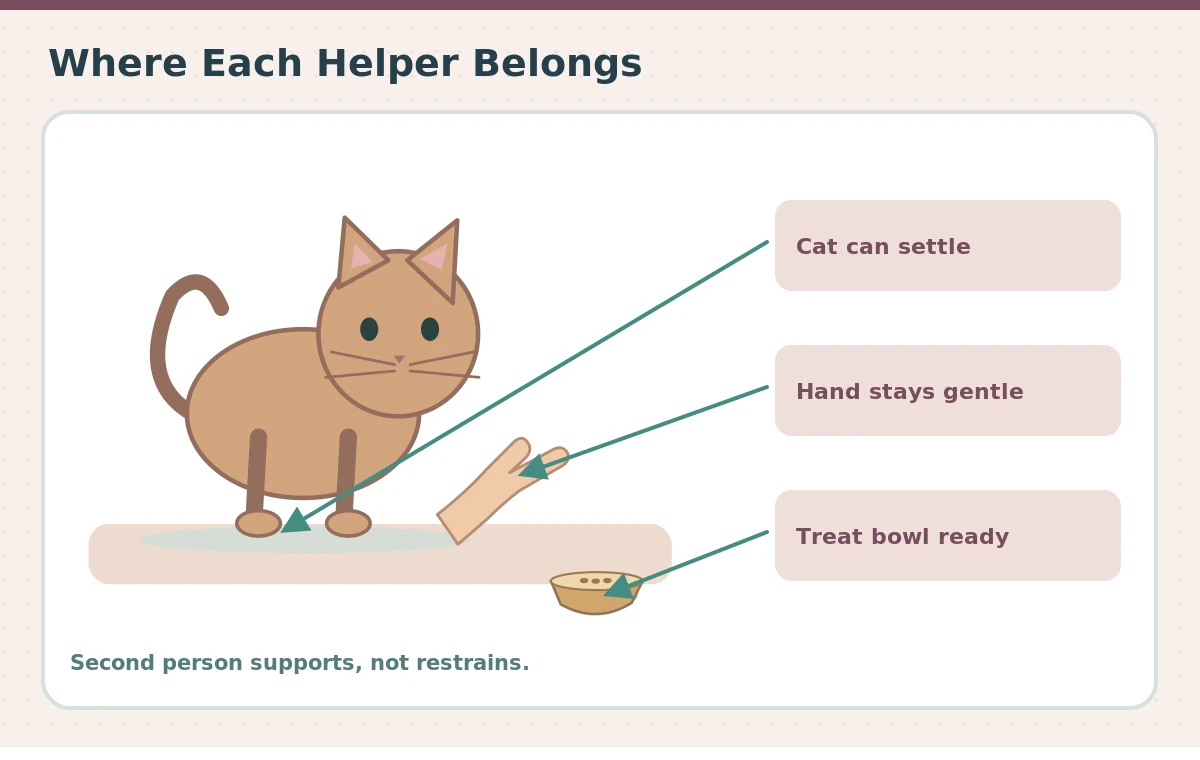
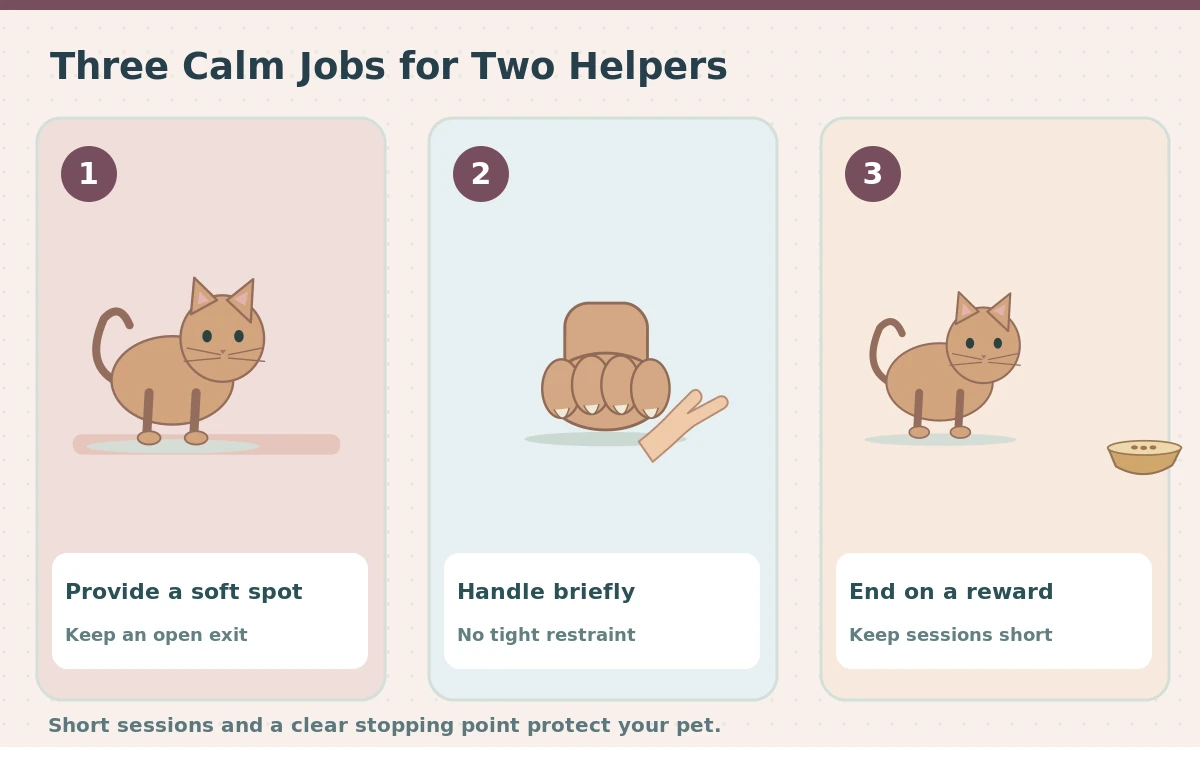
Choose one person to handle the paw and the other to offer a favorite treat, hold the towel in place or observe signs of discomfort. Avoid two people reaching for the same limb at once. Keep clippers and other tools off the cat’s walking route. Speak quietly and use the same predictable phrase before touching a paw. If one helper has less experience reading feline body language, make that person the observer rather than assigning restraint. Decide in advance that either person can say “stop” and both will immediately release.
Create an inviting place, not a trap
A familiar sofa or low, stable table with a nonslip towel can work for practice. Let the cat approach and choose a position. Block dangerous exits such as an open balcony door, but do not corner the cat behind people. A towel should be a comfortable surface, not a tight wrap used to immobilize the body. Place a treat dish where the cat can reach it without stretching or twisting. The helper should sit to the side, leaving a clear retreat path, and should avoid looming over the cat’s face.
Start with a very small voluntary action
Before you attempt a nail trim, reward the cat for sitting near the towel or approaching your resting hand. Touch a shoulder briefly, reward and stop. On later repetitions, glide your hand toward a foreleg and touch the paw only if the cat remains relaxed. Cats Protection advises gentle pressure to reveal a claw rather than squeezing. The helper can offer a tiny treat immediately after the touch. Repetitions should end before the cat becomes tense. One calm response teaches more than several forced holds.
Support the paw without twisting it
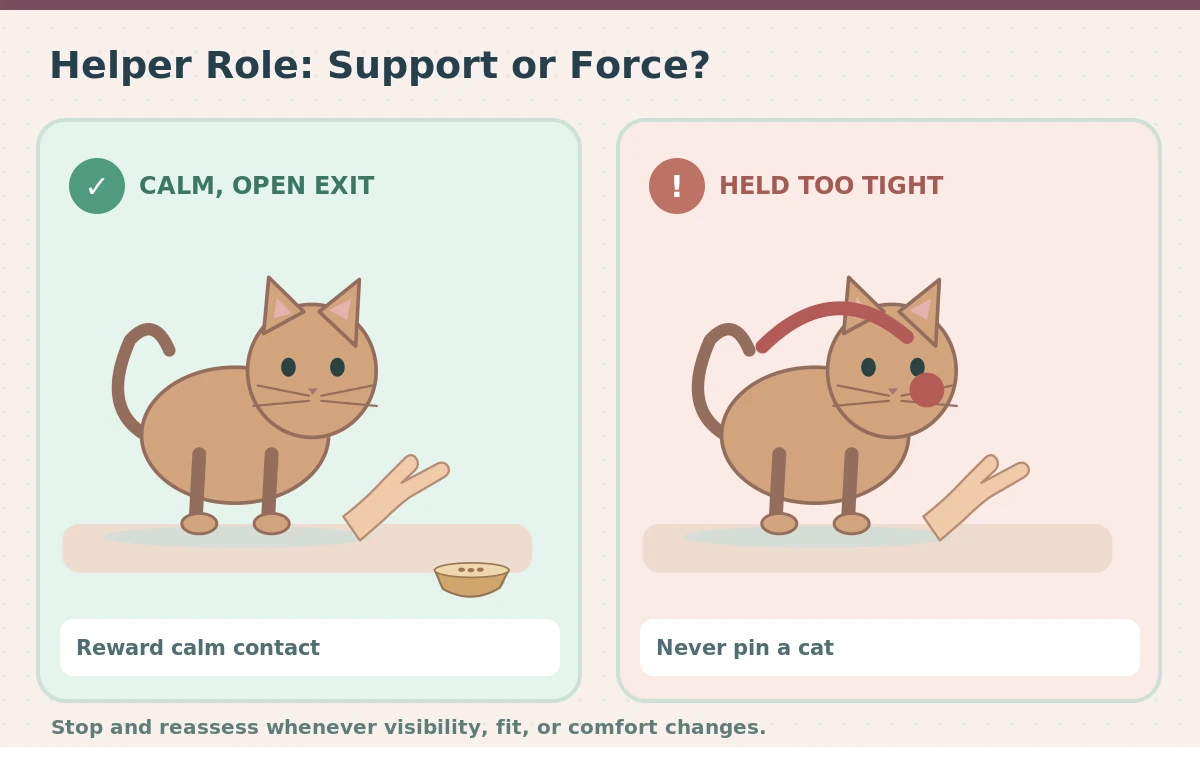
Use one hand to steady the leg and the other to support a toe near its natural position. Do not stretch the limb backward or force it high in the air for a better camera-like angle. Light pressure on the toe pad may extend the claw so you can see the sharp outer tip. The quick, often pink within a light claw, must not be cut. If it is hard to see, pause and get advice. An assistant should never squeeze around the chest or hold the neck tightly while you work.
Read the quieter signals first
A cat may stop taking treats, turn its ears sideways, flick its tail sharply, tuck its paws, freeze or stare intensely before hissing or swatting. The helper’s main job is to catch those small changes early. Do not assume that an animal who stops moving is happy with the process. Release the paw, back away and let the cat choose whether to stay. Returning to an easier touch another day is not failure. Some cats simply need professional nail care rather than repeated home trials.
Keep each trim small and unhurried
If the cat accepts claw extension and the correct tool, the handler can take only the sharp white tip of a single nail, then release and reward. Do not continue merely because the cat remains physically nearby. Avoid counting nails as a performance target. The assistant can monitor the paw and cat’s expression while the handler checks visibility before every cut. If the cat suddenly pulls, close the clipper away from the claw and end the attempt. Never chase the animal around the room to finish the remaining toes.
Know the limits of a second helper
A helper cannot safely compensate for a blunt clipper, poor visibility, pain or a cat who is actively trying to escape. More physical control often increases fear and risk. A person who is unfamiliar to the cat may make the session harder, so use someone calm and trusted whenever possible. If two people cannot coordinate without tugging the cat between them, simplify to one person doing handling practice only. Your aim is a comfortable association with touch, not a perfect salon-like pose.
Plan rewards and short breaks
Choose small treats the cat already eats comfortably and place them within easy reach. Offer a reward after successful voluntary participation rather than luring the cat into a position it cannot leave. Some cats prefer play or a quiet pause to food. Allow the cat to move away between tries. Keep records of which paw or touch was comfortable, but avoid imposing a rigid daily schedule. A single relaxed minute may be the entire session. Consistency comes from predictability, not from forcing the same number of repetitions.
Ask for professional help when needed
A curved claw approaching a paw pad, bleeding, splitting, swelling or sudden sensitivity deserves veterinary assessment. If a cat cannot tolerate even gentle paw handling, ask a veterinarian or feline-friendly groomer for a plan. A nurse can show the family how to support a limb and use the proper tool safely. Do not use sedatives, restraint devices or adhesive products without professional direction. Helpful teamwork means knowing when to stop and when the animal needs a different level of care.
How We Research
HubPet compared current veterinary and animal-welfare guidance on nail handling, grooming comfort, and the relevant equipment. We focused on fit, visibility, common failure points and situations where a professional should take over. We have not physically tested specific products or examined your pet; this is an evidence-informed practical guide, not a certification or clinical treatment plan. Read how HubPet researches pet-care products.
Sources
Cats Protection — How to Trim Cat Claws
ASPCA — Destructive Scratching
The helper should offer rewards and watch comfort, not pin the cat. Use minimal gentle support only when the cat accepts it.
Sit to one side within easy reward reach, without blocking the cat’s route away from the towel or resting spot.
You do not need to. Start with short paw-handling practice and perhaps a single nail only when the cat remains relaxed.
Treat freezing as a possible sign of stress. Release the paw, lower the difficulty and allow the cat to leave.
Contact the clinic for pain, damaged claws, swelling, bleeding, ingrowing nails or repeated intense fear around handling.