
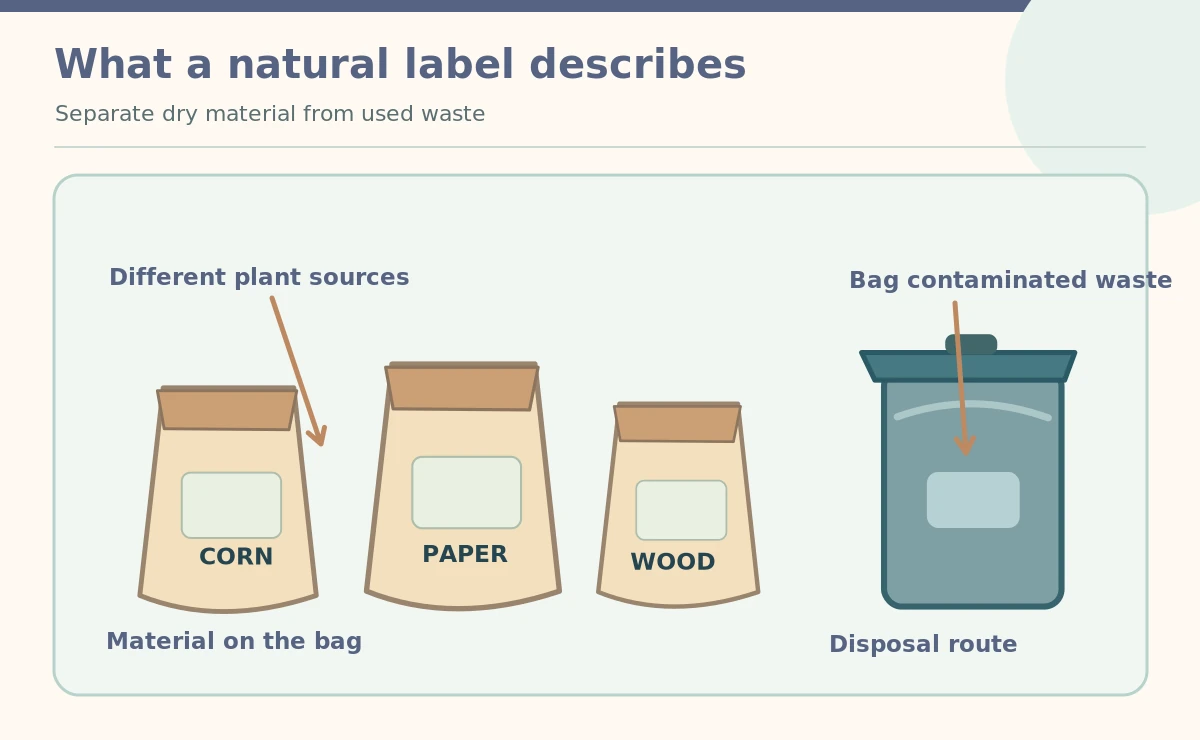
Natural cat litter is a broad label, not a single material or a promise of safe disposal. Products may contain corn, wood, paper, wheat, grass fibers or minerals, each with different grain shapes and maintenance needs. A leaf icon does not tell you whether the cat likes the texture, whether a clump holds together or whether used litter belongs in a garden. This guide translates common packaging claims into practical buying and cleanup checks, with special attention to the difference between a fresh substrate and cat waste.
Separate the ingredient from the advertising word
Read the material list first. Some litters contain single plant fibers while others combine plant and mineral ingredients. A front panel saying “natural” may still include added fragrance or binders; check the ingredient and safety information available for the exact product. Natural origin does not guarantee low dust, a soft paw feel or high absorption. Compare the shape, smell and performance of the granules themselves. If information is missing, contact the manufacturer rather than guessing based on a green bag or an attractive picture.
Learn what biodegradable does and does not mean
A biodegradable substance can break down under suitable conditions. This does not mean it disappears rapidly in an ordinary household bin or that used cat litter is safe for a vegetable garden. Heat, moisture, time and local processing systems affect what happens after disposal. The US EPA explicitly lists pet waste and cat litter among materials to avoid in backyard compost piles. Treat green claims as questions about unused substrate properties, not permission to mix fecally contaminated litter into ordinary compost.
Treat flushable claims with caution
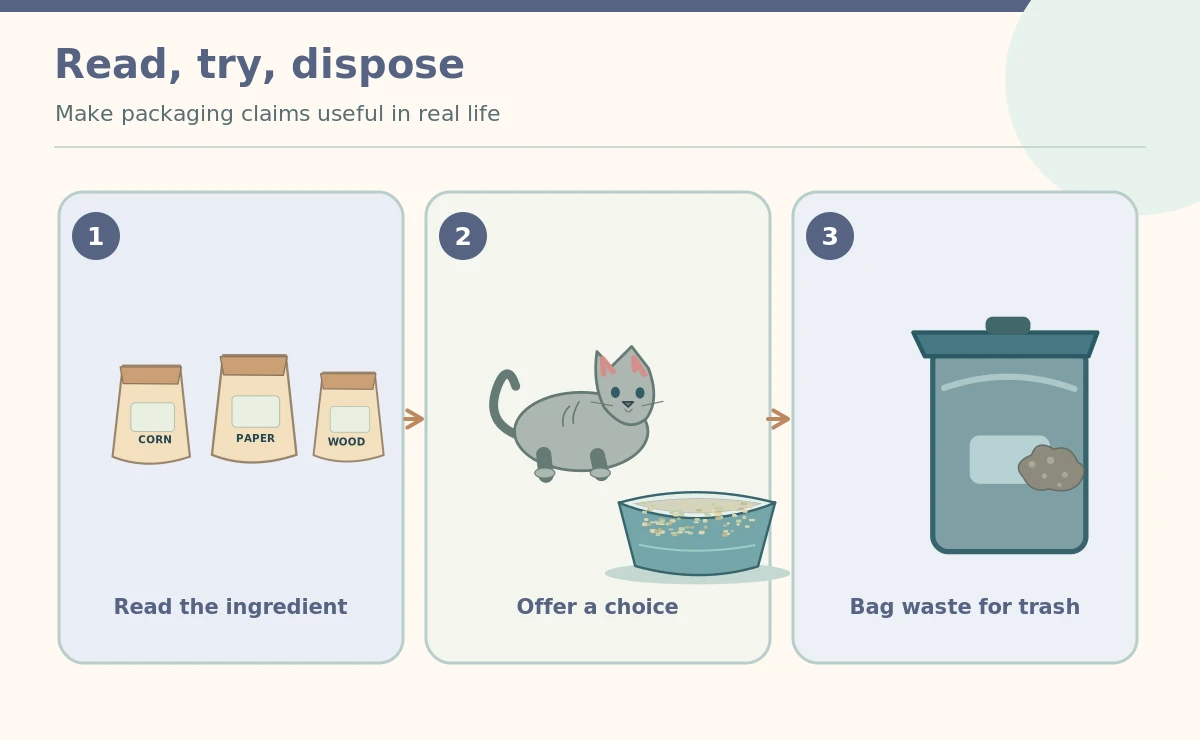
Even if small unused plant particles disperse in water, a clump carrying cat waste raises separate plumbing, wastewater and public health questions. Do not assume that “flushable” on a package overrides municipal sewer instructions. Keep a lined trash container nearby and bag used litter according to local rules. Never send clay or heavy pellet loads down a toilet. Cat feces may contain microorganisms or parasites, and avoiding unnecessary discharge into waterways is a sensible default. If disposal instructions seem conflicting, choose household trash until local guidance is clear.
Compare actual grain and pellet shapes
Wood pellets, paper cylinders, grass grains and corn crumbs look and feel different. Many cats prefer soft, fine, unscented substrates, according to Cornell and Cats Protection, but a cat familiar with pellets may accept them happily. Do not change the substrate solely to match your environmental preferences if your cat avoids the box. Compare feel visually, then offer an alternative box so the cat can choose. Observe digging, turning and elimination rather than interpreting a single sniff as acceptance.
Ask whether the material clumps or absorbs
A plant-based litter may form firm clumps, fragile masses or simply absorb urine. Match the scoop slots and cleaning routine to the product. Clumping makes it easier to remove some wet waste, while non-clumping formulas may need partial or full replacement at different intervals. Read the exact directions for the formula you buy. Do not stir wet litter through dry material or assume odor control means the box can wait longer between cleanups. Actual hygiene depends on removing feces and saturated areas promptly.

Check dust, fragrance and potential irritation
“Natural” does not automatically mean dust-free or unscented. Open bags carefully and pour slowly near the tray, then note visible dust without deliberately inhaling it. Look for added fragrances on ingredient descriptions. Cats may refuse scented litter even when people enjoy its smell. Do not add essential oils to fix odors; several concentrated oils pose additional pet safety concerns. If a cat coughs, sneezes repeatedly or becomes reluctant to enter after a change, stop experimenting and consult a veterinarian about symptoms.
Store the litter so that it stays usable
Plant-based bags should stay dry, sealed and away from pet chewing. Inspect material for water damage, unexpected mustiness or visible mold before placing it in a box. Damp storage can compromise texture and cleanliness, regardless of environmental marketing. Store heavy sacks on a stable shelf or floor instead of creating a falling hazard above the litter tray. Label the container with the product name so you can check instructions later. Clean the container completely before switching material types.
Look at packaging without assuming a perfect winner
A lighter bag can be easier to carry, but it may contain less material by weight than a dense clay product. Paper packaging may be recyclable where you live, but a contaminated liner or mixed-material bag may not be. Compare actual packaging instructions with your municipal waste program. Claims about carbon footprint require reliable product-specific data; do not calculate environmental savings from a leaf icon. The safest practical purchase starts with a material your cat accepts and a disposal route your locality supports.
Keep cat comfort ahead of a sustainability badge
A cat that avoids the box may seek carpets, bathtubs or other surfaces, creating stress and additional cleanup. Keep a familiar unscented texture available when you introduce a new plant-based litter. Offer a second box if possible and avoid locking the animal into a test. A smooth transition is more sustainable than throwing away a full bag after one uncomfortable day. Watch for changes in digging and elimination, and rule out medical causes if avoidance begins suddenly.
Use a reliable handling routine regardless of material
Scoop feces daily, wash hands afterward and keep cleaning tools away from food areas. The CDC advises special precautions for pregnant or immunocompromised people because cat feces can carry Toxoplasma. Use gloves when appropriate and let another household member handle the box when possible. Keep children and dogs away from the waste container. Bag soiled litter before trash collection. These basic steps matter whether the fresh granules began as wood, corn, paper or clay.
Use a five-question label check at the shelf
Before purchasing, ask what the actual material is, whether fragrance was added, how wet waste comes out, whether the texture suits your cat and what your local disposal option allows. If a claim has no explanation, treat it as promotional until verified. Choose one new feature to test instead of swapping box, location and litter at once. Track the cat’s comfort and your cleanup experience for a normal week. A careful comparison can prevent unnecessary waste while keeping the toilet area dependable.
How We Research
We review established guidance from veterinary schools, cat welfare organizations and public health agencies, alongside product attributes that readers can inspect. We distinguish general cat preferences from guarantees about any specific brand. Sources were checked on October 28, 2026. We have not performed laboratory testing or a veterinary examination for this article. Learn more about HubPet.
Sources
US Environmental Protection Agency, Composting At Home. Read the original guidance.
Cats Protection, How to Choose the Best Cat Litter for Your Cat. Read the original guidance.
Cornell Feline Health Center, Feline Behavior Problems: House Soiling. Read the original guidance.
CDC, About Cleaning and Disinfecting Pet Supplies. Read the original guidance.
Safety note: This is general litter and hygiene guidance, not medical diagnosis. If your cat strains, has trouble passing urine, appears painful, or suddenly avoids the box, contact a veterinarian promptly. People who are pregnant or immunocompromised should follow CDC litter-handling precautions. See our veterinary disclaimer.
No. Natural is broad marketing language; check the exact ingredients and any verified disposal information for that product.
The US EPA advises excluding pet waste and cat litter from backyard compost, regardless of the substrate origin.
No. Some pellets are firm or coarse. Offer a familiar alternative and observe the cat’s preference for texture and scent.
No universal permission exists. Check local rules and product instructions; bagging contaminated litter for trash is a conservative option.
Consider the cat’s comfort, regular cleaning, accurate ingredient information, sensible storage and locally appropriate disposal.