
Mounting during play is not a reliable test of dominance or a sign that a dog is behaving badly. Dogs of different ages and sexes may mount another dog, a cushion, or a person when excitement rises. ASPCA describes several possible contexts, including play and stress. The practical goal is to notice whether everyone is comfortable and to interrupt when someone needs space. Use short, low-drama pauses and reward a different activity instead of punishing a dog for a behavior you have not yet understood.
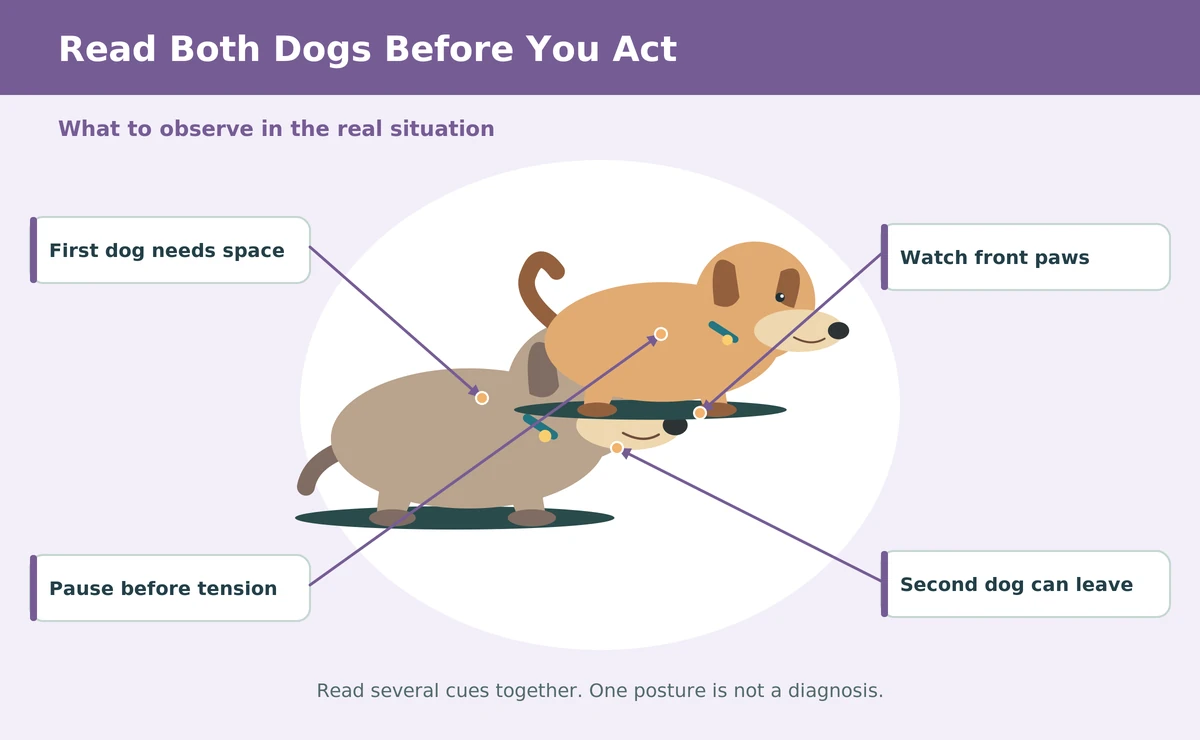
Look at what happened just before the mounting
Mounting may follow a burst of chase, a crowded greeting, or a moment when play becomes too intense. Watch for repeated following, fast movements, panting, pawing, or an inability to pause. These clues help you decide whether to lower arousal. One episode does not prove a single motive, and the behavior can appear in neutered or spayed dogs. ASPCA notes that play, excitement, stress, and sexual behavior all can contribute. Avoid labeling one dog dominant from this action alone.
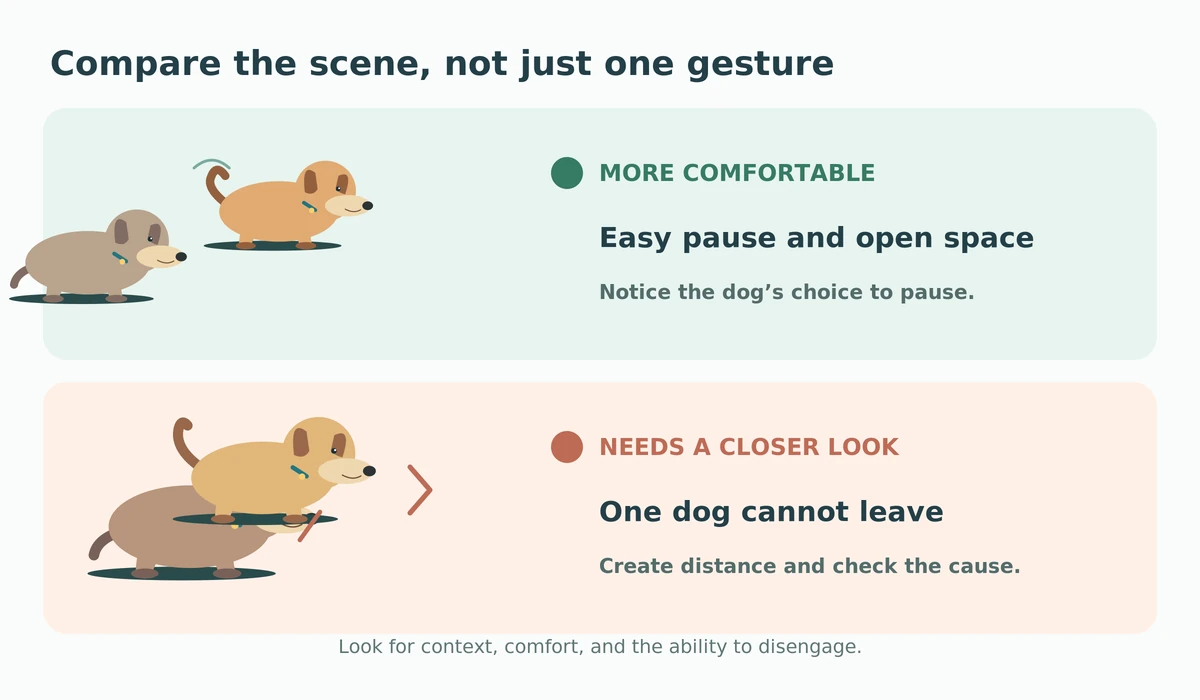
Check whether the other dog can choose to leave
The dog underneath matters just as much as the dog doing it. Some dogs turn away, freeze, crouch, growl, or try to escape instead of continuing play. Give both dogs open routes away from one another and avoid forcing them back together. Do not grab between their faces or hold a struggling dog in place. If there is tension, calmly separate the activity before conflict grows. Play is healthier when each dog can stop without another dog following or cornering it.
Interrupt before excitement rises too high
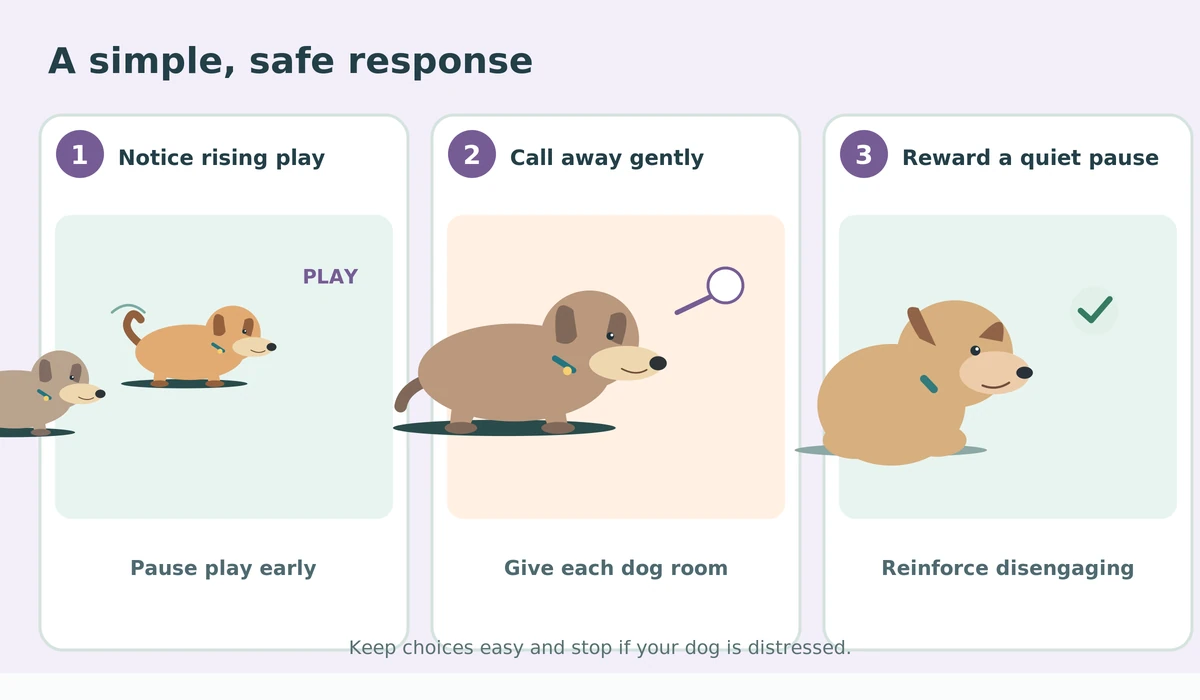
If you can see mounting about to begin, call your dog using a familiar, rewarding cue while the dog can still hear you. Toss a suitable toy away from the other dog or guide your dog toward a calm station. Reward disengaging and allow a short pause. Avoid yanking collars, shouting, spraying, or startling dogs, which can raise stress and increase conflict. With unfamiliar dogs, use distance and barriers rather than reaching into an argument. A short, successful break may be more useful than a long lecture the dog cannot understand.
Teach a better option outside the dog park
Practice an easy recall, hand target, or move-to-mat cue when distractions are low. Reward the dog for approaching you willingly and returning to a relaxed activity. Once the cue is reliable at home, practice at a comfortable distance from another calm dog. Increase difficulty gradually without waiting for uncontrolled mounting to occur. A dog cannot learn a fresh skill effectively while another dog is protesting. Reward-based lessons provide an alternative pattern that you can use before play gets too intense.
Use shorter play sessions with real pauses
If long group sessions routinely end in mounting, change the format. Pair dogs with compatible play styles, offer brief breaks, and end while everyone can still settle. Do not assume that all dogs need busy dog parks for exercise or social contact. A parallel walk, sniffing outing, or supervised one-on-one game may work better. Watch how each dog re-enters play after a pause. If one consistently avoids the other, respect that preference rather than insist they should become friends.
Handle mounting of people and household objects calmly
When a dog mounts a guest or household item, change the setup before the routine repeats. Provide a little space from the exciting event, invite the dog to sit or find a toy, and reward that response. Ask visitors to avoid rough games that encourage escalating contact. Do not physically wrestle the dog off a person if there is a risk of snapping. Teach a greeting routine in advance and use household barriers if needed. This approach addresses the event that precedes mounting instead of humiliating or frightening the dog.
Recognize signs that need more than a training tip
Frequent mounting combined with intense genital licking, pain, urine changes, or skin irritation deserves veterinary advice. ASPCA notes that medical problems can contribute in some cases. Seek qualified behavior help if mounting triggers fights, your dog becomes aggressive during interruption, or the pattern disrupts normal life. Do not attempt to diagnose hormone levels or prescribe treatment from a behavior description. These are reasons for a professional assessment, not for stronger corrections at home.
Keep children and visitors out of risky interactions
Adults should supervise dog play, especially around children, elderly visitors, and people who could fall. When excitement rises, redirect dogs to separate activity rather than let someone push or shout at them. Ask children not to tease, climb on, or drag dogs away by the collar. If a visitor is uncomfortable, prioritize their space and your dog’s ability to settle. A predictable greeting area and practiced cues can prevent repeated stressful scenes without making the dog fearful of visitors.
Set simple rules for multi-dog homes
Each dog needs its own retreat route and opportunities for rest away from group activity. Put toys or highly valued items away if they make interactions tense. Watch for one dog repeatedly following another that is trying to leave. Interrupt the pursuit early and reward both dogs for choosing separate comfortable spaces. Do not use an unsupervised closed room to force them to work things out. If household tension grows, consult a qualified reward-based professional who can see the full relationship rather than relying on a single online description.
Measure improvement in choices and comfort
A successful plan is not simply the absence of mounting at one gathering. Look for shorter bursts of excitement, easier responses to a familiar cue, relaxed body language, and play partners that willingly return after a pause. Note the situations that still overwhelm your dog and make those situations easier. Keep practice short and positive. If mounting remains intense or other dogs appear worried, reduce group exposure and ask for help. The goal is comfortable social interaction, not perfect obedience under pressure.
How We Research
HubPet reviewed current veterinary and animal-welfare guidance for this specific behavior, compared the practical recommendations, and separated normal context from signs needing an examination. We do not diagnose an animal from a posture or brief video. We accessed the sources below on November 1, 2026; individual dogs can communicate differently. Learn more about our editorial process at About HubPet.
Sources
ASPCA: Mounting and Masturbation. Consult the complete source for context and limitations.
AKC: Why Dogs Mount. Consult the complete source for context and limitations.
This article provides general education, not an individual diagnosis. For pain, injuries, sudden behavior changes, or safety concerns, speak with your veterinarian. Read the HubPet veterinary disclaimer.
Yes. ASPCA notes that dogs of different sexes may mount other dogs, people, and objects, and this behavior has several possible contexts.
No. Play, excitement, stress, and sexual motivations may all contribute; one action alone does not establish a dog’s social status.
Avoid reaching into tense interactions or applying force. Use a practiced cue, safe distance, or a barrier and pause play when needed.
End the interaction calmly and give the dog a clear exit. Do not require the dogs to resume play together.
Get veterinary or qualified behavior help when it is sudden, excessive, painful, linked to fights, or difficult to interrupt safely.