
A plastic liner can speed emptying for a person, yet loose folds and caught claws can make the tray uncomfortable for a cat. This guide focuses on the decision that actually changes daily use. Consider the animal’s access and comfort first, then fit, cleaning, and long-term upkeep. The examples are practical screening tests rather than promises that one design works for every pet.
Ask whose problem the liner solves
Cat litter box liners are thin bags or shaped sheets placed between litter and the tray. Their main promise is quicker emptying and less residue stuck to the box. That is a household convenience, not automatically a feline comfort feature. A cat digs with its paws close to the bottom of the tray, so loose plastic can change traction, texture, and sound with every stroke. Before buying liners, ask whether daily cleanup is truly difficult with a smooth uncovered pan. A cat that already uses an unlined box comfortably may gain nothing from a new surface. Plan to test any change while keeping the original option available.

Understand the snag and tear problem
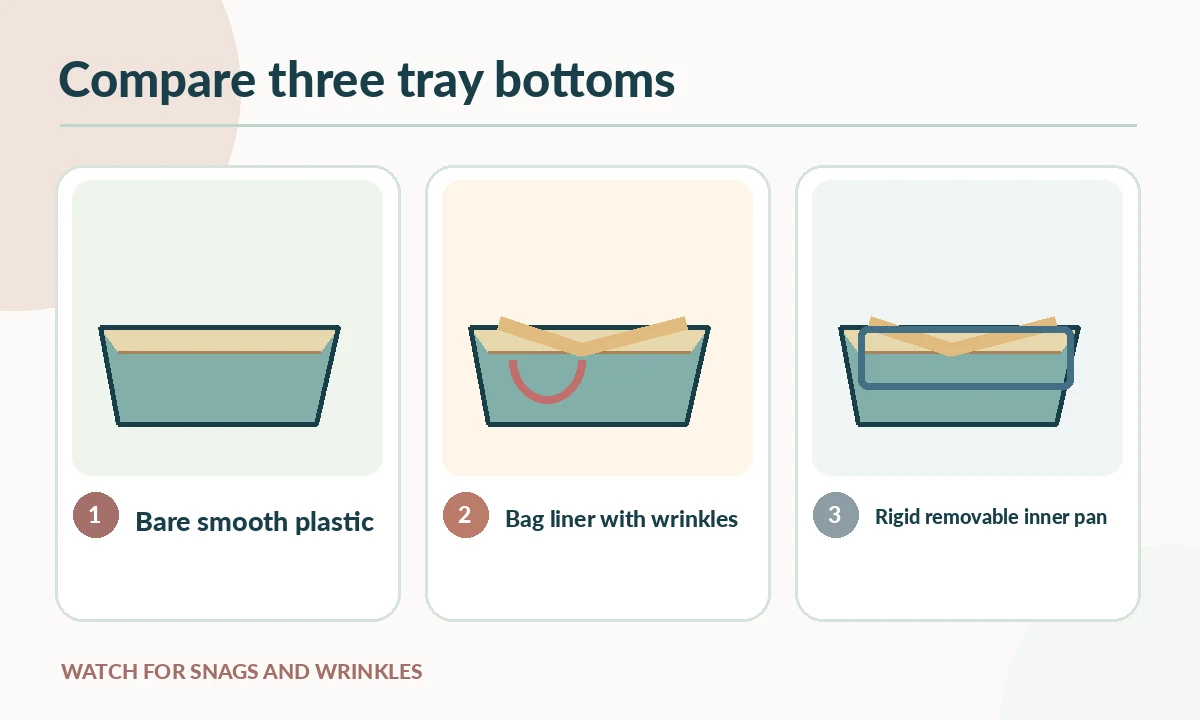
When claws scrape through litter, they may catch a folded liner or puncture stretched plastic. The sensation can interrupt digging; damaged plastic can then trap wet litter underneath. A liner that looks neatly stretched before you add litter may wrinkle as soon as the cat moves substrate around. Inspect the corners and rim after actual use, not just immediately after installation. Claw marks, ripped edges, or a cat trying to dig around the liner instead of into the litter are reasons to stop using it. Never leave loose torn plastic where a cat or kitten can chew it.
Compare fitted, elastic, and generic liners
A model-specific shaped liner may reduce excess material, although it still can catch on paws. Elastic-edge bags can be easier to position but may snap loose if the rim is unusually thick or the cat pulls at it. Generic garbage bags create extra folds, and their shape rarely matches a litter tray. Evaluate the tray dimensions and attachment method: nothing should dangle into the litter or leave exposed plastic loops. If you have a high-sided box with a low entrance, ensure the liner does not cover the cutout or create a lip that the cat must negotiate.
Recognize the limits of a bag-based cleanup
A liner is not a substitute for daily waste removal. It also does not solve odor caused by insufficient cleaning or an undersized box. When it tears, liquid or fine material may accumulate unnoticed between liner and plastic, producing the very residue the bag was meant to prevent. To evaluate claims fairly, compare time spent scooping, replacing the bag, washing the tray, and disposing of the extra plastic over several ordinary changes. Account for the full recurring cost and waste stream rather than just the price of one package.
Choose gentler cleanup alternatives
A large, smooth nonporous tray is usually easy to scoop and wash without any added layer. Rounded internal corners reduce places where litter sticks. A removable rigid insert may bunch less than a bag. Check for adequate turning room and stability. Select litter that meets your cat’s preferences, avoid excessive fragrance, and maintain the manufacturer’s recommended replacement routine. If sticking is the main issue, improve scooping frequency and technique before adding plastic that the cat contacts directly. Do not use harsh chemical treatments on a tray to prevent sticking.

Test liner acceptance without forcing the change
Offer a second tray containing the same familiar litter, leaving one unlined option in place. Observe normal entry, pawing, digging, and exit during ordinary days. If the cat claws at loose material, avoids the box, rushes out, or toilets elsewhere, remove the liner rather than trying to teach acceptance. In multi-cat homes, keep resources separated so a single preferred box cannot be guarded. Do not interpret avoidance as spite. If a cat suddenly stops using litter boxes, arrange veterinary advice to rule out illness or discomfort.
Handle waste and cleanup hygienically
Remove litter waste daily, seal it for appropriate trash disposal under local rules, and wash your hands. Do not flush litter or feces unless local authorities and product guidance explicitly permit it; many systems cannot handle litter. If a liner tears, remove it completely, clean and dry the tray, and check for plastic scraps before refilling. People who are pregnant or immunocompromised should follow CDC guidance. Ask someone else to clean the litter if possible. Use gloves and wash hands when cleaning yourself. A low-friction routine is valuable only if the cat still has a safe, appealing toilet.
Quick decision checklist
Before making a change, check your cat’s approach and exit. Check stability and cleaning access. Ask whether the setup still works on a busy day. Offer a familiar alternative when testing a new toilet feature. Watch real use rather than relying on a product promise, and revise the arrangement if your cat hesitates or appears distressed.
How We Research
Our research compares physical design and daily use with feline welfare guidance. We prioritize voluntary access, enough room, familiar litter, and cleaning that works in a real home. Relevant sources include veterinary bodies such as AAHA, plus Cats Protection and International Cat Care. Marketing claims do not count as evidence. We make no claims of hands-on testing on commercial models. Illustrations demonstrate general principles, not safety certifications. Learn more about our editorial approach on the HubPet About page.
Sources
Battersea, Best litter tray setup: Read the source. Accessed October 27, 2026.
International Cat Care, Caring for your new kitten: Read the source. Accessed October 27, 2026.
CDC, People at Increased Risk for Toxoplasmosis: Read the source. Accessed October 27, 2026.
Safety note: A sudden change in urination or defecation, repeated straining, apparent pain, or persistent litter-box avoidance needs veterinary assessment; do not assume a behavior or equipment problem. For general context see our veterinary disclaimer.
They may help empty the tray, but daily scooping and proper cleaning are still required. Torn bags can make cleanup worse.
Digging claws may catch a fold or stretched plastic. That unpleasant sensation can make a tray less appealing.
Strong scents can discourage some cats and do not replace removal of waste. Unscented options and cleaning are preferable.
A household bag can bunch, tear, or fit poorly. Avoid improvised liners that cause paw discomfort or loose plastic hazards.
A large smooth-sided tray without a liner, with an appropriate litter depth and daily scooping, works for many cats.