
A dog sofa bed borrows the shape of a couch: a cushion, raised back, and sometimes two arms. The design can offer a comfortable chin rest or create a neat place for a dog to relax near the family. The risk is choosing a bed that looks like furniture but works poorly as bedding. Thick arms reduce the interior footprint, a high front can block access, and decorative fabrics may not survive daily washing. Treat the shape as a functional object, not a tiny human sofa.
Look at where your dog puts its head
Some dogs rest their chin on a raised edge and seem to enjoy a back bolster. Others roll onto their sides with legs fully extended and need a large open surface. Observe at least a few naps before buying. A sofa-style bed may suit a dog that leans into furniture, but a dog that changes sleeping direction often can feel boxed in by three high sides. Choose a design based on how the dog sleeps rather than matching your living room sofa. Provide an open mattress alternative if your dog favors stretching out.
Measure the seat between the bolsters
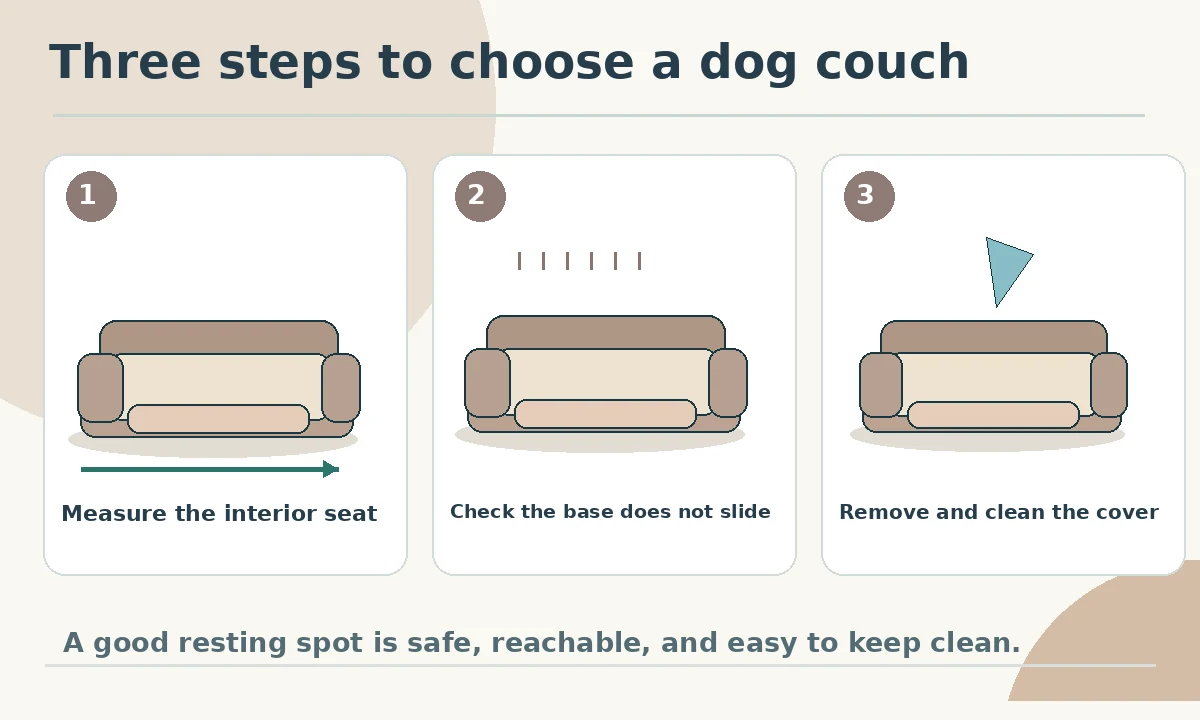
Listings often describe the full width of the furniture, including the arms and wooden or upholstered frame. The dog actually rests on the inner seat. Look for interior length and depth, then compare those numbers with your dog’s natural sleeping shape. A long body may not fit if thick side cushions occupy both ends. Consider where the head rests and whether the dog can rotate without bumping a leg. For larger dogs, inspect the entire foundation rather than assuming a small human-furniture silhouette provides suitable support.

Treat the front opening as a mobility feature
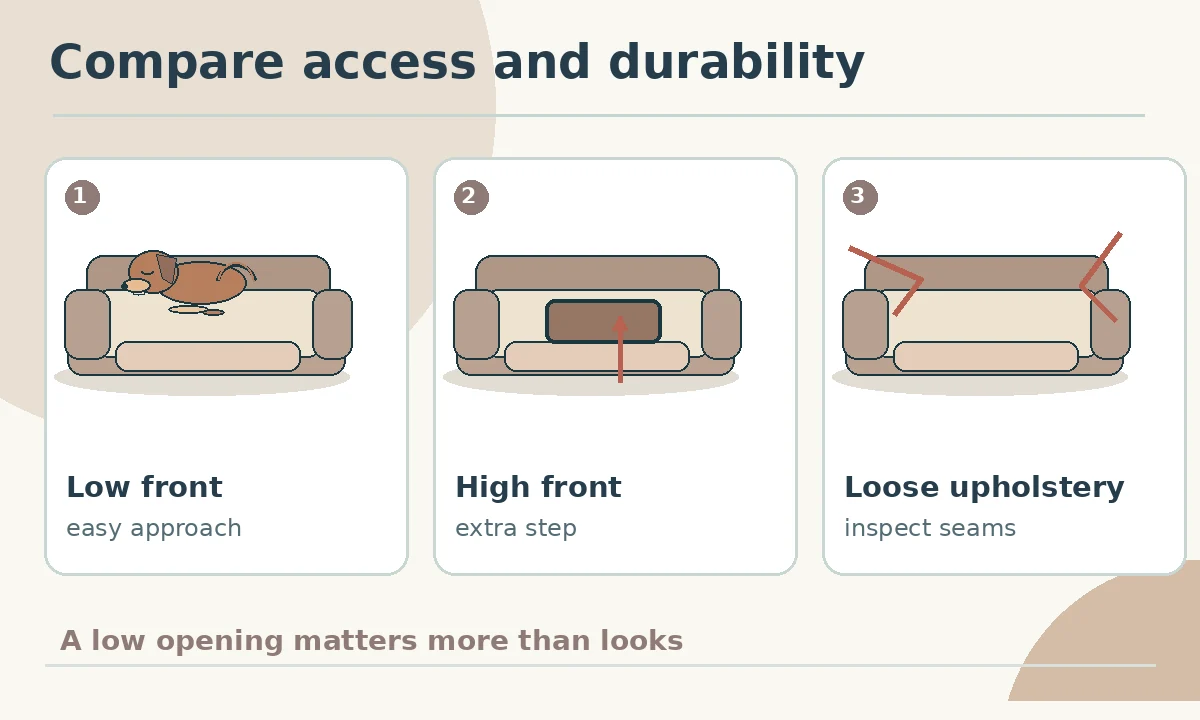
An open, low entry allows an older or stiff dog to step onto the bed more easily. Some models place a high decorative lip in front, which requires an unnecessary hop. VCA explains that dogs with mobility difficulties may struggle with high or overly soft resting surfaces. Watch your dog enter and leave the proposed design, and keep a non-slip rug beneath the approach if needed. If a dog suddenly struggles to rise, seeks veterinary care for the underlying problem rather than simply adding taller pillows or slippery ramps.
Check whether the base is stable on your floor
A lightweight couch bed can slide each time a dog braces its front paws. This matters on hard flooring and in narrow passages. Test the rubber feet or non-slip base on the same type of surface used at home. If the bed has a wooden frame, feel for exposed staples, splinters, and sharp corners. Avoid high furniture legs that create a gap where toys or paws can become caught. A washable non-slip mat should lie flat, not fold up and create a tripping edge.
Inspect fabric texture and seam strength
Thick decorative weave may catch claws, while loosely attached piping can become a chew target. Run your hand along the corners and the underside, then locate every zipper pull or exposed tag. Favor tight seams and covers that can come off without dismantling a complicated frame. A dog that scratches before lying down needs durable fabric, but any cover can fail under sustained chewing. Remove loose stuffing immediately. Redirect destructive behavior with appropriate enrichment and supervision rather than punishing the dog for using its bed.
Prioritize the cushion, not the furniture effect
A raised armrest should not compensate for a thin, sagging central mattress. Press the center gently and examine how the fill rebounds. A removable foam core may retain shape better than loose stuffing that migrates toward the edges, but the actual product matters more than labels such as luxury or orthopedic. Make sure the dog can lie with its spine and legs in a natural position. If the dog has pain, weakness, or a noticeable gait change, bedding alone is not an appropriate diagnosis or treatment.
Plan an honest laundry routine
The best design allows you to remove hair, wipe spills, and launder the sleep surface according to its care label. VCA recommends vacuuming dog bedding before washing and using the product’s care instructions. Check whether side bolsters unzip separately and whether the frame can tolerate damp wiping. Let all parts dry fully before rebuilding the bed. If the product has a fixed upholstery cover, consider how you will clean accidents without saturating the cushioning. Keep a second washable sleeping spot for days when the cover is in the wash.
Make the location comfortable without isolating the dog
Many dogs choose a spot close enough to observe family activity but outside a busy walkway. Place the sofa bed with the open side toward the dog’s usual approach, away from swinging doors or hot vents. Avoid narrow positions where a sleeping dog could feel cornered by people stepping around it. Offer a quiet alternative during guests or noisy cleaning. Children should learn to leave resting dogs undisturbed. A fancy bed works only if your dog can enter, rest, and leave at will.
Use a short at-home acceptance test
Set up the bed in its planned position, remove distracting packaging, and encourage calm exploration without pushing the dog into it. Observe three things over several days: whether the dog chooses the seat, whether it fits in its favorite pose, and whether it gets out without slipping. Look for repeatedly dangling paws, cramped turning, and flattened filling. If your dog consistently selects a basic floor mat instead, respect the preference. Returns are easier to manage before the fabric becomes heavily soiled or the original box disappears. If you buy a model with removable bolsters, inspect whether the pieces stay attached during normal entry and sleep. Save a photo of the care label and note the true inner seat dimensions, so a replacement cover can be chosen without guessing later.
How We Research
This independent buying guide compares fit, construction, usability, and common safety limitations. We reviewed veterinary guidance from VCA Animal Hospitals and relevant pet-care recommendations from the American Kennel Club and CDC, focusing on the claims that apply to dog sofa beds. We examined dimensions a shopper can verify, everyday cleaning requirements, and observable signs a dog finds a bed usable. Illustrations show principles, not a tested or endorsed product. No purchases, laboratory durability tests, or veterinary examinations took place. Read About HubPet for our editorial standards.
Sources
American Kennel Club, Sleepy Time: Choosing a Dog Bed: Read the guidance. Accessed October 27, 2026.
VCA Animal Hospitals, Should My Dog Sleep in My Bed?: Read the guidance. Accessed October 27, 2026.
VCA Animal Hospitals, Safe Spring Cleaning With Your Dog: Read the guidance. Accessed October 27, 2026.
Safety note: Inspect beds for torn fabric, exposed fill, and unsafe hardware. Remove bedding if the dog chews or swallows components. New problems standing, walking, breathing, or resting need veterinary evaluation rather than assumptions about the bed. See our veterinary disclaimer.
Not universally. Raised backs can give a chin rest, but flat mattresses usually provide more uninterrupted space for dogs that stretch out.
Check the internal seat length and depth between bolsters, not only the furniture’s outside dimensions.
Low entrances and steady surfaces can be easier than high steps, but specific mobility problems deserve veterinary guidance.
Only if the care tag allows it. Some have removable cushion covers while the frame or side bolsters require another cleaning method.
Remove damaged bedding and exposed stuffing, supervise access, and offer suitable chew alternatives. Fabric and fill may cause serious harm if swallowed.