
Cat feeding mats are useful when they protect a floor without making food harder to reach. A mat can catch small splashes and crumbs, but a curled edge or slippery underside creates new problems. Before choosing a material or decorative print, measure the footprint of the dishes and observe where mess actually lands. The mat must lie flat, stay easy to lift, and dry completely between cleanings. This guide explains low retaining lips, floor grip, cleaning traps, and whether food and water should share one station. It is a practical buying and setup guide, not an excuse to skip washing food dishes. FDA and CDC offer straightforward hygiene advice for feeding equipment; follow the product’s cleaning label as well. See our veterinary disclaimer for health concerns.
Measure the mess before choosing a mat
A feeding mat should catch the spills your cat actually makes. Watch where crumbs, wet-food splashes, or drinking drips land, then measure the usable area that needs coverage. Do not choose by the outside size alone: a tall lip can reduce the level space where bowls sit. Leave room for each dish to be lifted without dragging across the edge. If you use separate food and water spots, a small mat at each location may work better than one enormous tray. The goal is a cleaner floor and steady bowls, not a barrier the cat must step over.

Decide whether you need a low lip
A slight raised perimeter may contain small water drips, while a flat mat is easier for some cats to approach and less likely to catch paws. Compare your cat’s movement around the bowl. A tall stiff wall may push dishes together and make the area feel cramped. Water can still escape when a dish is tipped; no lip makes a space floodproof. For kittens, older cats, or cats with limited mobility, prefer a low unobtrusive edge. Check corners for folds where food can hide. The best rim is one that helps cleanup without becoming a daily obstacle.
Check real floor grip before trusting a claim
Silicone and rubber-like mats can still slide on wet tile, dusty wood, or textured vinyl. Clean and dry the floor first, then test the empty mat with a light sideways push. It should lie flat without rolling up. A heavy bowl on a slick mat may still travel when a cat nudges it. Do not use loose adhesive tape as a permanent fix because it can leave residue and create a chewing hazard. If the mat bunches against a wall or doorway, change dimensions or choose a different design. Floor conditions matter as much as the material name.
Look for easy-to-reach food-contact edges
Food can accumulate where a molded lip meets the base, in decorative ribs, and underneath embossed patterns. A smooth surface with broad rounded corners is usually easier to wipe than intricate grooves. Read care instructions and inspect whether heat or harsh cleaners could damage the finish. If a mat has a foam core, cracks, or fabric layers, water may remain trapped even when the visible top is dry. Use a washable, intact material that can be lifted safely without spilling collected liquid. Avoid a mat with strong persistent odors or loose peeling coatings.
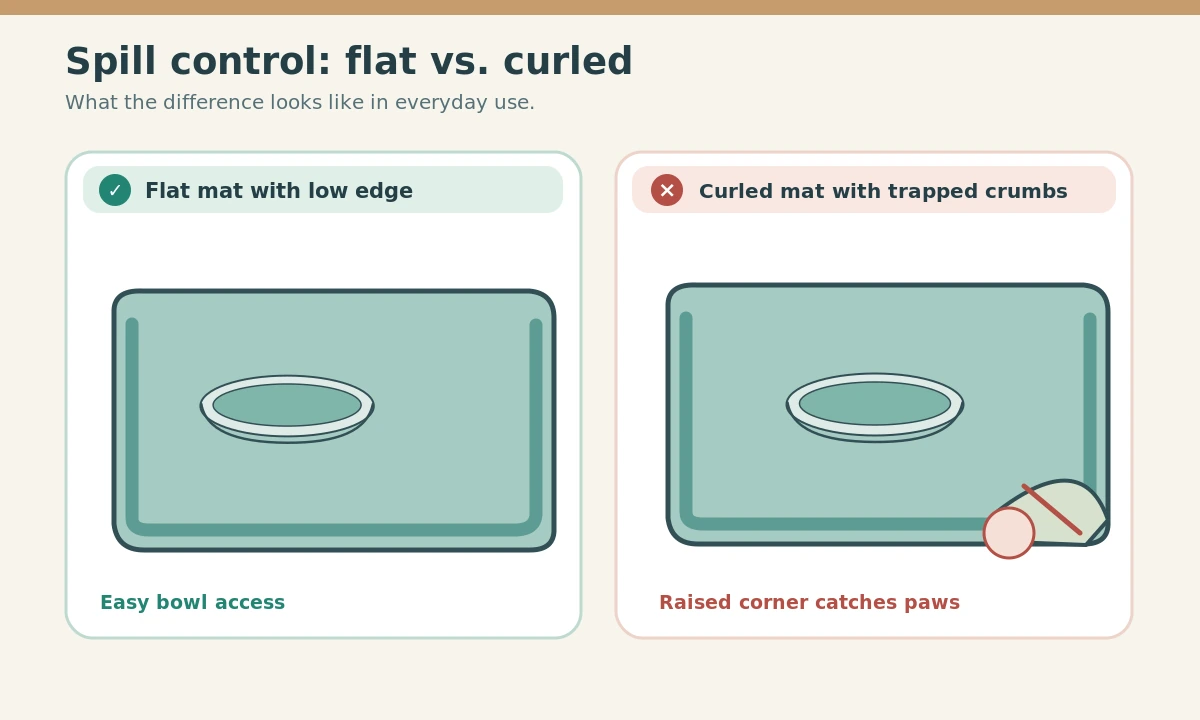
Give bowls enough separation and access
A mat marketed for two dishes may hold food and water so close that the cat must work around one to reach the other. Leave comfortable space for the cat’s head and shoulders. Cats may prefer water in another area; the mat should support, not dictate, a feeding layout. In a home with multiple pets, make sure another animal cannot block the station in a narrow hallway. Place it where a cat can approach and retreat easily. If one cat guards food, separate feeding locations instead of relying on a larger shared mat. Observe the household over several meals.
Compare easy cleaning with decorative texture
A textured top can hide spilled food until it smells or attracts pests. Lift the mat daily and inspect the floor below, particularly under water bowls. If crumbs collect in raised decorations, a simple smooth mat may save time. Test whether a cloth reaches all corners and whether the lip keeps its shape when lifted. A flexible mat can be convenient for rinsing but may spill the contents if picked up suddenly by one edge. Choose what you can clean consistently rather than what looks best in an advertising photograph. Hygiene is an everyday feature, not an occasional deep clean.
Create a practical cleaning routine
Move the dishes aside, discard food particles, wash the food-contact mat with an appropriate mild detergent, rinse thoroughly, and dry it before replacing bowls. FDA recommends washing and drying pet food dishes after use, while CDC emphasizes cleaning bowls and pet supplies regularly. Dry the floor underneath, especially along wood seams or laminate edges that moisture can damage. Wash hands after handling pet food and used dishes. Inspect the mat for cuts, sticky buildup, or curled corners. Replace a worn mat before loose pieces or trapped moisture become a problem.

Choose fit over expensive add-ons
Extra thick borders, personalized printing, and decorative shapes do not necessarily improve spill capture. A sensible purchase has enough flat room for your dishes, reliable traction, a comfortable low edge, and an easy-to-clean underside. Try it in the actual feeding location and watch whether your cat steps across it without hesitation. If the cat avoids the new area, restore the previous setup and test changes one at a time. Feeding should stay predictable and relaxed. A useful mat makes daily maintenance easier while leaving the cat’s normal routine intact; it is not a substitute for washing bowls.
How We Research
HubPet reviewed FDA and CDC hygiene guidance alongside relevant veterinary sources about feeding comfort and enrichment. We compare observable features—dish width, stability, food access, finish, and cleaning—rather than claiming laboratory product tests. Examples in the drawings are original explanatory illustrations, not tested products or medical outcome claims. Read our editorial approach, confirm manufacturer instructions, and adapt the setup to the individual pet.
Sources
FDA — Proper Storage of Pet Food and Treats — https://www.fda.gov/animal-veterinary/animal-health-literacy/proper-storage-pet-food-treats (accessed October 2026).
CDC — Cleaning and Disinfecting Pet Supplies — https://www.cdc.gov/healthy-pets/about/cleaning-and-disinfecting-pet-supplies.html (accessed October 2026).
AVMA — Safe Handling of Pet Food and Treats — https://avma.org/resources-tools/pet-owners/petcare/safe-handling-pet-food-and-pet-treats (accessed October 2026).
Safety note: This article provides general pet-care information, not veterinary diagnosis or treatment. If appetite, swallowing, behavior, or physical comfort changes suddenly, seek advice from a veterinarian. Keep small parts, damaged ceramics, and cleaning products away from pets.
Only if it helps contain the actual mess. A low flat edge may be more comfortable than a tall wall for some cats.
No. Grip depends on the specific material and your floor condition; test the mat after the floor is clean and dry.
Only if its manufacturer specifically allows it. Otherwise follow the care label and hand-wash, rinse, and dry thoroughly.
They can, but cats may prefer separate water access. Ensure adequate spacing and consider multiple locations.
Check for food or moisture every day and clean as needed, especially beneath water bowls and on moisture-sensitive floors.