
Cassava cat litter is a plant-based option made with a starchy root ingredient, sometimes combined with other materials. Its small granules may form scoopable clumps, but performance varies by formula. Texture, floor tracking, moisture sensitivity, and the cat’s preference remain important. This guide explains how to judge those features from an actual bag and normal use, while keeping environmental and flushability claims in perspective. This article is general product and care guidance, not a veterinary diagnosis. See the HubPet veterinary disclaimer when discomfort or a health concern arises.
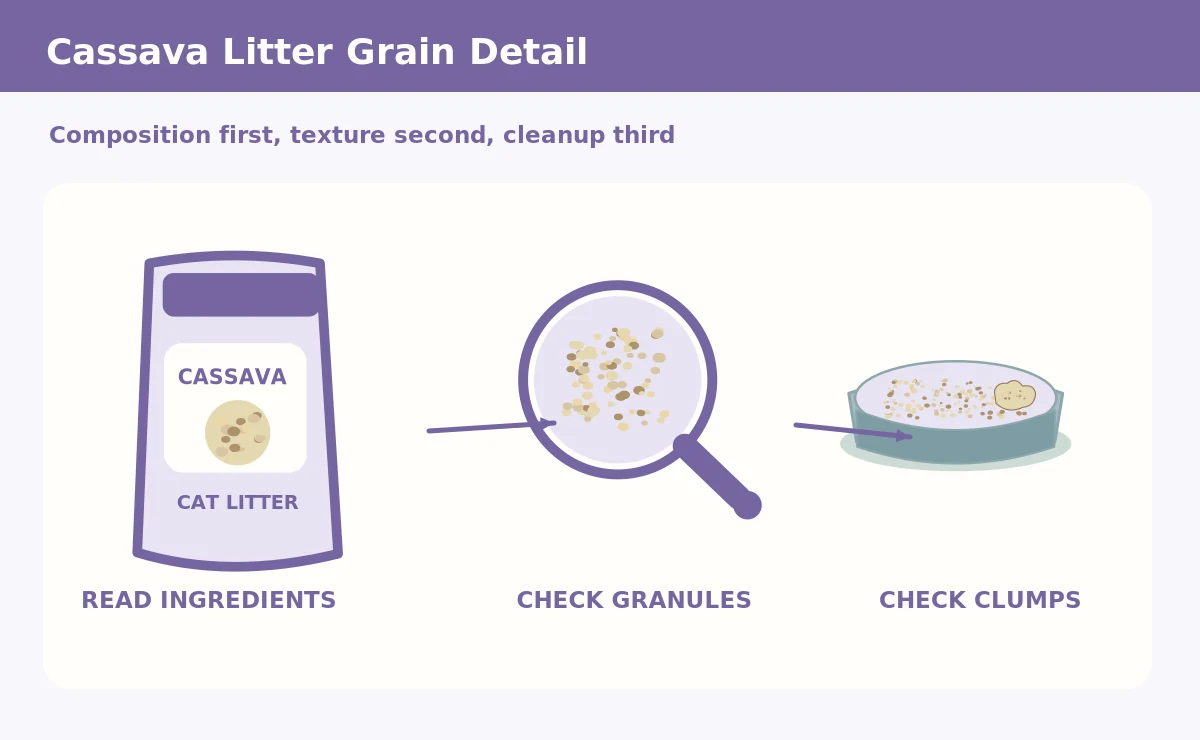
Check whether cassava is the only ingredient
Some cat litters emphasize cassava while also using corn or another plant ingredient. Read the complete material list before choosing. Added binders, scent, or alternative granules may change how a product works. A front-of-bag photo cannot tell you everything about the blend. If you need an unscented product, verify the specific fragrance statement rather than assuming plant-based equals perfume-free. Keep the original instructions for minimum depth, clump timing, and any equipment compatibility restrictions. Do not apply one brand’s directions to all cassava litter.
Examine grain shape before switching
Cassava-based products may look like pale grains, chips, or small pellets depending on the formulation. Pour slowly into a separate clean tray and see how the pieces spread. Compare that feeling with the fine, sand-like texture the cat already uses. Many cats show strong preferences for familiar substrate types. Give the animal space to inspect and dig voluntarily. Watch for slipping, stepping only on the tray rim, or avoiding the box entirely. Those behaviors are more meaningful than a package claim about paw comfort.
Check clumps after ordinary use
Clumping ability requires judging by actual waste removal and manufacturer directions. Lift the wet section at the suggested interval using a scoop with appropriate slots. Look for a mass that stays together instead of leaving damp crumbs behind. If the clump is too fragile, the tray may need more frequent complete cleaning. Never mix household adhesives, baking soda, or perfumed additives into the litter. Repeatedly breaking clumps can turn a seemingly efficient material into an expensive, messy option.
Match scoop slots to granule size
Very fine grains should sift through a scoop while the clump remains supported. Wide slots can drop smaller bits of waste back into the box, and narrow slots can make every scoop slow. Test with fresh dry granules first, then watch how the tool handles a real clump. Choose a rounded-edged scoop that can reach tray corners without scraping away the finish. Keep tools clean and dry. Do not shake an overfilled scoop vigorously; that spreads dust and can break wet material apart.
Expect tracking when particles are light
Small cassava grains can cling to paws or be pushed out by digging. Look at the path from box entrance to the next resting spot. A comfortable flat mat may catch some scatter, but it should not introduce a high step. If a cat has limited mobility, prioritize easy access over tidier floors. Do not change the entire tray layout to solve a small tracking issue. Sweep the floor regularly and discard dirty particles rather than tipping them back into the box.

Protect the product from humidity
Cassava is plant-derived, and the dry bag should stay away from moisture. Reseal unused litter, use a clean lidded bin if helpful, and check for unexpected hard lumps or a musty smell. Do not keep the bag under a leaking sink or next to wet floor mops. If the contents become damp during storage, do not return them to use after an improvised drying attempt. Review the manufacturer’s advice for shelf life and container care. Record how long a bag stays open in your home.
Be cautious with odor and dust promises
A brand may describe cassava litter as low-dust or powerful against odor. Those claims apply to a stated formula and test, not every cat household. Pour slowly and assess airborne particles in normal light. Scoop at least daily according to litter box care guidance. Strong odor can signal old waste, unsuitable placement, or inadequate cleaning rather than a failed special ingredient. Avoid perfumed treatments that can discourage the cat from using the box. Seek veterinary advice if litter behavior changes suddenly.
Try a second box rather than removing the first
Keep the established litter available while offering cassava material in a separate tray of similar size and design. Keep both boxes accessible and scoop them on the same schedule. This lets your cat show a preference without losing a familiar toilet. Observe where the cat urinates and defecates, not just where it sniffs. If the new box is avoided, revert to the accepted texture. Never withhold the old litter to make the cat comply. Comfort and consistency are more important than finishing a purchased bag.
Measure the real cost of clumping
A bag with strong clumps may let you remove waste without discarding much clean litter. But this advantage disappears when clumps crumble or stick to the tray. Track how much you top up and how often you do a full change. Factor in floor cleanup, scoop replacement, and any incompatibility with an automatic litter box. A lightweight plant-based formula can still cost more per clean day. Start with a smaller bag and only stock up after repeated normal use.

Follow local waste rules regardless of claims
Cassava and other plant-based litter may carry the labels biodegradable or flushable on packaging. That does not make contaminated litter safe for sewers, storm drains, vegetable gardens, or casual compost. Cat feces may contain pathogens. Put the used contents in a secure bag and follow household trash guidance. Wash hands and tools after scooping. Never assume that a product’s renewable material automatically makes its disposal impact negligible. The ordinary local trash route is the safest default.
How We Research
This HubPet guide distinguishes general cat litter preferences from claims about a specific cassava cat litter formula. We used veterinary and animal welfare litter box guidance, then checked available product instructions only for described ingredients and handling. We do not treat a brand comparison as independent safety testing. The source review took place on November 1, 2026. For our editorial approach, see About HubPet.
Sources
Purina — Types of Cat Litter. Refer to this source for its specific guidance and limitations.
ASPCA — Litter Box Problems. Refer to this source for its specific guidance and limitations.
Cats Protection — How to Choose the Best Cat Litter. Refer to this source for its specific guidance and limitations.
IAABC Foundation Journal — Evaluating Litter Substrate Preferences in Cats. Refer to this source for its specific guidance and limitations.
No. Some formulas combine cassava with other plant ingredients. Check the ingredient list on the exact bag.
No. Clumping varies by formulation and timing. Judge how a normal wet clump lifts during cleaning.
Small light granules may track. A comfortable washable mat can help without making entry difficult.
Only if the automatic box manufacturer approves that product type and particle size. Do not assume compatibility.
Do not assume so. Plant origin does not override local plumbing and wastewater restrictions; use trash disposal.