
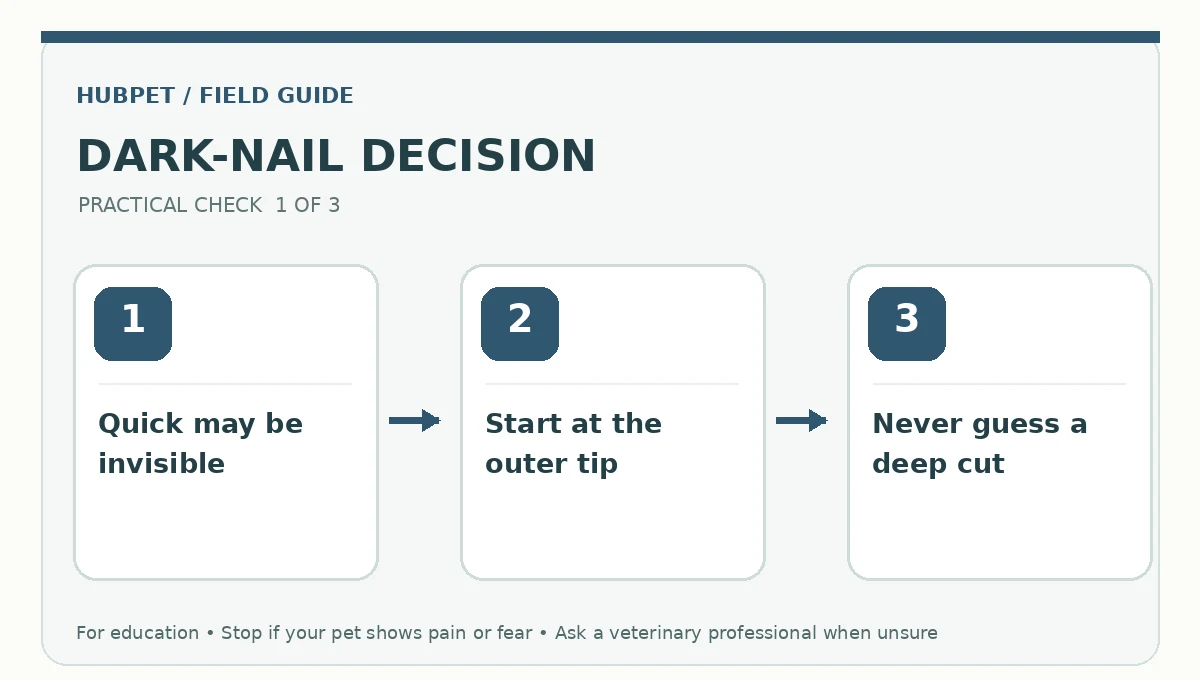
Black dog nails can make trimming feel uncertain because the blood vessels and nerves inside the nail, called the quick, may be invisible from the outside. Rather than guessing where the quick ends, work from a stable paw position and take the smallest obvious tip off at a time. Even experienced owners sometimes need a veterinary or grooming demonstration for an unusually curved nail. This guide focuses on safe decision points, not a promised cutting depth. For an injured nail or unexplained pain, contact a veterinarian; HubPet’s veterinary disclaimer explains the limits of general guidance.
Why a dark nail needs a different approach
Light nails often reveal a pink quick through their surface, but dark pigment can conceal that line. In addition, the quick is living tissue and may extend farther toward the tip in an overgrown nail. No single measurement guarantees that a cut is safe for every dog. Instead of attempting to remove the whole curve in one clip, plan a series of tiny, well-observed decisions. You should always be able to explain why the next cut is safe. If you cannot, stop. Nail color itself is not a health problem; it simply changes visibility and increases the importance of patient technique.
Position the dog and light before holding a tool
Use a non-slip mat or other secure floor where your dog can stand or lie comfortably. Meanwhile, bright even light helps you examine the nail surface, though it does not make a hidden quick magically visible. Practice lifting each paw a small amount without twisting joints or pulling a leg backward. Reward the dog for relaxing into the touch. If the dog freezes rigidly, pants, growls or tries to escape, stop trimming and work on cooperative handling. A helper may offer treats, but physical restraint should not replace a safe view. Never clip a moving target merely because the nail seems overdue.
Know what a normal tip looks like
Examine the ends of several claws to understand how their shape changes toward the curve. Therefore, the outside may appear hard and dry while the center looks different after a cut. Veterinary handling guides describe inspecting the cut face after every tiny removal rather than using the color of the outside to decide how far to go. A dark nail can contain different shades and textures, and none provides a foolproof map in every dog. If you see a soft or glossy center, tenderness or a concerning change in texture, stop rather than testing one more slice.
Take the first cut conservatively
Hold a sharp pet nail clipper in a stable hand and remove only the very outer tip. Instead, check your view and the dog’s response before anything else happens. You may need to stop after that single cut, especially with a newly trained dog. If the nail is long but the safe margin is unclear, consult a groomer or veterinarian rather than making increasingly deep trial cuts. Some dogs need gradual reductions over repeated sessions. A shorter visit with no pain can be more valuable than a perfectly shaped nail achieved through a stressful struggle.
Do not trust a light or sensor as a safety guarantee
Clippers with lights and quick-finding claims can be appealing when dark pigment makes visual inspection difficult. However, a light may not show living tissue through every opaque nail, and a device cannot account perfectly for movement, curvature and variation between dogs. Judge the cutting head by grip, blade condition and clear placement first. If you use any extra feature, treat it as supplemental rather than proof of a safe depth. Avoid buying a complex tool as a substitute for learning where to stop. As a result, ask your veterinary team for a hands-on demonstration using your own dog’s nails.
Consider a grinder carefully
A nail grinder removes material in smaller increments, which can give some owners more control than a large clipping motion. Next, it also creates sound, vibration and friction heat. Introduce the inactive device first, reward calm inspection and follow the tool’s instructions for brief contact. Keep long fur clear of moving parts, and stop if the dog dislikes the sensation. A grinder does not eliminate the quick or make over-trimming harmless. Owners who cannot safely see or access the nail should still get professional guidance. Do not insist on grinding through fear just because cutting seems difficult.

Make the stopping rule part of the plan
End the session whenever you lose sight of the tip, your hand becomes unsteady or your dog begins pulling away. As a result, stop as well if the cut face changes to a concerning soft or glossy center, if the nail looks cracked, or if the dog shows pain. A little uncertainty is enough reason to stop. If you accidentally reach the quick and bleeding occurs, pause immediately and follow veterinary first-aid guidance; call the clinic if bleeding persists or the toe looks badly injured. Do not reattempt the same nail while the dog is distressed. Set up the next session around trust.
Check length without relying on floor clicks alone
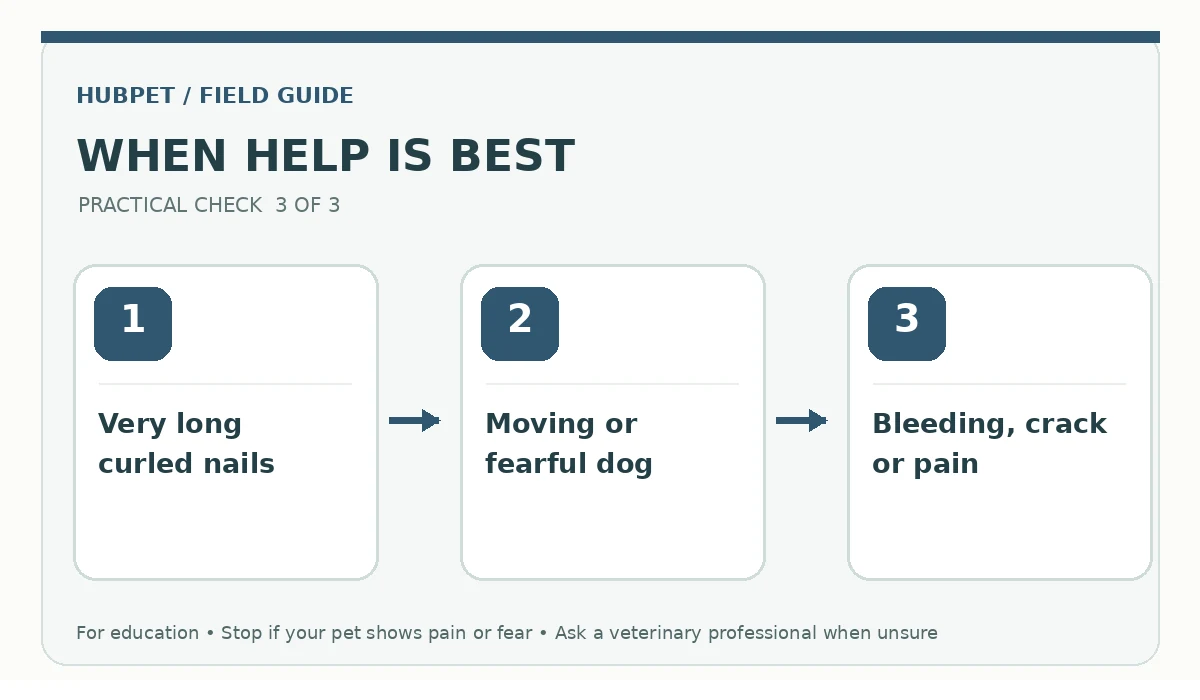
Nails that click audibly on hard flooring can signal that trimming may be due, but sound alone does not tell you how deeply to cut. By contrast, look at each paw while the dog stands naturally and check for snagging, pressure against the floor or altered posture. Some dogs wear individual claws unevenly, and dewclaws may not touch the ground at all. Note the overall trend every few weeks rather than chasing a universal length. If the paw is painful, swollen or the dog limps, contact your veterinarian before grooming. An overgrown nail may need multiple careful sessions.
Turn a difficult trim into a cooperative routine
Practice paw touches and harmless clipper motions between trims. For example, reward a voluntary paw rest, then return the paw to the floor before your dog becomes uneasy. During actual trimming, take the least ambitious cut that still leaves a safe, neat tip. Track which nails you finished and which require a future visit. If your dog needs urgent shortening yet resists handling, ask the veterinary team about appropriate supervised options; never give calming medications on your own. A reliable routine grows from predictable, low-pressure experiences and sensible professional backup.
How We Research
Our editorial review compared veterinary and animal-welfare guidance on healthy claws, handling tolerance, tools, and reasons to seek professional help. Practical owner decisions took priority over product claims. We did not conduct controlled tool trials, test specific brands, or provide diagnoses. Guidance may vary by age, lifestyle, anatomy, and stress response; ask a veterinarian about individual needs. We last reviewed the sources on October 27, 2026. Read about our editorial process on the About HubPet page.
Sources
VCA Animal Hospitals: How to trim a dog’s nails at home. Accessed October 27, 2026.
VCA Animal Hospitals: Handling exercises for nail trimming. Accessed October 27, 2026.
American Kennel Club: How to trim dog nails safely. Accessed October 27, 2026.
Sometimes the cut surface offers clues, but the external color may hide the quick entirely. Trim tiny tips and stop when the safe margin is uncertain.
No device provides a universal guarantee. Motion, nail shape and pigmentation still matter, so use conservative handling and professional guidance.
It can allow gradual removal for some dogs, but noise, heat and the hidden quick remain concerns. Choose the method the dog accepts.
Do not attempt a large cut to reach an ideal length immediately. Ask a veterinarian or experienced groomer about gradual reduction.
Stop if you cannot identify a safe tip, the dog pulls away, the cut surface changes concerningly, or you notice bleeding or pain.